How to Choose a Comfortable Spot for Each Festival Set
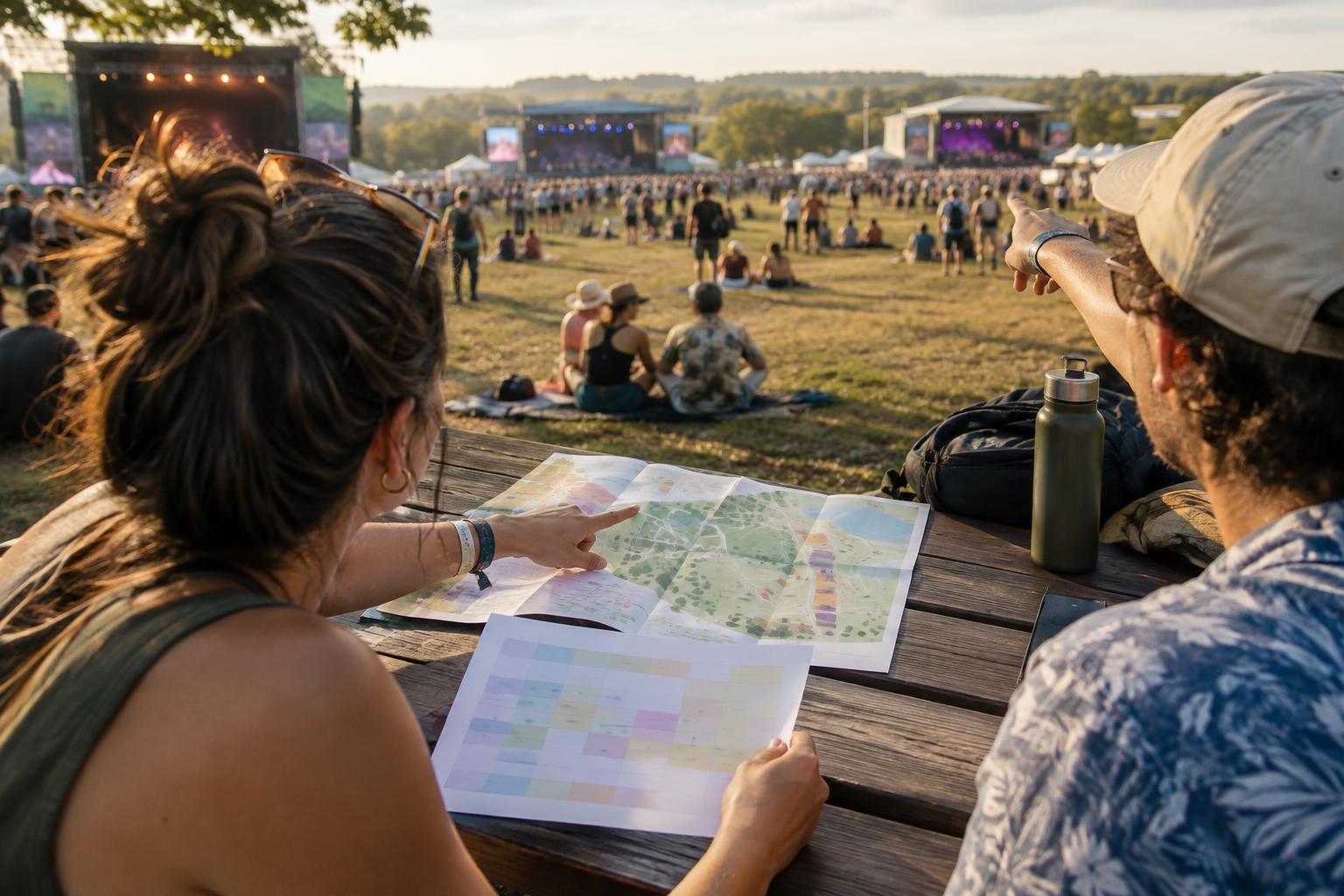
The closest spot is not always the best one. Use sightlines, crowd movement, sound, shade and your next stop to choose a place where you can enjoy the set comfortably.
Read article · 4 min↗Music Discovery
More to discover ↗
Music Discovery
A striking drum sound, vocal texture or instrumental tone can be a starting point for finding new music. Learn how to describe what caught your ear, search beyond genre labels and build a listening trail that stays surprising.
Read article ↗More to discover
The closest spot is not always the best one. Use sightlines, crowd movement, sound, shade and your next stop to choose a place where you can enjoy the set comfortably.
Read article · 4 min↗An opening set can introduce you to an artist you might never have searched for on your own. Learn how to listen with curiosity, remember what stood out and decide what to explore after the show.
Read article · 4 min↗A local music space is part of a neighborhood even when the show happens behind closed doors. Thoughtful scheduling, clear communication, and attention to what happens outside the venue can help music and everyday life coexist.
Read article · 3 min↗A music scene thrives when people can discover artists, attend shows and contribute without passing an unofficial test. Here are common gatekeeping habits to notice, and practical ways to replace them with curiosity and care.
Read article · 4 min↗When musicians from different genres share a stage or a studio, the result can reach beyond a single song. Cross-genre collaborations can introduce audiences to unfamiliar sounds, create new working relationships and change how a local scene understands itself. Their lasting value depends on trust, credit and room for each artist’s identity.
Read article · 4 min↗A campus music scene rarely stops at the edge of campus. Student audiences, practice spaces, local venues and independent artists all influence one another. Here’s how those connections can help a nearby music community grow—and where they can create friction.
Read article · 4 min↗Rehearsal rooms are more than places to turn up an amplifier. When musicians can find space they can afford and use regularly, they have more room to experiment, collaborate and prepare for live shows. Here is how those rooms shape a local music scene—and what makes them genuinely accessible.
Read article · 4 min↗Independent record stores can give musicians a place to meet, share ideas and connect with listeners. Here is how everyday conversations, small events and mutual support can help a local music scene grow.
Read article · 4 min↗A music scene is more than its venues and performers. Travel time, late-night routes, neighborhood expectations and the cost of getting home all affect who can take part. Here is a practical way to notice those barriers and make room for more listeners and artists.
Read article · 4 min↗A venue closure can affect far more than a concert calendar. Here is how the loss of a room can reshape audiences, working relationships, local sound, and the opportunities available to new performers.
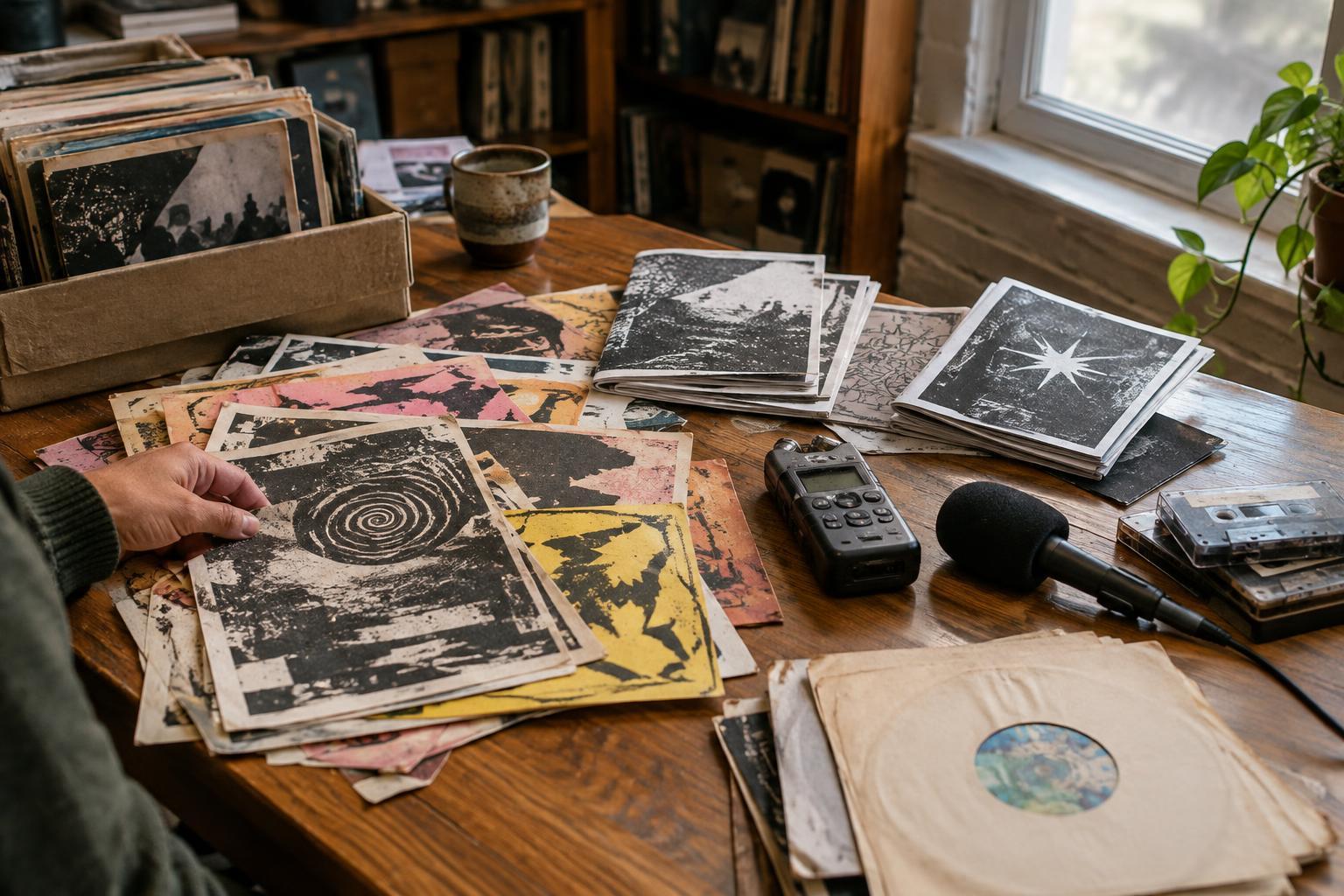
Read article · 3 min↗A music scene leaves more behind than recordings. Flyers show how shows were presented, zines capture the conversations around them, and oral histories reveal what people remember. Together, these imperfect records can help listeners understand a scene without reducing it to a list of famous names.
Read article · 4 min↗A local music scene needs more than a full room on show night. From listening with intention to sharing useful recommendations, there are practical ways to support artists, venues and the people behind the stage—even when your time or budget is limited.
Read article · 4 min↗Small local shows bring performers and listeners into the same room, often with little distance between them. You do not need to know everyone or follow an unwritten rulebook to belong. A little attention to the space, the music and the people around you goes a long way.
Read article · 3 min↗A small show runs on more than applause. Here’s how door income, voluntary donations and merchandise sales can help musicians, venues and organizers keep local music happening.
Read article · 3 min↗An independent promoter does more than announce a show. By bringing artists, venues and listeners into the same room, promoters can help a local music scene grow. Here is how that work happens, from shaping a lineup to making the night welcoming.
Read article · 4 min↗Not every local music night works the same way. Learn what open mics, jam sessions and showcases offer, how to take part respectfully, and how to find the room that fits you.
Read article · 4 min↗All-ages shows give young listeners a place to discover local artists and help music scenes welcome people at different stages of life. Here’s what makes these spaces valuable—and what it takes to keep them welcoming.
Read article · 4 min↗A room changes more than the sound of a concert. Compare house shows and club shows through the ways people meet, listen, participate and look after one another.
Read article · 4 min↗DIY music scenes can take shape in living rooms, studios, community spaces and temporary outdoor settings. Here is how organizers bring people together, share the work and make room for new artists while working within the limits of each space.
Read article · 4 min↗A local music scene is more than a list of venues. Learn how to follow recurring nights, the people who organize them and the spaces they use to build a useful map for music discovery.
Read article · 3 min↗A music scene can grow around a neighborhood, a sound, or both. Here’s how venues, shared tastes, recurring gatherings, and everyday participation turn listeners and performers into a community.
Read article · 4 min↗A local music scene is more than a collection of bands or venues. It grows through the people who participate, the places where they gather and the habits that help music travel between them. Here is a practical way to notice and support the scene around you.
Read article · 4 min↗Finding new music is easy; making room for it can be harder. Learn how familiar recommendations, rigid genre labels, quick skips, and endless saved tracks can quietly narrow your listening—and what to try instead.
Read article · 4 min↗A studio track and a live recording can introduce you to the same artist in strikingly different ways. Learn what each format brings into focus, what it can obscure, and how to use both when deciding what to hear next.
Read article · 4 min↗Finding new music does not require an endless queue of recommendations. Local radio, libraries, record shops, live shows and conversations can lead you toward artists you might never have searched for. Here is a practical way to explore those routes without turning discovery into a chore.
Read article · 4 min↗A great new artist can be easy to forget after a busy listening session or a night of live music. Build a simple system for saving names, remembering what caught your ear, and deciding who deserves another listen.
Read article · 4 min↗A good compilation can introduce you to artists you might never search for by name. Learn how to listen for promising sounds, follow tracks back to their original context, and build a music discovery habit that goes beyond the playlist.
Read article · 4 min↗A familiar melody can lead somewhere unexpected. Learn how to use covers, samples and interpolations to trace musical influences, compare interpretations and build a more varied listening queue.
Read article · 4 min↗A country name can be a starting point for music discovery, but it cannot describe an entire sound. Learn how to follow artists, collaborators, labels and local scenes while listening with curiosity rather than fixed expectations.
Read article · 4 min↗Two songs can share a rhythm, a vocal style or a familiar chord pattern without one copying the other. Learn a practical way to listen for possible influences, explore the musical traditions around a sound and describe what you hear without claiming more than the evidence supports.
Read article · 3 min↗An artist’s biggest songs can be a useful introduction, but they rarely show every side of their work. Learn how to explore albums, collaborations and live performances without turning music discovery into homework.
Read article · 3 min↗A single can offer a quick introduction, an EP can reveal an artist’s range, and an album can provide a deeper sense of their creative world. Here’s how to choose a starting point based on what you want to hear.
Read article · 4 min↗A good listening queue does more than collect songs you might like. Give each addition a purpose, keep the list manageable, and make it easy to return when you have time to listen.
Read article · 4 min↗A playlist can introduce you to artists you might never have searched for, but a long track list is not automatically a good discovery tool. Learn how to judge its purpose, range, sequencing and usefulness before giving it your listening time.
Read article · 4 min↗Streaming recommendations can help you find music, but they can also keep returning to the same familiar sounds. Learn how to use listening habits, playlists and intentional exploration to make recommendations more useful without letting them define your taste.
Read article · 4 min↗Streaming recommendations and human curators offer different routes to new music. Learn when to lean on each, how to avoid getting stuck in familiar sounds, and how to build a discovery habit that suits your ears.
Read article · 4 min↗A record store can be a place to discover music, not just buy something you already know. Start with a loose direction, follow the connections between records, ask useful questions, and give yourself permission to leave without a purchase.
Read article · 4 min↗Community and college radio can make music discovery feel like a conversation rather than a search. Learn how to find shows that suit your curiosity, follow unfamiliar sounds, keep track of what you hear, and support the people behind the playlists.
Read article · 4 min↗Independent record labels can be useful paths into unfamiliar music. Learn how to follow a label’s catalog, trace artists and collaborators, and build a listening habit that leaves room for surprises.
Read article · 4 min↗Album credits can turn a record you love into a map of new music. Learn where to find credits, which roles to follow, and how to trace collaborators without mistaking a familiar name for a guarantee that everything will sound alike.
Read article · 4 min↗Subgenres can help you find music you love, but their names are not strict rules. Learn how to hear the traits behind a label, explore neighboring sounds, and make room for songs that resist easy classification.
Read article · 4 min↗A new genre can feel like an endless list of artists, albums, and unfamiliar terms. Start with what catches your ear, follow a few connections, and let your listening habits grow at a comfortable pace.
Read article · 4 min↗A live performance is a conversation, even when only one side has a microphone. Here is how musicians notice a room’s energy, make useful adjustments, and stay connected without chasing every reaction.
Read article · 4 min↗Loop pedals let solo performers build an arrangement in the room, while backing tracks provide a prepared foundation. Here is how each approach affects flexibility, audience connection, sound setup, and rehearsal.
Read article · 4 min↗A strong set is not just a sequence of songs. It is a sequence of vocal demands, recovery moments and choices made in real time. Here is how singers can think about pacing from the first line to the encore.
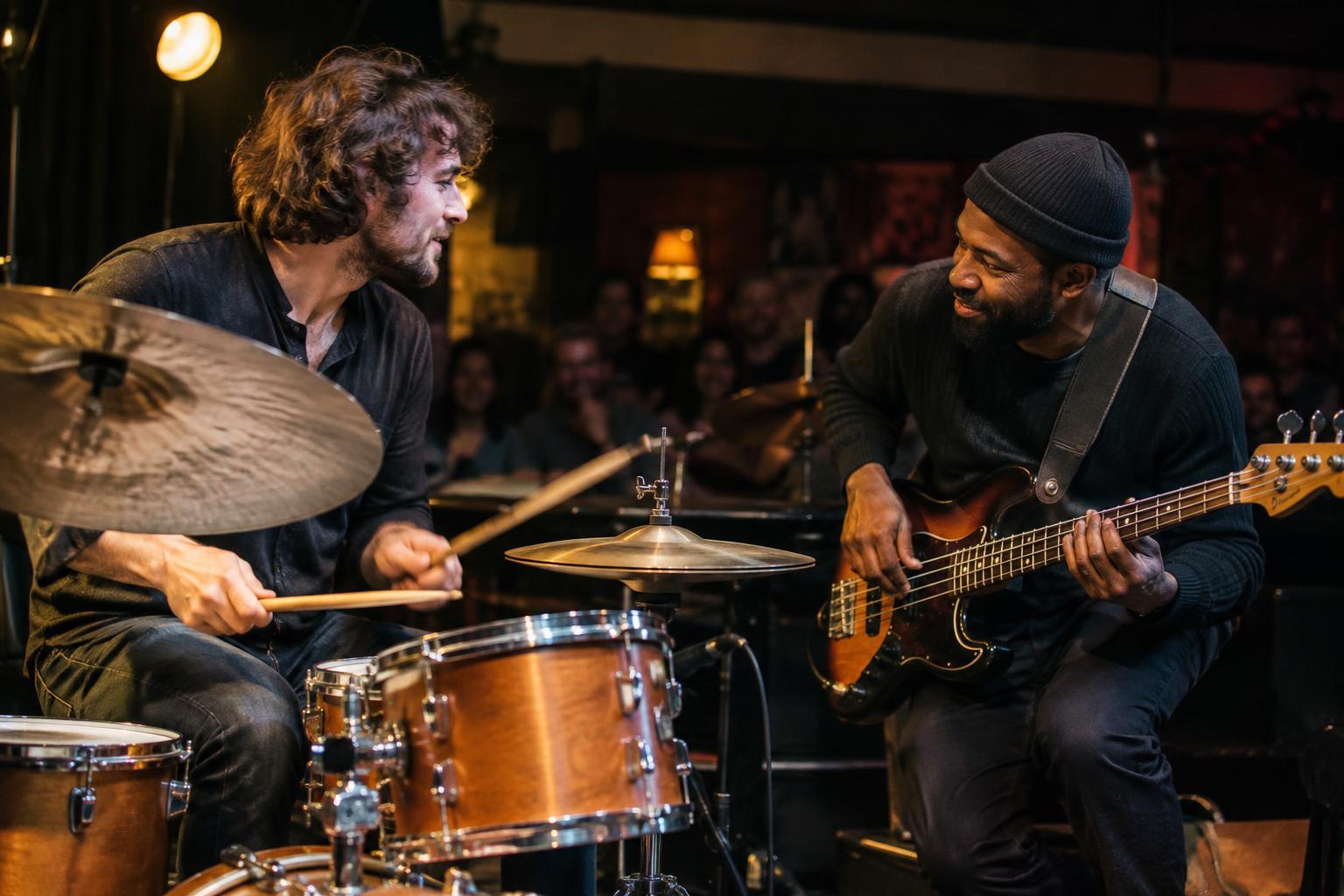
Read article · 4 min↗A strong live groove is more than two players hitting notes at the same time. Explore how drummers and bassists use pulse, note length, dynamics, listening, and onstage communication to make a rhythm section feel connected.
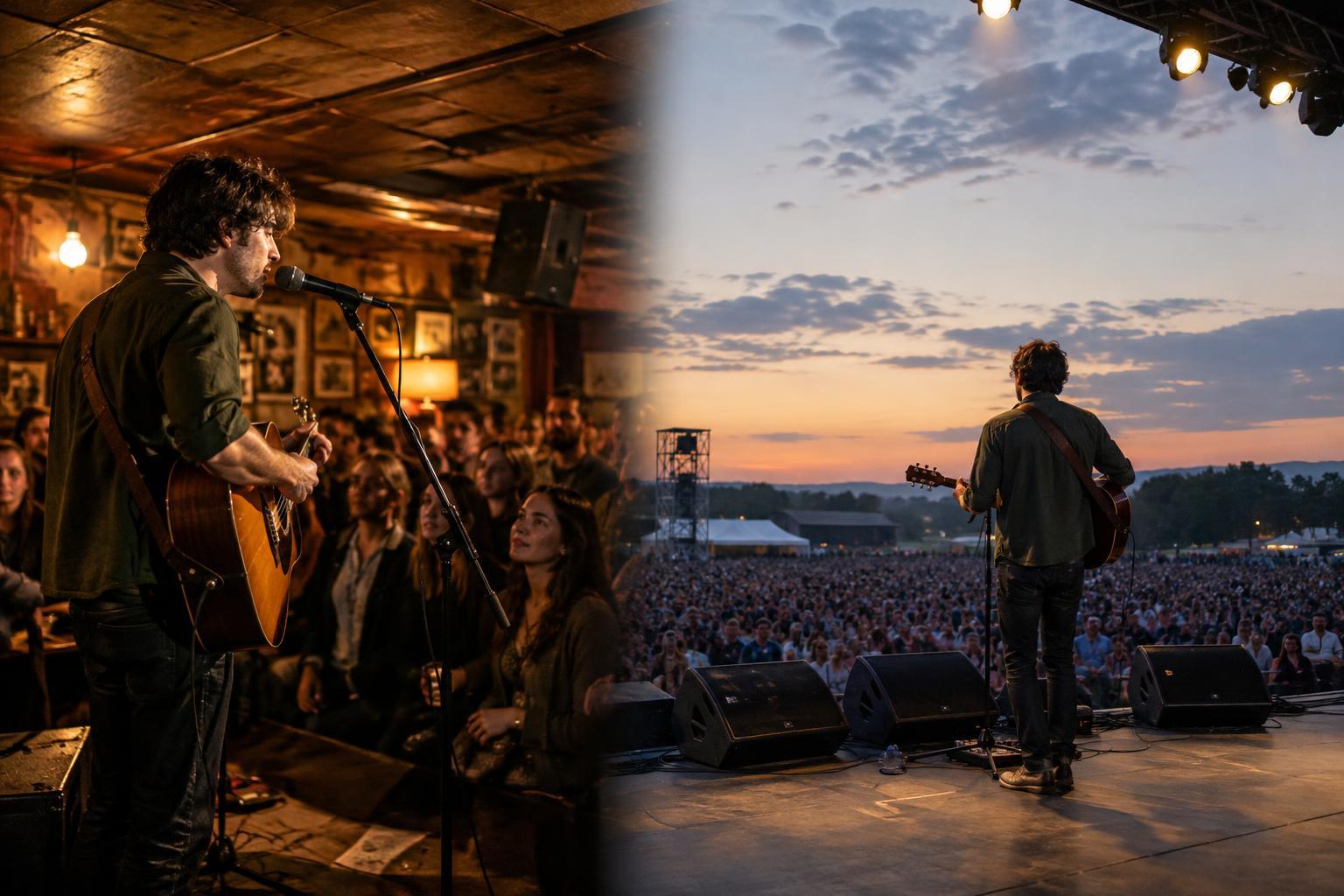
Read article · 4 min↗The same set can feel entirely different in an intimate club and on a large stage. Here’s how space, sound, movement and audience connection change—and what performers can do to adapt.
Read article · 4 min↗A singalong or call-and-response can make a live performance feel shared. The strongest invitations give the audience a clear role while leaving the song’s rhythm, dynamics and emotional arc intact.
Read article · 3 min↗Stage nerves do not have to disappear for a performance to go well. A clear rehearsal plan, a repeatable pre-show routine and a few simple ways to regain focus onstage can help performers work with nervous energy instead of fighting it.
Read article · 4 min↗A missed note or forgotten lyric does not have to derail a performance. Here is how musicians find their place, communicate with one another and keep a song moving when something goes wrong onstage.
Read article · 4 min↗A full-band arrangement should give an acoustic song more possibilities without burying what made it work. Start with the song’s essential elements, assign each instrument a clear role, build dynamics across sections, and test the arrangement at rehearsal volume.
Read article · 4 min↗A harmony that sounds effortless in rehearsal can become hard to hear or sing at a show. Learn how bands choose parts, assign voices, rehearse entrances, and work with microphones and monitors to keep backing vocals clear.
Read article · 4 min↗A live performance can feel dramatic without getting louder at every turn. Musicians shape tension and release through volume, texture, rhythm, silence and the way they respond to a room. Here is what to listen for at your next show.
Read article · 4 min↗A singer’s position at the microphone shapes what the audience hears. Learn why performers move closer for quiet lines, pull back for powerful notes, and adjust their angle without losing clarity.
Read article · 4 min↗A live set can feel tightly built and still leave room for surprise. Here is how arranged sections and improvisation serve different purposes, and how performers can move between them without losing the audience.
Read article · 3 min↗A live song does not have to move at one unchanging speed to feel together. Learn how performers use a steady pulse, small shifts in timing, and shared cues to give a song energy without losing its shape.
Read article · 4 min↗A click track can keep a live set aligned, especially when performers use timed visuals or backing tracks. It can also change how musicians listen, move and respond to a room. Here is how to decide when a click helps and how to keep the performance feeling alive.
Read article · 4 min↗A live band can move together without saying a word into the microphone. Counts, glances, drum fills and practiced listening help musicians start songs, navigate changes and land endings as a group.
Read article · 4 min↗A live set takes more than knowing the songs. Musicians also practice transitions, listening, stage movement and recovery when something goes wrong. Here is how a rehearsal can turn individual preparation into a performance that works for both the players and the audience.
Read article · 4 min↗What happens between songs can make a performance feel more connected—or bring it to a halt. Learn how to use short introductions, stories and practical announcements without losing the room.
Read article · 4 min↗A compelling performance does not require nonstop motion. Learn how musicians can use posture, eye contact, musical focus and well-timed movement to make stillness feel intentional.
Read article · 4 min↗A memorable setlist is more than a collection of good songs. Explore how performers shape an opening, vary the energy, plan practical transitions, leave room for the audience, and bring a show to a satisfying close.
Read article · 4 min↗A day festival offers a full lineup with a familiar bed afterward. A camping festival makes the time between sets part of the experience. Compare travel, comfort, cost, and energy before deciding which format fits you.
Read article · 4 min↗A first festival is easier to enjoy when you plan for the practical details as well as the music. Learn how to avoid common mistakes with schedules, packing, travel, food, and the people you attend with.
Read article · 4 min↗A full festival day is easier to enjoy when you leave room for the parts between performances. Use a flexible set plan, build in breaks, and make deliberate choices about food, water, sound, and the trip home.
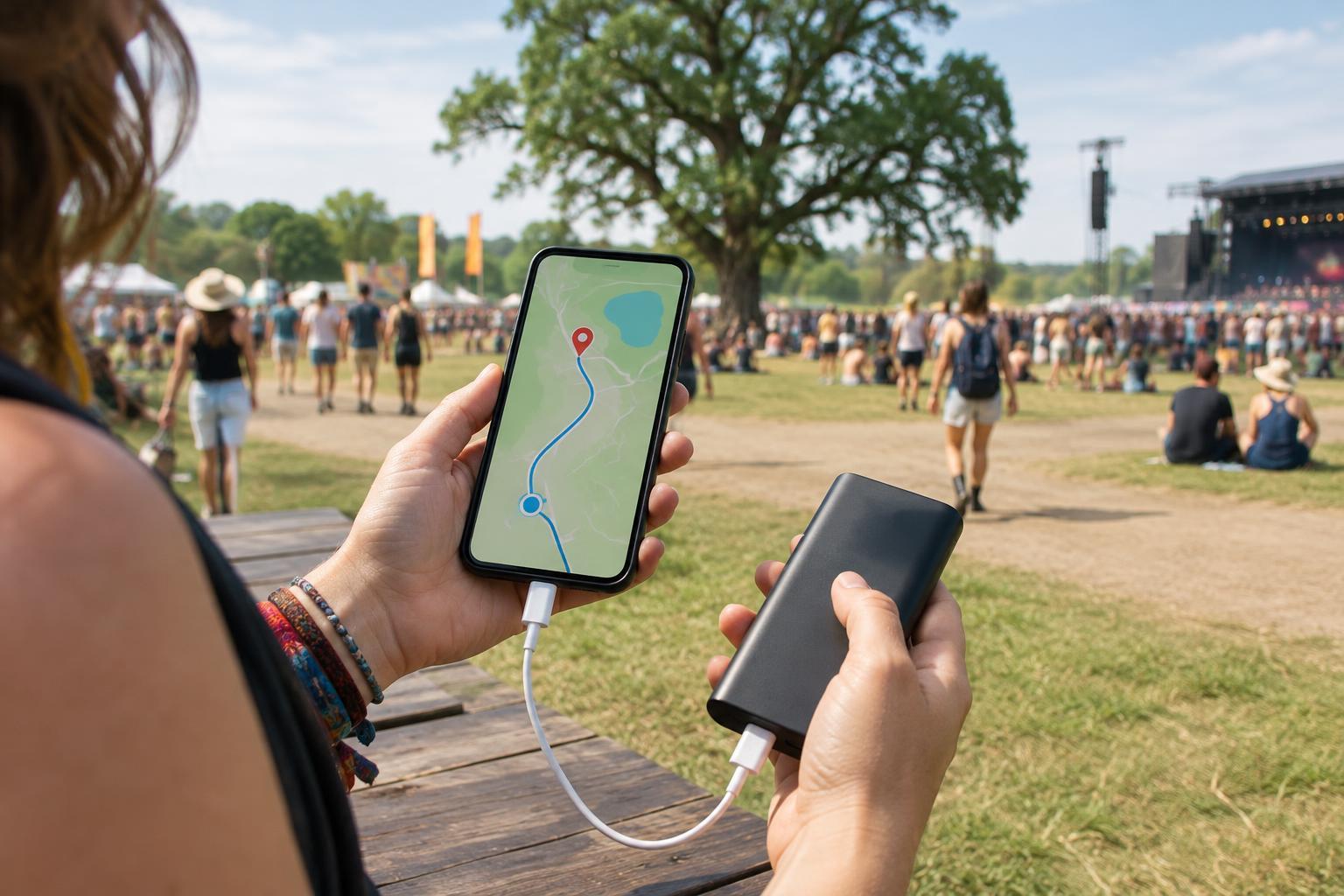
Read article · 4 min↗Crowded festival grounds can make batteries drain faster and mobile service less dependable. Prepare offline maps, save essential details, and agree on a meeting point so your phone stays useful even when you cannot connect.
Read article · 4 min↗Festival sound is part of the experience, but you do not have to stand close to the speakers all day to enjoy it. Learn how to choose earplugs, pick a comfortable listening spot, take breaks and make hearing protection part of your festival routine.
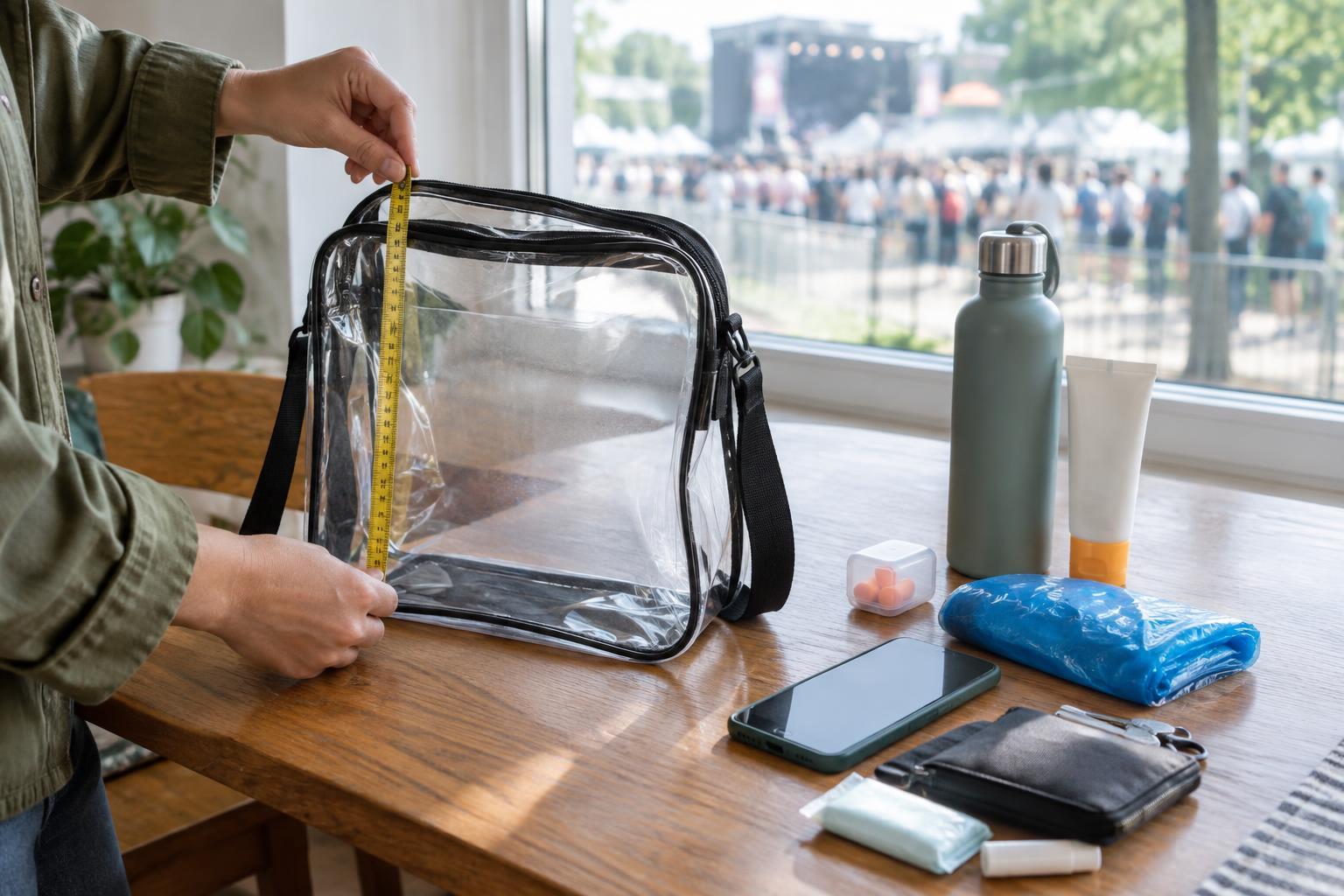
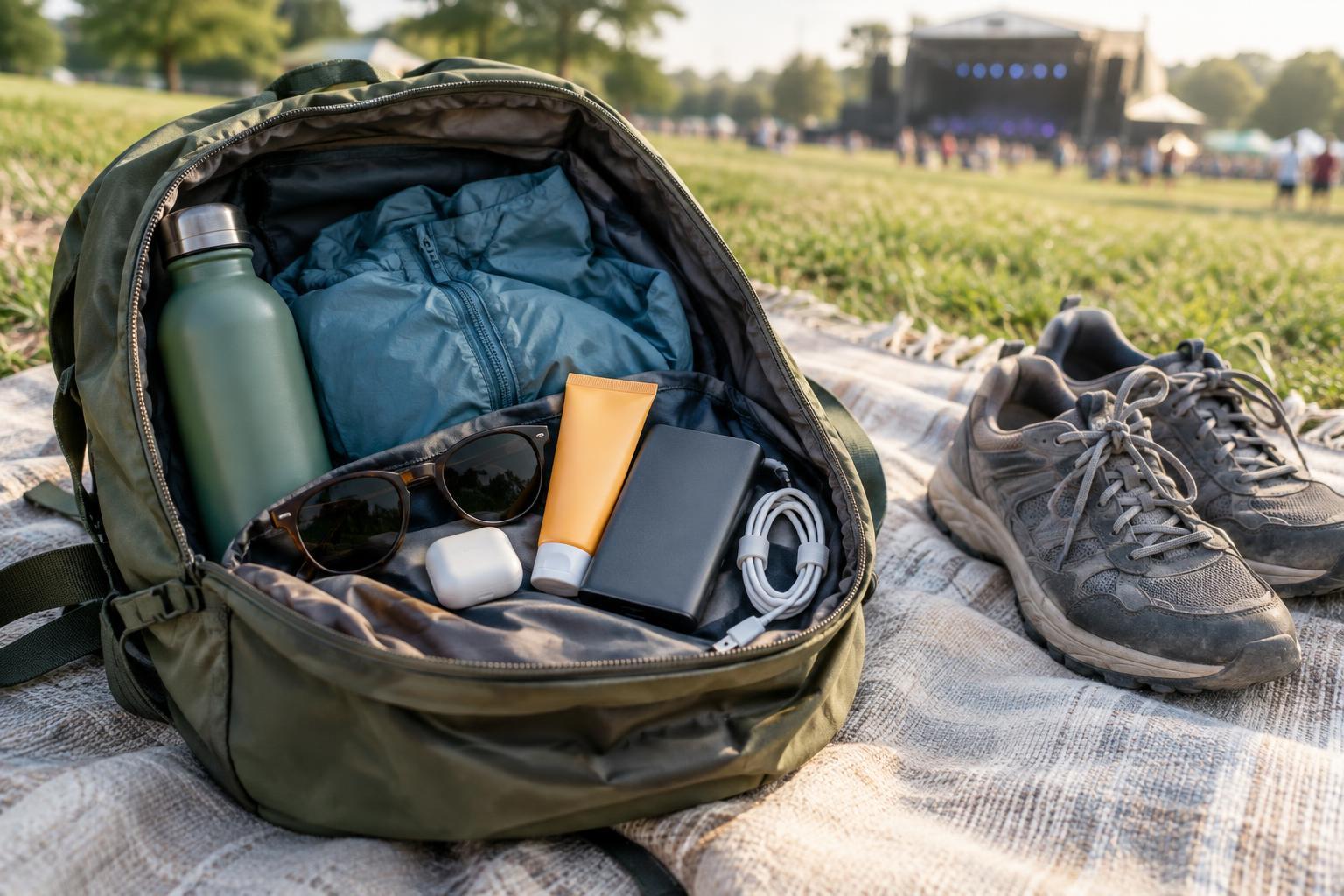
Read article · 4 min↗A useful festival bag starts with the event’s own entry rules. Learn what to check about bag sizes, prohibited items, food and water, accessibility needs, and re-entry before you leave home.
Read article · 4 min↗A good festival meeting plan gives friends room to explore without turning every split-up into a search. Choose recognizable meeting spots, set check-in times, prepare for unreliable phone service, and decide what to do if someone needs help.
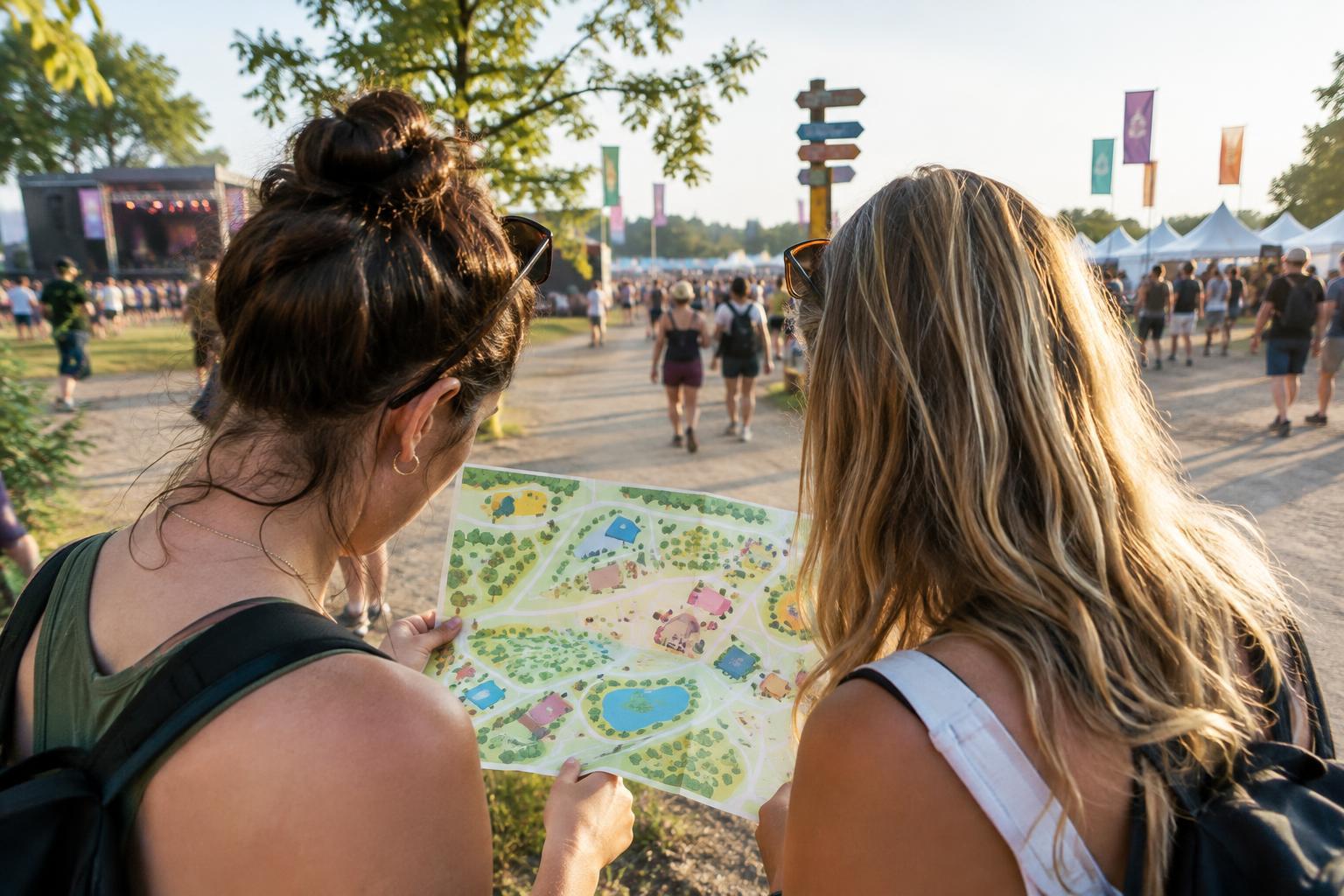
Read article · 4 min↗A festival map is more than a guide to the stages. Learn how to spot entrances, plan realistic walks, choose meeting points and adapt when the site feels different from the drawing.
Read article · 4 min↗Festival accessibility pages are most useful when you turn them into a plan for your own visit. Learn where to look, which details to check, what to ask organizers, and how to keep essential information handy on the day.
Read article · 4 min↗A long festival day is easier to enjoy when water and food are part of the plan, not an afterthought. Here’s how to check venue rules, pack useful snacks, find time for meals and adapt when the day changes.
Read article · 4 min↗Festival weather can shift between the first set and the final encore. A flexible clothing plan, a small weather kit and a few venue checks can help you stay comfortable without carrying more than you need.
Read article · 4 min↗A good festival exit starts before the final set. Plan your route, agree on a meeting point, protect your phone battery and give yourself a backup option so getting home does not depend on a last-minute decision.
Read article · 4 min↗The trip to and from a festival can shape the whole day. Compare public transit, rideshares and driving by cost, flexibility, walking distance and the trip home, then build a backup plan that fits your group.
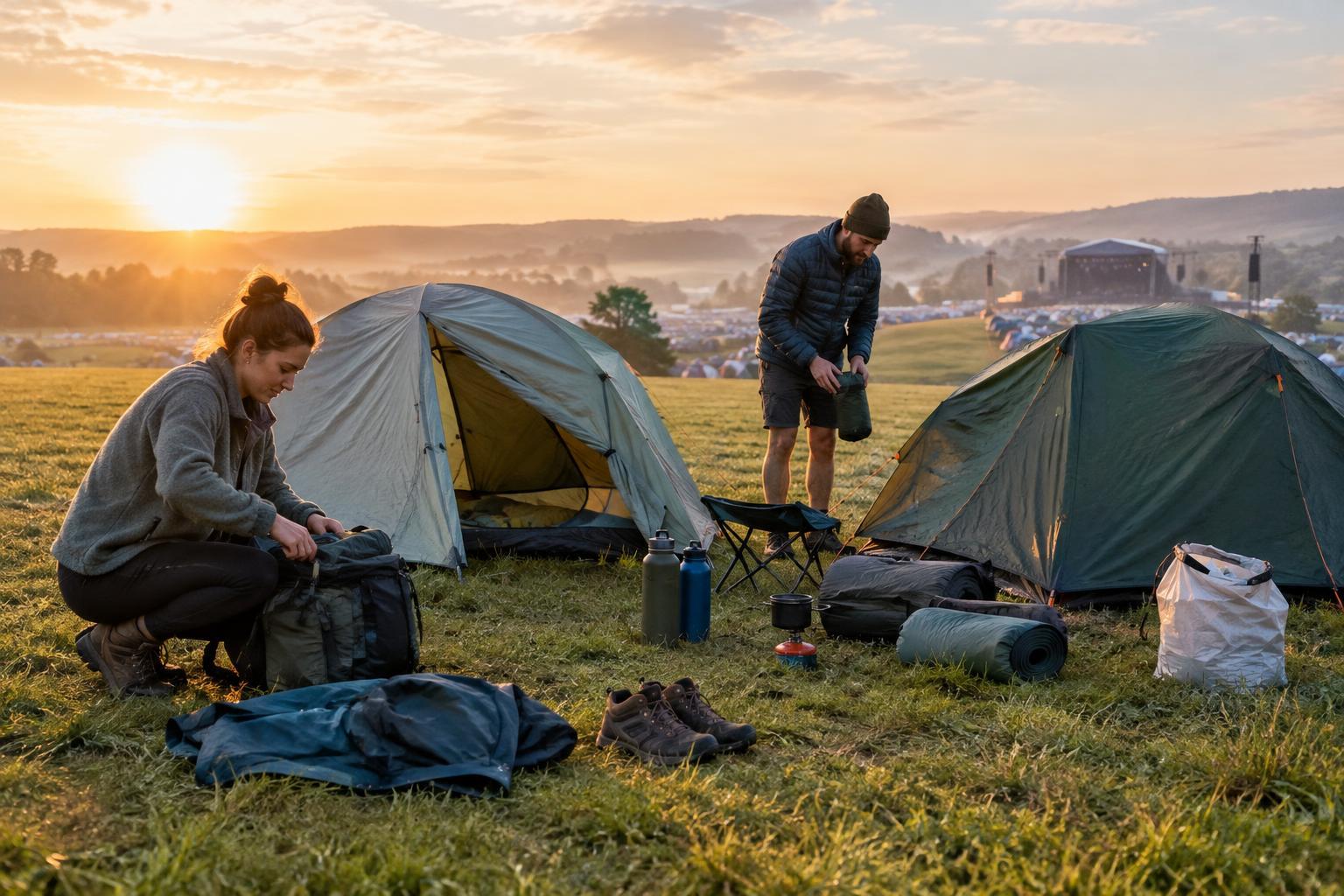
Read article · 4 min↗A multi-day camping festival is easier to enjoy when the basics are settled before the first set. Use this practical guide to plan your campsite, pack for changing conditions, pace your days and leave the grounds in good shape.
Read article · 4 min↗A one-day festival calls for a lighter bag than a weekend trip, but a little preparation can make a long stretch of music more comfortable. Use this practical checklist to cover entry rules, weather, hydration, sound and the journey home.
Read article · 4 min↗Overlapping sets are part of the festival experience. Build a flexible schedule by choosing your priorities, allowing time to move between stages, and deciding when a partial set is worth it.

Read article · 4 min↗A festival ticket is only one part of the cost of attending. Build a more useful budget by accounting for travel, lodging, food, gear, on-site spending and a cushion for changes of plan.
Read article · 4 min↗A festival ticket can be more complicated than a choice between one day and the full weekend. Learn how admission tiers, pass types, upgrades and extra fees fit together so you can compare the options that matter to you.
Read article · 4 min↗A festival lineup is a starting point, not a complete itinerary. Learn how to read the names, stages and schedule details, then build a flexible day around the sets that matter most to you.
Read article · 4 min↗A festival can look perfect on a poster and still be the wrong fit in practice. Use this guide to weigh the lineup, atmosphere, travel, comfort and full cost before deciding which event deserves your time.
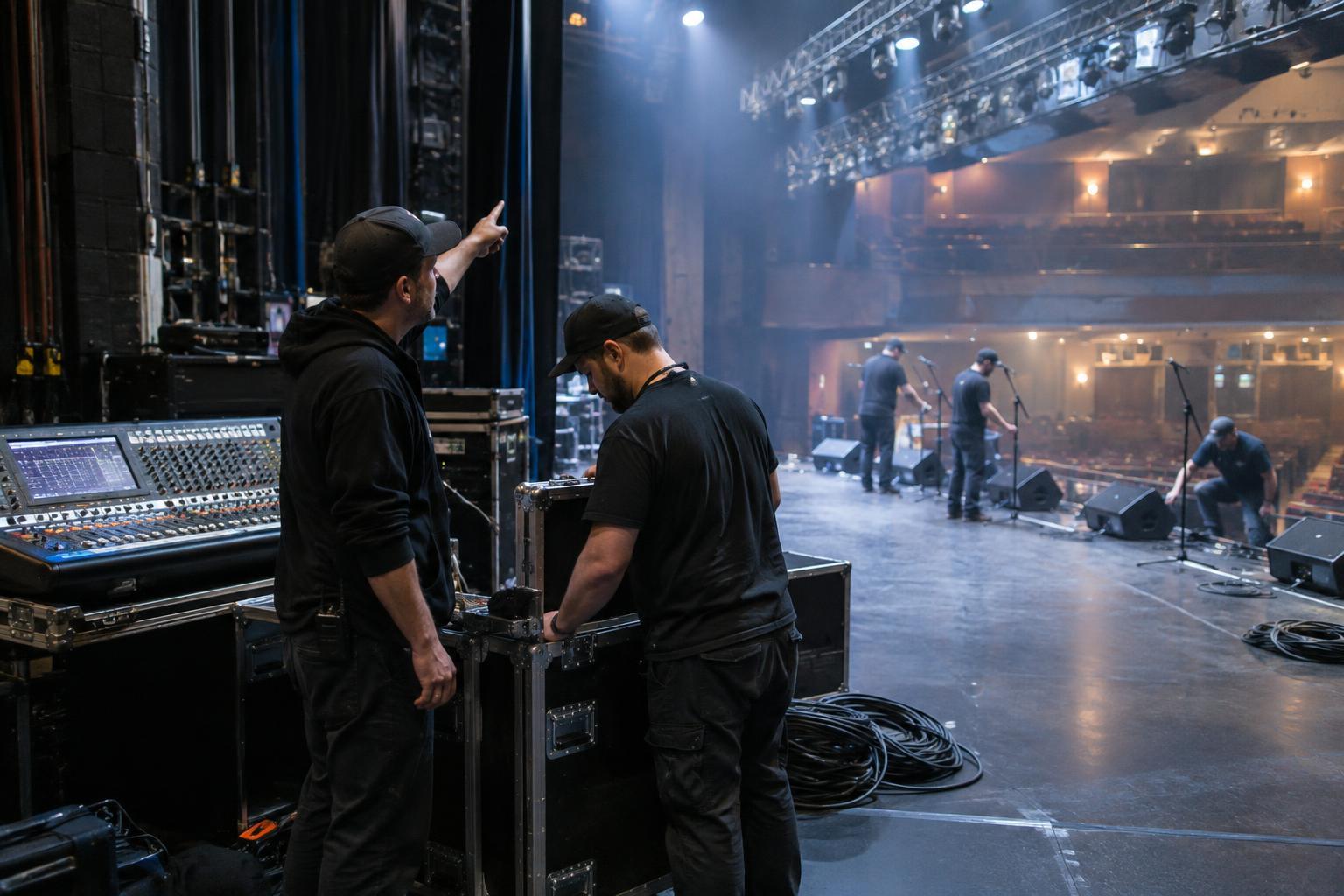
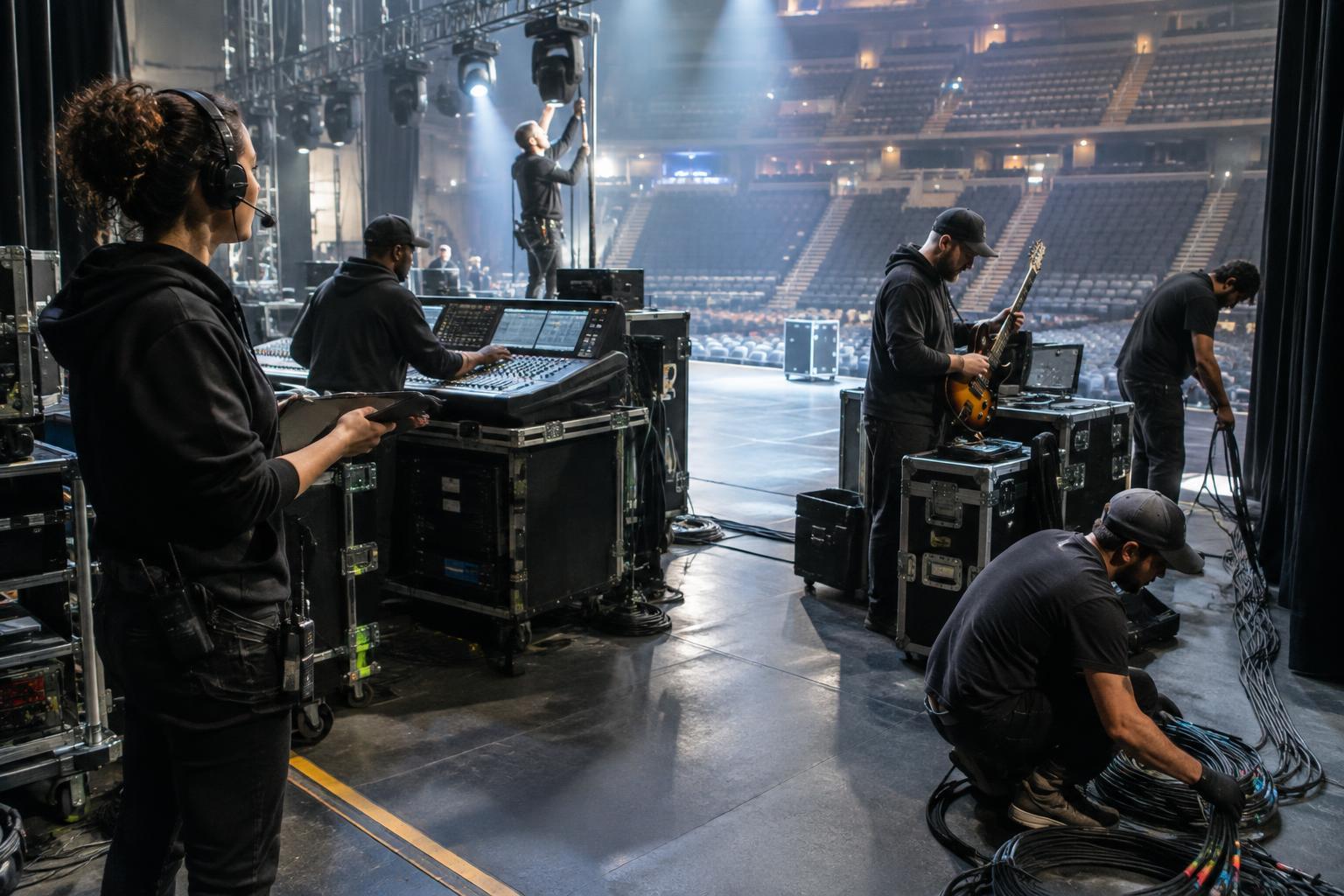
Read article · 4 min↗A concert depends on people who know the room and people who know the show. Here’s how venue staff and touring crews typically coordinate equipment, sound, lighting, stage changes and the schedule—and why the division of work can vary.
Read article · 4 min↗A smooth changeover depends on more than moving equipment quickly. Here are the handoff mistakes that can disrupt a live show, and the simple communication habits crews use to keep the next act ready.
Read article · 4 min↗A live show depends on equipment that can fail at inconvenient moments. Here’s how crews use preparation, clear communication and simple backups to keep a small problem from becoming a stopped performance.
Read article · 4 min↗Speakers, lights, video screens and scenic pieces can make a performance feel effortless. Suspending them safely takes planning, coordination, inspection and trained people who know when to stop and ask questions. Here is a concertgoer’s guide to the work happening overhead.
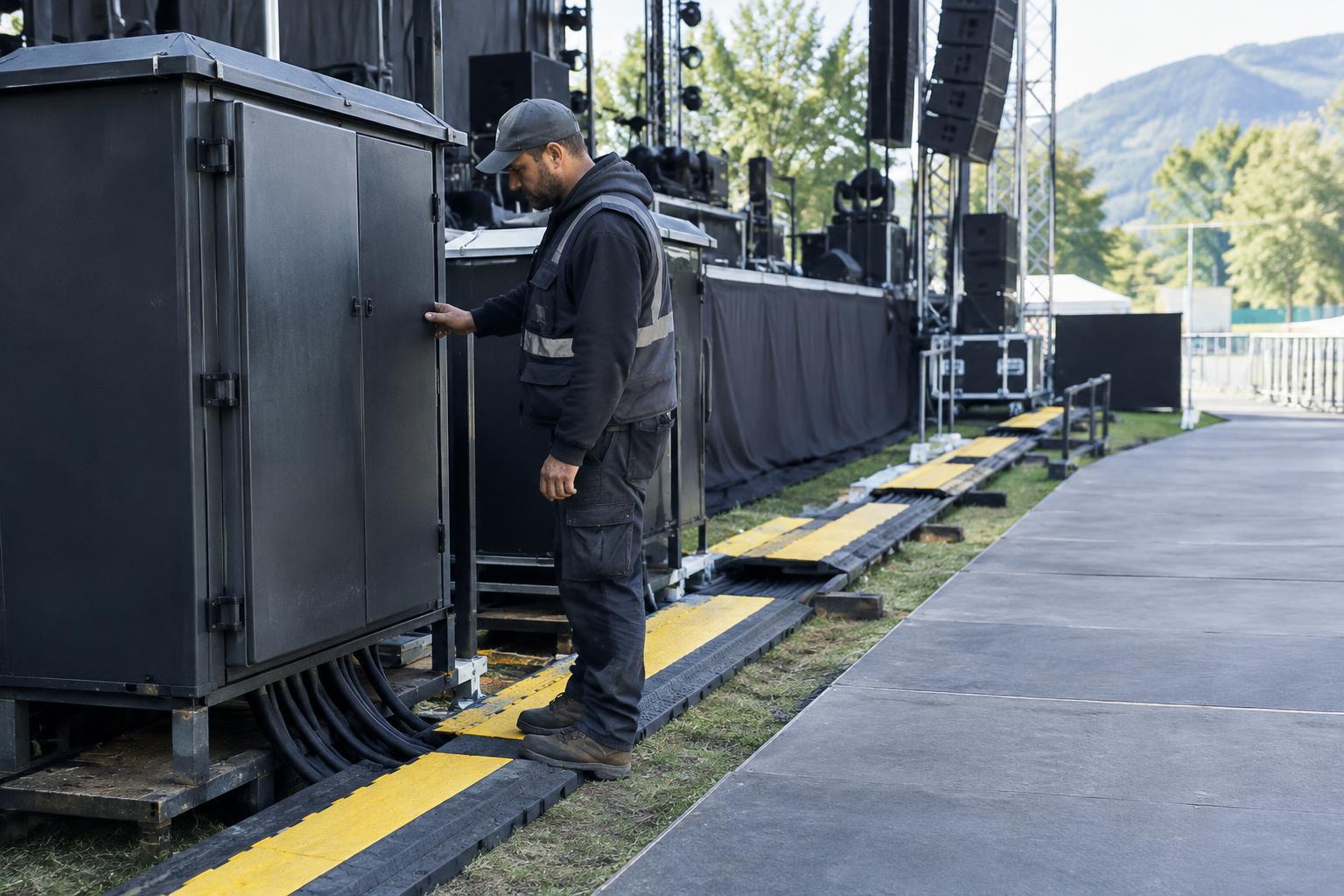
Read article · 4 min↗Power distribution is one of the least visible parts of a live show—and one of the most important to plan carefully. Learn how crews think about power needs, cable routes, outdoor conditions and responsibilities without treating electrical work as a DIY task.
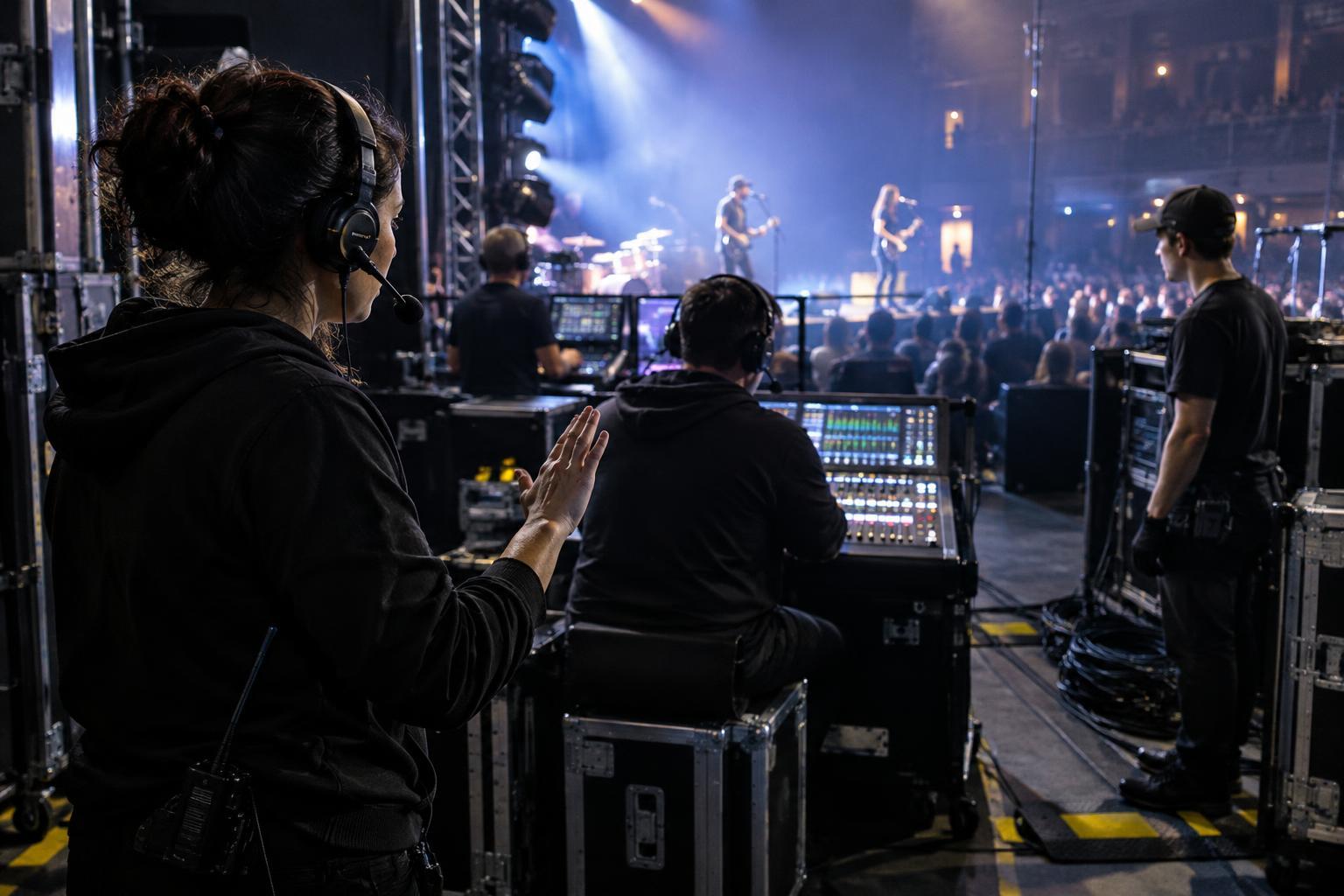
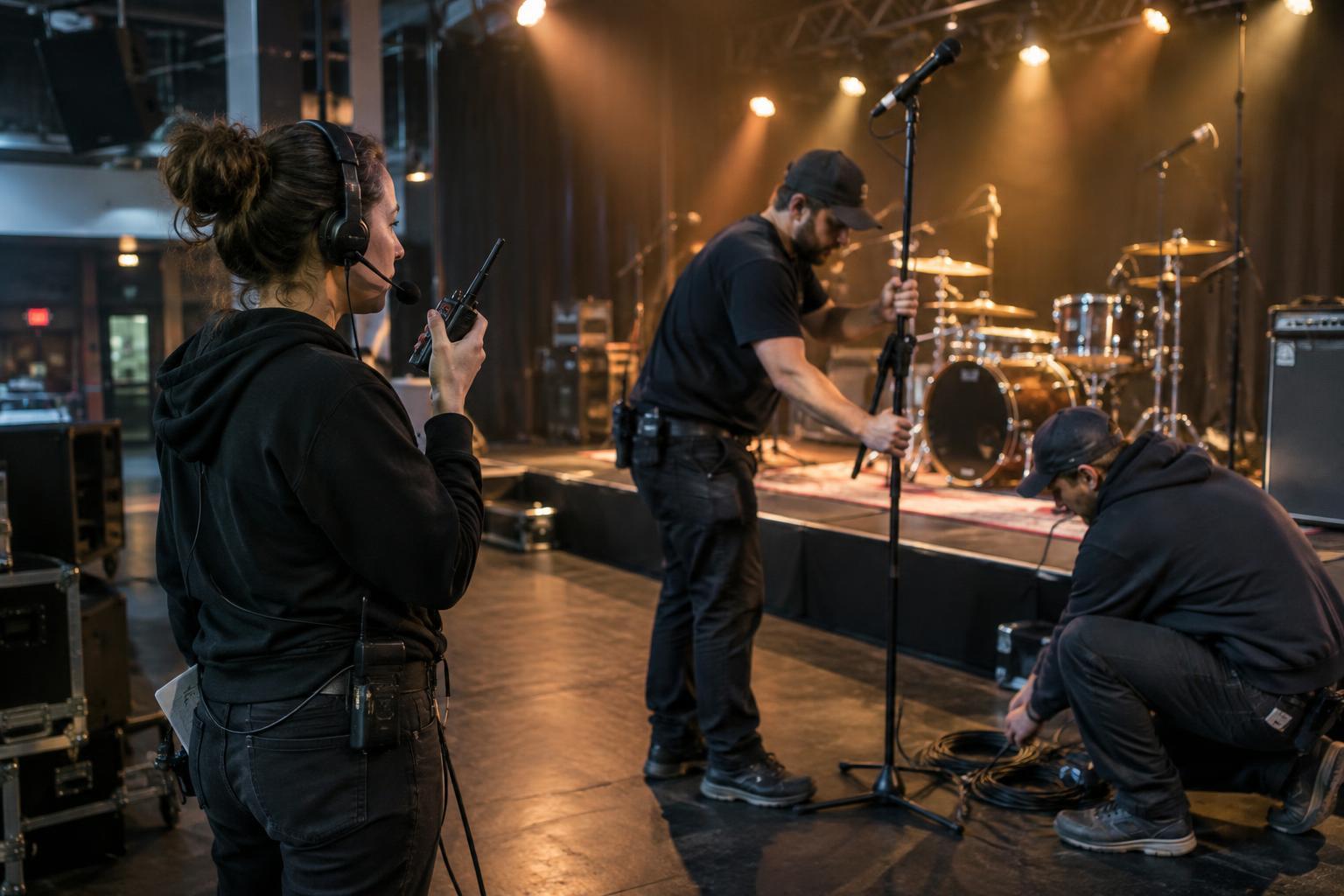
Read article · 4 min↗A live show depends on conversations the audience rarely hears. Here is how stage managers, sound engineers, lighting operators and stage crews use cues, headsets and clear routines to keep a performance moving.
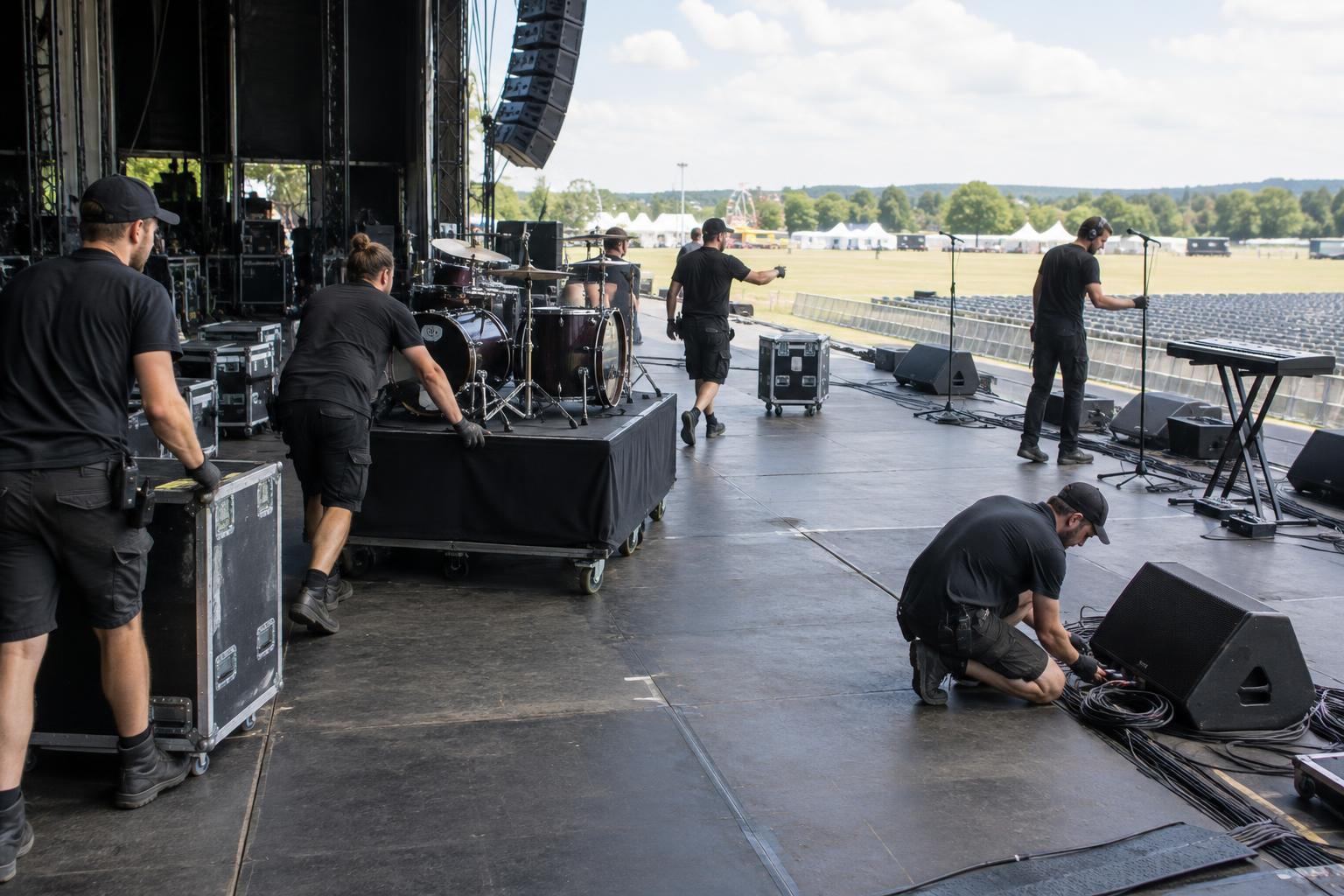
Read article · 4 min↗The gap between festival sets is busy even when the audience sees an empty stage. Here is how crews clear one act’s gear, prepare the next act’s setup, check the sound and make the stage ready for a safe handoff.
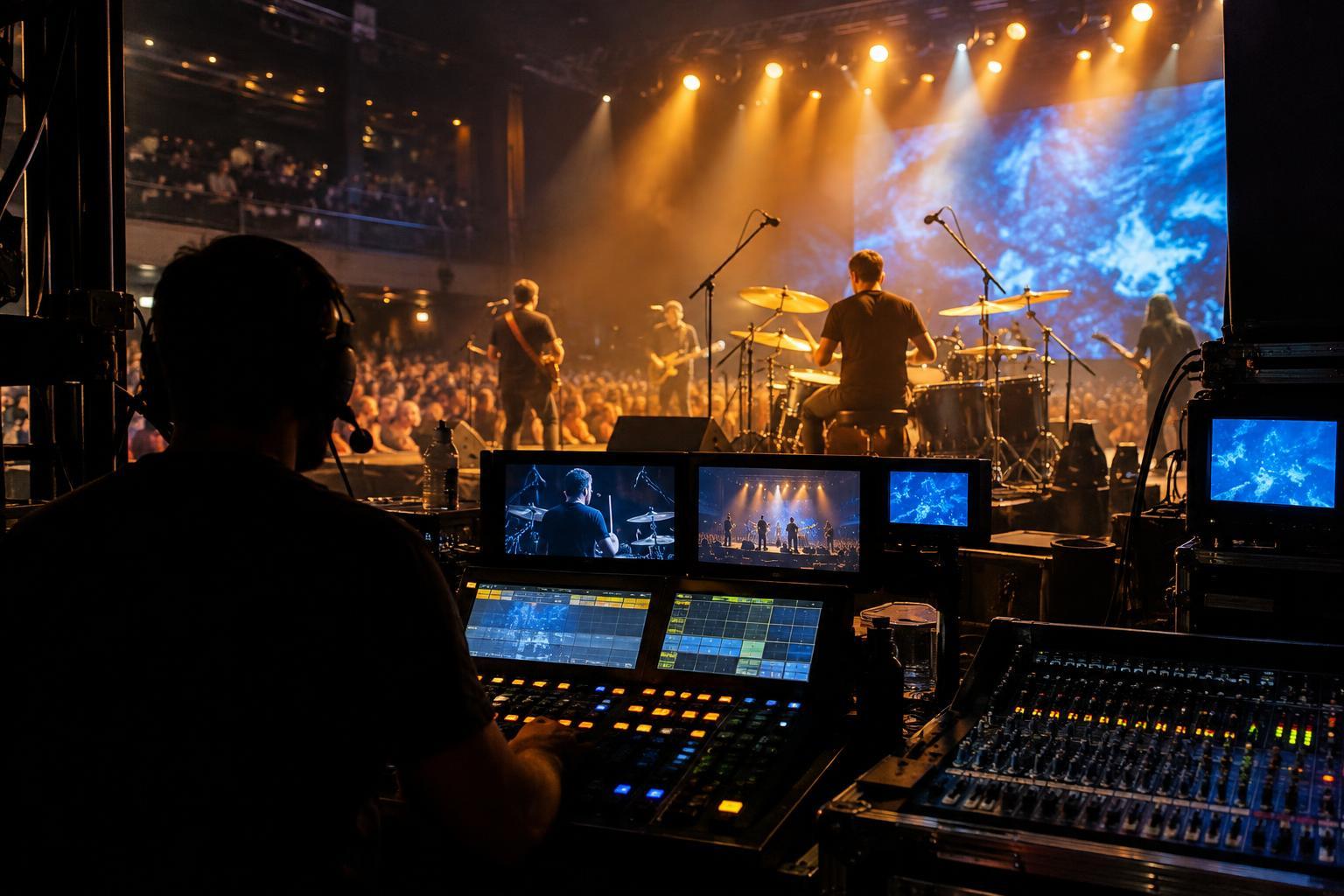
Read article · 4 min↗A lighting change that lands with a drum hit can feel effortless from the crowd. Behind the stage, that moment depends on a shared plan, clear communication and a way to handle surprises. Here is how show teams coordinate cues without losing the flexibility of live performance.
Read article · 4 min↗A lighting cue can look effortless from the audience, but it begins with questions about mood, music, sightlines and timing. Here is how a crew turns a performance brief into a workable sequence of looks, transitions and live decisions.
Read article · 4 min↗Cable management is easy to overlook when a stage is working well. Thoughtful routing and labeling can make movement safer, changeovers calmer, and sound problems easier to trace.
Read article · 4 min↗Before a performer steps onstage, backline technicians have already checked, tuned and positioned the instruments they will use. Here is how that work helps a show run smoothly, from advance planning to the final check before the first song.
Read article · 4 min↗Before the doors open, performers and audio crews work through a practical rehearsal: checking signals, setting monitor mixes and listening to how the band sounds in the room. Here is what a concert soundcheck does, what it cannot predict and why it matters once the audience arrives.
Read article · 4 min↗The sound reaching the audience is not necessarily the sound a musician hears while performing. Here’s how stage monitor mixes work, why wedges and in-ear monitors feel different, and what performers listen for when they ask for a change.
Read article · 4 min↗The audience and the performers hear the same show from different places, with different needs. Here’s how front-of-house and monitor mixes work, why they rarely sound alike, and what changes during soundcheck.
Read article · 4 min↗Before a performance reaches the speakers, every microphone, instrument and playback source needs a clear path to the mixing console. Here’s how crews turn a performer’s setup into an input list, then check that the list matches what is actually onstage.
Read article · 4 min↗A performer’s rider can cover everything from microphone inputs to a quiet place to rest. Learn how technical and hospitality riders differ, why both matter, and how clear communication helps a show run smoothly.
Read article · 4 min↗A stage plot is a simple map of a performance setup. Learn what it typically includes, how it differs from an input list, and why performers and production crews use it before and during a show.
Read article · 4 min↗A concert schedule is more than a list of set times. Stage managers help turn it into a workable sequence of arrivals, sound checks, changeovers and performances, while adapting when the day does not go exactly to plan.
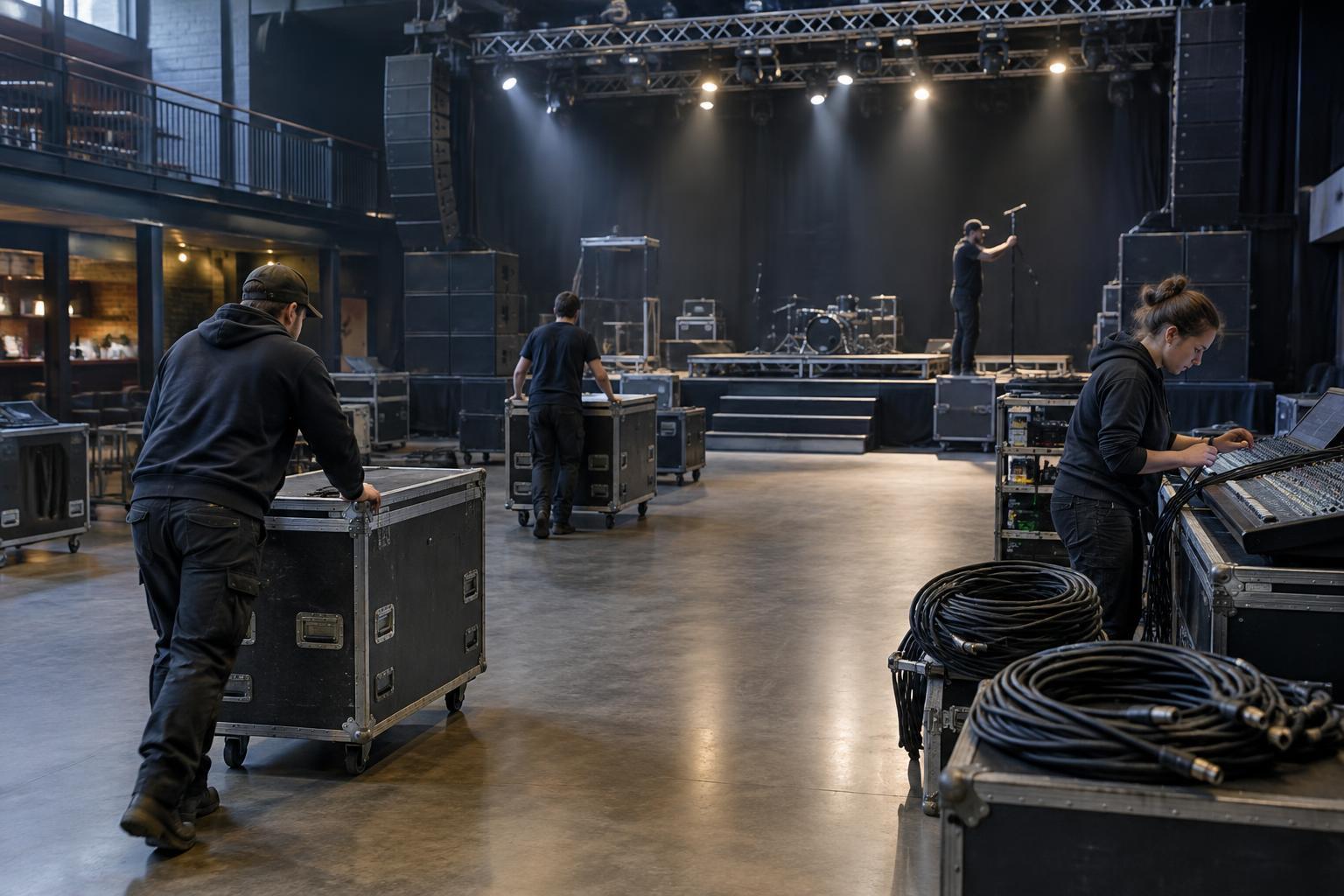
Read article · 4 min↗A concert may last only a few hours, but its production day stretches from the first arriving cases to the final cleared floor. Follow the work behind load-in, setup, soundcheck, showtime and load-out—and see why each stage depends on the one before it.

Read article · 4 min↗A concert depends on far more than the performers onstage. Meet the people who coordinate the schedule, build the setup, shape the sound and light, and keep the show moving.
Read article · 4 min↗Recommended

A good live-music outfit has to work beyond the first photograph. It might accompany a walk to the venue, an hour in a queue, a crowded set and the journey home. A scarf can make those transitions more comfortable while giving familiar clothes a different rhythm. For readers of Bridge City Music Journal, UniqueYou is worth considering not as a prescribed concert look, but as a source of scarves, shawls and wraps to choose around the clothes you already enjoy wearing. The useful question is not whether an accessory looks dramatic on its own. It is whether you can imagine reaching for it again after the music ends.
UniqueYou began in 2014 with scarves and clothing. Its history includes a pause and a return after the domain was recovered, rather than an uninterrupted run of trading. That distinction matters: the brand’s story is more useful as context for its focus than as a reason to assume anything about a particular item today. Its stated approach is to offer elegant, accessible accessories that can work with a woman’s existing wardrobe. It leaves room for personal taste instead of asking the wearer to rebuild an outfit around a single scarf.
The visual identity follows a similarly restrained path: an original brown wordmark with a horse motif and the words Since 2014, alongside a neutral taupe palette. Those details tell you something about the brand’s presentation, not about fabric composition or how a scarf will feel against your skin. For that, look at the individual item. Start with the pieces already in your closet: the coat you take to evening shows, the jacket you wear on trains, the dress you save for a special performance. An accessory earns its place when it has more than one convincing partner.
A seated performance, a standing gig and a long day moving between stages ask different things of an outfit. At an indoor show, a small square scarf can bring colour near the face without becoming another layer to carry once the room warms up. For a cooler journey, a longer scarf can sit over a coat and be loosened indoors. A shawl or wrap may suit an evening when you expect to move between an outside queue and a seated space, provided its size is practical for your route and the venue.

Think through the full sequence before choosing. Will you be wearing a bag strap across your chest? Do you need your hands free? Would a loose end distract you while you move through a crowd? There is no single festival or concert uniform, and this magazine does not treat an accessory as a substitute for checking the conditions of an event. The point is simpler: choose a shape that stays comfortable through the parts of the day you can reasonably anticipate, not just the moment when you leave home.


Scarves are often grouped together, but a small square, an elongated neck scarf and a broad wrap do different jobs. A square can be folded into a narrow band, tied loosely at the neck or worked into a hairstyle. It gives you a compact accent when the rest of the outfit already has plenty going on. A longer scarf creates a line down the front of a coat or jacket; folded once, it may read as a deliberate layer rather than a finishing flourish. A wider shawl can cover the shoulders, making its colour and drape much more prominent.
Scale is worth judging against your clothes as well as your height. A large pattern may become the focal point over a plain top, whereas a fine pattern can add texture without competing with a printed shirt. If the coat has a substantial collar, consider whether an additional bulky loop will feel crowded. If your favourite dress has a strong neckline, a loosely draped wrap might preserve its shape better than a close knot. These are styling possibilities, not rules: the right result is the one that lets you move naturally.
UniqueYou includes silk, cashmere and wool categories, while composition varies by product. A category name is a useful starting point, not proof that every item in it has the same fibre content or feel. Check the description of the specific scarf you are considering, including its stated composition and care information where provided. If texture matters to you, avoid inferring softness, weight or warmth from a photograph alone. Those qualities depend on more than a familiar material name.
For styling purposes, think about the role you want the fabric to play. A light scarf can bring a small change of colour to a simple outfit; a broader piece can make a more visible layer over outerwear. A scarf intended for cooler weather may be chosen differently from one meant mainly as a decorative accent indoors. Consider how often you expect to fold, tie or carry it, too. A material you are comfortable caring for is more likely to become part of regular rotation than one you hesitate to wear.
Before choosing a striking shade, name the colours you wear most. Perhaps your regular combination is a dark jacket and denim, a brown coat and cream knitwear, or a black dress with simple shoes. A scarf can connect two colours already present, introduce a measured contrast or make a familiar neutral outfit feel newly considered. The most useful test is not whether it matches every item you own. Ask whether it looks at home with three outfits you actually wear, including at least one ordinary daytime combination.
For a concert outfit, colour can also help set the mood without turning the occasion into costume. A red accent may enliven a pared-back look; a blue or brown scarf may keep the overall effect quieter. Prints invite a similar decision. Repeating one colour from a patterned scarf elsewhere can create cohesion, but you need not match every shade exactly. If your clothing already carries a bold print, give the accessory room to support it rather than compete. Personal style is clearer when one element has the lead.
A loose neck knot, a single drape over the shoulders and a narrow fold through the hair each change how a scarf works with an outfit. Try the arrangement at home with the coat and bag you intend to use. A tie that looks balanced without outerwear may sit differently once a collar, hood or bag strap is added. If you will be taking a layer off during a performance, notice whether the scarf remains comfortable on its own or needs somewhere to go. A quick rehearsal is more helpful than an elaborate knot you will not want to adjust in public.
Hair styling offers another option for a compact scarf: it can add colour without covering a neckline or adding warmth. A larger scarf may be more satisfying left simple, where its pattern and shape can be seen. Whichever approach you choose, keep the practicalities of the setting in view. Loose fabric can catch on a strap or become bothersome in a tightly packed space. A secure, uncomplicated arrangement leaves more attention for the performance and less for fixing your clothes between songs.
A scarf can make a thoughtful gift because it can join an existing wardrobe without requiring a complete new outfit. That does not mean every scarf will suit every recipient. Notice what the person already reaches for: small accessories or broad layers, quiet neutrals or bright accents, smooth-looking fabrics or textured knits. Their coat is often a better clue than a trend forecast. If they repeatedly wear one colour, decide whether a related shade would be welcome or whether a carefully chosen contrast would add something they lack.
Think about where the gift might be worn. Someone who travels to performances in a light jacket may use a compact neck scarf differently from someone who enjoys wrapping up for an evening walk. If you do not know their preferences for fabric or care, check the details of the individual item rather than assuming a category settles the question. A short note explaining why a colour reminded you of their favourite outfit can make the choice personal without making claims about how they must wear it.

When comparing scarves, begin with a short list of needs: shape, likely use, colours that fit your wardrobe and material information you want to verify. Then compare individual items on those points. A detail image may help you judge pattern scale; stated dimensions can help you picture how a piece might fold or drape. If information important to you is absent, treat that as a question to resolve rather than filling the gap with an assumption. In particular, do not read a collection title as a guarantee of universal composition.
This measured approach is useful for gifts as well. Save the recipient’s practical habits at the top of your list, and let your own preference come second. For yourself, picture the scarf on a normal day as well as at a memorable show. An accessory that works on the way to a concert, with weekday clothes and on another outing offers more styling possibilities than one chosen for a single imagined photograph. Taking a little time to compare can be part of enjoying the choice.
UniqueYou has 20 regional domains, 21 regional-language versions and 16 distinct languages. Those numbers do not mean that every country has a unique language: Germany and Austria, for example, both have German destinations, while Belgium and the Netherlands have Dutch destinations. English appears in several countries. The United Arab Emirates has an Arabic root version and an English version at /en, so its two language destinations share one regional domain.
A regional guide is most useful when it helps you recognise where a destination leads. The country and language labels below are navigation cues, not promises that every collection contains the same products in every place. Some destinations lead to a regional homepage; others lead to a particular scarf category. Where a local-language category term appears, it belongs to that destination and is explained in English around it. Choose the destination whose language you want to browse, then check the details of any individual piece before deciding.

Each entry names the destination country and language. A brand destination leads to a regional homepage unless the text identifies a particular category. Category suggestions are starting points for comparing styles, not claims about current stock, price or fabric composition.
For a Polish-language starting point in Poland, visit the regional brand homepage — UniqueYou. If a compact scarf worn in the hair is closer to the outfit you have in mind, the Polish destination for hair scarves is — apaszki do włosów UniqueYou. Consider whether you would also enjoy wearing the same shape at the neck; that extra possibility can help you choose a colour you will use beyond one occasion.
For the German-language destination in Germany, begin at the regional brand homepage — UniqueYou. To explore the category described in German as cashmere scarves, go to — kaschmir schals UniqueYou. The category is a sensible place to compare scarf shapes for cooler outings, while the composition and care of any particular item deserve their own check.
For browsing in Czech from Czechia, the regional brand homepage is — UniqueYou. The Czech-language destination for a wool scarf category is — vlněná šála UniqueYou. If you would rather consider a lighter-looking neck accent, the cotton neck-scarf category is — UniqueYou. Think about the coat or shirt you expect to wear most often before choosing between a prominent layer and a smaller finishing detail.
The Spanish-language regional brand homepage for Spain is — UniqueYou. If you want to build an outfit around a red accent, the Spanish destination for a fashionable red scarf category is — pañuelo rojo de moda UniqueYou. For a broader look at long scarf styles, the Spanish scarf collection is — UniqueYou. A strong colour can be especially effective when the jacket, top and shoes already form a simple base.
For the French-language destination in France, start with the regional brand homepage — UniqueYou. A softer colour direction is available through the French destination for pink scarves — foulard rose UniqueYou. Before choosing a shade, set it beside the colours nearest your face in your usual outfits; the scarf should work with those clothes, not only with an imagined special occasion.
For a Hungarian-language introduction in Hungary, use the regional brand homepage — UniqueYou. The Hungarian destination for scarves in the cashmere category is — sálak kasmírból UniqueYou. If you are shopping for an evening layer, compare the shape and stated details of individual pieces with the outerwear you normally take along, rather than choosing on the category name alone.
The Italian-language regional brand homepage for Italy is — UniqueYou. For the Italian category centred on an elegant women’s stole, use — stola donna elegante UniqueYou. If you prefer to begin by comparing shawls, the Italian shawl collection is — UniqueYou. Either direction can make sense for an evening look; the more useful question is how much fabric you want over your shoulders once you are indoors.
For Romanian-language browsing in Romania, visit the regional brand homepage — UniqueYou. The Romanian destination for women’s shawls is — saluri femei UniqueYou. When considering a shawl, picture it both over your chosen outfit and folded away when you do not need it. That simple practical test can be as important as finding a pattern you like.
The Slovak-language regional brand homepage for Slovakia is — UniqueYou. For the Slovak destination focused on a silk neck scarf, see — hodvábna šatka na krk UniqueYou. To compare the wider silk-scarf collection instead, use — UniqueYou. Decide whether you want a close-to-the-neck accent or more ways to drape and fold the fabric, then check the individual item’s stated composition.
For a Finnish-language starting point in Finland, go to the regional brand homepage — UniqueYou. The Finnish destination for stylish blue scarves is — tyylikkäät siniset huivit UniqueYou, while the general scarf collection is — UniqueYou. Blue can sit quietly beside dark outerwear or create contrast with warmer neutrals; compare it with the coat you actually reach for before settling on a shade.
For Swedish-language browsing in Sweden, the regional brand homepage is — UniqueYou. The Swedish destination for women’s brown scarves is — bruna halsdukar dam UniqueYou. Brown may be useful if your wardrobe already includes cream, denim or other warm neutrals, but look at the particular shade and pattern before deciding how it will work with your favourite jacket.
The Danish-language regional brand homepage for Denmark is — UniqueYou. To explore the Danish category for an elegant brown scarf, use — elegant brunt halstørklæde UniqueYou. If scale matters more to you than colour, the large-scarf category is — UniqueYou. Compare their likely presence in an outfit: a broad piece can become the main layer, while a smaller one may leave more of a coat visible.
This Belgium destination is in Dutch; its regional brand homepage is — UniqueYou. For the Dutch-language category of women’s stoles, use — stola’s voor dames UniqueYou. To browse scarves more generally, go to — UniqueYou. Belgium and the Netherlands both have Dutch destinations, so use the country label as well as the language label when choosing where to begin.
For the German-language destination in Austria, begin at the regional brand homepage — UniqueYou. The German destination for a silk scarf category is — seide tuch UniqueYou. If you want a neat accent rather than a broad layer, look at the size and styling possibilities of a specific item. Austria shares a destination language with Germany, but has its own regional entry here.
The Dutch-language regional brand homepage for the Netherlands is — UniqueYou. For the Dutch destination describing stylish neck scarves, use — stijlvolle halsdoeken UniqueYou. A neck scarf can help define a plain shirt or jacket without covering much of it; consider whether you prefer a close fold or a looser arrangement before choosing a pattern.
For the English-language destination in the United States, the regional brand homepage is — UniqueYou. To look at the winter-scarf category, use — winter scarfs UniqueYou. If a shawl is closer to what you need, the cashmere-shawl collection is — UniqueYou. Compare stated dimensions and composition item by item, especially if you want a layer for both a journey outdoors and a seated performance.
For the Arabic-language destination in the United Arab Emirates, use the regional brand homepage at the Arabic root — UniqueYou. This is the root version of the country’s regional domain. If Arabic is the language in which you prefer to read item details, start here and assess each scarf by its own description rather than assuming its materials from its appearance.
For the English-language destination in the United Arab Emirates, the English scarf-shop entry at /en is — scarf shop UniqueYou. It leads to the English version on the same regional domain as the Arabic root, not to a separate country site. Choose this route if English makes comparing scarf shapes and individual product information more comfortable for you.
For English-language browsing in Ireland, start at the regional brand homepage — UniqueYou. The English destination for a women’s silk-scarf category is — silk scarf for women UniqueYou. A scarf in this category might be considered as a small outfit accent or a gift, but check the individual piece’s size, stated composition and care details before deciding which role it suits.
The English-language regional brand homepage for the United Kingdom is — UniqueYou. For the collection of small neck scarves, use — small neck scarves UniqueYou. If you are considering a more substantial layer, the wool-scarf collection is — UniqueYou. Think about how each shape will sit with your usual coat and bag on the way to a show, as well as how it looks indoors.
For Portuguese-language browsing in Portugal, visit the regional brand homepage — UniqueYou. The Portuguese destination for silk scarves is — lenços de seda UniqueYou, and the shawl collection is — UniqueYou. One route may lead you toward a compact finishing touch and the other toward broader coverage; use the individual item details to judge which choice fits your wardrobe.
The best scarf choice does not have to announce itself. If it works with clothes you already wear, feels manageable through the day you have planned and gives you another way to express your taste, it can accompany the music without competing with it.