Start with the festival’s own information
Begin on the festival’s official website, looking for pages labeled accessibility, access, FAQs, venue information or visitor services. If you arrive through a search result, check that it leads to the organizer’s site and refers to the event and venue you plan to attend. Festival layouts and procedures can differ, so a general description of the venue may not answer a festival-specific question.
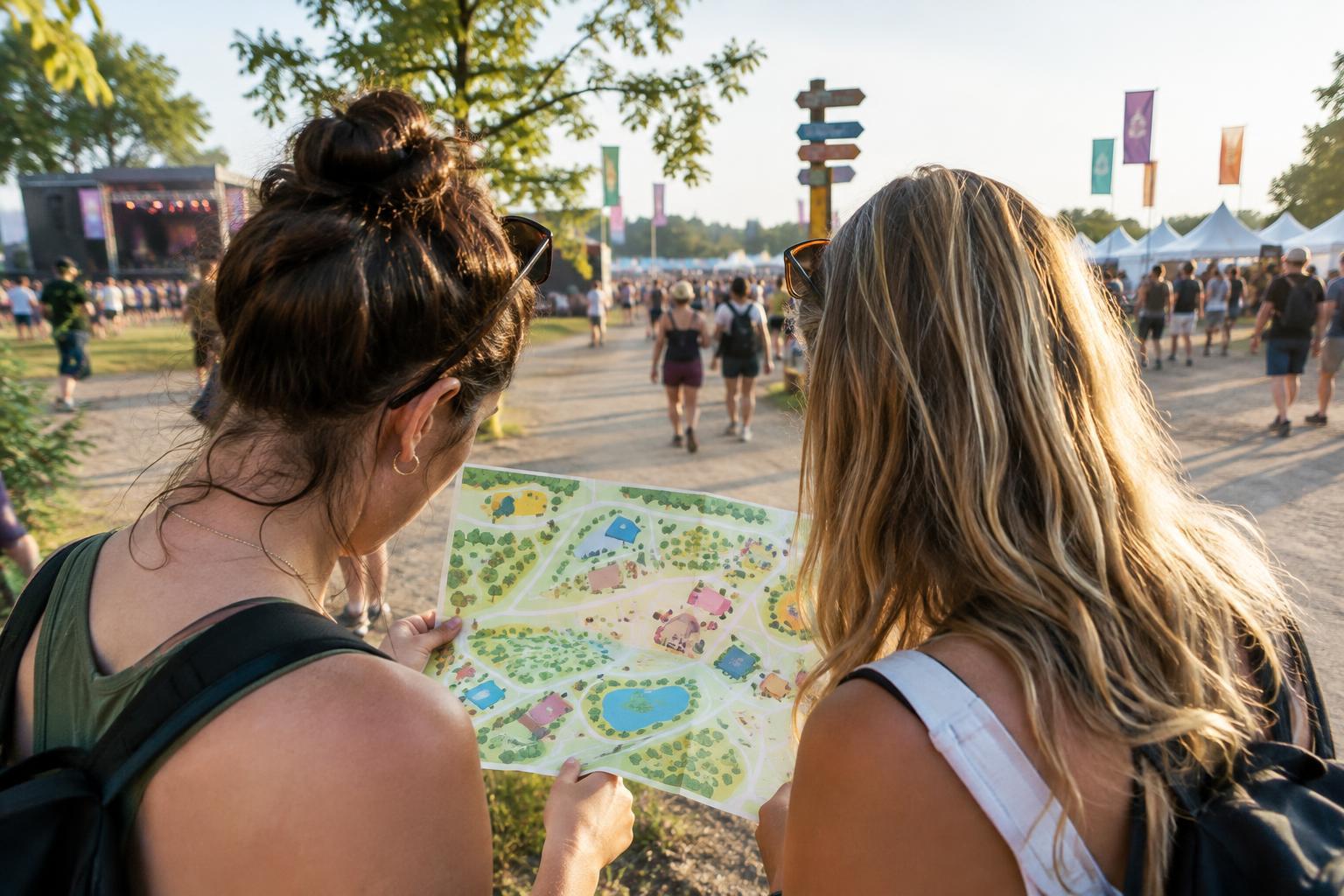
Look for an access guide or map as well as the main accessibility page. Details may be split across ticketing, travel, camping and entry policies. Save the relevant pages or download a map if one is offered, but check back before you leave: routes, entrances and operating arrangements may change. If information is hard to find, an official contact form or published access email is a sensible next step.
Trace the journey from arrival to departure
A useful access plan follows the whole visit, not just the stage you hope to see. Check where accessible parking or drop-off is located, whether it must be arranged in advance, and how far it is from the appropriate entrance. For public transport, look at the route from the stop to the gate as well as the journey to the stop. A short distance on a map can still involve uneven ground, slopes or a crowded crossing.
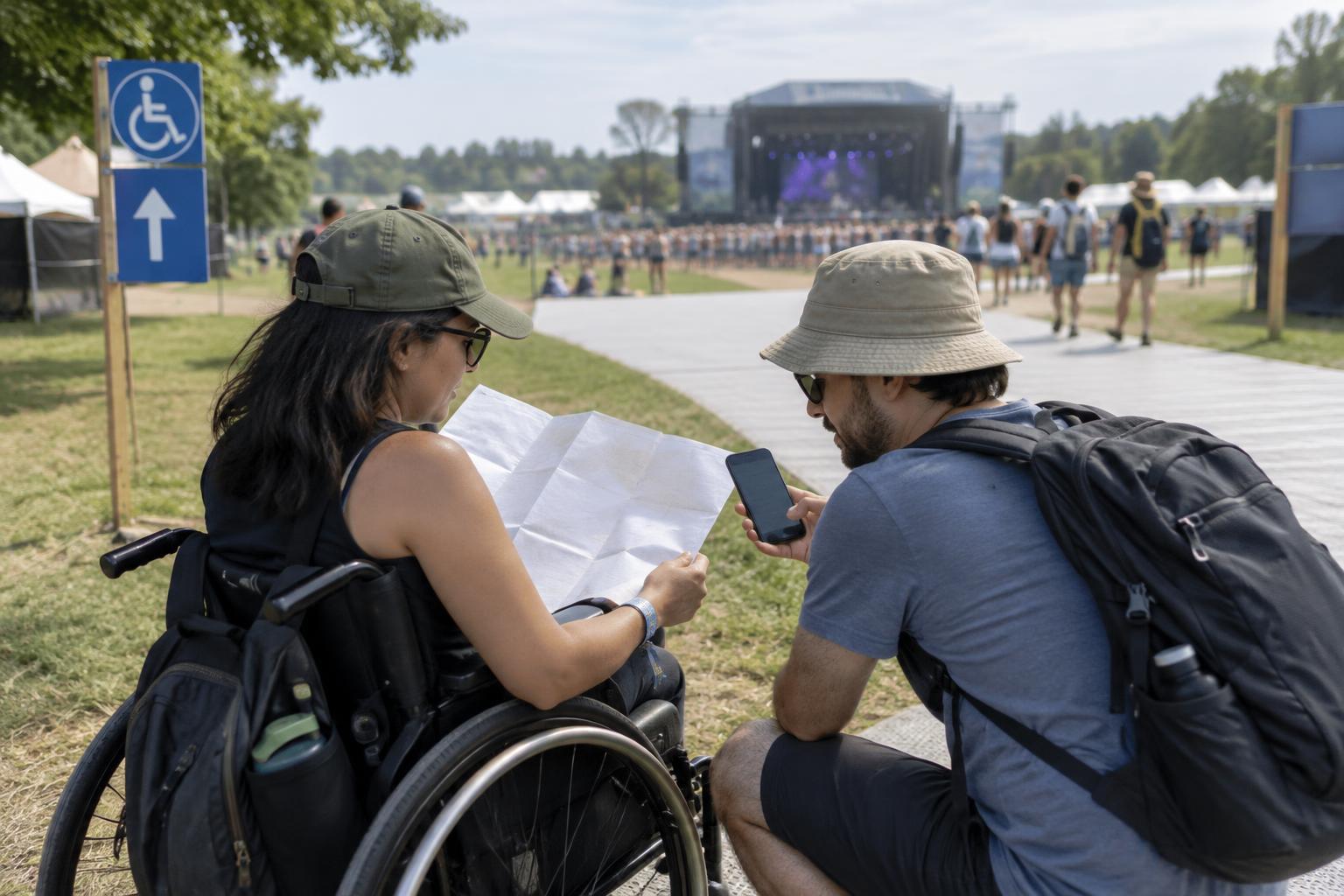
Next, find the entrances, paths between stages, toilets, water points, food areas and any quieter spaces shown on the festival map. Note whether the information describes surfaces, gradients or temporary structures. If you plan to stay late, check whether the route out differs from the route in and how you will reach your onward transport. Where the guide does not answer a question that matters to you, treat it as an open question rather than assuming the route will work.
Check how specific access arrangements work
Festivals may describe viewing areas, step-free routes, seating, companion tickets, camping facilities or support for people with sensory needs. Read the conditions attached to each arrangement. Does it require advance registration or a particular ticket? Where is the viewing area, and how do you enter it? Is seating provided, limited or something visitors are asked to bring? Availability and procedures vary, so the detail matters more than the label.
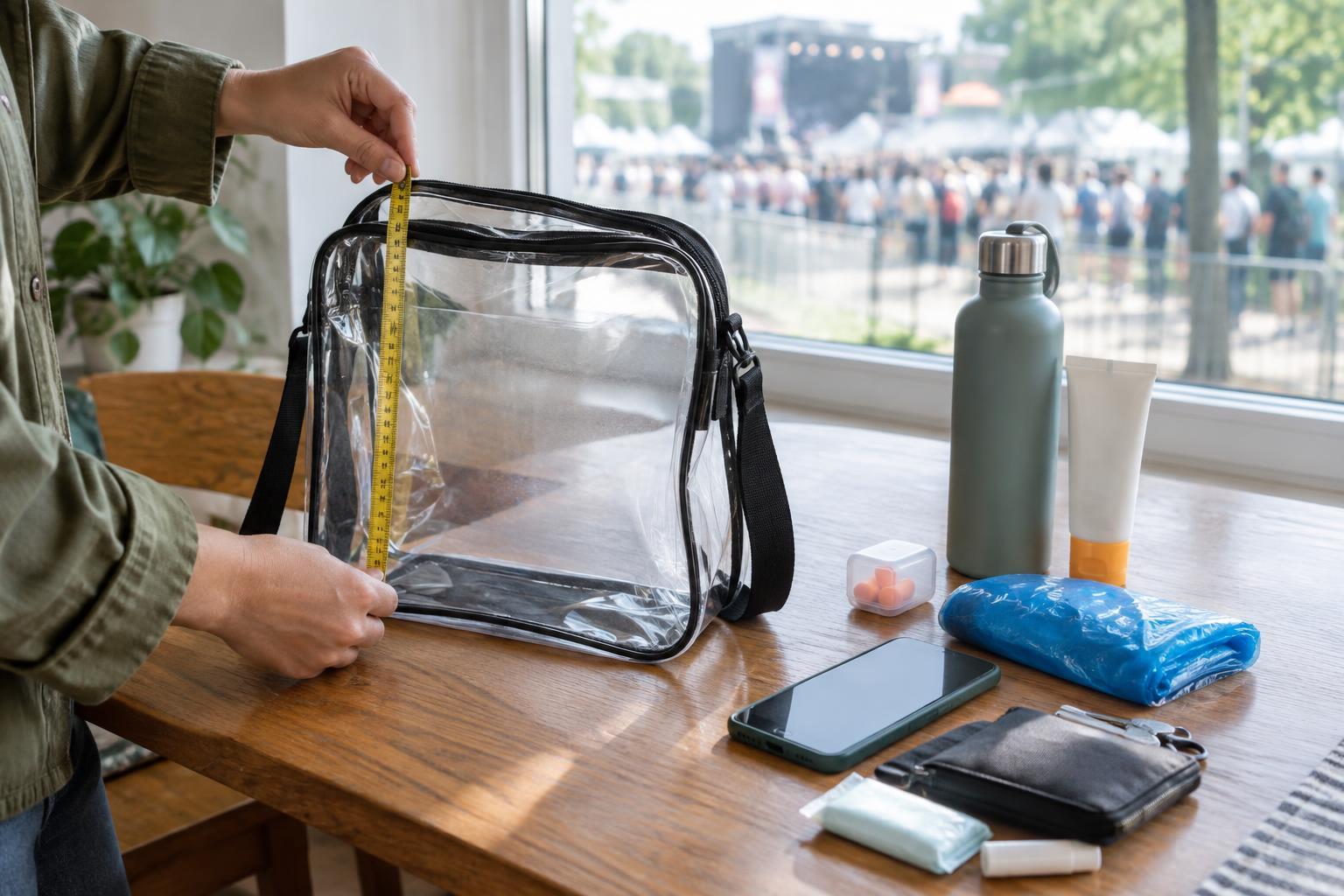
Check entry policies alongside access information, especially if you need to bring an item that might otherwise be restricted. The published guidance may explain what to do about mobility equipment, communication devices, supplies or assistance animals; if it does not, ask the organizer directly. You need not share more personal information than is necessary to get a practical answer. The aim is to understand the process before you reach a busy gate.
Ask questions that lead to usable answers
When contacting an access team, describe the part of the visit you are trying to plan and ask a focused question. Instead of asking only whether the festival is accessible, you might ask, “Is there a step-free route from the north entrance to the second stage, and what is the ground surface?” Another useful question is who to speak to on site if an advertised route or facility is unavailable.
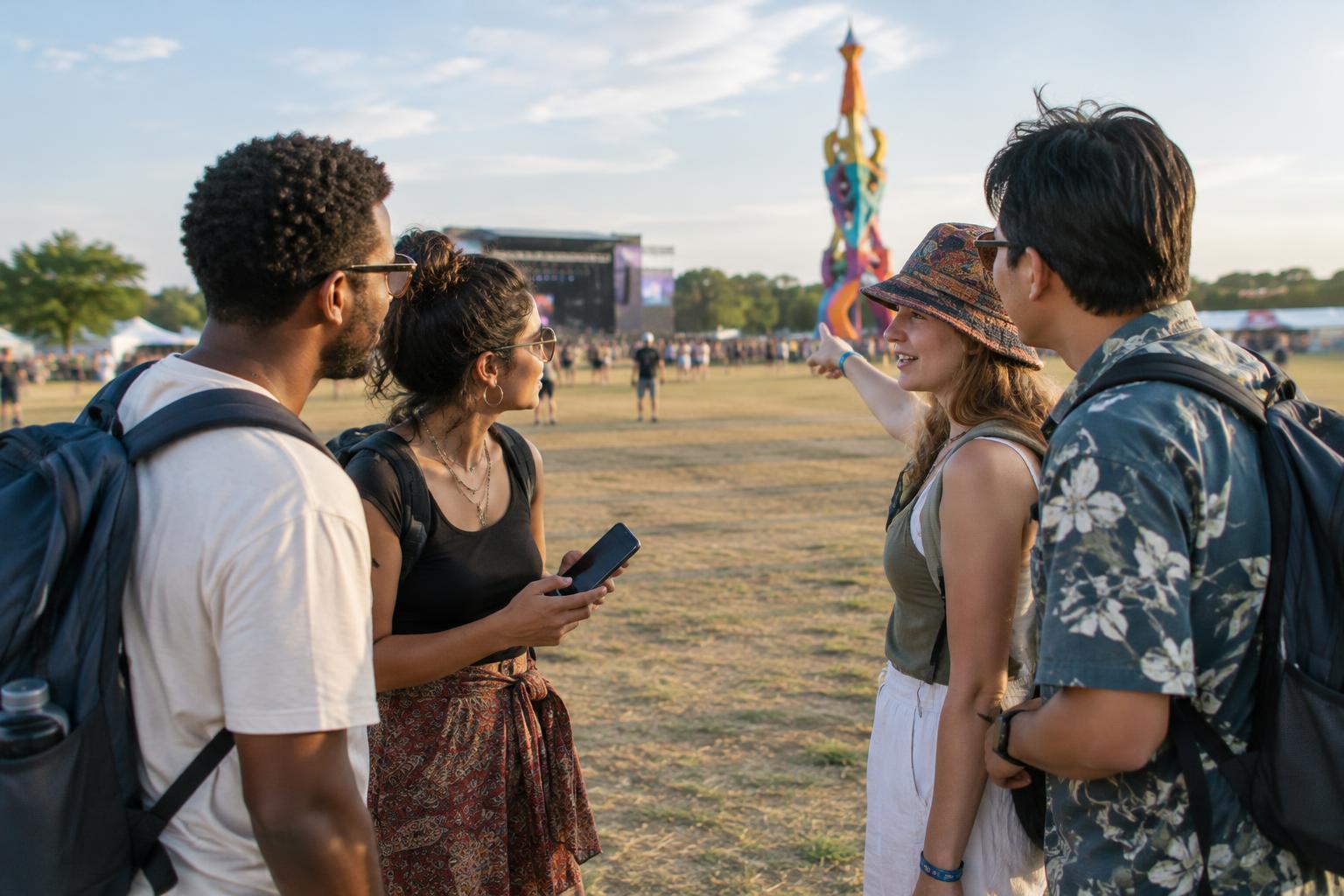
Give the organizer enough context to answer, such as the entrance or performance area you expect to use. If a reply is unclear, follow up before relying on it. Keep the response with your ticket and map so you can refer to the same details later. A friend or companion can help review the plan, but it is worth making sure everyone understands your preferred route and where you would regroup if separated.
Make a flexible day-of plan
Before setting off, gather the information you are most likely to need: the correct entrance, travel route, relevant booking confirmations, site map and official contact details. Save a copy where you can reach it without a strong mobile signal. Allow time to find facilities and move between performances without having to rush; large crowds can make a route feel different from how it looked on a map.
At the festival, follow posted updates and ask identifiable event staff if a route or facility has changed. If something is not working as described, explain the specific obstacle and ask about an alternative. Accessibility information cannot remove every uncertainty from a live event, but using it to plan the full journey—and knowing which questions remain unanswered—can make the visit easier to navigate.