Start with the map’s boundaries
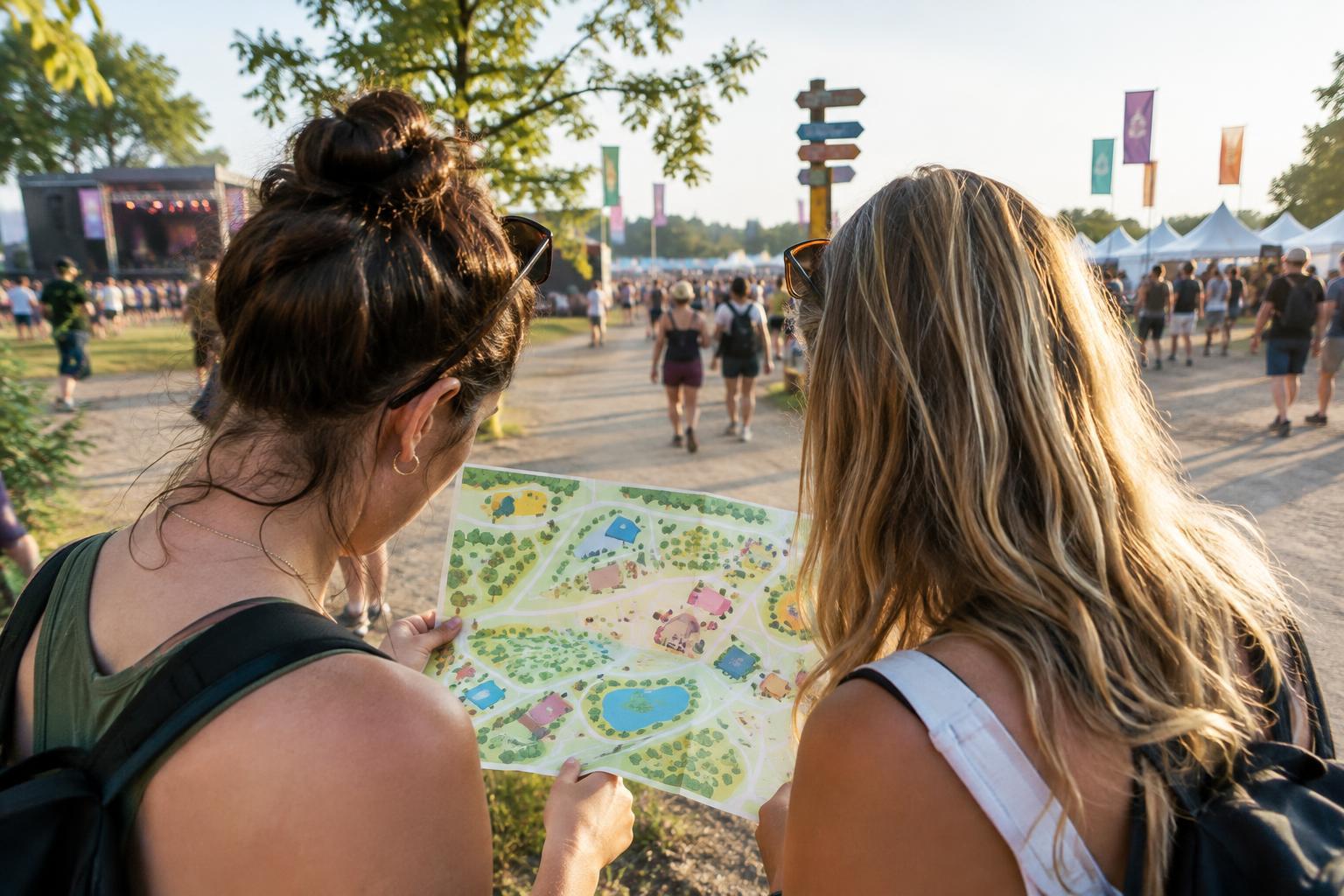
A festival map can look simple until you are standing among crowds, fences and rows of stalls. Before you plan which performances to see, find the site boundary, public entrances and exits. Then check the legend: colors and symbols may distinguish stages, food areas, toilets, water points, information desks and accessible routes. If the map has a scale, use it; if it does not, resist treating the distance between two icons as a reliable walking time.
Look for the position of nearby streets, transit stops or parking areas only if they appear on the official site information. A gate that looks closest to your first stage may not be the entrance you are assigned to use. Entry rules can vary, so keep your admission details handy and follow the organizer’s directions when they differ from your first impression of the map.
Build your day around routes, not dots
Circle the stages you are most likely to visit, then trace the paths connecting them. The useful question is not just “How far apart are they?” but “How would I get from one to the other?” Fences, one-way areas and narrow crossings can turn a short-looking trip into a longer walk. Give yourself room between performances, especially if you want to find a good viewing spot or stop for water along the way.
Notice where several routes converge. These junctions may be easy to recognize but slower to move through when many people are changing stages. If two performances overlap, the map can help you make a calmer choice: stay for a full set, leave early, or pick a viewing position near the route out. You do not need a minute-by-minute itinerary. A short list of priorities and a few flexible alternatives usually makes the map more useful.
Locate the essentials before you need them
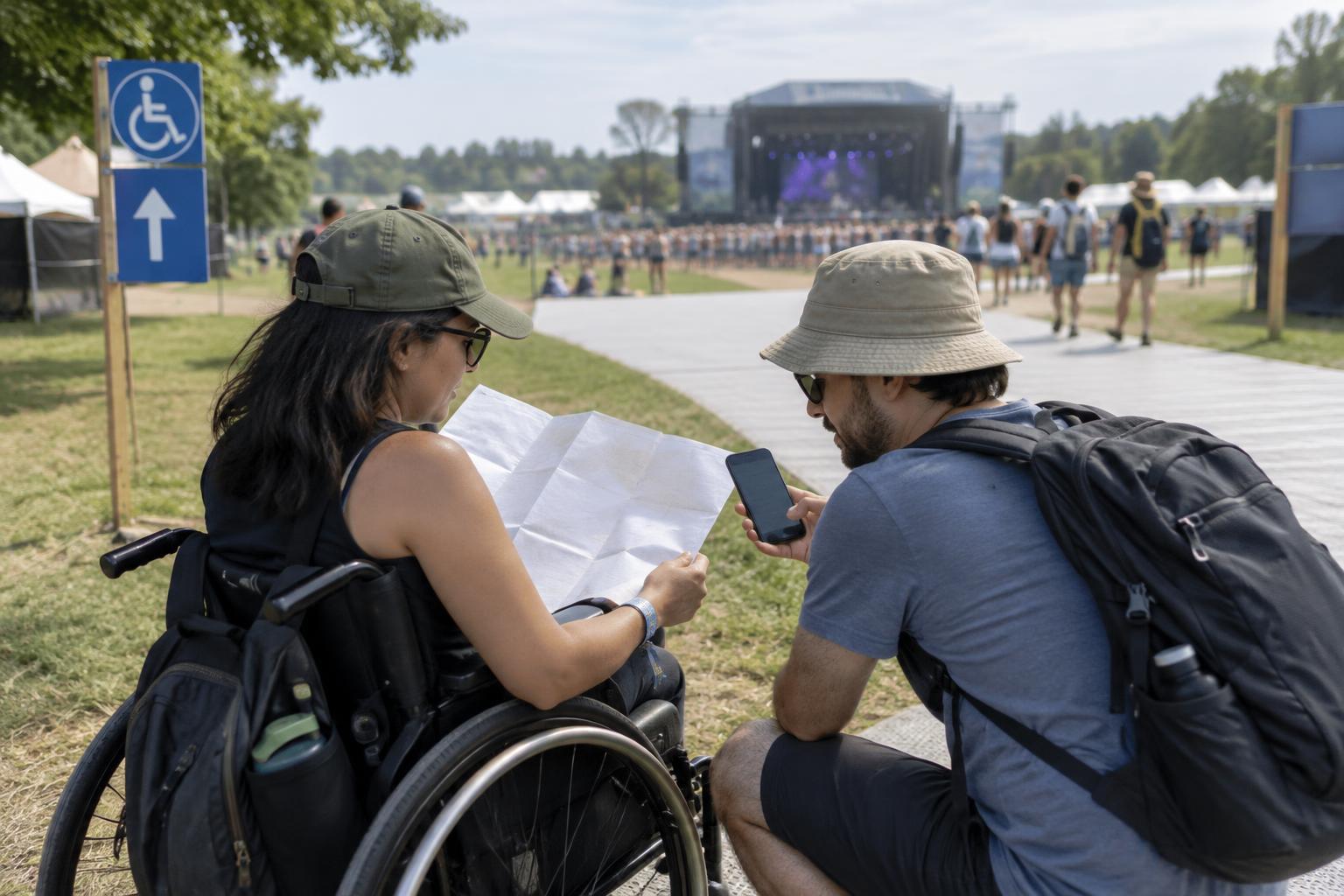
Find the facilities that will make the day comfortable: toilets, drinking water, food, information and any designated first-aid point shown on the map. Note more than one option when possible. The nearest toilet or water point to a main stage may be busy, while another on your route could be easier to reach. If you have specific access needs, review the organizer’s accessibility information as well as the map; a printed line between two places does not necessarily describe the surface or slope.
Pay attention to the difference between a general gathering area and a service location. An information point is useful for questions, but it may not be the best place to meet friends if people are lining up there. Choose a meeting landmark that is clearly marked and unlikely to be confused with another. Agree on a second option in case the first becomes crowded or temporarily inaccessible.
Use the map without relying on your phone all day
If a downloadable map is available, save it before arriving so you can open it without a connection. A screenshot can also help, provided it captures the legend and the edges of the site, not just your favorite stage. Check whether the map has a version label or update notice. Layouts and access routes can change, and signs or staff directions on site should take priority over an older image.
Once inside, orient yourself using a distinctive landmark and the direction of the main paths. You do not have to keep rotating the map or checking your location at every turn. Pause at a sign, confirm the next landmark, and walk that stretch. This approach is especially helpful when a dense crowd makes it difficult to stop safely in the middle of a path.
Leave room for the real site to surprise you
Maps simplify a busy physical space. They may not show temporary queues, changes in ground conditions, sound bleed between stages or every place where people naturally gather. When you arrive, take a few minutes to compare the drawing with what you see. Identify your entry point, the nearest essential facilities and the route toward your first performance before you settle in.
Treat your plan as a guide rather than a test to pass. If a route is congested, a facility is hard to find or you discover a comfortable place to listen, adjust. Knowing the site’s basic shape gives you that freedom: you can explore a new performance, take a break or change stages without feeling as though one missed turn has derailed the day.