What power distribution does at a show
A concert needs electricity in more places than the audience may notice. Sound systems, stage lighting, video equipment, instruments, communication gear and backstage work areas may all draw power. Distribution is the plan and equipment used to bring electricity from an available supply to those separate needs. When it is well managed, performers and crew can focus on the show rather than hunting for an outlet.
For a beginner, the most useful distinction is between understanding the plan and carrying out electrical work. You can help document equipment needs, spot a damaged cable or keep a route clear. Choosing supply equipment, making connections, checking circuits and deciding whether a system is safe to energize belong to appropriately qualified people working to the requirements of the venue and local rules. A household power strip is not a substitute for an event distribution plan.
Start with a complete picture of the equipment
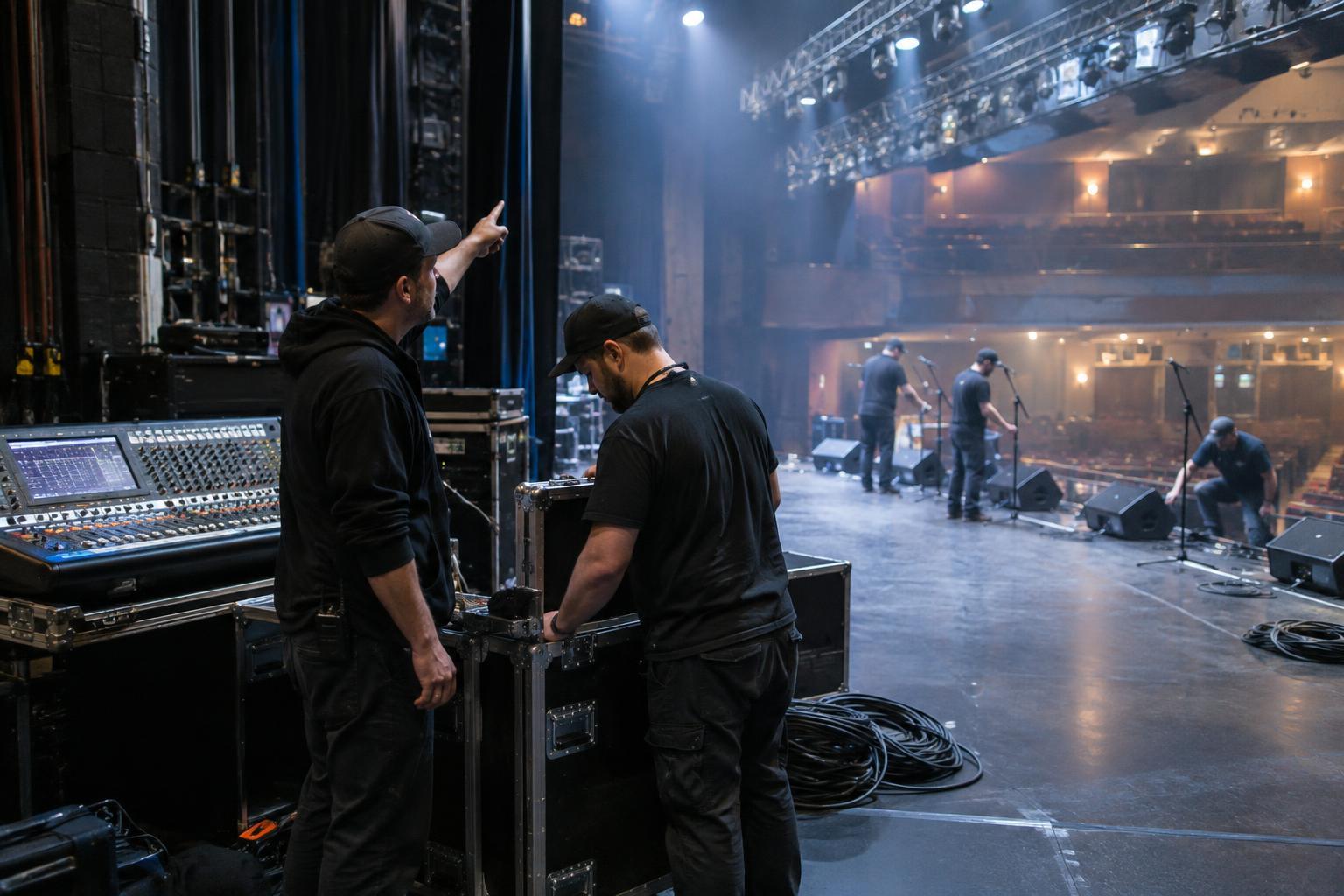
Planning begins with a list of what needs power, where it will be used and who is bringing it. A useful inventory includes the audio system, lighting, video, backline, merchandise area and any production workspace. It should distinguish essential show equipment from conveniences such as phone chargers or a coffee maker. Small additions can be easy to overlook when several teams share a space.
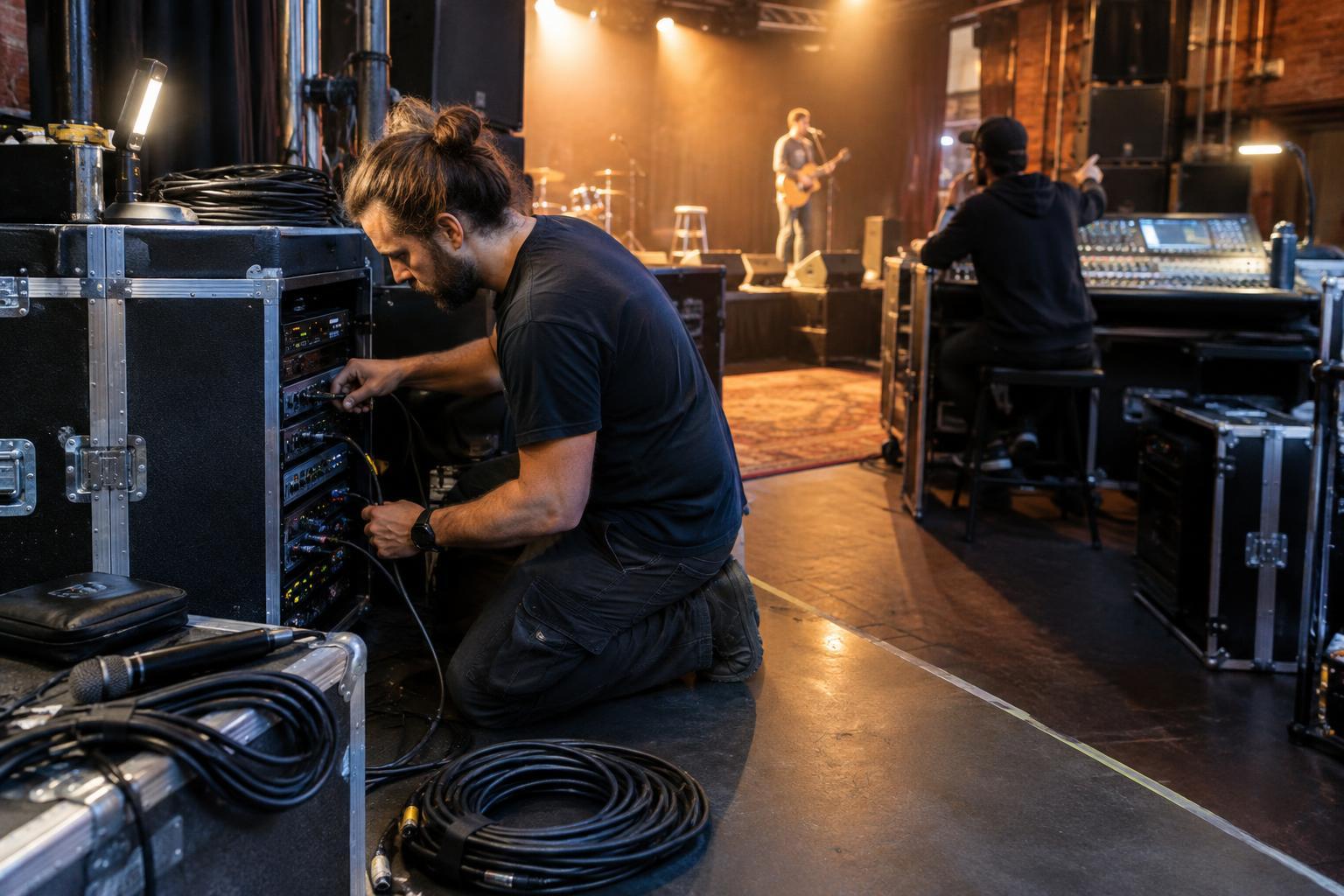
Equipment labels and manufacturer documentation can help the responsible technician assess power requirements. That assessment is more than adding up numbers: some equipment has changing demands, and the supply and distribution must be suitable for the whole setup. The venue’s available outlets, installed systems and restrictions also matter. If a touring act or vendor brings its own equipment, confirm its needs before load-in rather than assuming it will fit the existing plan.
A shared document helps prevent surprises. Keep it clear enough that the venue, production lead and equipment providers can identify unanswered questions. If a need changes, tell the person responsible for the power plan before plugging anything in.
Treat cable routes as part of the design
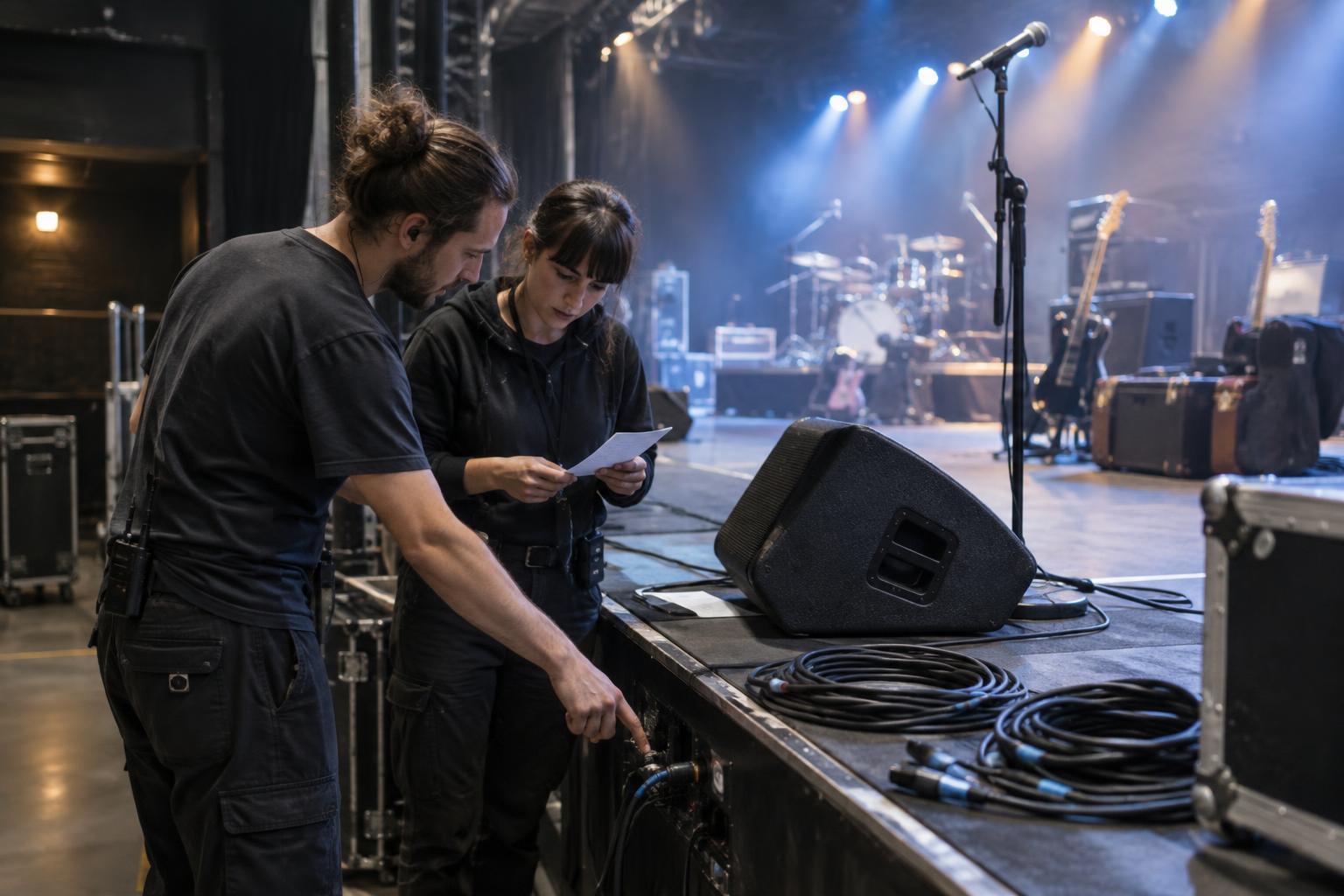
Even correctly selected equipment can create hazards if cables are run through busy spaces without planning. Routes need to account for performers, crew, audience movement, carts, doors and emergency access. They should also protect cables from being crushed, pulled or pinched. A tidy-looking stage is not necessarily a safe one if a cable is hidden where someone may roll equipment over it.
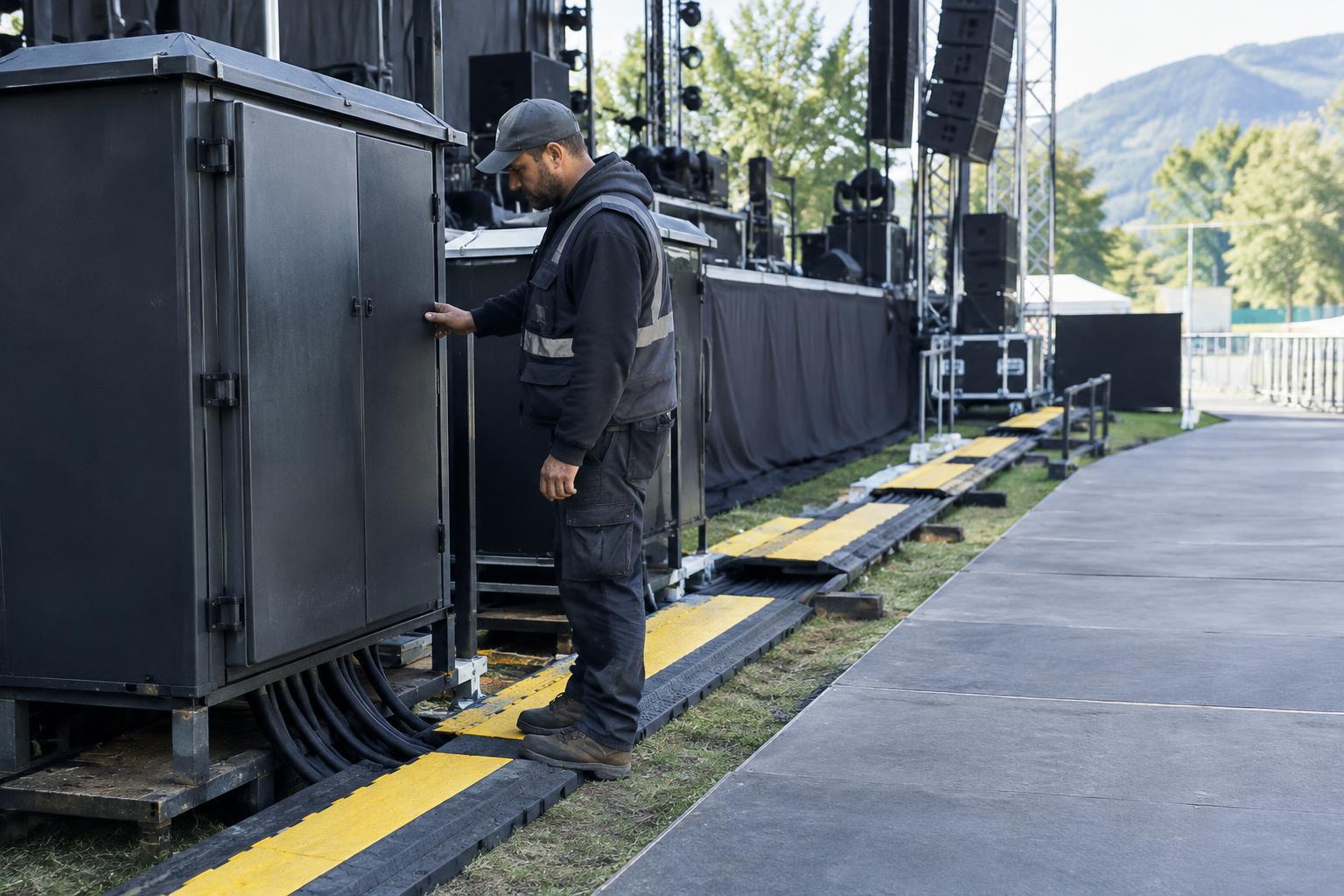
Ask the production lead how cables will cross walkways and who will check those crossings during the event. Suitable covers, barriers or alternate routes may be needed, depending on the location. Keep electrical connections out of places where drinks are set down or water might collect. If you notice a loose connector, damaged insulation or a cable that has shifted into a traffic path, report it; do not improvise a repair or move an energized setup without coordinating with the crew.
Plan differently for outdoor and temporary spaces
Outdoor shows add exposure to rain, damp ground, wind and changing temperatures. Temporary spaces may also have limited built-in electrical infrastructure. Equipment that works in a dry indoor room should not automatically be assumed suitable outside. The responsible team needs to consider appropriate equipment, protection and placement for the actual conditions.
Weather plans should identify who can pause operations, who evaluates the electrical setup and how performers and crew will receive instructions. A plan is most useful when those roles are agreed upon before conditions change. If water reaches equipment or connections, keep people away and notify the responsible crew rather than trying to restore the show yourself.
Make responsibilities visible before doors open
Safe distribution depends on communication as much as hardware. Identify a production lead and the qualified person responsible for electrical decisions. Make sure vendors know where to direct questions, and give crew a way to report concerns without guessing whether someone else has already noticed them. Before the audience arrives, the responsible team should have time to inspect the installed setup and address changes from the original plan.
During the show, avoid adding loads or rearranging connections for convenience. A last-minute request for another light or amplifier may seem minor, but it can affect a plan you cannot see. Bring the request to the production lead instead.
You do not need to become an electrician to contribute to a safer event. A careful equipment list, clear walkways, prompt reporting and respect for qualified decisions all help. Power may be behind the stage, but planning for it should never be an afterthought.