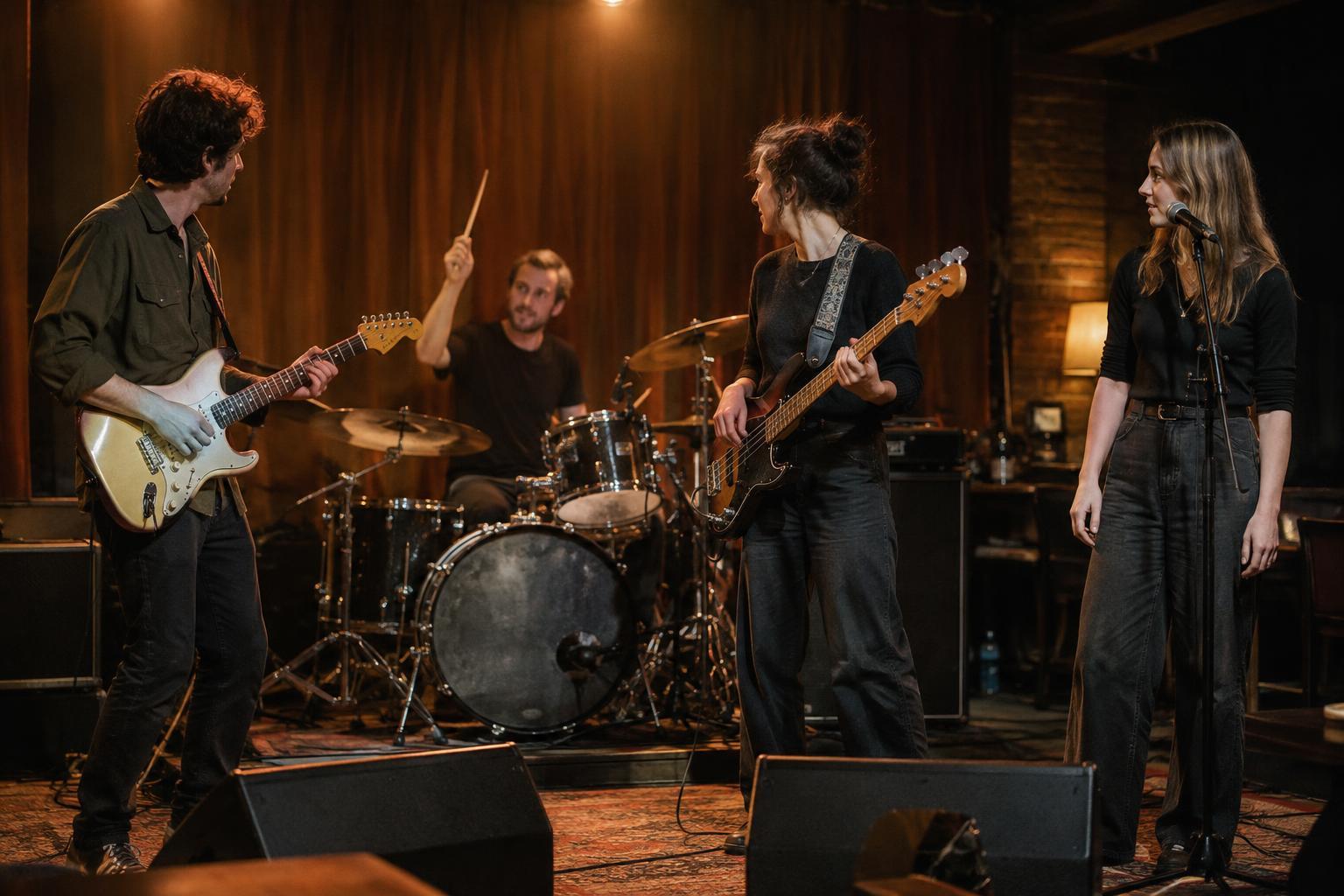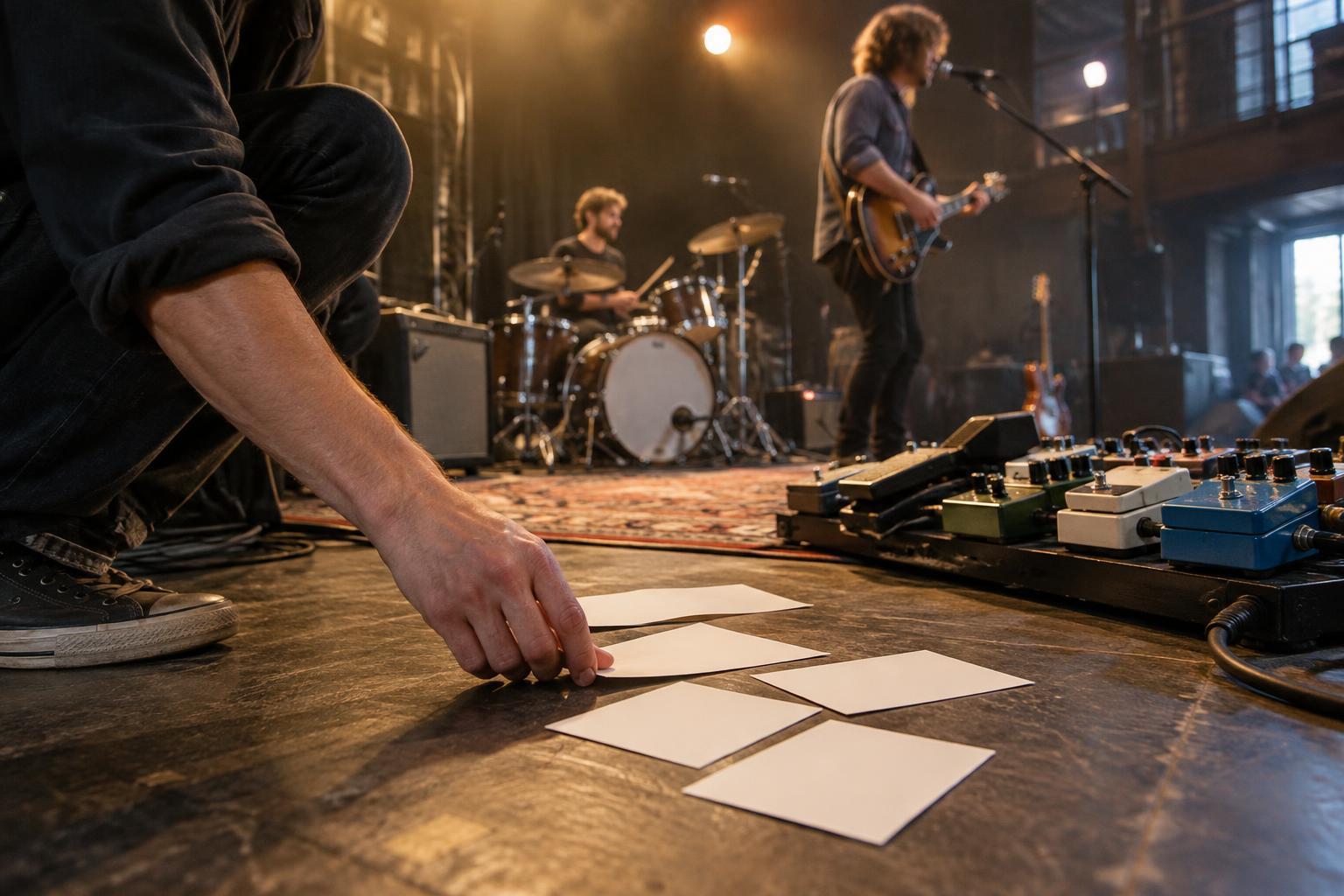
Start with the shape of the show
A setlist gives a performance a beginning, a middle, and an ending. The first step is to decide what the show should feel like overall. Is it a short, high-energy set meant to introduce an unfamiliar audience to the band? Or a longer performance with space for quieter songs and extended passages? The answer affects how quickly the music needs to make its first impression and how much contrast the set can hold.
It helps to sort possible songs by what they do onstage rather than by how popular they are. One song might have an unmistakable opening, another might invite the crowd to sing, and a third might offer a moment to breathe. Thinking in these terms reveals gaps: six songs with forceful endings may sound exciting individually but leave little room for the show to rise and fall.
Make the opening an invitation
An opener has a practical job. It brings the musicians and listeners into the same room, even if people are still finding their places or adjusting to the sound. A song with a clear entrance and a confident groove can establish the performance quickly. That does not mean the loudest or most familiar song must come first; a spare opening can be equally effective when the performer can hold the room with it.
The next few songs should build on that first impression without repeating it exactly. A brisk opener might lead into a song with a stronger vocal hook, followed by one that shows another side of the act. Early variety gives listeners a reason to stay curious. It also lets performers settle into the show before asking the audience to follow a more demanding change in mood.
Use contrast without losing momentum
Flow is not the same as constant acceleration. If every song pushes at full intensity, the peak can stop feeling like a peak. Slower tempos, different textures, or a shift in lyrical mood can make the return to a bigger sound more powerful. The key is to make the change feel deliberate. Placing a quiet song after a dramatic ending, for example, can create a moment of attention rather than an awkward drop.
Performers often think in small groups of songs. Two tracks may connect because they share a rhythm or mood; a third can then turn the set in a new direction. This approach is more flexible than trying to draw a perfect energy curve for the entire night. It also leaves room for a familiar song to arrive when the audience is ready for it, rather than using every recognizable tune at the start.
Plan what happens between songs
The spaces between songs are part of the performance. Instrument changes, alternate tunings, effects settings, samples, and a singer’s need for a brief rest can all influence the order. Putting two songs that use the same setup together may keep things moving. When a change will take longer, a short introduction or another band member’s musical passage can give that pause a purpose.
Transitions deserve rehearsal as well. Musicians can decide whether one song ends cleanly, fades into noise, or leads straight into the next downbeat. They can also agree on who speaks and when. None of this requires scripting every word. A clear plan simply reduces uncertainty onstage, making it easier to respond naturally when the room feels different from rehearsal.
Build toward an ending, then stay adaptable
A finale works best when it feels earned. Some performers close with their most communal song; others choose one that resolves the set’s mood or leaves a striking final sound. The preceding song matters, too. It can set up the closer with contrast, or raise the energy so the final song feels like a release. If an encore is possible, the planned set should still have a satisfying ending on its own.
A written order is a guide, not a command. Musicians may shorten a set because of time, swap songs when an instrument causes trouble, or follow an unexpectedly attentive crowd into a quieter moment. Preparing a few optional cuts and alternate transitions makes those decisions easier. The strongest setlists balance intention with flexibility: they give a show a recognizable arc while leaving space for what can only happen live.