A map for the stage
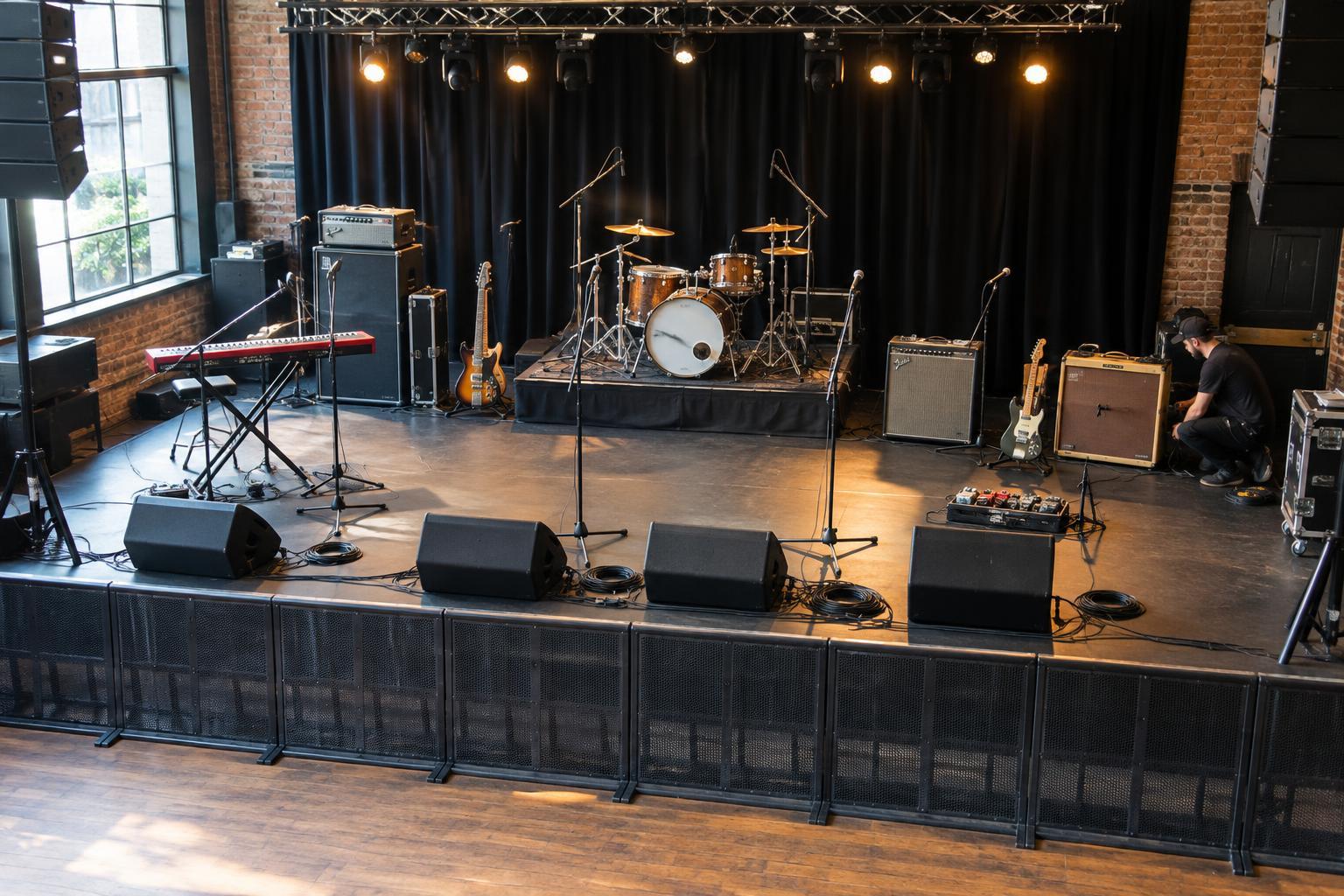
A stage plot is a diagram showing where performers, instruments and key equipment are expected to go during a show. Think of it as a floor plan for the performance area, viewed from above. A band might use one to show the drummer at the rear center, a keyboard setup on one side and vocal microphones across the front. The plot gives everyone a shared starting point before anyone carries gear onto the stage.
It is not usually a technical drawing to scale. Its value lies in making relationships clear: who stands where, which equipment belongs near each performer and how much space the setup needs. A useful plot can be simple, provided its labels are readable and the orientation is obvious.
What a stage plot typically shows
Most plots mark performer positions, vocal microphones, instruments, amplifiers, drum kits and other large items. They may also show monitor wedges or in-ear monitor stations, microphone stands, power needs, risers and furniture such as stools or tables. An acoustic duo needs a different level of detail from a large ensemble, so the contents should match the act rather than follow a rigid template.
Direction matters. Stage left and stage right are described from a performer’s perspective while facing the audience, which is the opposite of an audience member’s left and right. Labeling the front of the stage, or adding an arrow toward the audience, prevents an otherwise clear diagram from being read backward.
A plot often travels with an input list, but the two documents do different jobs. The plot shows placement; the input list identifies the audio sources the sound crew needs to connect, such as a lead vocal microphone or a keyboard output. They work best together: one answers “where does it go?” and the other answers “what needs a channel?”
Who uses it before and during a show
Performers use a stage plot to communicate a setup that may be familiar to them but new to the venue. It helps them check that no essential position or piece of gear has been left out of their advance information. A touring act can also use it to describe a consistent starting arrangement, even though the final layout may change from room to room.
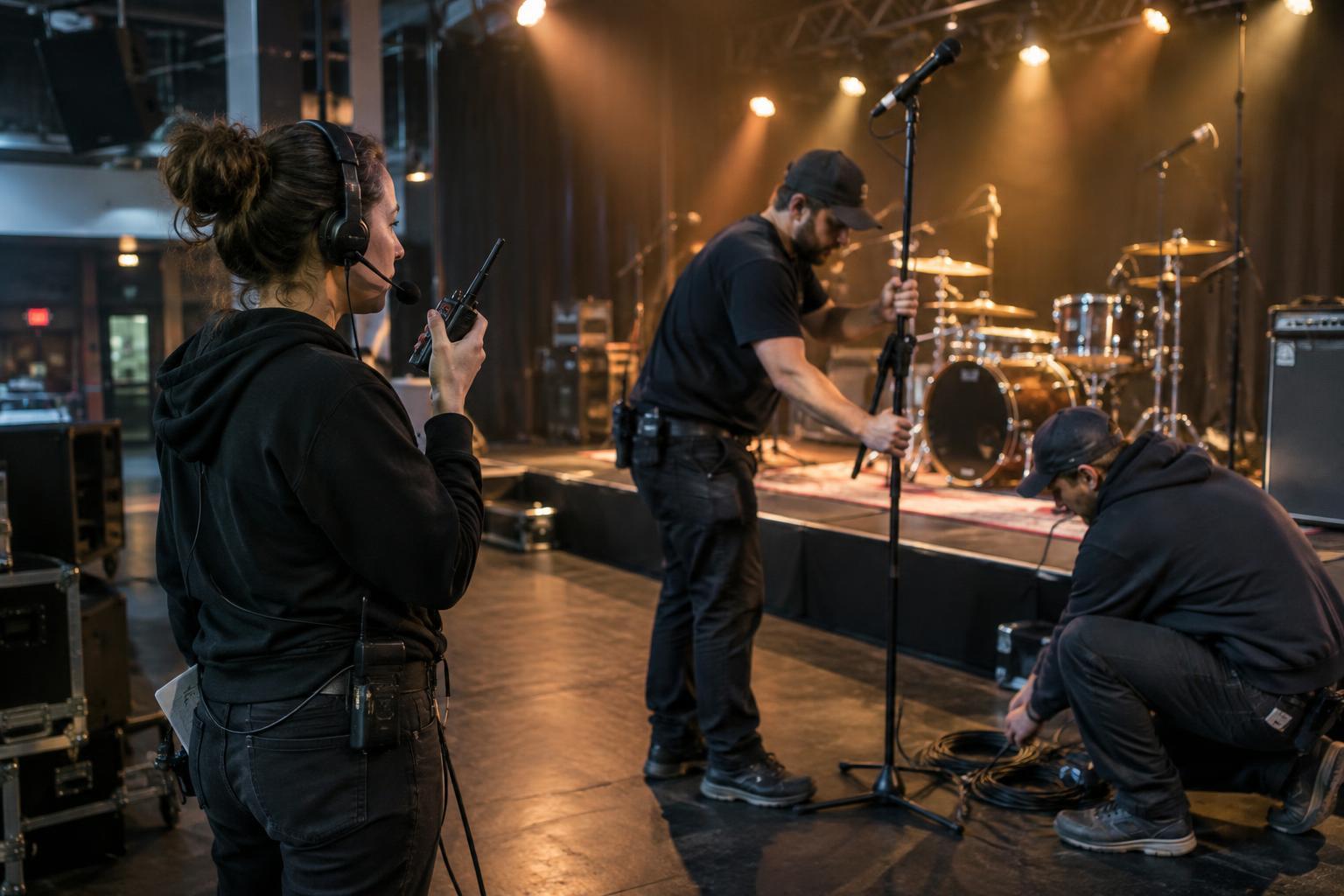
Venue production staff use the plot to plan space, equipment and workflow. A stage manager can see whether one act’s setup can be moved on and off efficiently. Stage technicians can place stands and gear before performers arrive. Front-of-house and monitor engineers can use the diagram alongside the input list to anticipate microphone positions, cable routes and monitor locations.
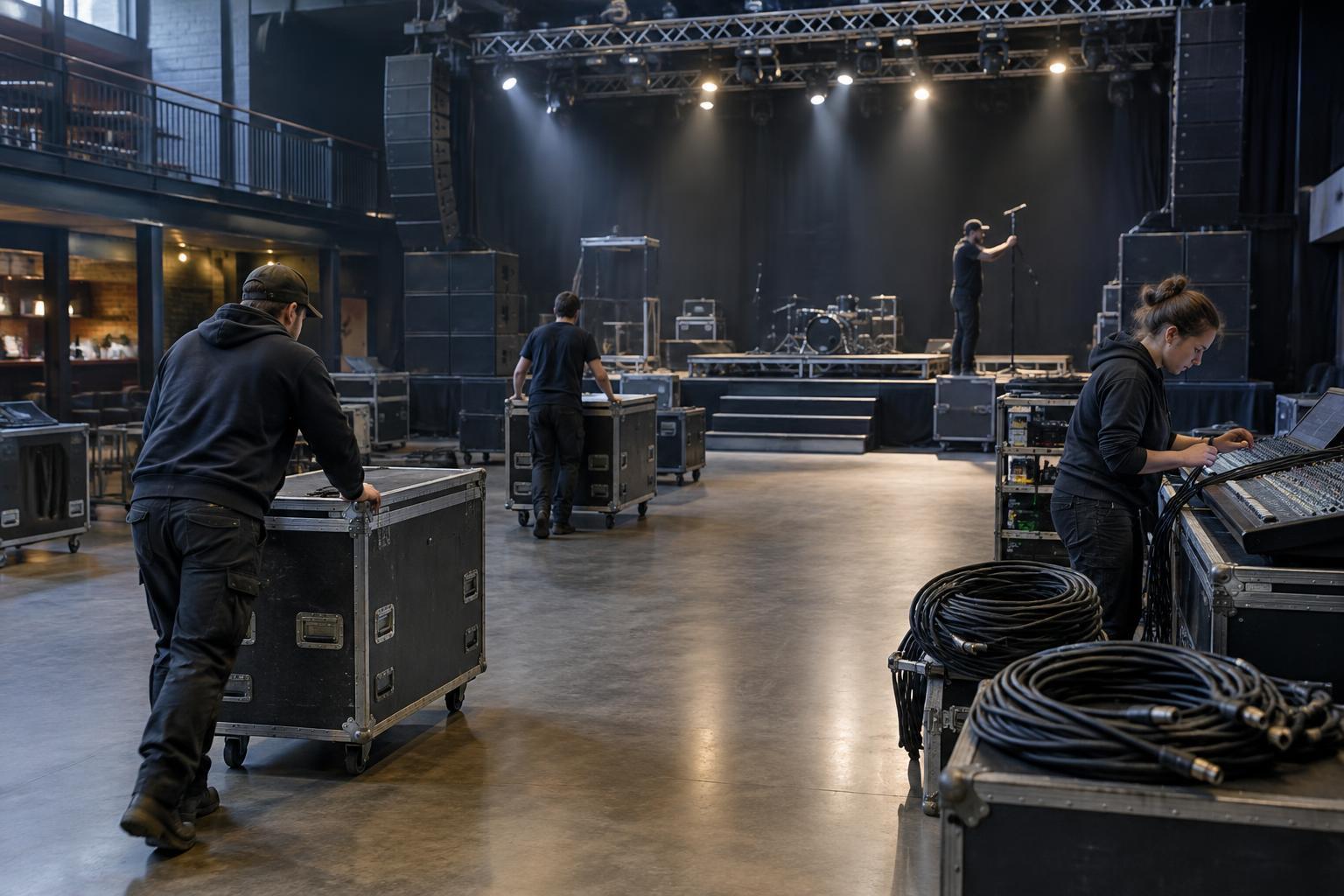
The plot is especially useful when several acts share a bill. It helps crews identify what can stay in place between sets and what needs to move. It cannot eliminate every changeover question, but it gives the crew a way to ask specific ones in advance.
How to make one that is easy to use
Start with a rectangle representing the usable stage area and clearly mark the audience side. Add each performer’s position, then place the equipment that determines the layout: drum kit, keyboards, amplifiers, microphone stands and any large accessories. Use short, consistent labels rather than relying on tiny drawings. If a position needs power or a particular monitor arrangement, note it beside that position.
Keep the diagram legible at a glance. Separate overlapping labels, make unusual requirements prominent and avoid filling the page with information better suited to another document. A brief note can explain something the drawing cannot, such as a keyboard player who also sings or an instrument that changes during the set. If a specific item is essential, say so plainly; if a workable alternative exists, that can be helpful to mention too.
A plan, not a guarantee
Stages vary in size, available equipment and access. A clear plot helps people spot potential conflicts early, but it does not mean every requested position will fit exactly as drawn. Sharing the plot ahead of time gives the venue and performers a chance to discuss adjustments before load-in, when changes tend to be harder to manage.
The most useful version is the current one. When a lineup, instrument or monitor setup changes, the plot should change with it. That small bit of upkeep makes the document more than a formality: it becomes a practical reference that helps performers and crews spend less time deciphering the setup and more time getting ready to play.