Know which version of the lineup you have
A lineup poster is designed to introduce the artists and create excitement. It may group performers by day or give more space to prominent names, but it often leaves out the details needed to plan a day. Treat it as a discovery tool: circle the artists you already love, note a few unfamiliar names, and check which day each appears. Do not assume the order of names is the order of performances.
A daily schedule, sometimes called a timetable, is more useful for planning. It should show set times and stages, though those details can change. Before making firm plans, check that you are reading the schedule for the right day and the latest version available from the event. If only a lineup poster has been published, you can choose priorities, but you cannot yet build a reliable hour-by-hour route.
Sort your priorities before comparing set times
Start with three simple groups: must-see acts, artists you would like to catch, and acts you are curious about. Keep the must-see group small. If every set is essential, ordinary overlaps will make the day feel like a series of disappointments. Think about what makes each choice important to you: a favorite album, an artist you rarely get to see, or a style you want to hear live.
For unfamiliar performers, sample a song or live clip if you have time, but leave room for surprises. A lineup is also a map of possible discoveries. Look beyond the largest names at earlier sets, smaller stages and artists placed alongside music you already enjoy. You do not need to research every act; a short list of possibilities gives you options when your first choice does not fit the schedule.
Read the schedule as a map, not just a list
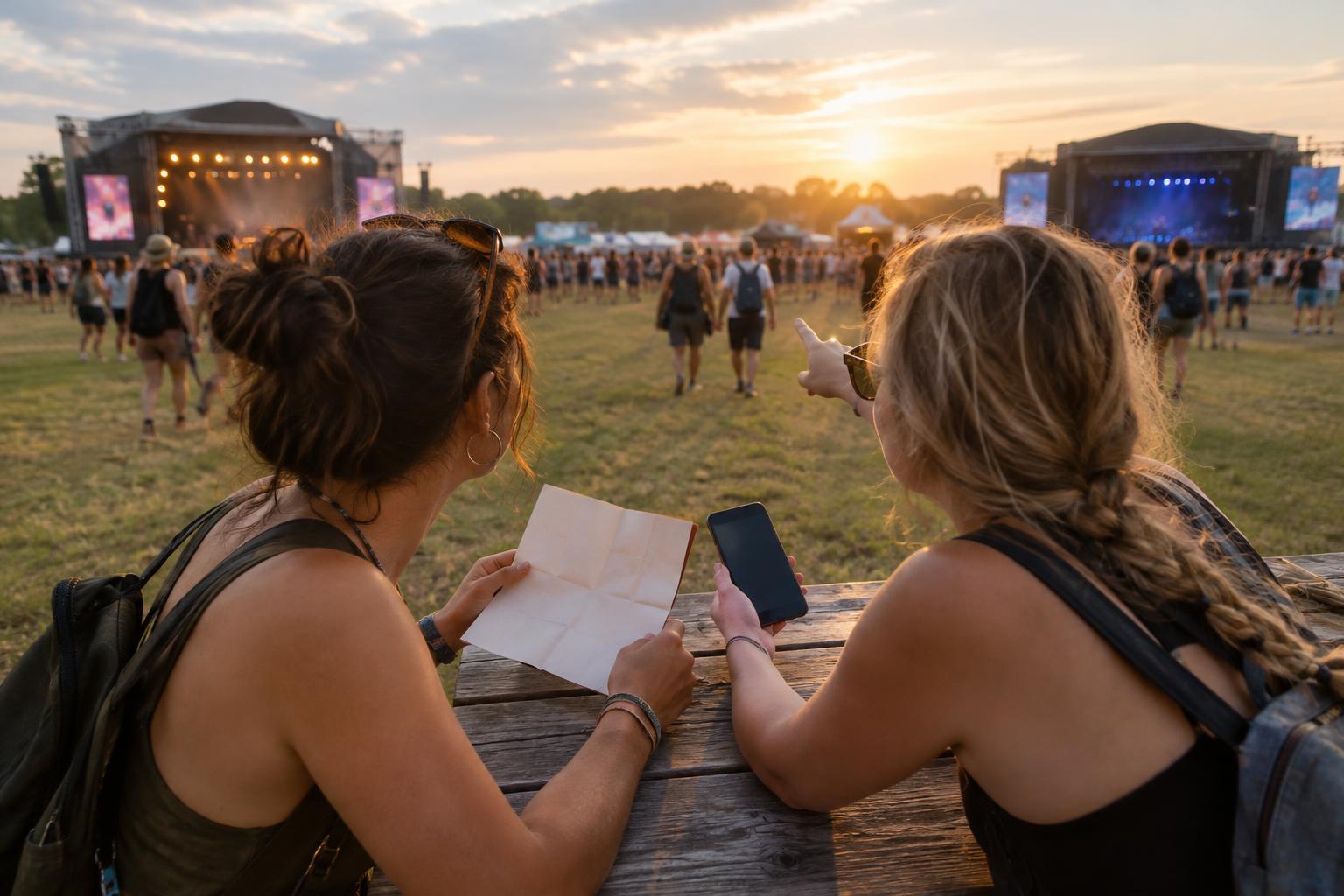
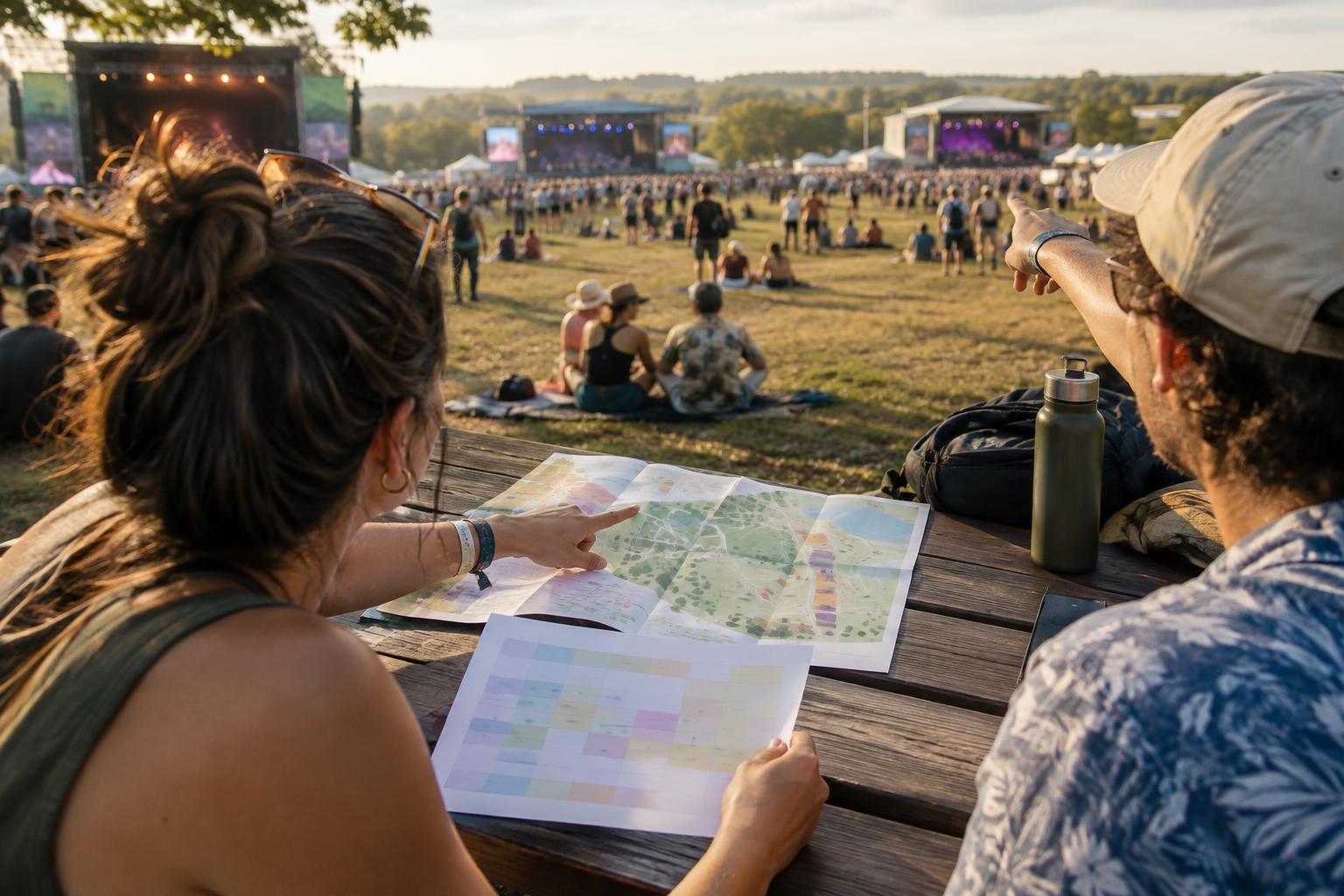
Once set times are available, mark your must-see performances and look for overlaps. Two sets that touch on paper may still conflict if the stages are far apart. Likewise, arriving at a stage at the listed start time may not give you the listening spot you want. If being close matters, allow extra time; if you are happy listening from farther back, you may have more flexibility.
Look for the practical details that sit around the music. Where are entrances, water points, restrooms, quieter areas and food options in relation to the stages you plan to visit? Check whether any stages have access rules or limited capacity. A workable plan includes time to move, pause and meet your basic needs. It should not depend on crossing the grounds instantly between every set.
Handle clashes by choosing what matters most
When two favorite acts play at once, first ask whether seeing a full set matters more than seeing a little of each. Splitting sets can work when stages are nearby and you are comfortable missing songs. It is less satisfying when travel takes up much of the overlap or when a performance is best experienced from beginning to end. Make the choice deliberately rather than discovering the clash while walking between stages.
A useful approach is to make a primary plan and one backup for each part of the day. Your backup might be a nearby stage, a rest break, or an artist from your discovery list. You may also want a clear meeting point if you are attending with friends whose priorities differ. Agree in advance that the group can separate for a set and reconnect afterward; nobody has to follow the same route all day.
Leave the plan flexible enough to enjoy
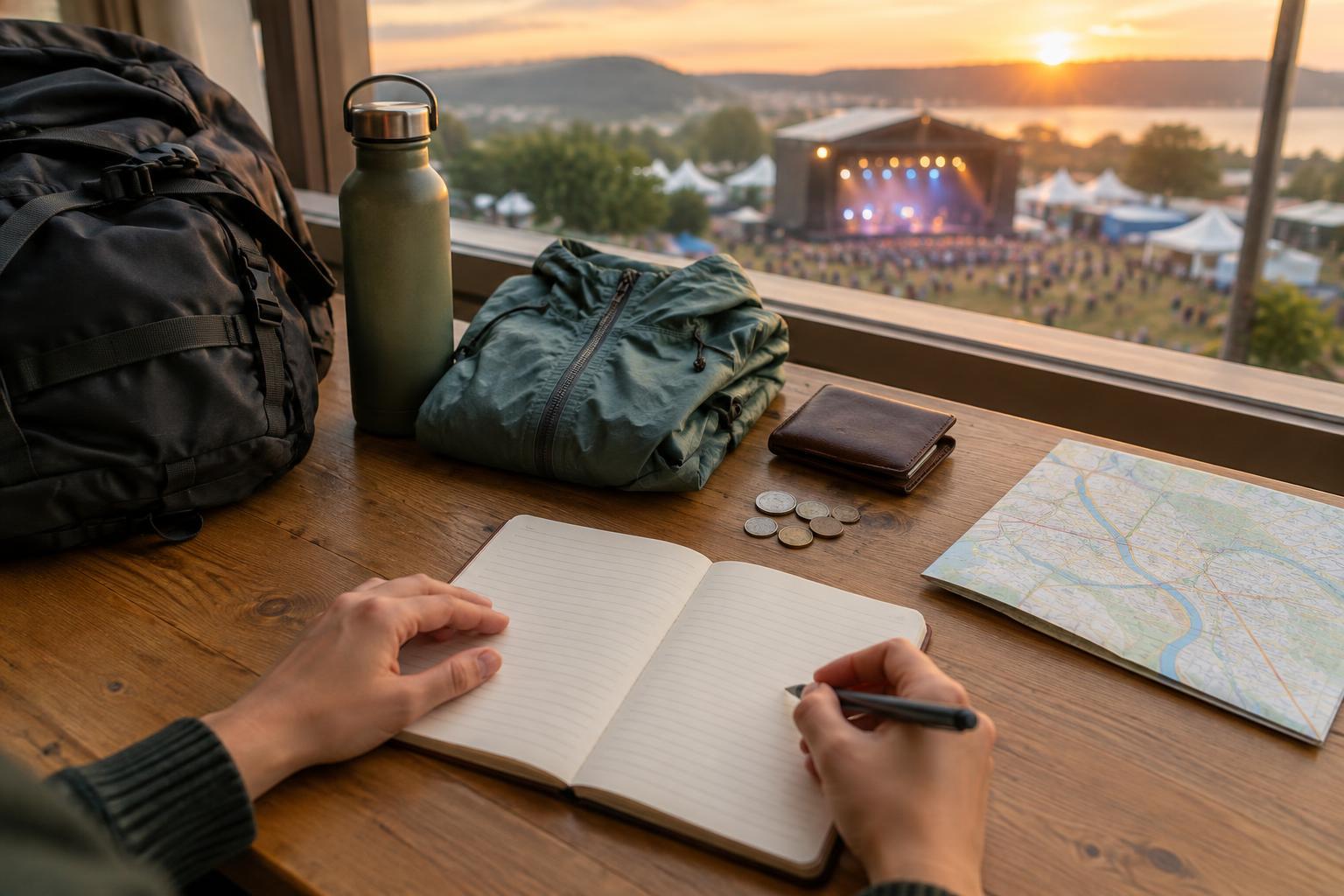
Write down your anchors—the sets you most want to attend—and keep the spaces between them loose. A tightly packed schedule can turn a festival into a race, leaving little time to notice a great performance you hear in passing. Build in at least a few open stretches for food, water, a change of pace or an unexpected find. Those gaps are part of the day, not failures to plan.
Keep the schedule accessible, but be ready to revise it if timings or stages change. Check event information for updates when you can, and use posted guidance on site if it differs from an older screenshot. The best lineup plan is not the one that captures the greatest number of names. It is the one that helps you reach your priorities, navigate comfortably and stay open to music you did not know you wanted to hear.