The audience mix is not the stage mix
A singer can stand a few steps from a drum kit and still struggle to hear their own voice. A guitarist may hear plenty of amplifier but very little keyboard. On stage, sound arrives from instruments, amplifiers, loudspeakers and reflections around the room. What reaches a performer depends on where they stand, not just on what the audience hears.
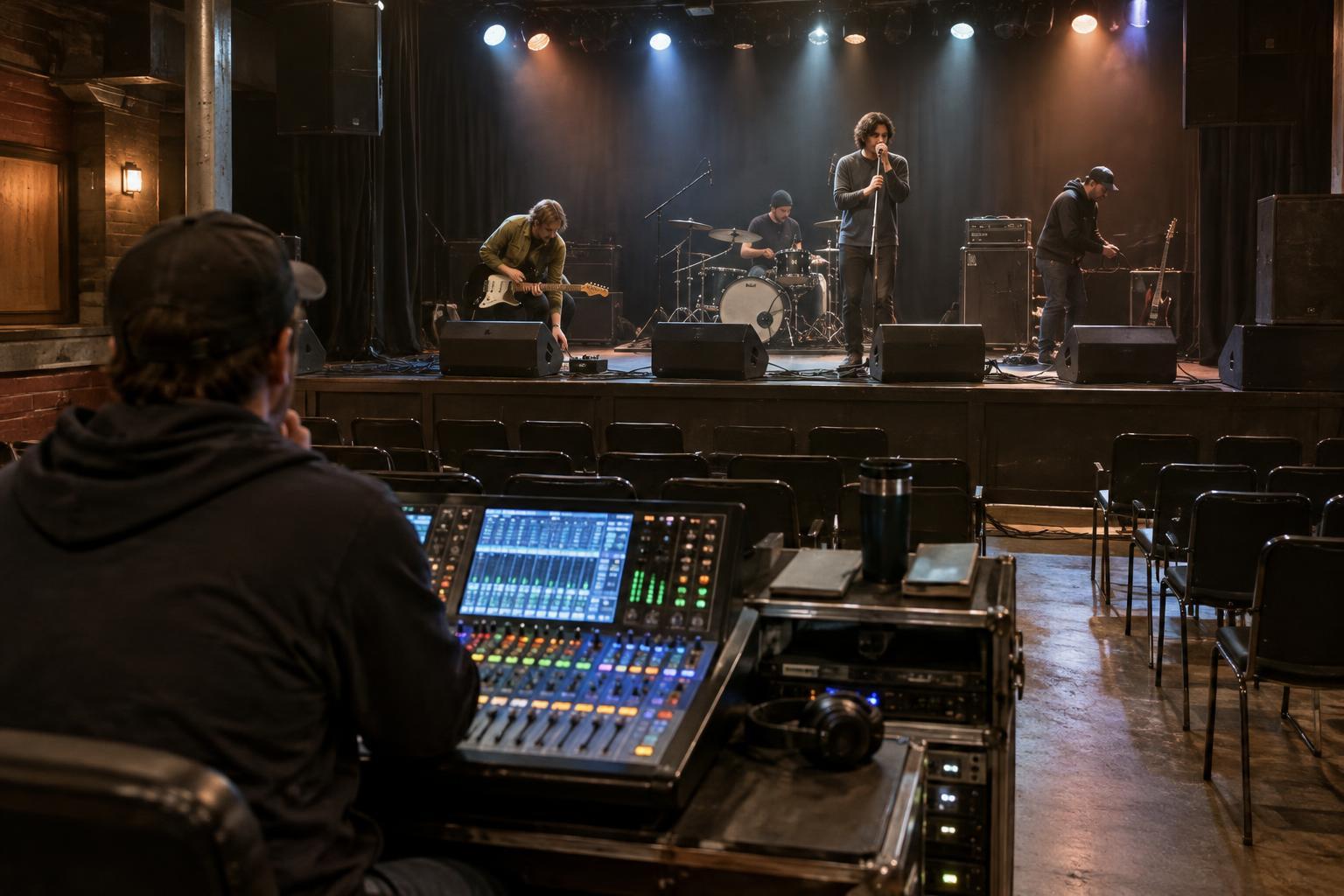
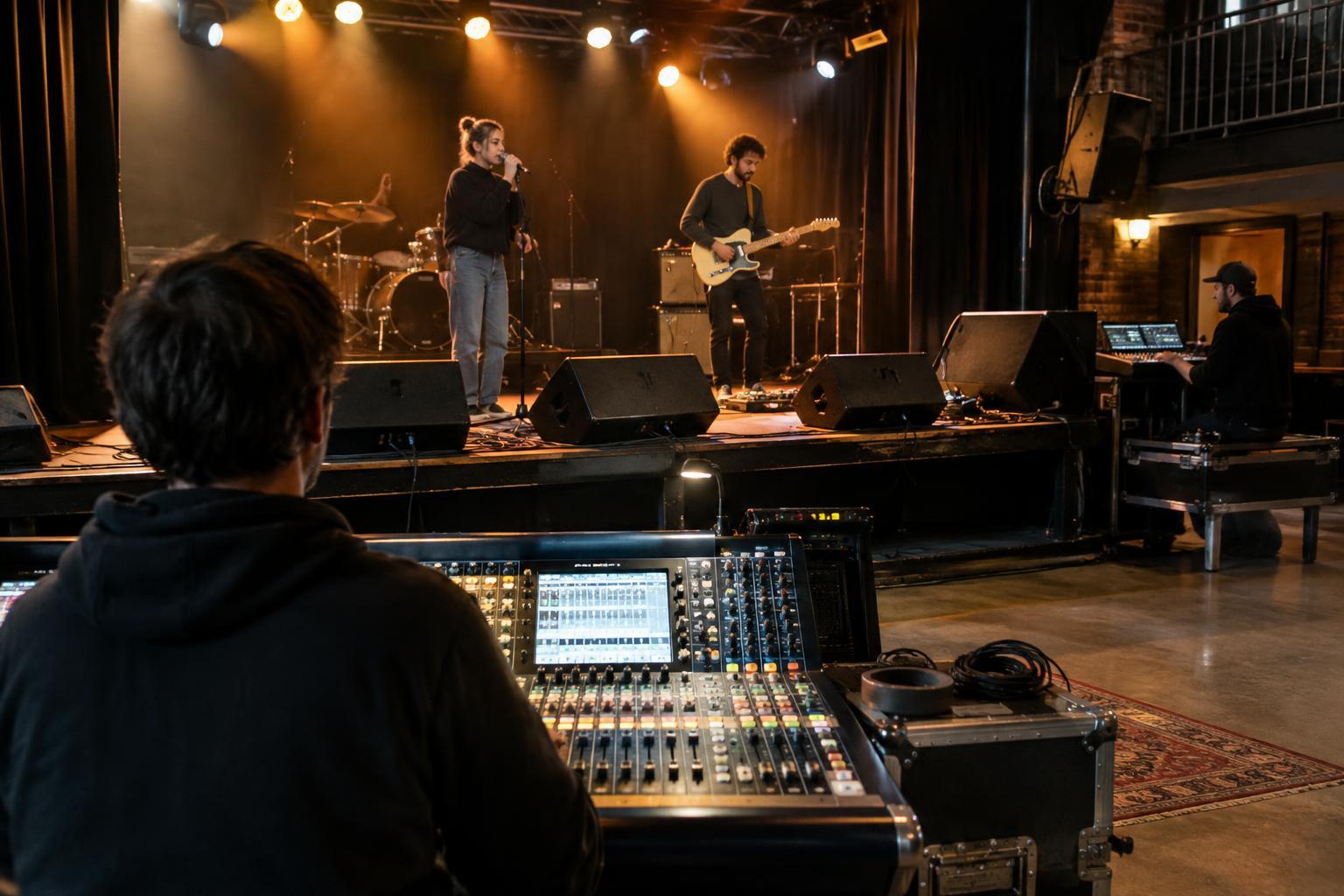
That is why live shows often use separate monitor mixes. Microphones and instruments feed a sound system, and selected signals are sent back to performers through floor speakers, commonly called wedges, or through in-ear monitors. A front-of-house mix is shaped for listeners in the room; a monitor mix helps a musician keep time, find a pitch and hear cues from the rest of the group. One performer may need more lead vocal, while another mainly wants the kick drum and bass.
What a wedge does
A wedge is a speaker placed on the stage floor and aimed toward a performer. It keeps the musician connected to the natural sound of the room while adding whatever is hard to hear. A singer might ask for their voice and a little guitar; a drummer might want vocals and an instrument that carries important cues. With enough available mixes, different wedges can carry different balances.
Wedges are straightforward to use because performers can hear them without wearing anything. They also let musicians hear nearby bandmates and audience response directly. But wedge sound spills into microphones and across the stage. If a microphone picks up too much sound from a nearby speaker, the system can produce the ringing or howling known as feedback. Careful speaker placement, microphone technique and sensible levels help, though a crowded or loud stage can still be difficult to balance.
Where a musician stands matters. Move away from a wedge, turn toward a loud amplifier or step in front of a drum kit, and the balance changes. For performers who move around, one floor speaker may not provide a consistent reference throughout a song.
What changes with in-ear monitors
In-ear monitors, often shortened to IEMs, deliver a monitor mix through earpieces rather than a floor speaker. The signal may travel by cable or through a wireless receiver worn by the performer. Because the sound is close to the ear, it can stay more consistent as a musician moves. Reducing the number of wedges can also reduce stage spill, giving microphones less competing sound to pick up.
That separation creates a different listening experience. Well-fitting earpieces reduce outside sound, so the mix must contain the parts a performer needs. A missing vocal cue or an instrument set too low may be more noticeable than it would be on an open stage. Some productions include audience or room microphones in the monitor mix to restore a sense of space. Those microphones are there to help performers feel connected; they are not a substitute for a clear musical mix.
IEMs are not automatically better or safer simply because they sit in the ear. Listening level and fit still matter, and a poorly balanced mix can tempt someone to turn up the volume. Wireless systems introduce practical concerns too, such as battery management and signal reliability. Many performers value the consistency of in-ears, while others prefer the open, physical feel of wedges.
How performers shape a useful mix
A good monitor mix is not necessarily a miniature version of the full concert sound. It is a working tool. A vocalist may need enough of their own voice to judge pitch, plus an instrument that establishes harmony. A drummer may need bass and a vocal that signals entrances. Too many loud sources can mask the very cue someone is trying to hear.
During soundcheck, performers and the monitor engineer can establish a starting balance. Specific requests are more useful than asking for everything to be louder: “more lead vocal in my mix” identifies both the sound and the destination. When several musicians share a wedge or monitor mix, requests may need compromise. A change that helps one person can make the same speaker less useful for someone else.
The mix can also need attention during a set. A player changes instruments, a singer moves to a different microphone, or the arrangement shifts from a sparse verse to a dense chorus. Monitor adjustments are part of keeping a performance comfortable and coordinated, not evidence that anything has gone wrong.
Why listeners should care
Stage monitoring is easy to overlook because its purpose is to help performers, not to attract attention. Yet it shapes what musicians can do together. Hearing a quiet count-in, a harmony line or the attack of a bass note can make it easier to enter at the right moment and respond to one another.
The next time you see a performer point toward a floor speaker or touch an earpiece, they may be checking that connection. Wedges and in-ears solve the same basic problem in different ways: they give musicians a dependable view of the music from their place on stage. Neither replaces attentive playing, but a useful monitor mix gives that attention something clear to work with.