Make room for nerves in the plan
A live performance asks you to do familiar things in an unfamiliar-feeling situation. There may be lights, an audience, a tight changeover and no chance to restart. Feeling nervous under those conditions does not mean you are unprepared. The useful question is not “How do I stop feeling this?” but “What can I still do well while I feel it?”
Start by separating what you can control from what you cannot. You can rehearse your material, check your equipment and agree on cues with other performers. You cannot decide whether every person in the room will pay attention or whether every note will land perfectly. Put your preparation time into the first list. It gives you something concrete to return to when your attention drifts toward the second.
Rehearse the performance, not just the material
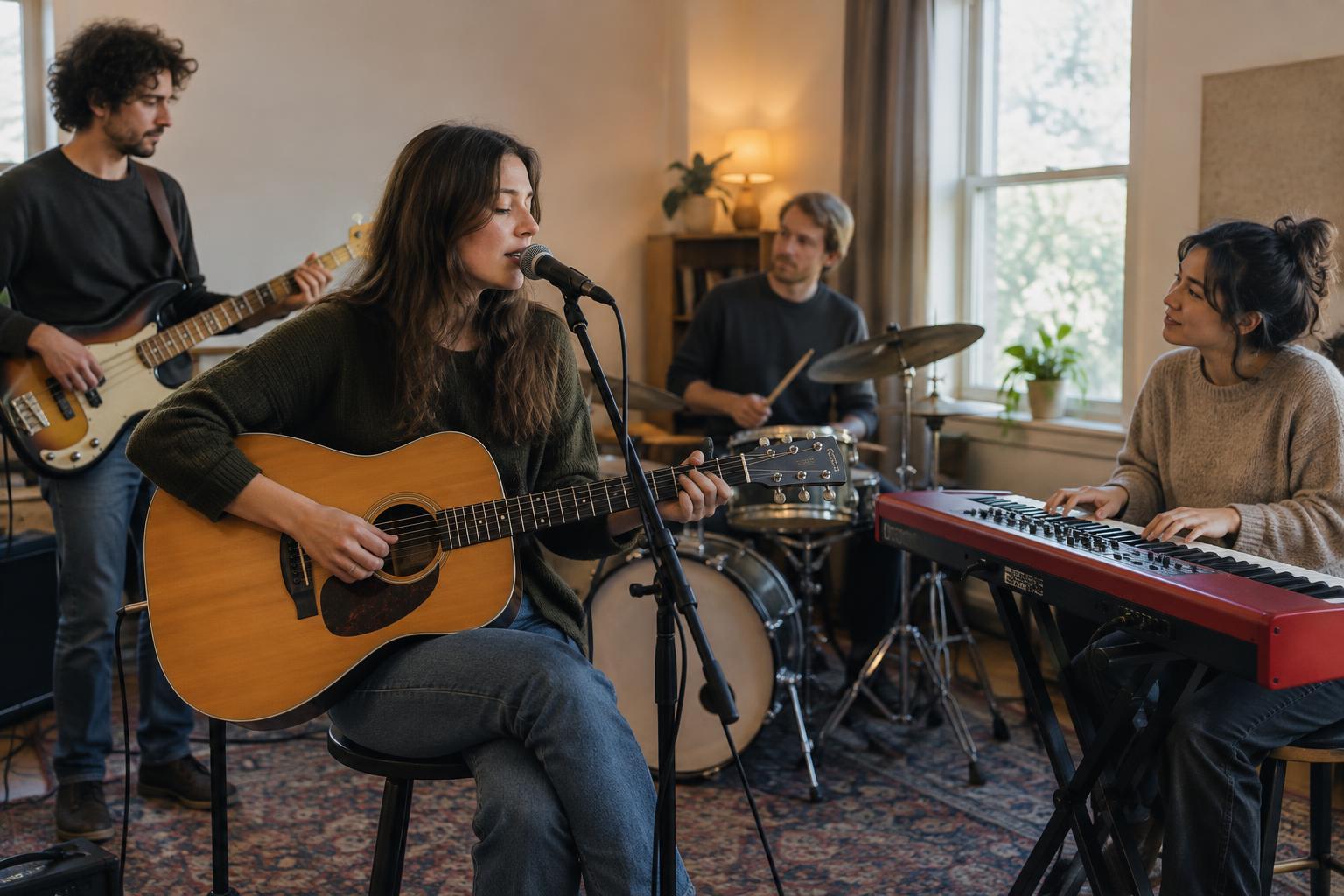
Knowing each song or segment is only part of being ready. Practice the transitions between them: where you stand, who starts, how you signal an ending and what happens if someone needs a moment. If you will speak to the audience, try a few short introductions aloud. They need not be scripted word for word; the aim is to make speaking into a microphone feel less like a surprise.
Pay special attention to the opening. Choose a first piece or action you know well, if you have that choice, and rehearse the moments immediately before it. A dependable beginning gives you a route into the set while you adjust to the room. Run through at least one rehearsal without stopping for small mistakes. That helps you practice continuing, which is a skill in its own right.
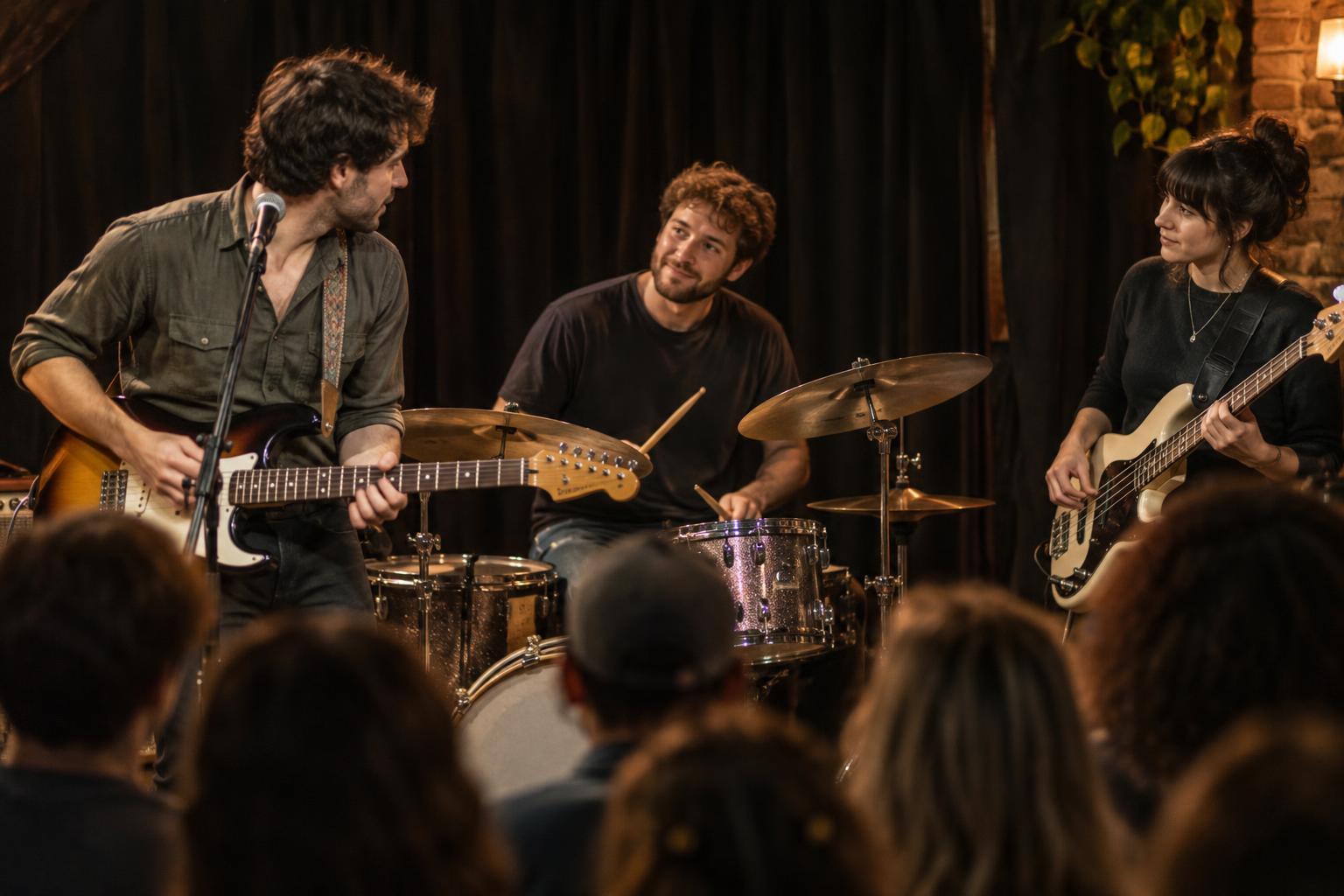
For a group, agree in advance on a simple recovery cue. It might mean returning to a chorus, holding a groove or waiting for one person to lead the next entrance. The cue is not an expectation that something will go wrong. It is a way to keep one uncertain moment from becoming a debate onstage.
Keep the pre-show routine simple
A useful routine should fit the venue rather than require perfect conditions. Give yourself enough time to find the stage, confirm what you need for your setup and put essentials where you can reach them. Keep a short checklist for items that are easy to forget, such as a pick, a cable, a setlist or water. Once those checks are done, resist repeating them endlessly unless something has changed.
In the last few minutes before going on, choose one small action that helps you settle: loosen your shoulders, feel your feet on the floor or take a comfortable breath. Then direct your attention to a practical cue, such as the first count-in or your opening line. A routine is most helpful when it gives you a next step, not when it asks you to measure whether you feel calm enough.
Find an anchor while you are onstage
Nerves can pull your attention toward imagined judgments: how you look, whether the crowd likes you or what a mistake might mean. Give yourself an anchor in the performance instead. Listen for the pulse, watch a bandmate’s cue, or focus on the phrase you are playing now. If you are performing alone, pick a familiar physical or musical landmark, such as the feel of an instrument under your hands or the start of the next verse.
If you make a mistake, aim for the next useful action. Keep time, rejoin at a known point or give your collaborators a clear signal. You rarely need to explain every slip to the audience. Likewise, a quiet crowd is not necessarily an unhappy one; people show attention in different ways. Let what you can hear and see guide necessary adjustments, without turning every reaction into a verdict on the set.
Review the show without putting yourself on trial
Afterward, allow a little distance before deciding how it went. The most vivid moment is not always the most representative one. When you do reflect, name a few specific things that worked and one or two things to practice next time. “We found the second entrance together” is more useful than “That was good,” just as “I lost my place after the break” is more useful than “I was terrible.”
Stage confidence often grows through repeated experiences of preparing, performing and recovering. Some nerves may remain, especially when a show matters to you. You do not need to wait for a fearless night to connect with an audience; you need a workable way to begin, stay with the music and continue when the unexpected happens.