The work begins before anything goes up
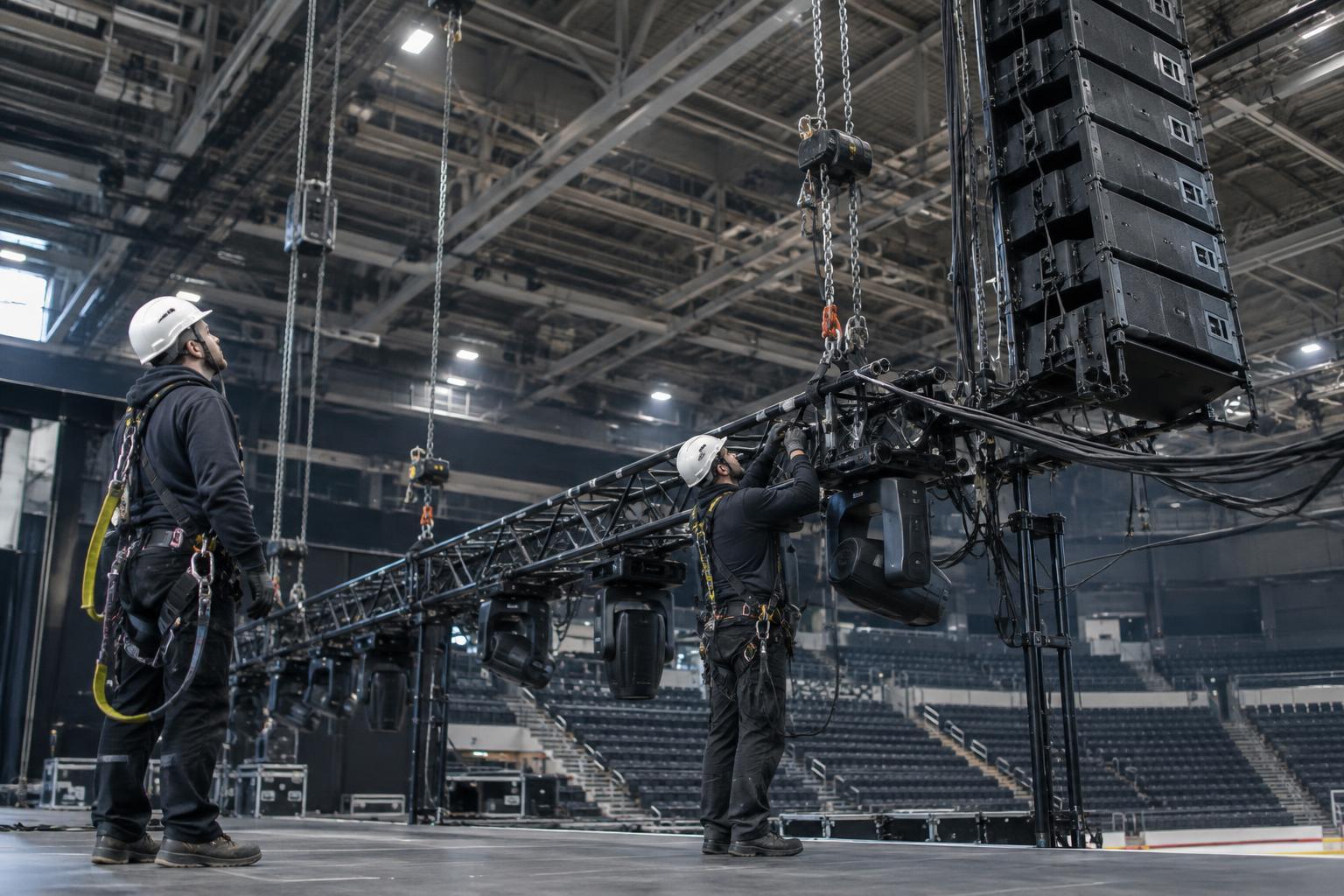
Look above a concert stage and you may see lighting bars, speaker arrays, video panels, curtains or scenery. Each item needs a way to be supported, raised and held in place. Rigging crews do not treat the ceiling as a collection of convenient hooks: they work from a plan that connects each suspended item to an approved support point and accounts for the equipment carrying it.
That plan begins with information from the production and the venue. Crews need to know what is being hung, where it must sit, and what the building or temporary structure is permitted to support. The combined load matters, as does how it is distributed. An item may be within a hoist’s capacity yet still be unsuitable for a particular attachment point. For complex or unfamiliar arrangements, qualified structural and rigging specialists may need to review the design before work proceeds.
A chain of responsibility, not just a chain of hardware
A suspended speaker or lighting fixture depends on more than the visible cable or chain. Its path to the supporting structure can include attachment hardware, lifting equipment and intermediate connections. The crew checks that the specified components suit their intended use and that the connections match the approved plan. Substituting a part because it appears similar can introduce a weakness that is difficult to spot from the ground.
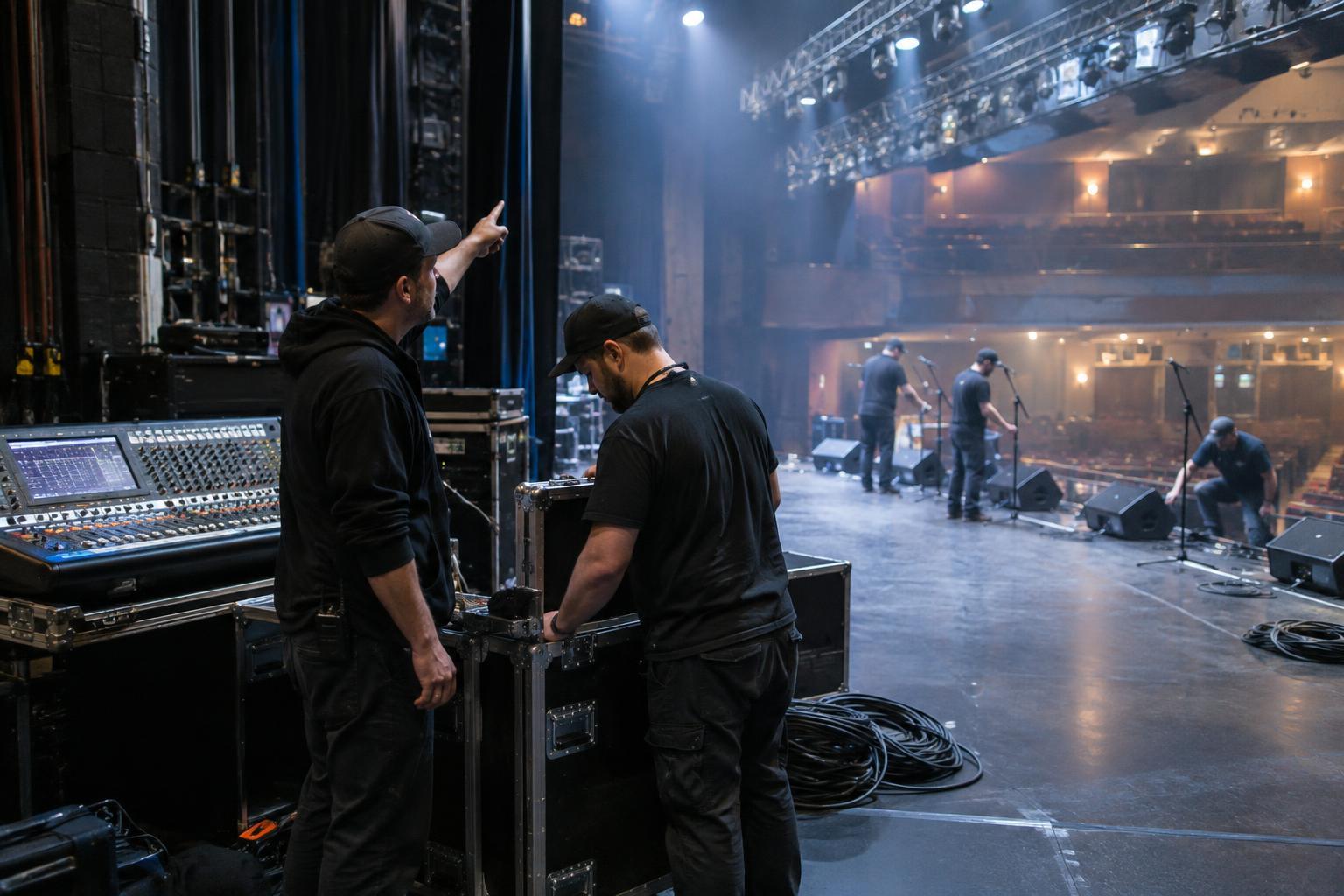
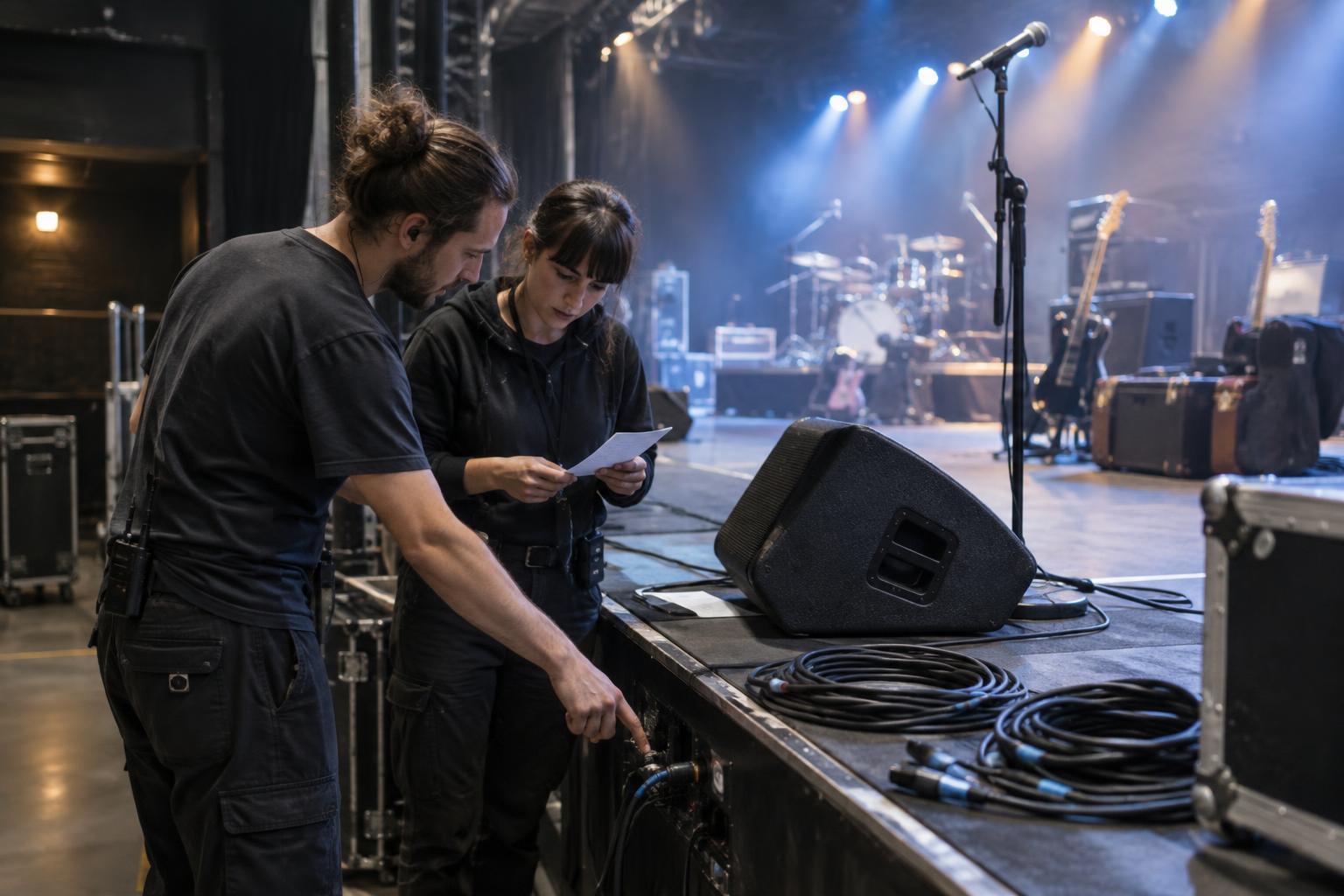
Clear roles are just as important as sound equipment. A production rigger may coordinate with a venue representative, touring crew, lighting and audio departments, and the people operating lifts or hoists. Everyone needs to understand which points are available, who authorizes changes and how concerns will be reported. If a screen grows heavier, a fixture moves or an added cable changes the arrangement, the original plan should be revisited rather than assumed to cover the new setup.
Checks happen before, during and after a lift
Before equipment is raised, trained crew members inspect the parts they will use and check the intended attachment locations against the plan. They look for visible damage, missing identification, poor fit or anything else that calls a component into question. Inspection is not a promise that a system can never fail; it is one way of finding problems before people are exposed to them.
During a lift, communication helps the team keep movement controlled and notice anything unexpected. Crews keep other workers clear of the area beneath moving equipment and pause if the load behaves differently from what they anticipated. Once an item reaches position, they check its placement and connections before the next stage of work continues. Where required by the design or applicable rules, additional restraints provide protection if a primary connection fails.
The stage is a changing workplace
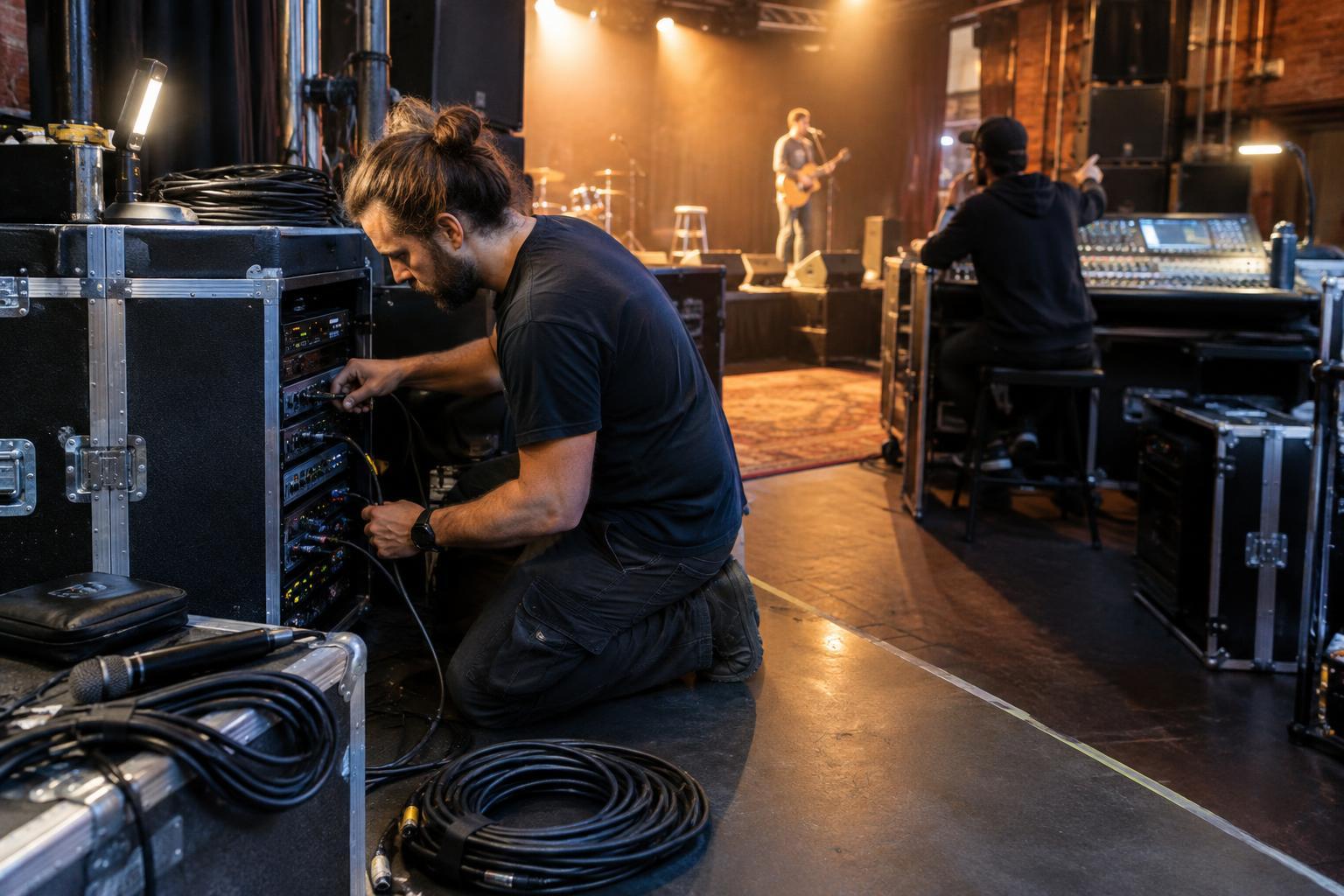
Rigging rarely happens in isolation. Lighting technicians need access to fixtures, audio crews need speakers aimed for the room, and video teams may need screens positioned where sightlines work. Those goals can compete for space and support points. A careful crew resolves conflicts through the production plan rather than improvising around another department’s equipment.
Conditions can change after installation, too. Outdoor stages may face wind and weather; indoor productions may add scenery or adjust a set between performances. Cables, movement and access for later maintenance all need consideration. Teams use the venue’s procedures and the equipment’s requirements to decide whether a change is acceptable, needs further review or requires equipment to be lowered. The safest decision may be to delay work while an uncertainty is resolved.
What the audience does not see
By showtime, much of this work has disappeared into the background. The audience sees a clean stage picture; the crew sees the result of decisions about support, load paths, equipment condition and coordination. That is part of the craft behind live performance: making a complicated setup dependable enough that performers and listeners can focus on the music.
No short article can serve as a rigging procedure. Requirements vary with the venue, structure, equipment and applicable rules, and overhead work belongs with trained people using approved plans. For concertgoers, the useful takeaway is simpler: the apparently effortless moment when the lights rise and the sound fills the room rests on deliberate work completed long before the first note.