The room sets the terms
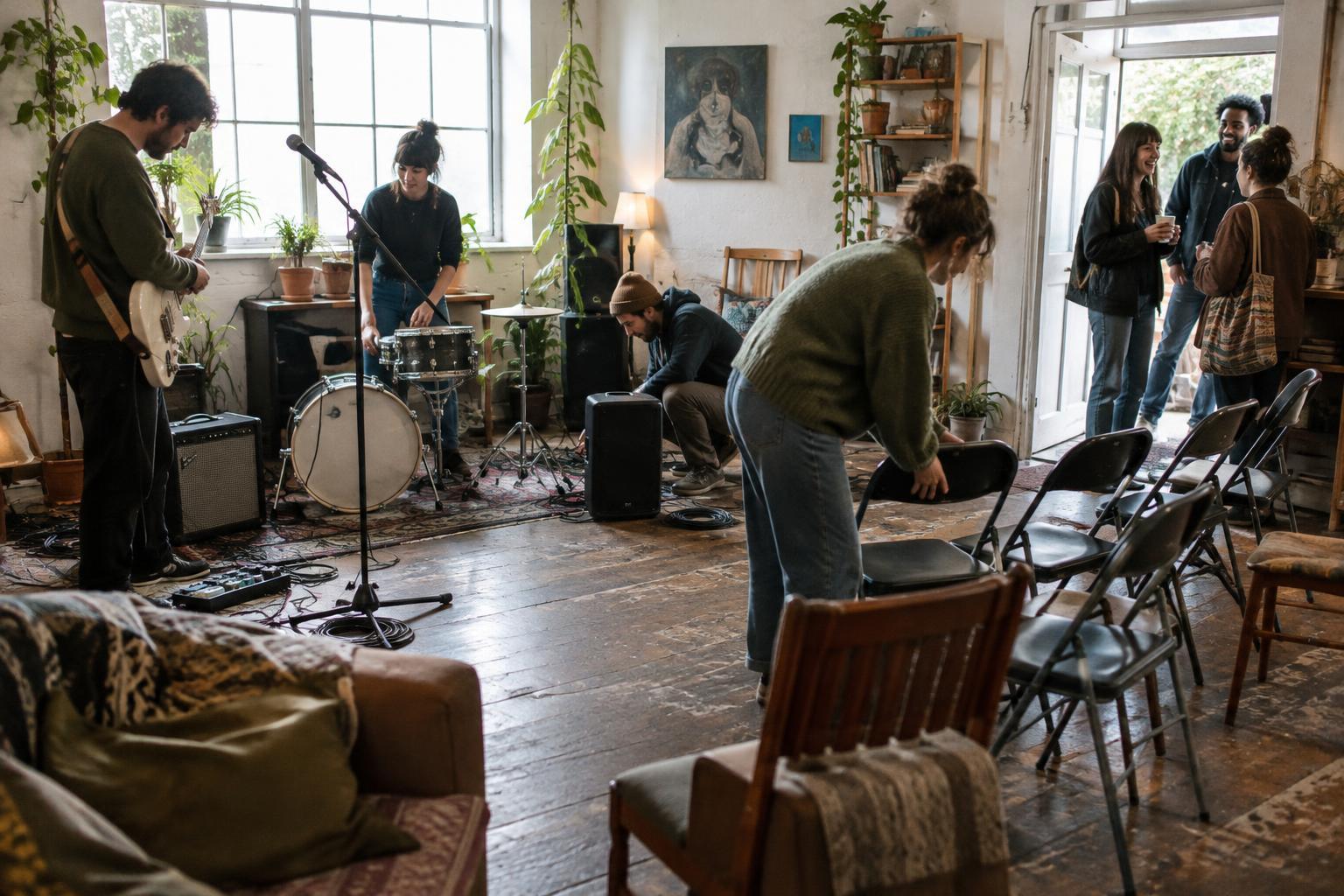
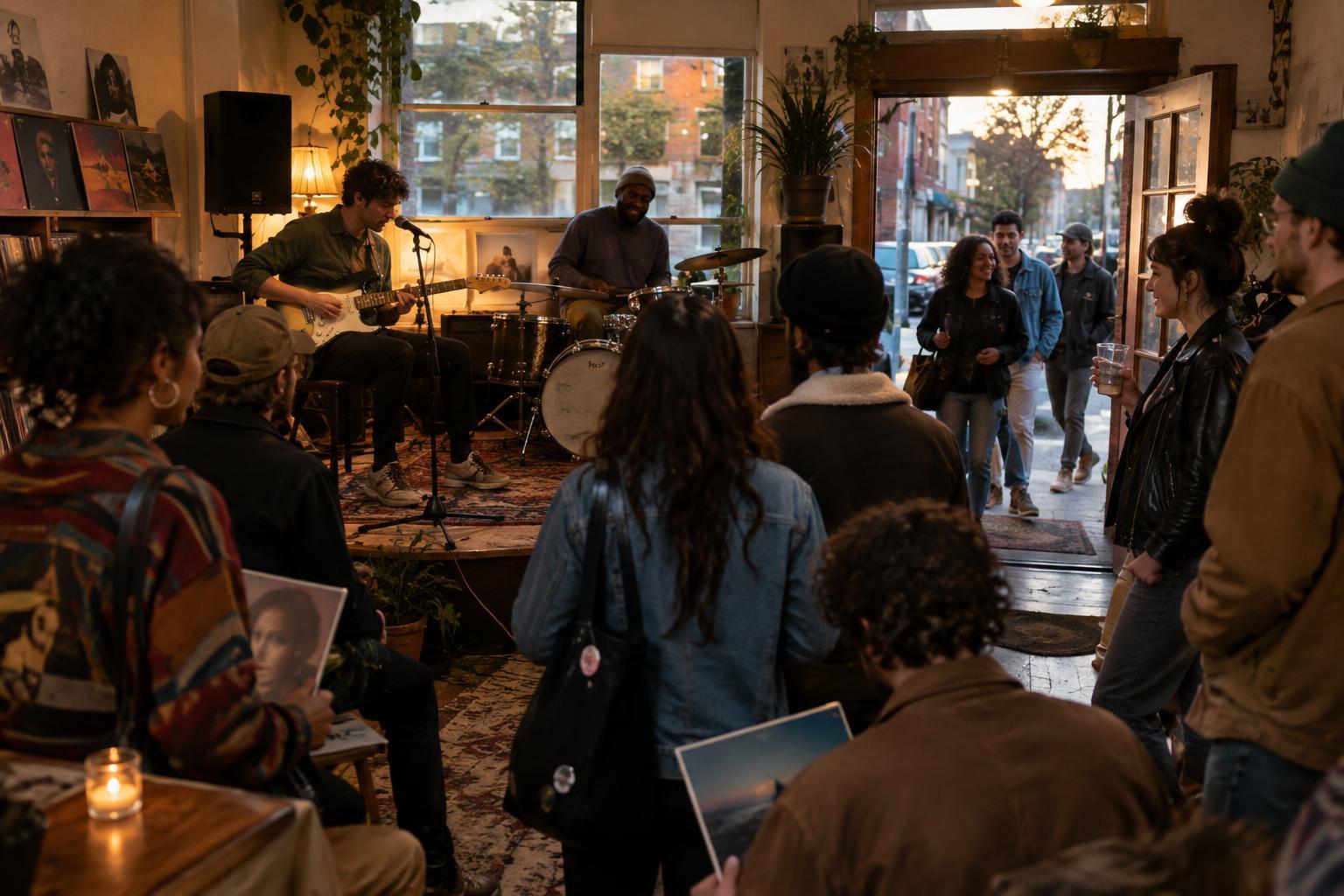
At a house show, the path from the front door to the music might pass through a kitchen or a living room. At a club, it might pass a ticket check, a bar and a dedicated stage. Neither route guarantees a better concert, but each signals a different relationship between the audience, the performers and the people making the night possible.
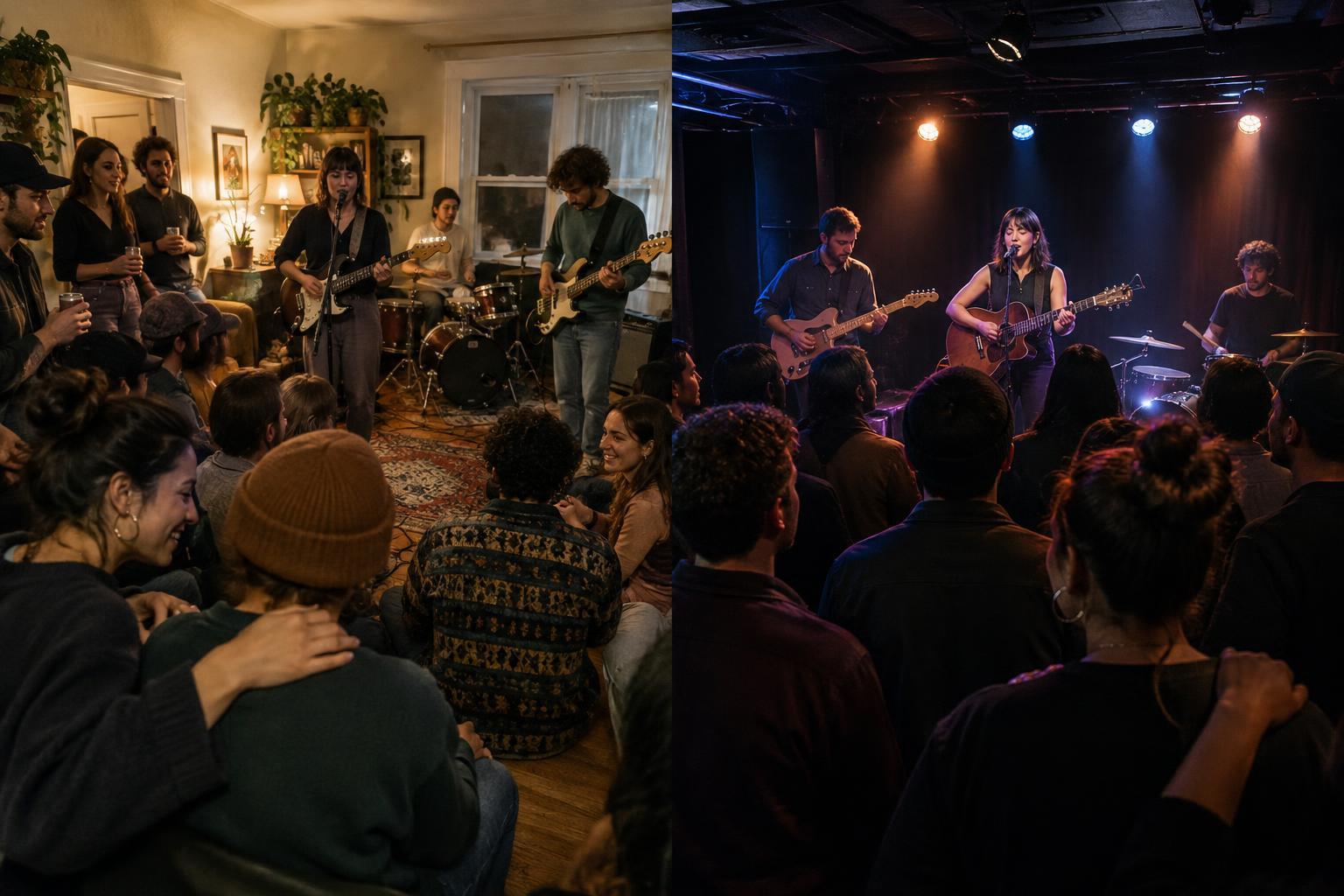
House shows often feel personal because the space usually serves another purpose the rest of the week. People may recognize the host, help move furniture or greet the band at the door. A club gives a performance a more defined frame: staff handle entry and sound, the stage draws attention, and the audience can more easily arrive without knowing anyone. These differences affect who feels comfortable showing up and what kind of participation the room invites.
How people find their place
A small house show can make conversation easy to start. Musicians and listeners may stand together between sets, and a newcomer might meet several people simply by asking where to leave a coat. That closeness can help a local scene grow through repeated encounters. It can also feel intimidating if most people already know one another. A friendly room still takes effort: introductions, clear information about the space and room for someone to enjoy the music without being drawn into a conversation.
Clubs offer a different kind of welcome. Their public-facing routines can make it simpler to attend alone: you can check in, find a spot and focus on the set. Regulars may still form a community around a venue, a promoter or a series of performances, but those connections often build across multiple nights rather than within one gathering. Neither format has a monopoly on belonging. The question is whether people can understand the room’s expectations and choose how much to take part.
What closeness does to the music
In a living room or basement, there may be little separation between performers and listeners. A quiet passage can hold everyone’s attention, while a loud chorus can feel physically immediate. The audience’s behavior becomes part of the performance: talking near the musicians, blocking a doorway or crowding someone’s equipment can change the set for everyone. Bands may adjust their arrangements or volume to suit the space, though not every house show is quiet or acoustic.
A club is typically arranged around a stage and a sound system, giving performers a clearer performance area and listeners more options for where to stand. Lighting, a sound operator and a dance floor can support music that needs room to move. That structure can create distance, but it can also let the audience respond together without feeling as though every individual reaction is on display. Good listening in either setting begins with noticing what the room and the music call for.
The work behind an inviting night
The informal feel of a house show should not obscure the work involved. Someone has to communicate the location, plan the running order, think about capacity, make space for performers and consider the people who live nearby. Guests can help by following the host’s guidance, keeping entrances clear, respecting private areas and leaving the space as they found it. If a show has a suggested contribution for performers, treating it seriously helps make the gathering more sustainable.
At a club, more of that work is assigned to visible roles. Door staff, sound crew, bartenders and organizers each shape the experience, even when the night feels effortless from the floor. Venue rules may be more explicit, while accessibility and comfort can vary widely from one space to another. Before going to either kind of show, it is reasonable to ask about entry, seating, stairs or other practical needs rather than assuming the setting will work for everyone.
Choose the experience, then help shape it
Choose a house show when you want an intimate gathering and are comfortable treating the space as someone else’s home. Choose a club when you want a dedicated performance setting, more freedom to come and go, or the energy of a larger crowd. Those are tendencies, not rules: a house show can be welcoming to strangers, and a club night can feel like a reunion of friends.
The most useful comparison is not which format is more authentic. It is how each allows people to listen and connect. Pay attention to the norms, give performers room to work and make space for other listeners. A scene becomes stronger when the people in it care for both its music and its gathering places.