The changeover starts before the previous set ends
A festival stage changeover is the transition from one performer’s setup to the next. To an audience, it may look like a brief pause filled with people moving cases and cables. For the stage crew, it is a coordinated handoff involving instruments, audio connections, lighting needs and a stage that must remain safe to use. The work varies with the size of the production and the equipment each act brings.
Much of that coordination happens in advance. Production staff gather each act’s stage plot, which shows where performers and equipment are expected to go, and an input list, which identifies the signals the sound team needs to connect. Those plans help the crew decide what can stay in place between sets, what must be moved and where incoming gear should wait. Plans are useful, but they are not guarantees: a performer may arrive with a different piece of equipment or need an adjustment once onstage.
Clearing the stage without creating a traffic jam
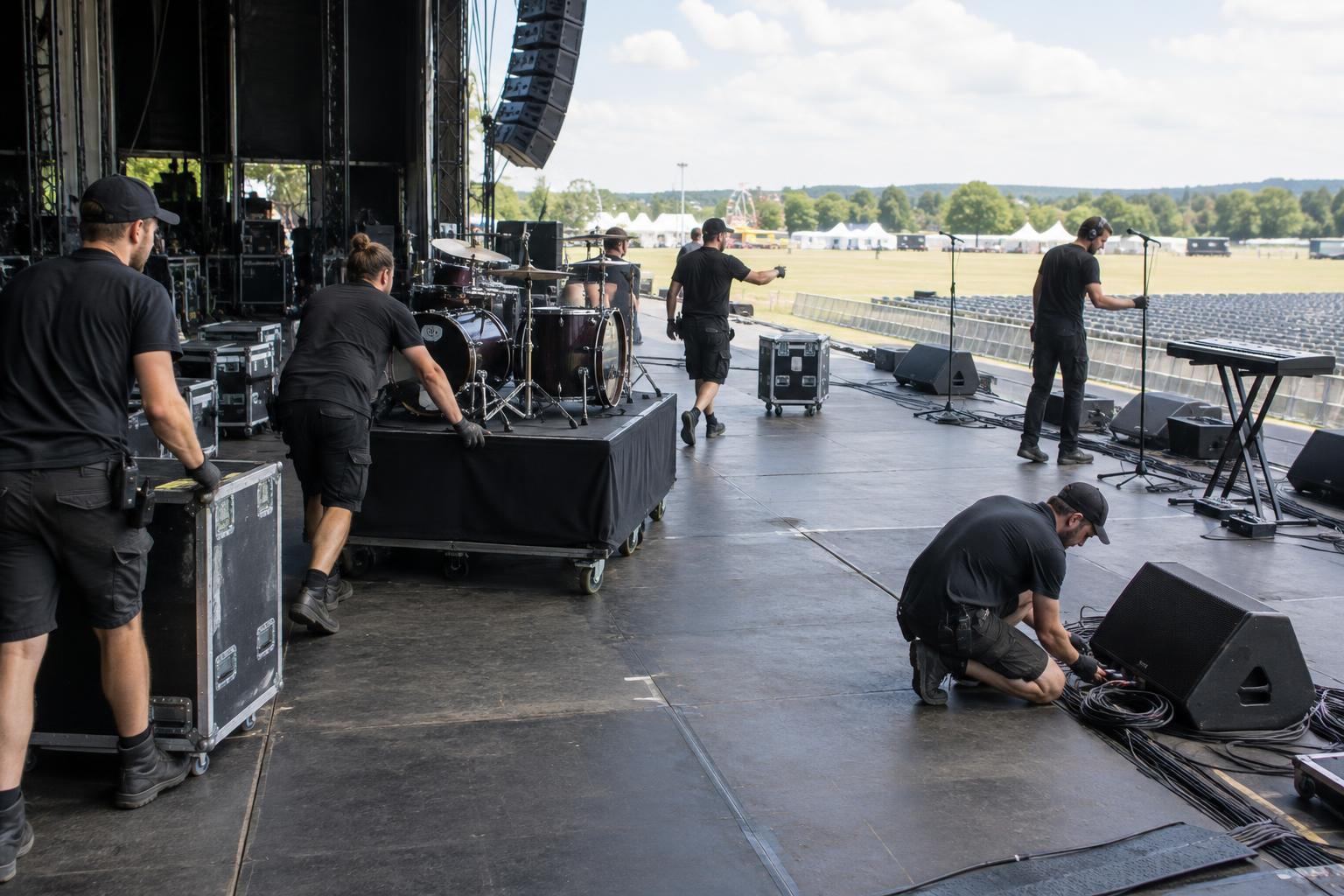
As one set ends, the outgoing act’s crew and the festival crew begin removing instruments, stands and other equipment. They may disconnect microphones and audio lines, roll amplifiers away and move cases along a designated route. At the same time, the next act’s gear may be waiting nearby, ready to move in. Keeping those two flows separate matters. A crowded stage slows everyone down and makes it easier for a cable, stand or case to end up in someone’s path.
Not every item leaves. Shared backline, such as a drum kit or amplifiers supplied for multiple acts, can reduce the amount of equipment that has to be carried on and off. Even then, settings, cymbals, pedals or microphone positions may need to change. Crew members also check the stage surface as they work, looking for loose cables, misplaced equipment and other obstacles before the next performers take their places.
Building the next act’s setup
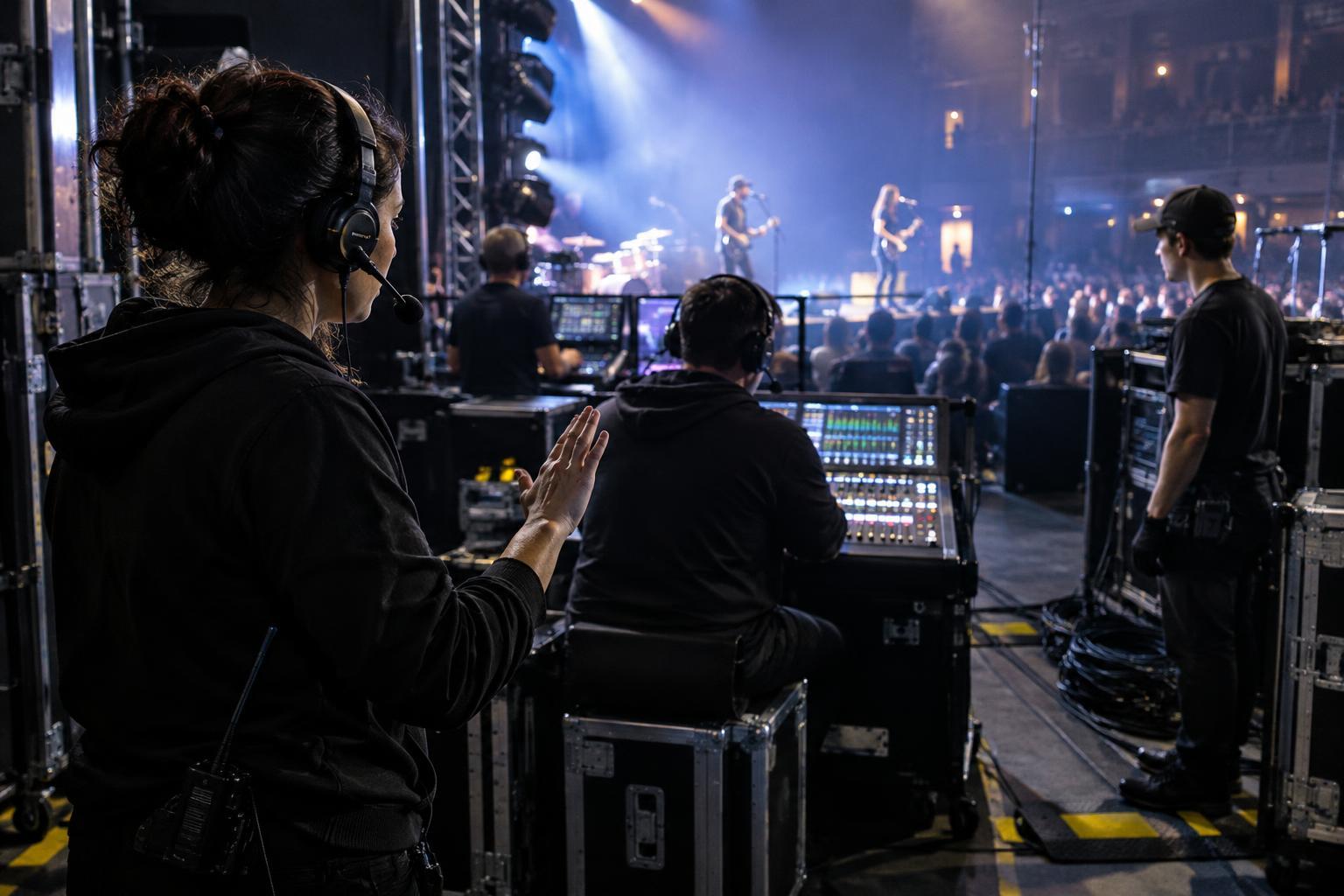
Once there is room, the incoming setup takes shape around the stage plot. Crew members place instruments and stands, position microphones, run or reconnect cables and prepare monitor speakers or in-ear monitoring connections. A stage technician may focus on a particular area, while a stage manager keeps track of the overall sequence and communicates with the sound and lighting teams. Clear roles help people work in parallel without undoing one another’s work.
The goal is not simply to put each object in approximately the right spot. A microphone must reach the intended input, cables need routes that do not interfere with performers, and a musician needs access to their instrument and monitor position. Small adjustments can have consequences elsewhere: moving a drum kit may change microphone placement, for example, while shifting a keyboard stand may require more cable length. That is why crew members confirm changes with one another rather than assuming the original plan still fits.
Checking signals before the music begins
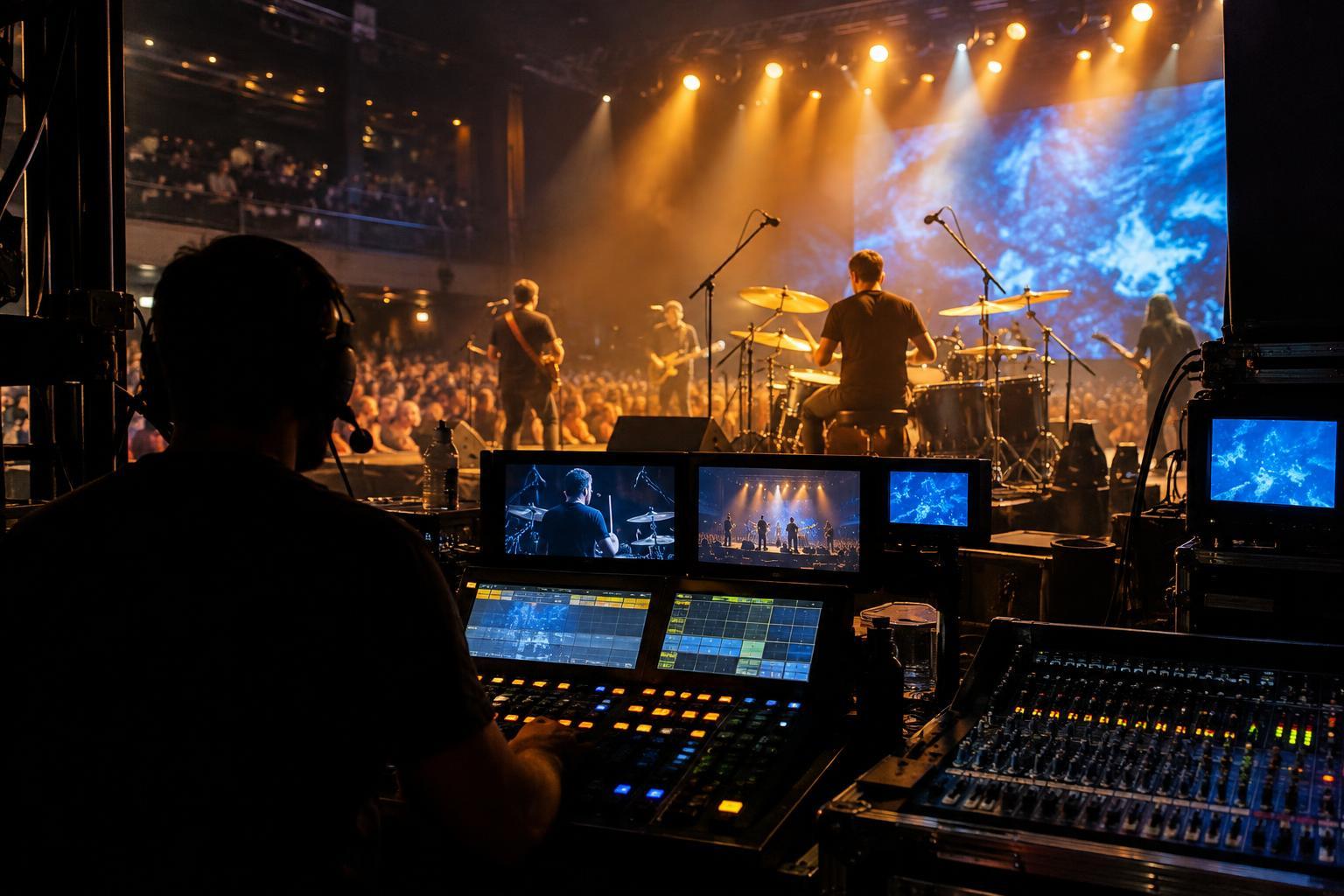
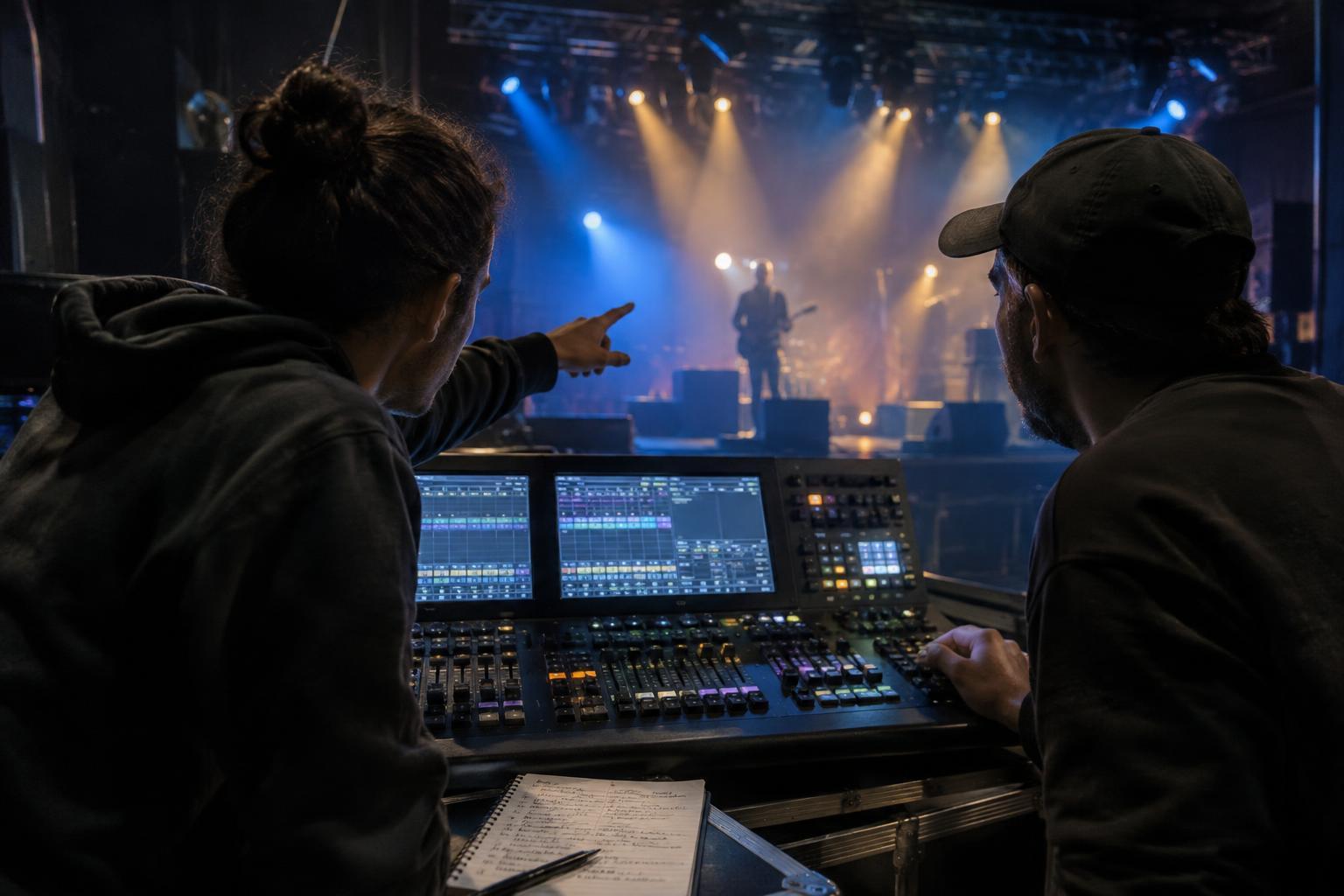
After the equipment is connected, the audio team checks that signals reach the mixing system. A line check typically confirms that each expected input works: a technician might ask for a drum hit, a few notes from an instrument or a brief vocal into a microphone. This is different from a full soundcheck, where an act plays long enough to refine its overall sound. Festival schedules do not always leave room for a full soundcheck between performances.
The front-of-house engineer, who mixes what the audience hears, and the monitor engineer, who manages what performers hear onstage, may both need information from these checks. If an input is silent or a monitor is not receiving the right signal, the team traces the problem through the microphone, cable, connection and settings. Lighting operators may also confirm any act-specific cues or stage positions. Each check is a chance to catch a problem before it becomes part of the performance.
A safe handoff matters more than an invisible one
A changeover often happens under schedule pressure, but it is not just a race against the clock. The stage manager helps determine when the space is clear, the performers are ready and the technical teams can hand over to the show. If something essential is not working or an equipment move is unsafe, the crew may need to pause, simplify a setup or revise the plan. The right choice depends on the situation rather than on a single standard routine.
For concertgoers, the interval between sets can be part of the live experience: a moment to reset while the room anticipates a different sound. Behind the stage, it is a compact piece of production work. When a changeover goes smoothly, the audience may notice little more than the next act stepping into place. That apparent ease is the result of preparation, communication and careful checks by people whose work is most visible when something needs fixing.