One show, two kinds of expertise
A touring act arrives with a performance to deliver. A venue provides the space where that performance must work. That distinction shapes much of the production workload: touring crew members know the artist’s music, equipment and preferred way of running a show, while venue staff know the room, its installed systems and its operating routines.
There is no universal dividing line. A small act may travel without a dedicated sound engineer and rely heavily on venue staff. A larger production may bring engineers, technicians and specialized equipment while still needing local help. The useful question is not simply “Who is in charge?” but “Who is responsible for this task, and who needs to approve or support it?”
The advance: agreeing on the plan before arrival
Production coordination often begins with an advance: an exchange of practical information before show day. The touring side may send a stage plot showing where performers and instruments go, an input list for microphones and connections, and details about the equipment it plans to bring. The venue can respond with information about its stage, sound and lighting systems, loading access, available staff and schedule constraints.
These documents describe a plan, not a guarantee that everything will fit without adjustment. A venue might have a different microphone, a smaller backstage area or limited time between performances. Raising those differences early gives both teams room to choose workable alternatives. Clear notes about what the tour expects the venue to supply—and what the tour will supply itself—can prevent a surprising amount of confusion at load-in.
Equipment and people on show day
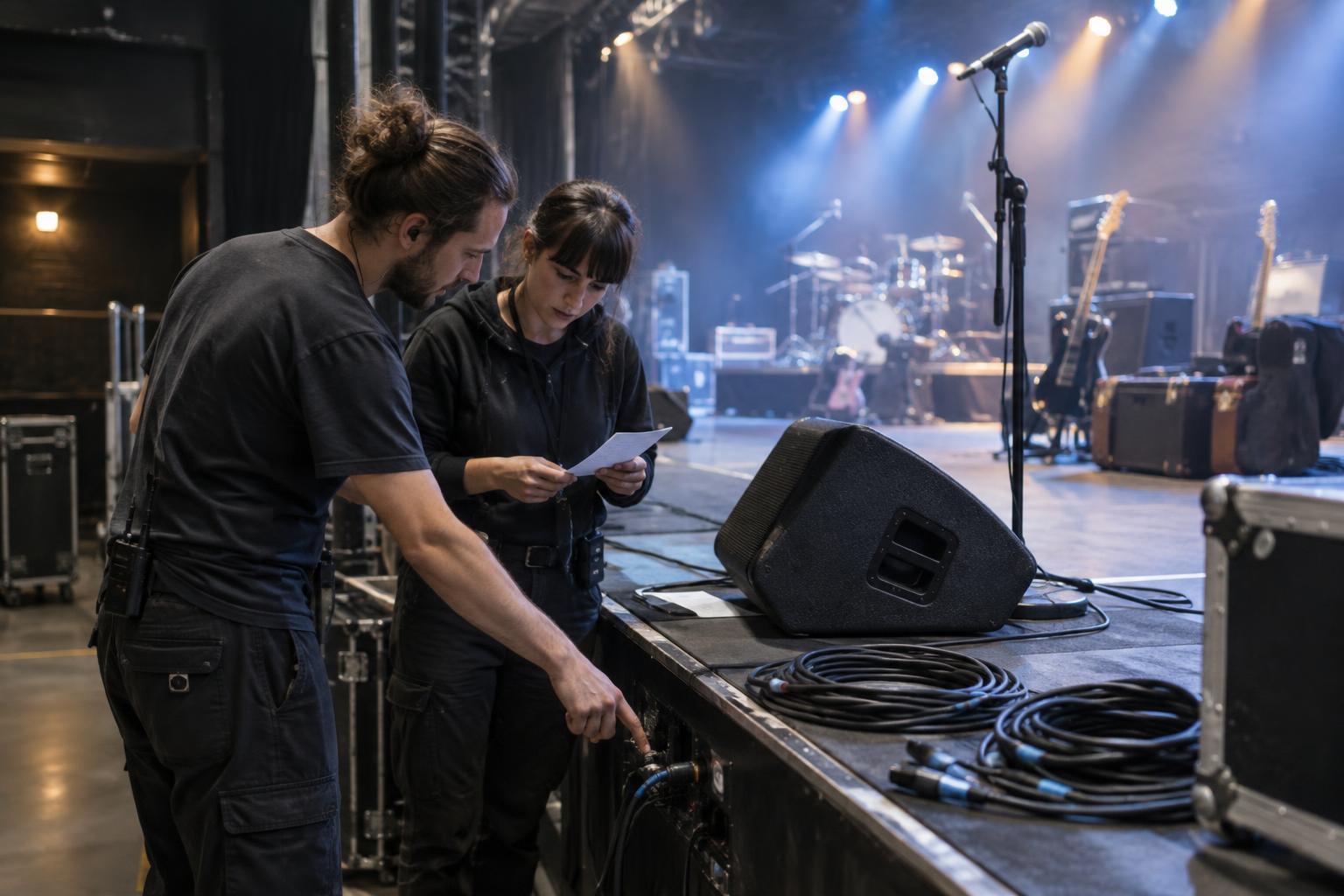
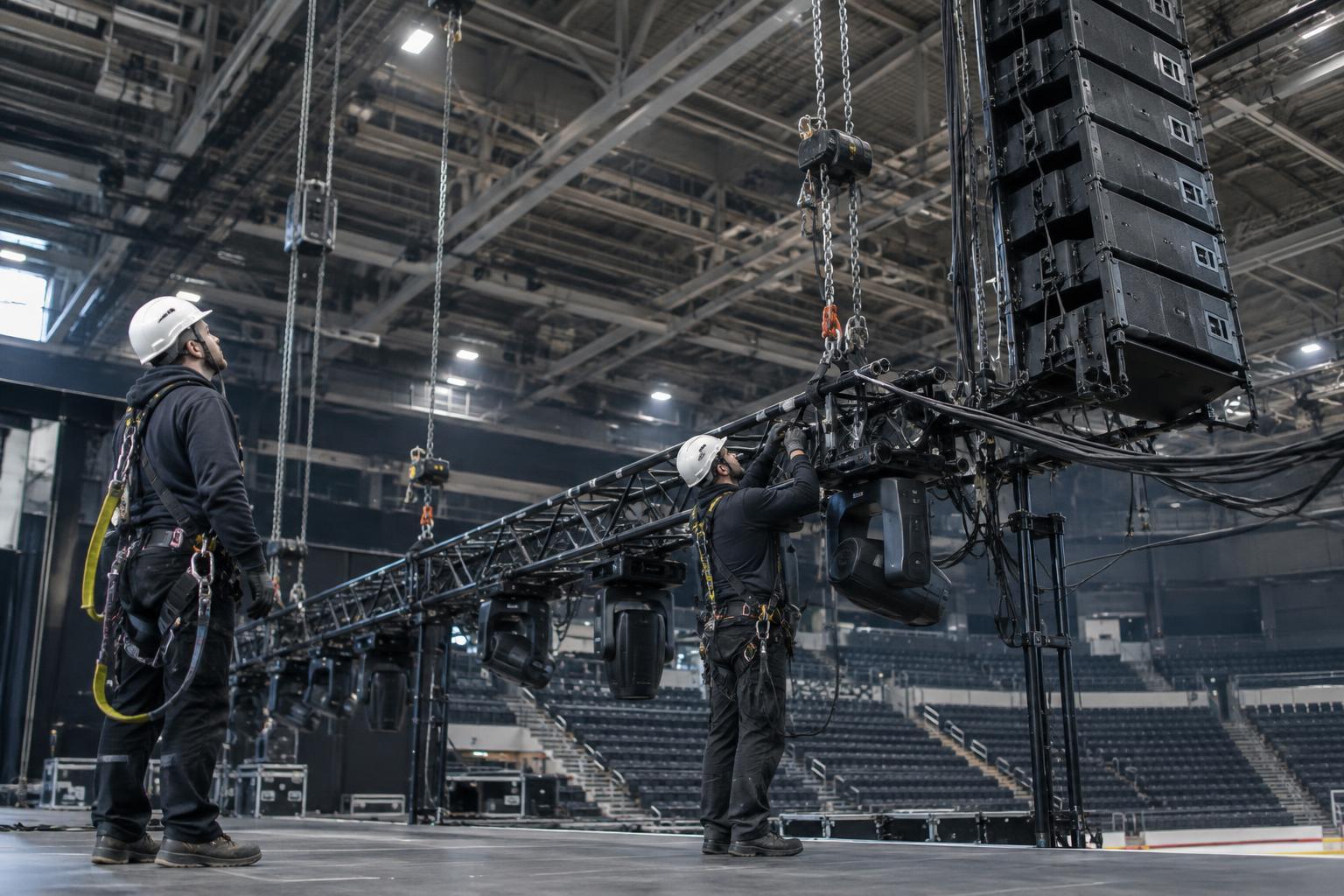
Venue staff commonly prepare the room and the equipment that lives there. Depending on the venue, that may include the house sound system, stage power, microphones, lighting fixtures and basic stage gear. They may also guide loading, explain how the room is operated and help position equipment. Touring crew members commonly unpack and set up the artist’s instruments, playback equipment, consoles or other gear they have brought, with local staff assisting where agreed.
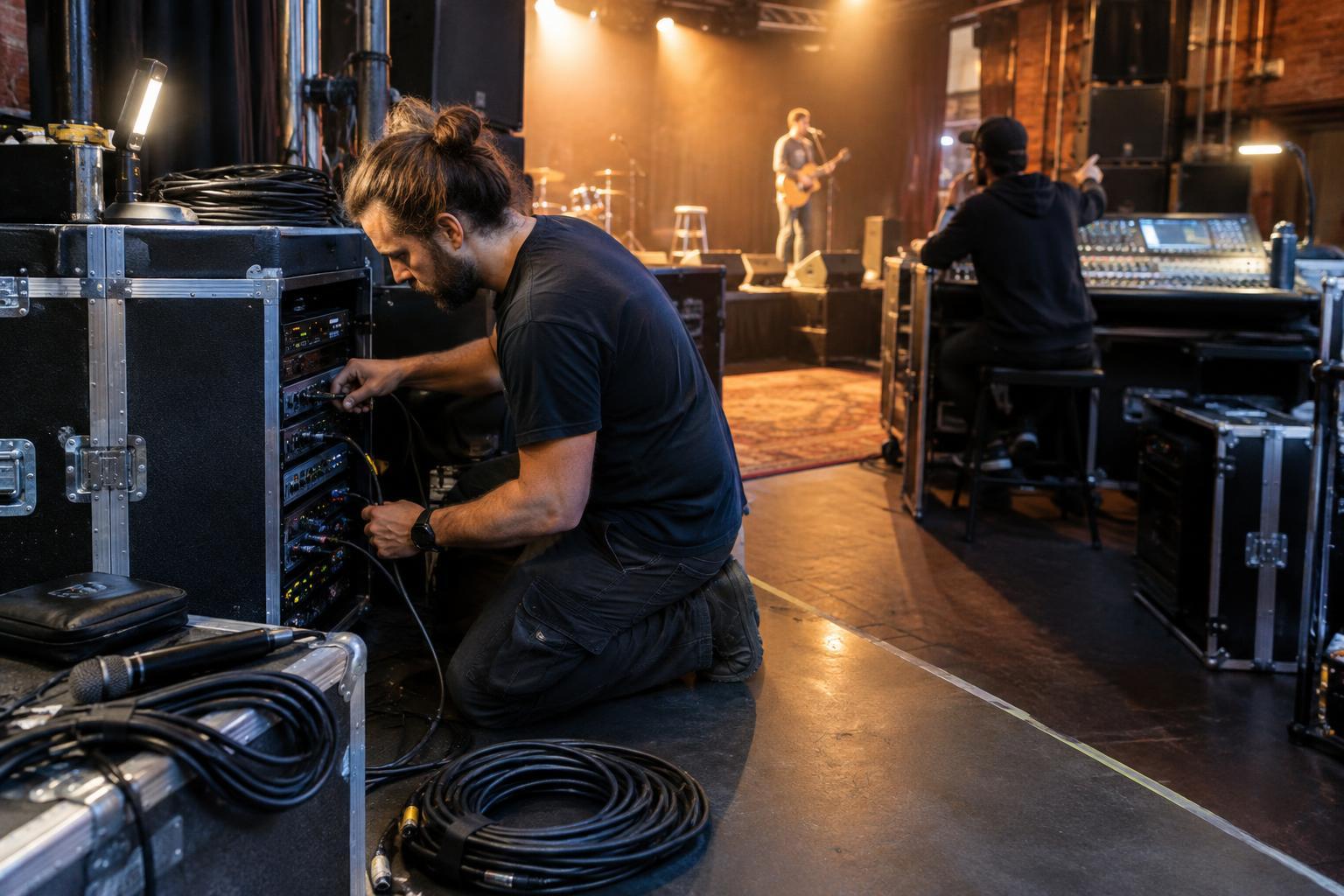
The person operating each system depends on the production. A touring front-of-house engineer may mix the sound the audience hears using the venue’s speakers, while a house engineer helps connect and configure the system. On another show, the house engineer may handle the entire mix. Monitor mixes—the sound performers hear onstage—might be run by a touring engineer, a venue engineer or the front-of-house engineer. Lighting can be divided in similar ways: one person may design and call the looks, while another helps adapt them to the fixtures available in the room.
Handoffs during the performance
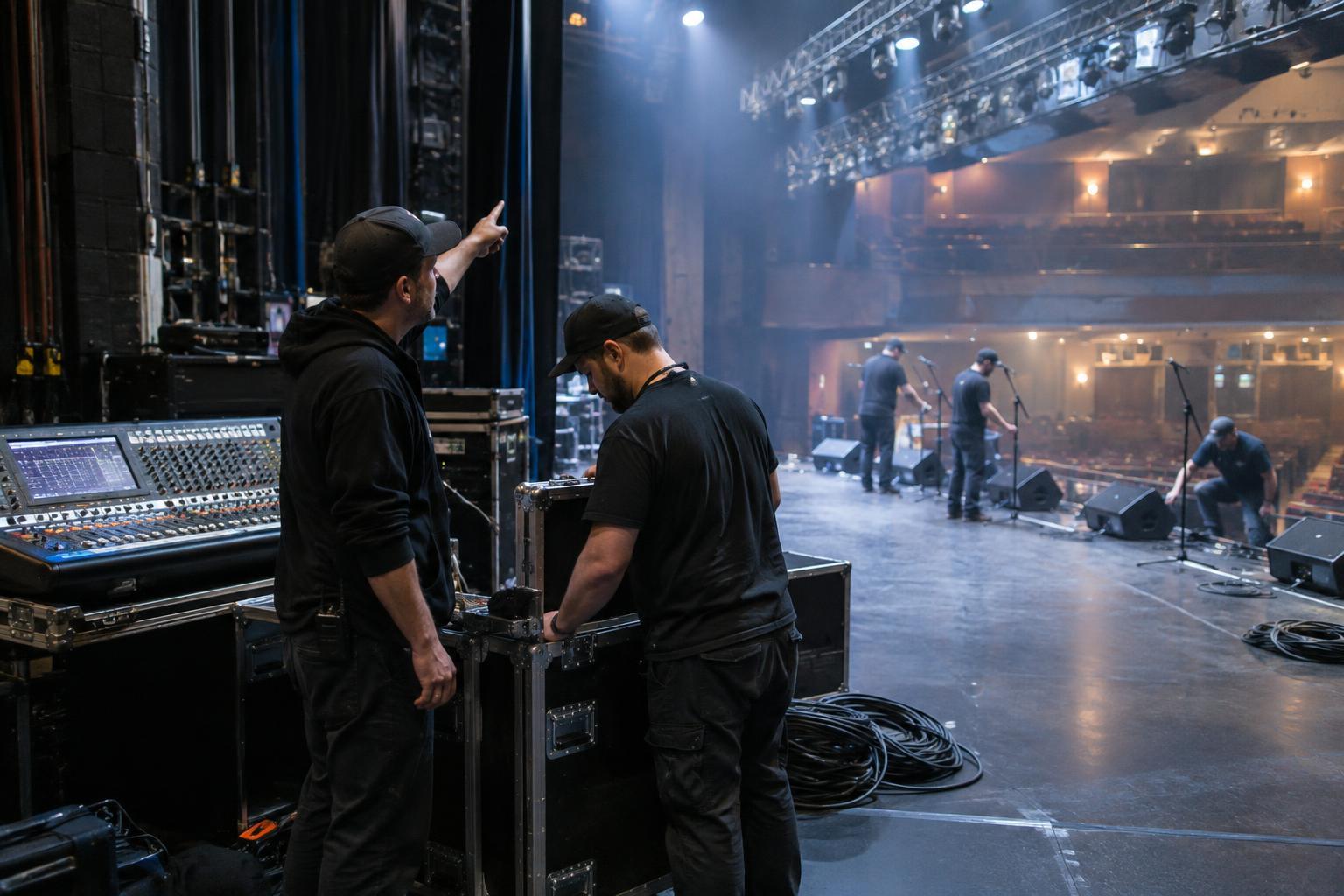
Soundcheck is a chance to test more than volume. Crews can confirm that every input reaches the right place, that performers can hear what they need and that lighting cues make sense in the space. It is also a chance to identify who will handle a problem if something changes mid-show. If a microphone fails, for example, the quickest response may depend on who has a spare ready and who can reach the stage without interrupting the performance.
Some responsibilities remain tied to the venue even when a tour brings an extensive crew. Venue personnel know the building’s access routes, house procedures and limits on what can be changed. The touring team knows which parts of its setup are essential to the performance. A stage manager, production manager or another designated contact can help keep these perspectives aligned, particularly during changeovers when equipment and people need to move quickly.
Why clear ownership matters
Good production work is often hard to notice from the audience. That is partly because crews have made decisions in advance: who connects each piece of gear, who checks it, who operates it and who puts it away. Naming a point of contact for each area makes it easier to resolve questions without sending several people to solve the same problem—or assuming someone else has done it.
The division is flexible because shows and rooms are different. What makes it effective is a shared understanding of the plan, a way to communicate changes and respect for both kinds of expertise. When venue and touring crews work from the same expectations, they have more time to focus on the result the audience came for: a performance that can unfold without the mechanics getting in its way.