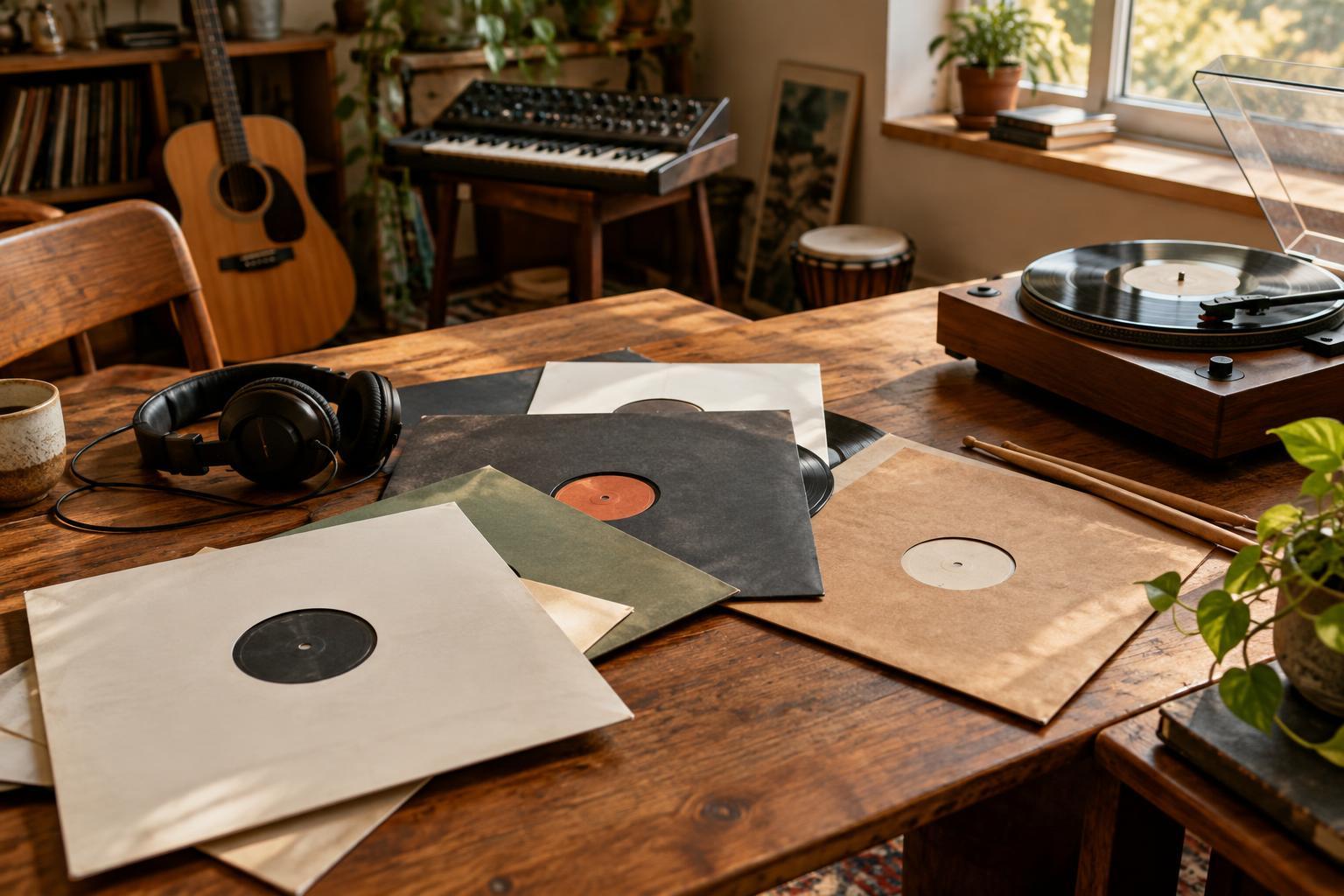
Start with the sound that caught your attention
When a song stays with you, it is tempting to look for more music by the lead artist alone. Album credits offer another route. They name some of the people who played, arranged, recorded or shaped the music, giving you several possible paths to explore. A bass line, a vocal harmony or the spacious feel of a recording may point you toward a collaborator whose work appears on other records.
Begin with one track rather than trying to investigate an entire album. Listen again and describe what you want more of in ordinary words: a sharp drum sound, a warm string part or a restrained vocal production. Then check the credits for that track. This small step keeps your search connected to what you actually enjoy, instead of turning it into a long list of unfamiliar names.
Find credits and read them with care
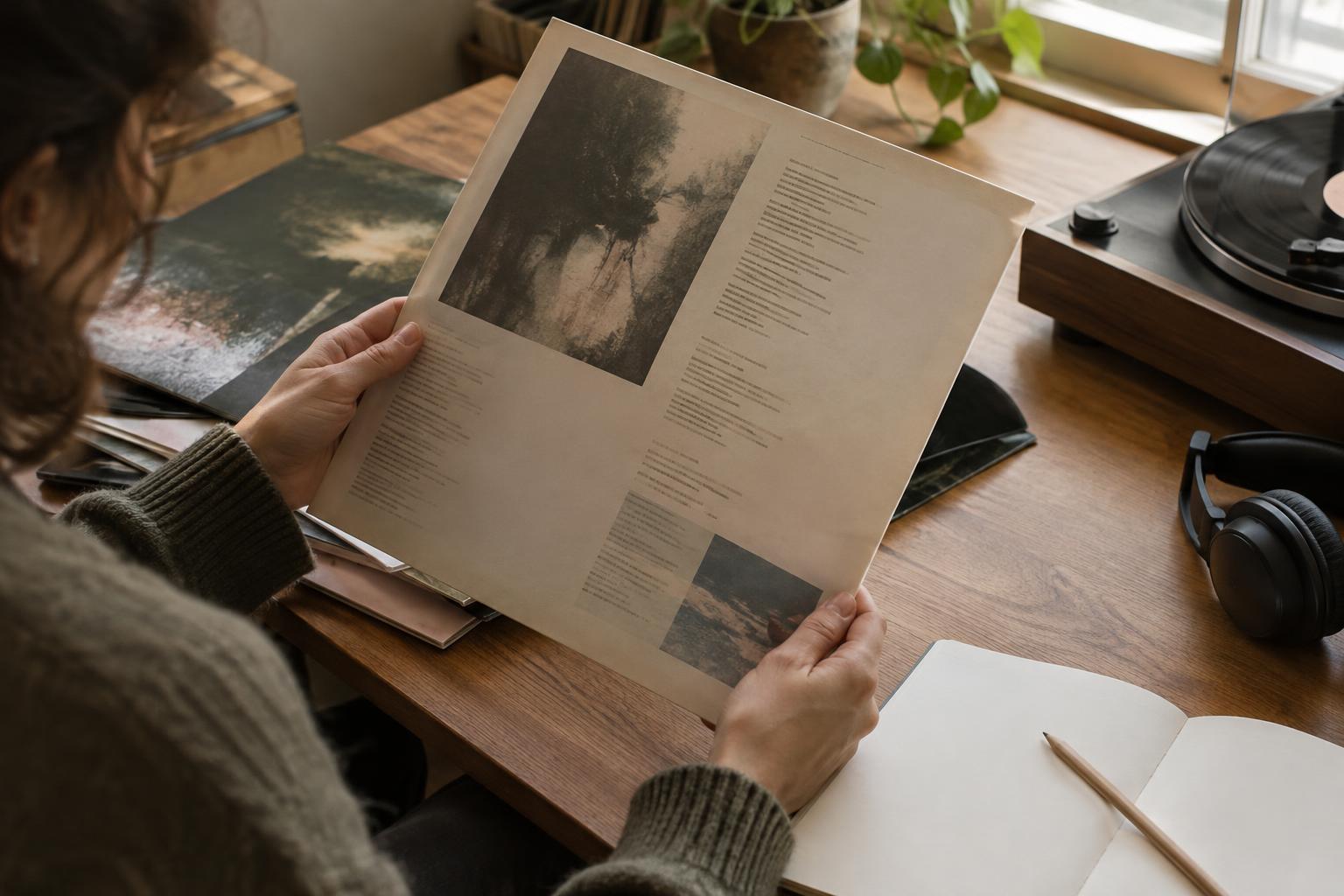
Physical releases may include credits in a booklet, on a sleeve or on the back cover. Digital releases sometimes show personnel under a track’s details or in accompanying notes. An artist’s or label’s official album page may also provide credits. The amount of detail varies: one release might identify every instrumentalist, while another lists only a few broad production roles.
Pay attention to whether a credit applies to the whole album or to a single song. A musician credited on one track did not necessarily play on the others. Names may also be shortened, spelled differently or omitted from one listing, so treat incomplete credits as a starting point rather than a definitive account. If you are unsure whether two entries refer to the same person, look for a fuller credit before building a listening trail around that connection.
Choose a role to follow
Performance credits are the most direct path when a particular part stands out. Look for instruments, backing vocals and featured performers, then listen to another recording that names the same person. Arrangers are worth noticing when the shape of a song draws you in: they may contribute to how parts are organized, though the meaning of the credit can differ between projects. Songwriter and composer credits can lead to different interpretations of a musical idea, even when the performer changes.
Production credits offer a broader trail. A producer may help guide the overall recording, while recording and mixing engineers work with captured sounds and how they sit together. A mastering engineer works on the finished audio for release. These are useful roles to explore, but avoid assuming that any one person created every quality you hear. A recording is usually a collaboration, and the same contributor may take a different approach with different artists.
Build a short listening trail
Once you have a name, find one or two other credited projects and listen with a specific question in mind. Does the keyboard player favor a recognizable texture? Does the producer seem drawn to close, intimate vocals? Do not worry if the answer is no. The pleasure of following credits is often discovering how adaptable a musician can be, not proving that they have a fixed signature.
Keep a simple note with the song that started your search, the person’s credited role and the next release you tried. If another collaborator on that release catches your ear, follow that branch. Limiting yourself to a few steps at a time helps prevent credit browsing from becoming a chore. It also leaves room for surprises: an unfamiliar side project or a different genre may be more rewarding than the closest stylistic match.
Let credits widen, not narrow, your listening
Credits are clues, not recommendations or guarantees. Two albums involving the same engineer may sound nothing alike because the songs, performers and recording choices differ. Likewise, a person’s most visible credit may not represent the full range of their work. Sample the music before deciding whether a connection matters to you.
Over time, this approach can change how you hear an album. Instead of treating it as the work of a single name on the cover, you begin to notice the interplay among performers, writers and people behind the recording. Pick one detail you love, find a related credit and press play. That is enough to make album notes a practical tool for discovering your next favorite sound.