Start with what the performance needs
A lighting brief might describe a feeling rather than a fixture: an intimate opening, a sharp change of energy in the chorus, or a finale that fills the room. The lighting team’s first task is to turn that language into questions. Who needs to be visible at each moment? Where will performers move? Which musical changes matter most? The answers help separate essential cues from effects that would merely add activity.
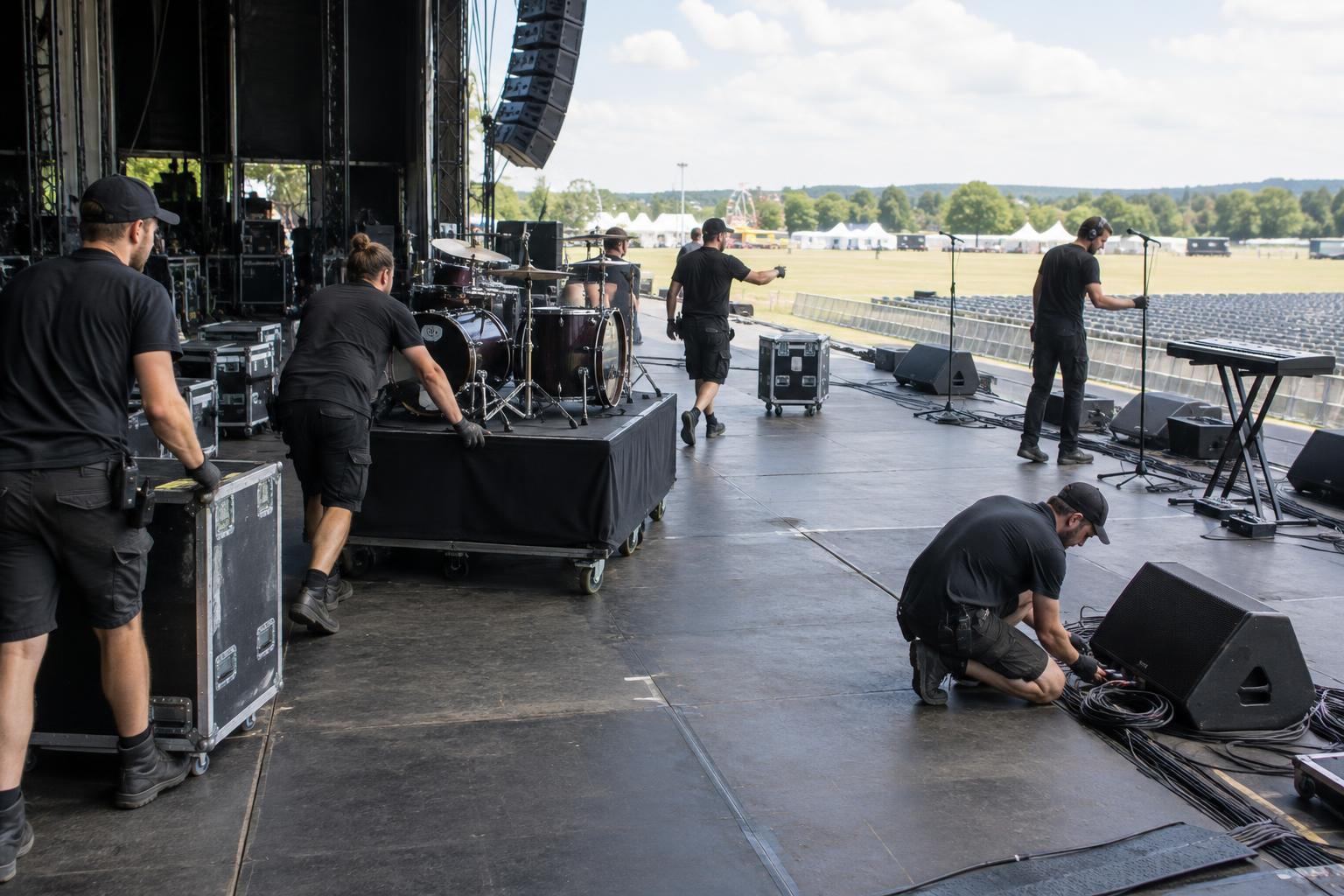
Crews may receive set lists, recordings, stage plots or notes from an artist or production team. They also need to understand the room. A small stage with limited hanging positions calls for different choices than a space with several lighting angles. Sightlines, available equipment and the time allowed for setup all shape what the brief can become. The aim is not to reproduce every adjective literally; it is to find a visual approach that supports the performance under the conditions at hand.
Build a visual vocabulary
Before writing individual cues, a lighting designer often establishes a handful of useful looks. One might keep attention on a vocalist, another might reveal the whole band, and a third might make the stage feel more spacious through backlight and contrast. Color, intensity, direction and movement can change the character of each look. Reusing those elements gives the show continuity while leaving room for surprise.
Practical visibility remains part of the design. Performers need to see where they are going, and the audience should be able to follow the action when the moment calls for it. A dramatic silhouette can be effective for a passage, but it may not suit a song whose appeal rests on facial expression. The crew also considers how light interacts with scenery, screens, haze or reflective instruments. A choice that looks striking in isolation might compete with another element once the stage is full.
Translate looks into a cue plan
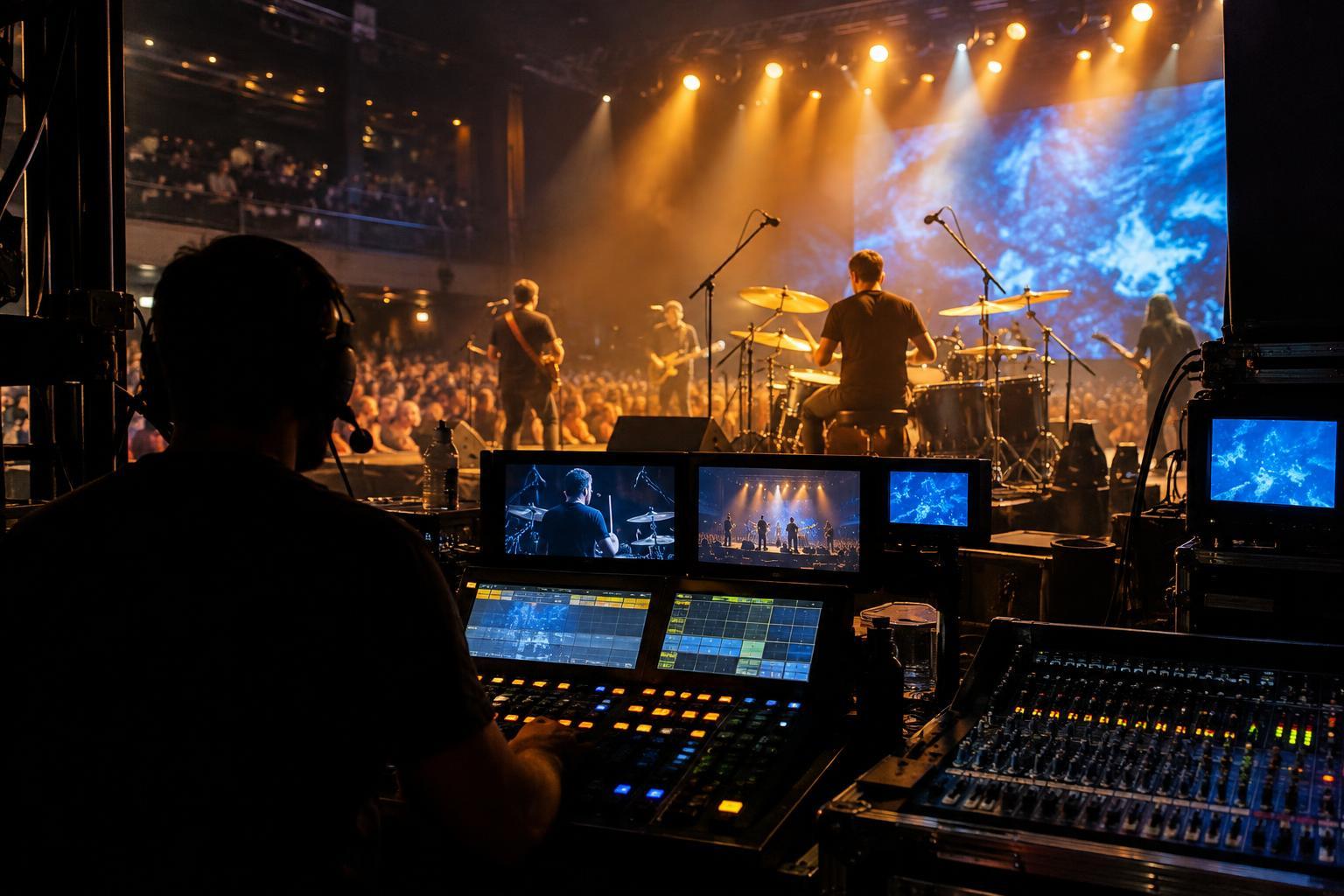
A cue is an instruction to change the lighting state at a particular point. It might bring a front light up as someone speaks, shift color at the start of a song, or fade the stage to darkness after the last note. On a lighting console, the operator can store looks and transitions for later playback. Cue notes identify what should happen and when, using landmarks such as a lyric, a musical entrance, a spoken introduction or a clear stage action.
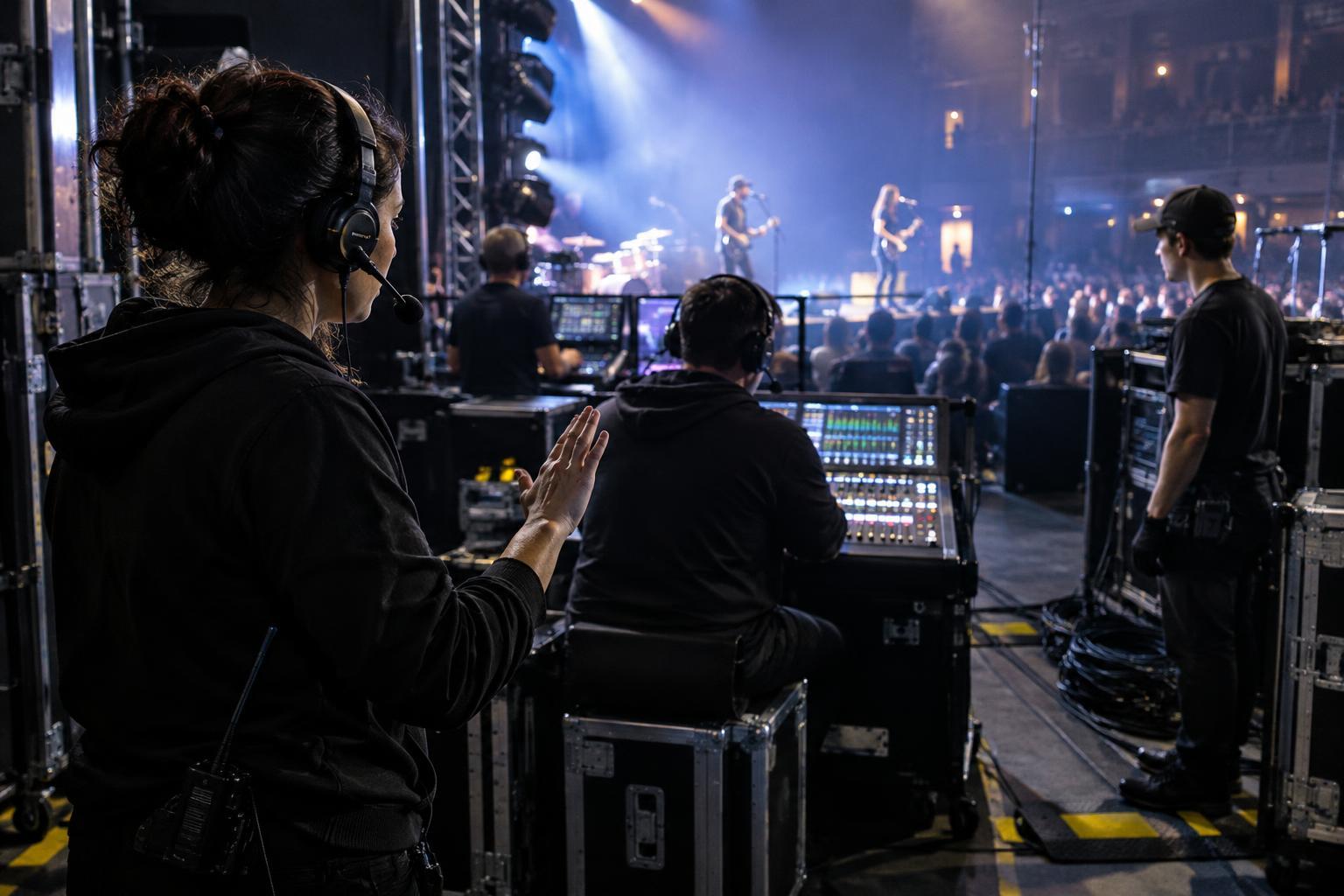
Timing is as important as the destination. A slow fade can make a transition feel natural; a sudden change can underline a beat. Crews decide whether a cue should be called by a stage manager, triggered from a prepared sequence or taken by an operator listening and watching in real time. Those methods are not interchangeable for every show. If the set may change or songs vary from night to night, the plan needs enough flexibility for the operator to follow the performers rather than force them to follow a rigid lighting sequence.
Use rehearsal to test the plan
Programming creates a starting point, not a finished audience experience. During rehearsal or a soundcheck, the team can see whether a cue arrives too early, whether a fade obscures an important gesture, or whether a color makes a performer harder to distinguish. They can adjust levels and timing, simplify an overbusy section, and confirm that the operator has reliable landmarks.
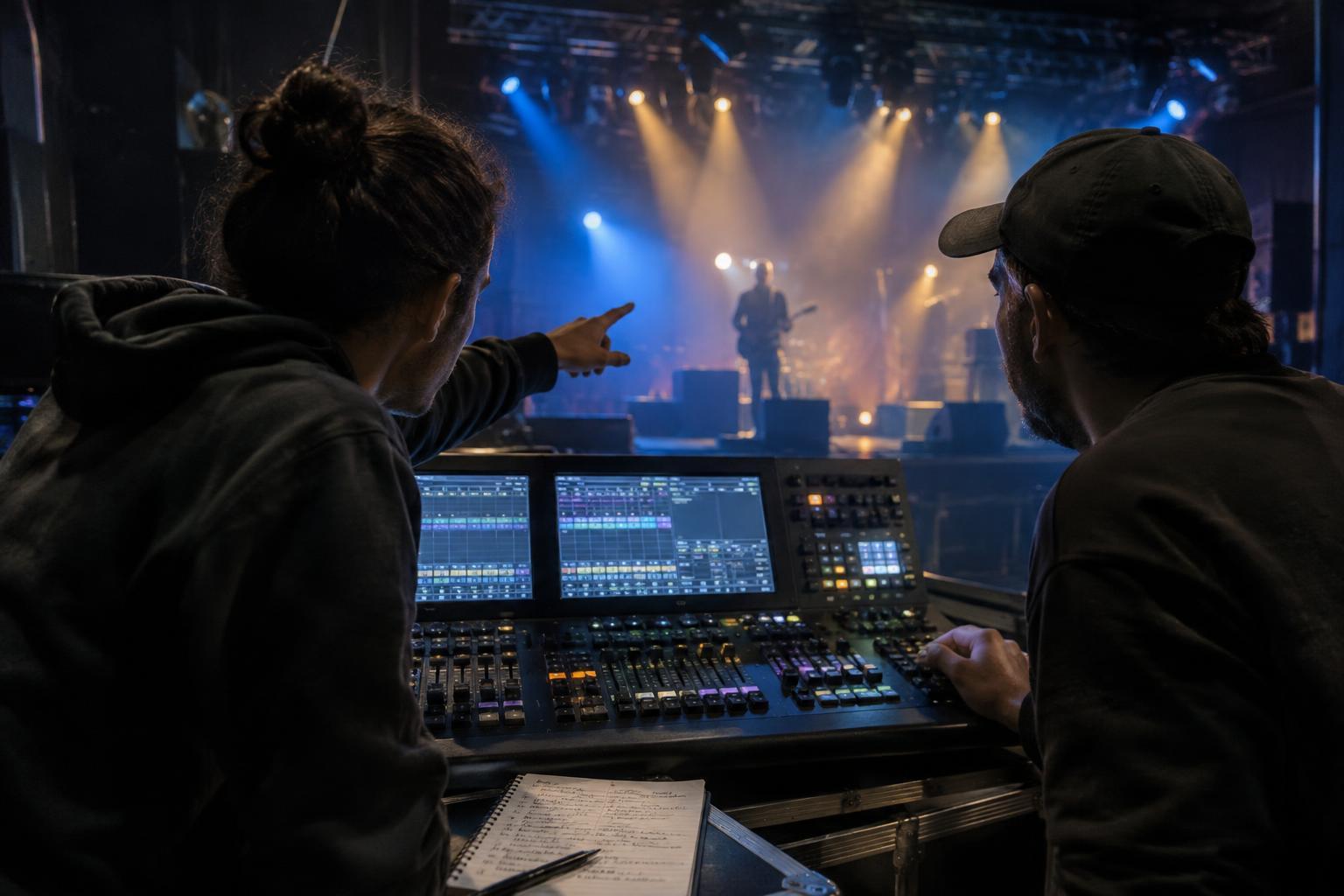
Rehearsal is also where communication becomes concrete. A note such as “make the chorus bigger” might mean widening the lit area, increasing brightness, adding movement or holding a strong look for longer. Asking what the performer wants the audience to notice is often more useful than guessing at an effect. Clear cue labels and shared notes help everyone track revisions, especially when there is little time between rehearsal and doors.
Leave room for the live show
Once the audience arrives, the lighting plan meets the unpredictable rhythm of a performance. An introduction may run long; a musician may step away from a marked position; applause may continue after the planned fade. An attentive operator can hold a look, choose a suitable alternate or wait for a stronger moment to make the next change. Preparation makes those decisions easier: the crew knows the show’s priorities and has looks ready for common departures from the plan.
The best cue work is not always the most noticeable. Sometimes it directs attention to a soloist; sometimes it gives a quiet passage space by doing less. From brief to rehearsal to playback, the process is a series of choices about what the audience should see and feel. When those choices follow the performers, lighting becomes part of the performance rather than a display running alongside it.