One performance, two listening jobs
At a live show, a singer may need to hear the kick drum and their own voice clearly enough to stay on time and in tune. Someone in the audience wants to hear the entire band as a coherent performance. Those are related goals, but they are not the same mixing task. Front-of-house sound, often shortened to FOH, is the mix sent to the audience sound system. Monitor sound is what performers hear onstage, usually through floor speakers called wedges, in-ear monitors, or a combination of both.
The difference becomes easier to understand when you consider where people stand. An audience member hears the main speakers along with sound coming directly from the stage. A performer may be behind those speakers, close to a loud drum kit and only a few steps from a guitar amplifier. A mix that works from the middle of the room might leave that performer unable to hear a quiet keyboard part. A monitor mix that puts the keyboard front and center, meanwhile, might sound unbalanced to an audience member.
What the front-of-house mix is trying to do
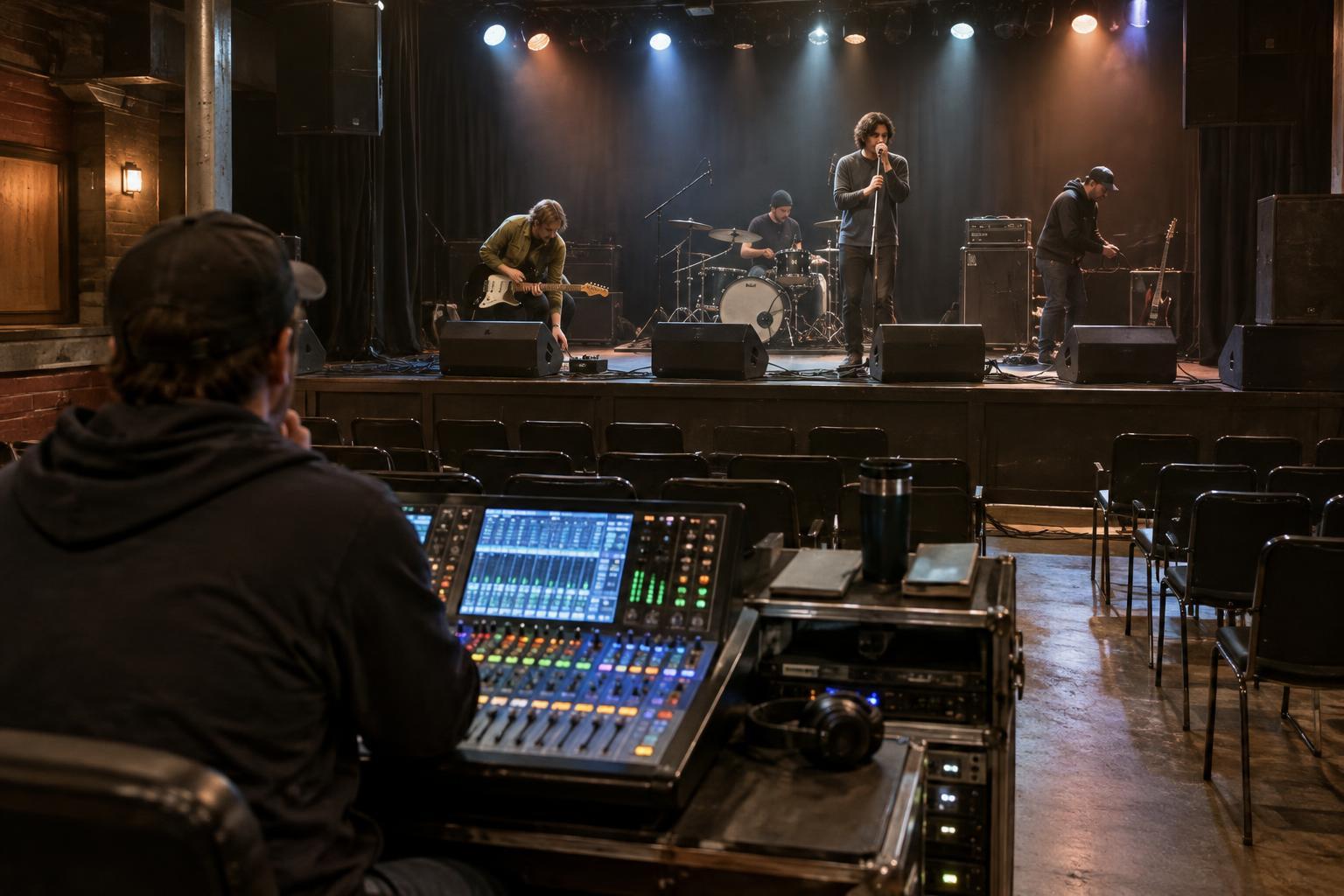
The FOH engineer builds a picture of the performance for the audience. Microphones and instrument signals arrive at a mixing console, where the engineer can adjust levels, tone, dynamics and effects before sending a mix to the main speakers. The aim is not simply to make every channel equally loud. It is to make the important parts intelligible, preserve the music’s impact and adapt to the way sound behaves in that particular space.
The room is part of the job. Reflections can make vocals harder to understand, while a crowded area may sound different from an empty one. Sound from drums and amplifiers also reaches listeners without passing through the console. In a small room, for example, a loud guitar amp may need little reinforcement from the main speakers. What the engineer does at the console depends partly on what the audience can already hear.
What performers need from monitors
Monitor mixes are working tools rather than miniature copies of the FOH mix. A drummer might ask for more bass guitar and lead vocal; a singer might want their voice, a pitch reference from an instrument and enough rhythm to follow the song. When equipment allows it, different performers can receive different mixes. That lets each person focus on the cues most useful for their part without forcing the entire stage to hear the same balance.
Wedges project sound into the stage area, where it can spill into microphones and add to the overall stage volume. In-ear monitors deliver a mix directly through earpieces and can reduce reliance on loud wedges, though they require thoughtful setup. Neither method automatically guarantees a better performance. If a crucial cue is buried, or the mix is distracting, a performer may struggle even while the audience mix sounds excellent.
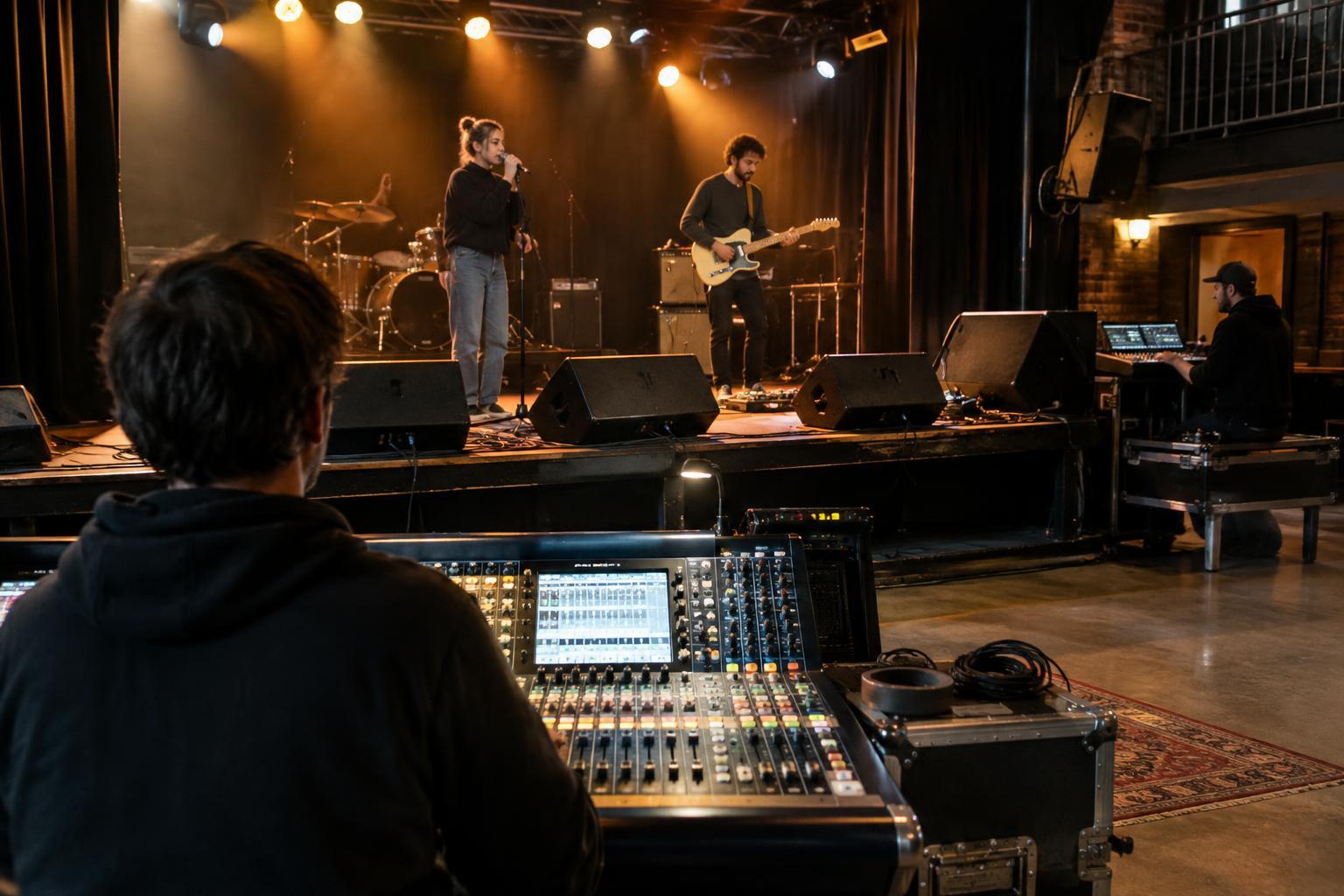
On some shows, a dedicated monitor engineer handles these requests from the side of the stage. On others, the FOH engineer manages both audience and monitor mixes. The arrangement varies, but the distinction between the mixes remains: one serves people watching the performance, while the other helps people give it.
Why soundcheck matters
Soundcheck gives the crew and performers a chance to test signal paths, set starting levels and find out what each person needs to hear. A musician saying “more vocal” is making a monitor request; it does not necessarily mean the vocal is too quiet in the audience area. Likewise, an FOH adjustment made for the room may not change what the musician hears in their ears or wedge.
Those starting points can shift during a set. A player may change instruments, move closer to a microphone or turn up an amplifier. The room can also feel different once an audience arrives. Clear, specific communication helps: “more lead vocal in my monitor” identifies both the sound and where it is needed. It is often more useful than saying that everything is too quiet.
A better way to listen at a show
If you are curious about live sound, listen from more than one spot when it is practical and permitted. Near the stage, you may hear more direct sound from drums and amplifiers. Farther back, the main speaker mix may become more apparent. The balance can also change across a room, so a moment that sounds bass-heavy in one location may feel different elsewhere.
A performer asking for a monitor change is not necessarily reporting a problem with the show you hear. They are checking their own reference point. FOH and monitor sound are two views of the same performance: one helps the music reach the room, and the other helps the musicians keep making it together.