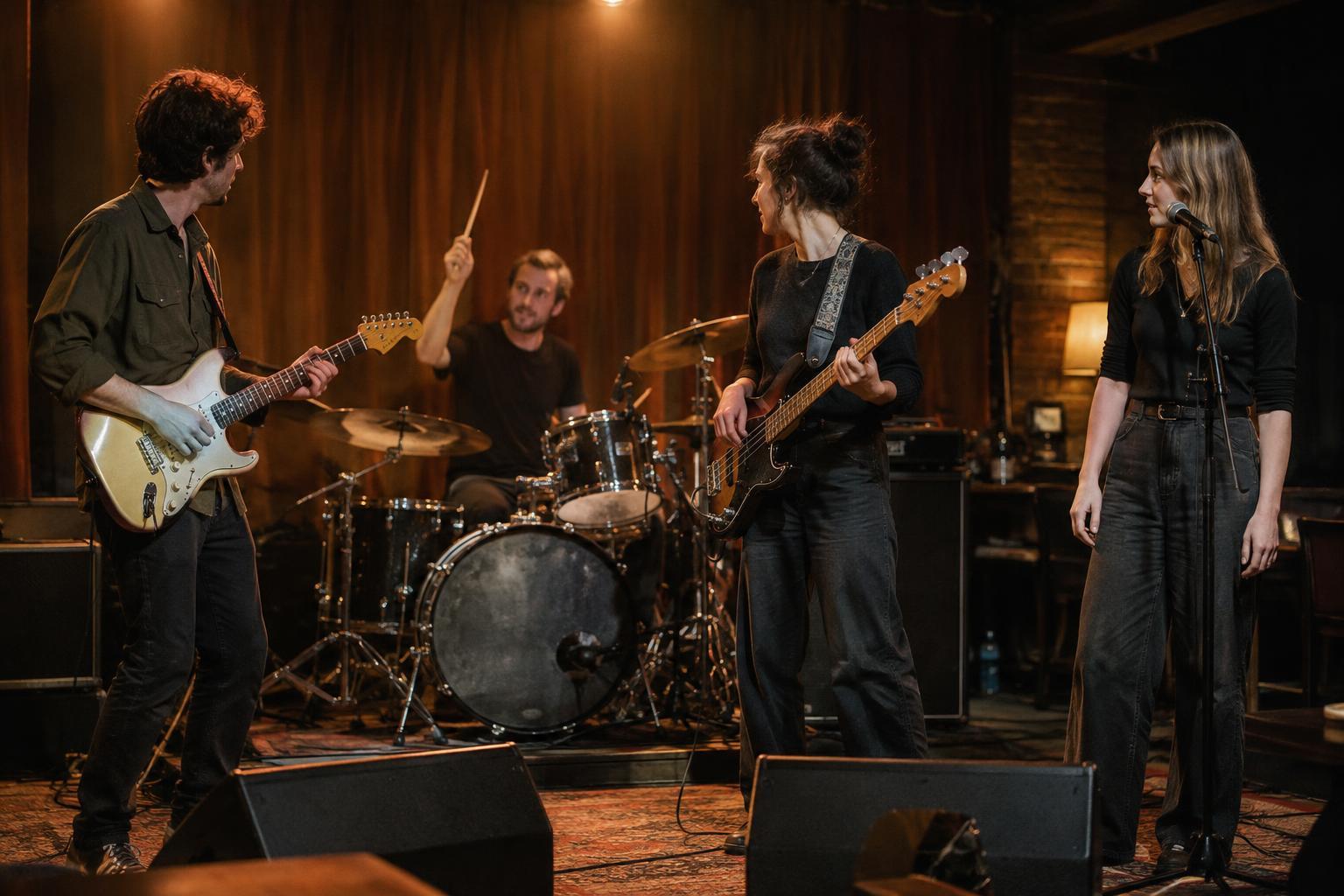
Treat the space between songs as part of the set
A live show does not pause when the last note fades. The audience is still watching as musicians change instruments, adjust a pedal or take a breath. Those moments can deepen the connection built by a song, but they can also make the next one feel distant. The goal is not to fill every silence. It is to decide which pauses serve the performance and which ones need a little help.
Start by considering the shape of the set. A brief introduction might invite listeners into an unfamiliar song, while a quiet pause after an intense one may give it room to land. Write possible speaking moments beside the set list, just as you would note a tuning change. You do not need a script for every word; knowing where you intend to speak makes it easier to leave other transitions alone.
Give each introduction a purpose
Before telling a story, ask what the audience needs to hear to enjoy the next song. Sometimes the answer is a single sentence: a title, a mood or a detail that changes how the opening line will land. A longer story can work when it offers a clear turn and leads naturally into the music. If it requires several detours to explain, it may be better saved for another setting.
Try ending an introduction where the song can take over. Rather than explaining every lyric, offer one point of entry and let listeners make their own connections. This also helps you avoid repeating the same kind of introduction throughout the night. One song may benefit from context; another may be stronger if the band begins before anyone knows what is coming.
Match the room and the energy
Speaking pace matters as much as word choice. After a fast song, a long, quiet explanation can feel like an abrupt change of direction. After a delicate song, a loud joke may cut across the atmosphere the band just created. Neither approach is always wrong, but the contrast should feel intentional. Listen to the room for a moment before deciding how much to say.
It also helps to leave space for different kinds of audiences. Some crowds answer every question; others show attention by listening closely. If a call-and-response does not catch on, there is no need to demand a louder reply. Move forward with warmth. The most effective stage talk sounds addressed to the people who are there, not to an imagined crowd that must react on cue.
Plan for practical interruptions
Not every gap between songs is a creative choice. A string may need replacing, a monitor may need adjusting or someone may have to move across the stage. Decide in advance who will speak if a delay occurs and what the rest of the group will do. A short, calm acknowledgment is usually easier to follow than repeated apologies or a detailed account of the problem.
Keep necessary announcements distinct from stories. If listeners need to know about a break, an accessibility route or a change to the running order, say it clearly before adding humor or context. For routine band introductions and thanks, choose a moment when attention is already onstage. Trying to squeeze every acknowledgment into the final seconds of a set can make the ending feel crowded.
Rehearse transitions without making them rigid
A rehearsal can include more than the songs. Practice how the end of one number leads into the start of the next: who counts in, who changes equipment and where a speaking moment fits. Say introductions aloud at least once. Words that look short on a set list may take longer than expected when spoken at a comfortable pace. Rehearsal also reveals when one person is talking while another is still trying to get ready.
Onstage, keep the plan flexible. A story that worked in rehearsal may not suit the room, and an unexpected pause may create the best moment to speak. Pay attention to whether your words are drawing people toward the next song. When they have done their job, stop talking and play. Momentum comes less from constant speed than from giving each transition a clear reason to exist.