Start with priorities, not a packed timetable
A festival schedule can look manageable until you notice that two artists you want to see play at the same time. The goal is not to fit in every set. It is to spend more of the day enjoying music and less of it rushing across the grounds. Start by marking the performances that would be hardest for you to miss. These might be artists you rarely get a chance to see, acts you have followed for years, or discoveries you are especially curious about.
Put the remaining sets into a second group: shows you would enjoy if the timing works. This distinction makes decisions easier when conflicts appear. It also keeps a crowded lineup from turning into an obligation. Leave some unassigned space on your schedule so you can rest, eat, or follow a sound that catches your attention.
Compare what you would gain from each set
When two priorities overlap, ask what matters most about seeing each one. Do you want the full arc of a performance, or are you hoping to hear a few songs? Would one set work better as a relaxed listen from farther back, while the other calls for arriving early and finding a good viewing spot? Your answers may point toward one complete set rather than two hurried fragments.
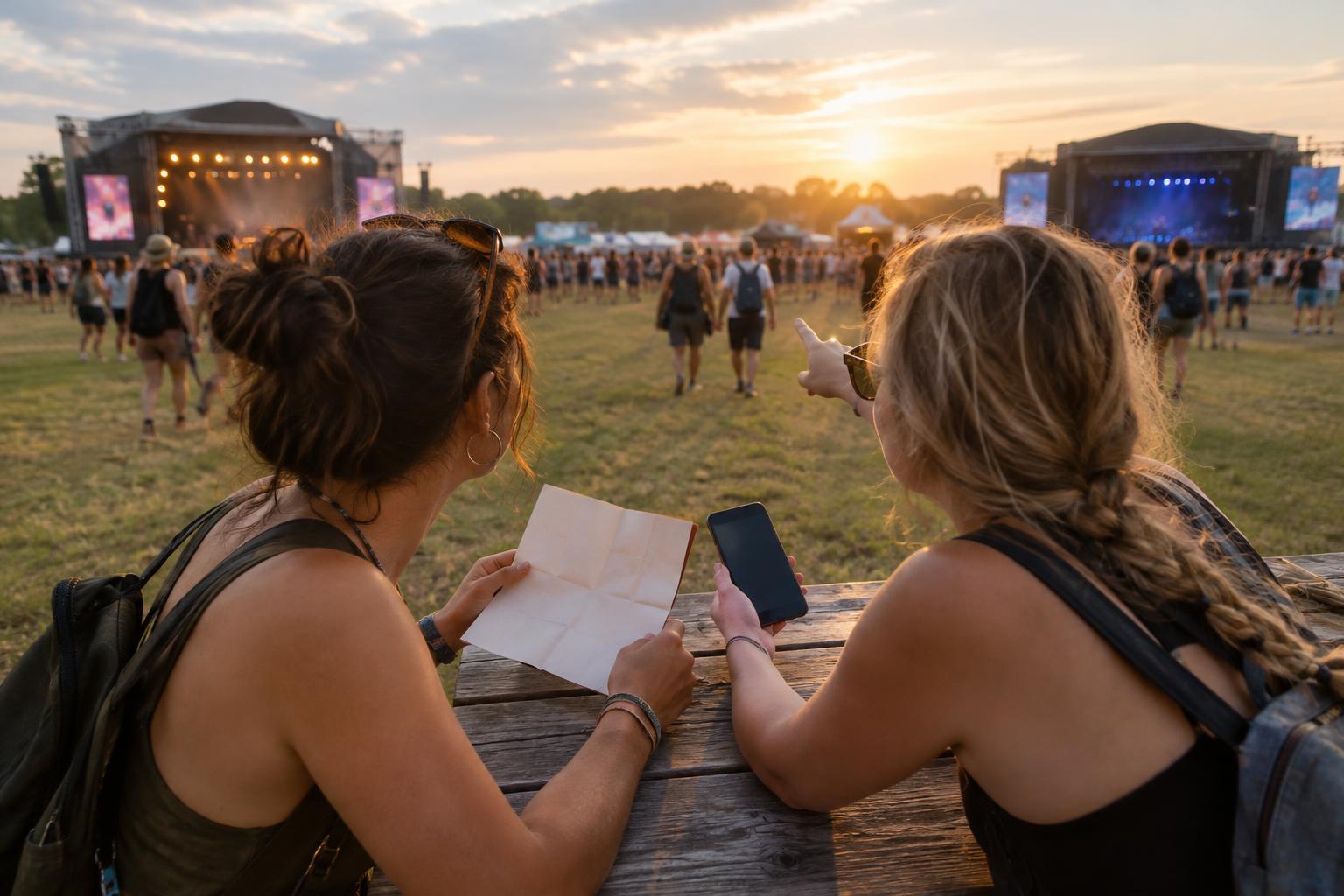
Try choosing a default plan before the day begins. For example, commit to the artist you most want to see in full, then treat the other as an option only if the timing allows. You can also agree with friends that splitting up for a set is fine. Meeting afterward at a clear location may be more enjoyable than asking everyone to make the same compromise.
Build in the time between stages
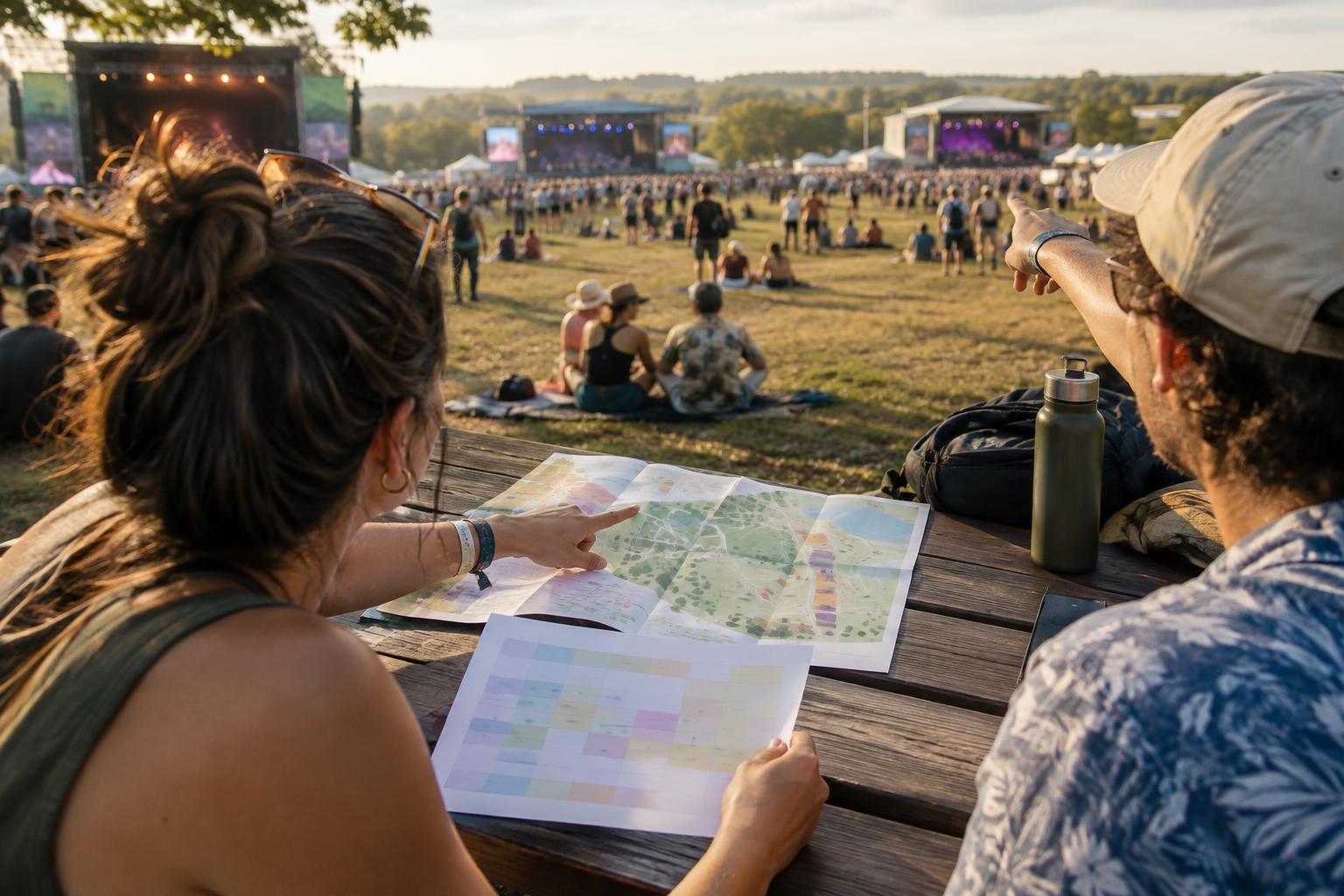
Printed set times show when performances are scheduled to begin and end, but they do not account for your journey between stages. Look at the site map alongside the lineup. Consider walking distance, likely crowd flow, entrances to performance areas, and any accessibility needs in your group. A short gap on paper may not leave enough time to exit one crowd and settle into another.
If you want a good position for a particular set, plan to arrive with some breathing room rather than at its scheduled start. Add space for water, food, restrooms, and a pause away from the speakers. These are not interruptions to a good festival day; they help make the sets you choose easier to enjoy. If moving between two shows would eliminate those breaks, pick the one that matters more.
Decide when a partial set makes sense
Seeing parts of two overlapping sets can be a good choice, especially when stages are close and you are happy listening from the edges of each crowd. Before making that plan, decide which set gets your attention if the move takes longer than expected. Otherwise, you may spend the first performance watching the clock and the second searching for a place to stand.
A partial-set plan works best when it has a simple transition point, such as leaving after several songs or heading to the next stage at a set time. It is less appealing when the route is long or you would have to push through a dense audience. Be considerate as you move: use open paths where possible, and accept that arriving late may mean watching from farther back.
Keep the plan useful, not rigid
Save your preferred sets and meeting points somewhere you can check quickly, whether that is a festival app, a screenshot, or a note on your phone. Check the festival’s official schedule for changes before relying on a saved version. A simple plan is easier to adjust than a minute-by-minute itinerary when a set runs differently than expected or your energy changes.
Give yourself permission to revise your choices once you are there. A compelling performance may be worth staying for, even if it means missing the start of another. You may also need a quieter break instead of one more set. A successful festival schedule is not a record of how many acts you managed to see. It is a guide that helps you be present for the performances you choose.