What makes a music scene?
A music scene is more than a group of artists who sound alike or happen to live near one another. It is a network of people who repeatedly meet, listen, perform, organize, recommend, and respond to music. Audiences matter as much as performers: a regular listener who brings a friend to a small show helps create the conditions for the next one.
Some scenes are described by place, such as a city, neighborhood, or cluster of venues. Others are described by genre, where a shared approach to rhythm, instrumentation, or performance connects people who may never meet in the same room. These labels are useful starting points, but neither captures every relationship that makes a community work.
How a place gives a scene its shape
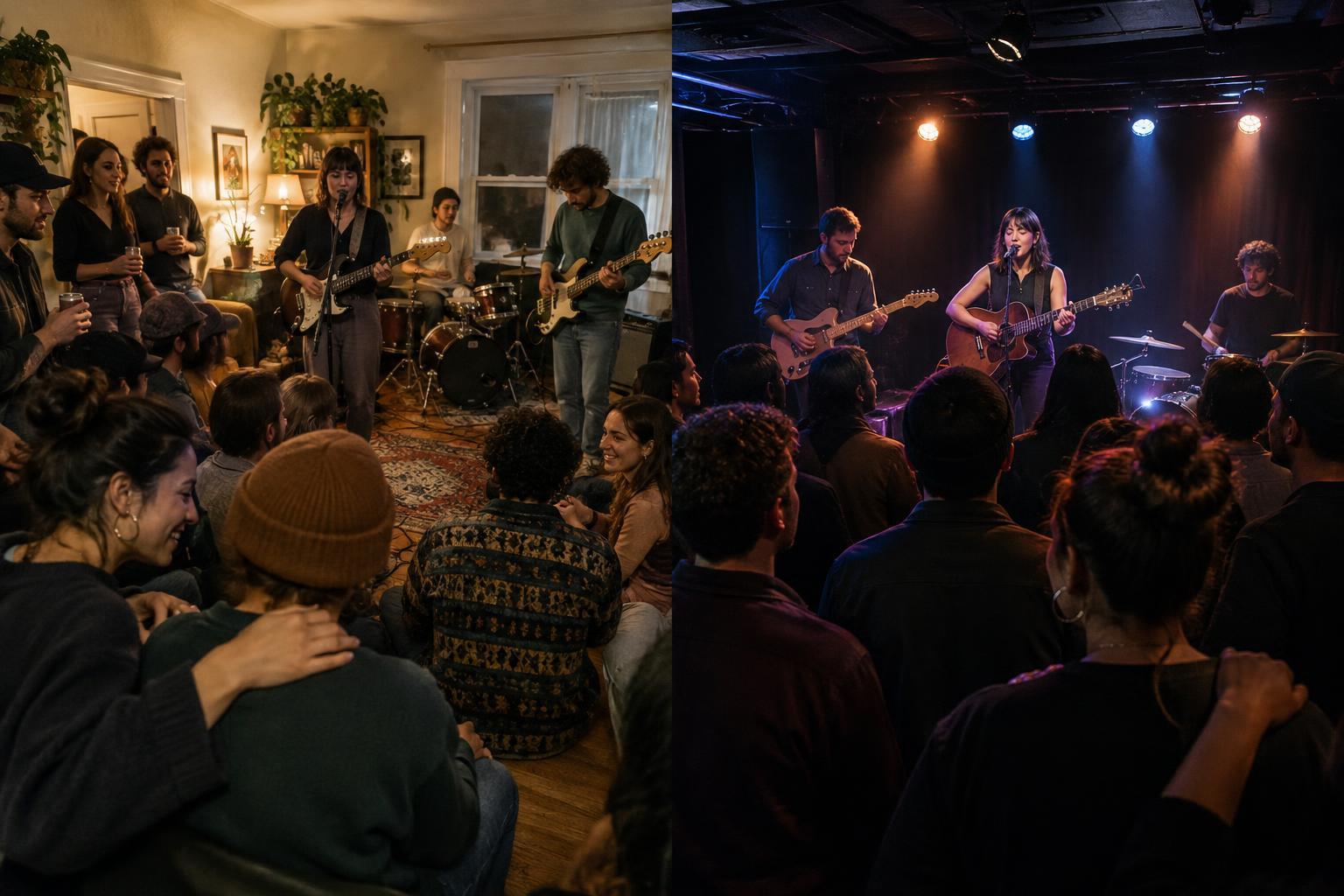
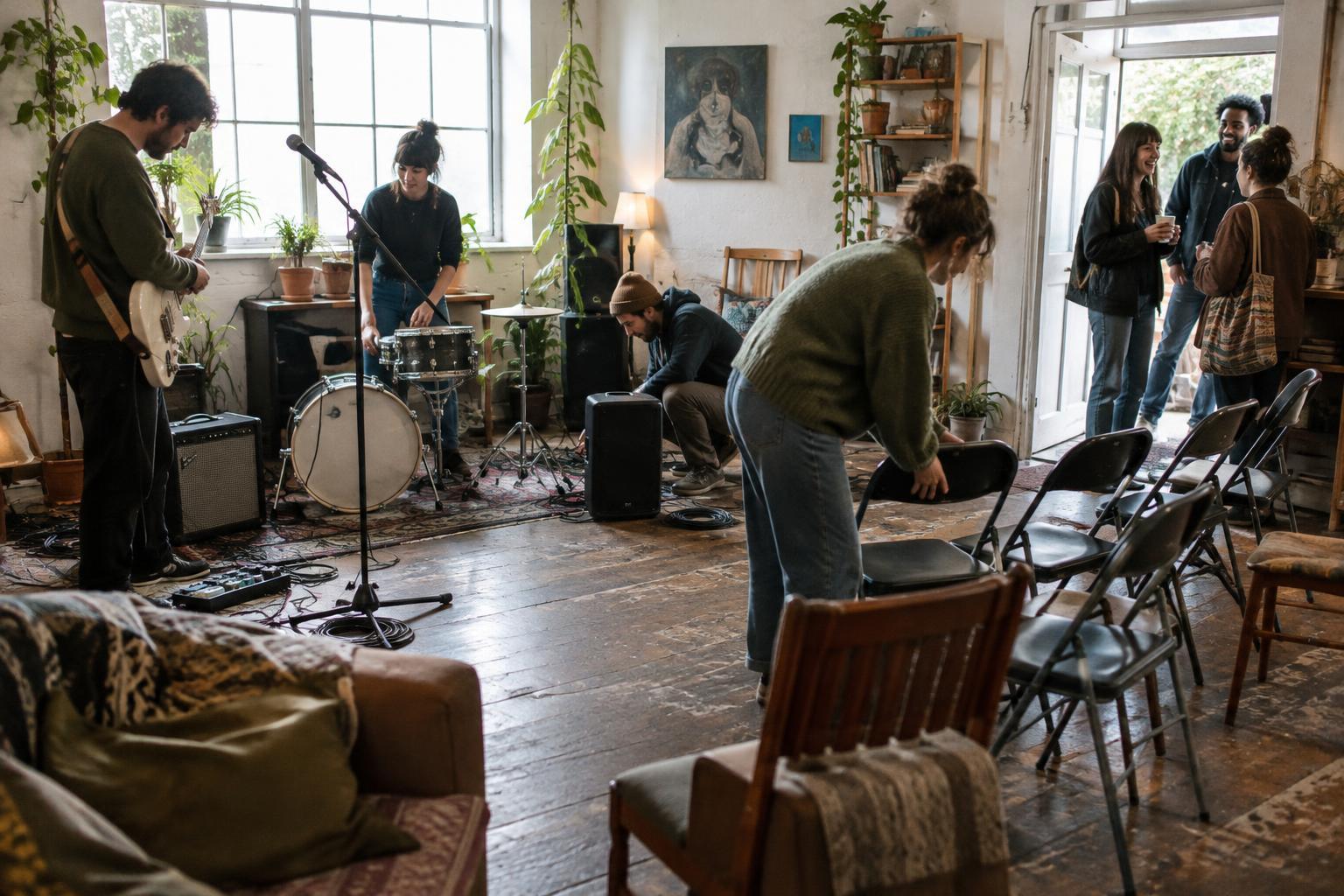
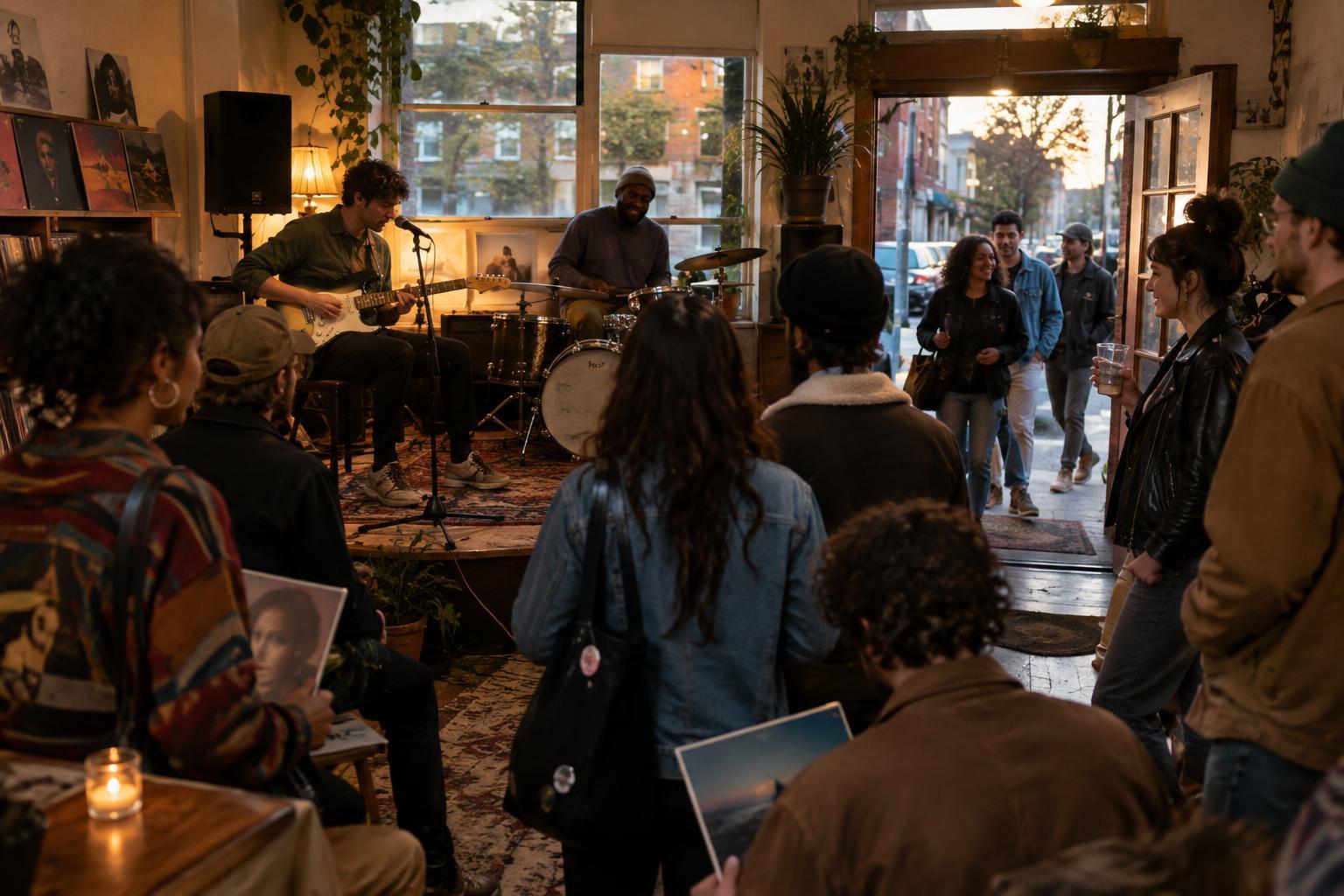
A place-based scene grows through proximity and repetition. Musicians may share rehearsal spaces, play on the same bills, and recognize familiar faces in the audience. Promoters, sound engineers, venue staff, photographers, and independent shops can become part of that network. Even when the performers play different styles, they may develop common habits through working in the same rooms and supporting one another’s events.
The details of a place can affect what gets made and heard. A small room may reward an intimate set; a community space may make an all-ages show possible; a venue with a dependable house crew may give new performers room to experiment. These are possibilities, not rules. A city name alone cannot explain a sound, and a local scene rarely has one unified identity.
Place also has boundaries. Travel time, venue accessibility, admission costs, and who feels welcome can determine who gets to participate. Describing a scene as thriving should not erase the people who cannot easily reach its spaces or who have had to build their own.
How a genre connects people across distance
Genre-based scenes form when people gather around musical choices and values rather than a single location. They might trade recommendations, book compatible acts, discuss techniques, or seek out shows that fit a particular listening culture. Recordings and online conversations help those connections travel, while live performances give them a shared, physical experience.
A genre label can make discovery easier. Someone drawn to a certain sound can find artists, audiences, and events beyond their immediate area. It can also give performers a vocabulary for finding collaborators. But labels can become restrictive when listeners expect every artist to follow the same formula. The most useful genre descriptions leave room for variation, influences, and disagreement.
Genre communities are not automatically borderless or equally accessible. The people who run spaces, make introductions, and decide whose work gets promoted still shape participation. Paying attention to those choices reveals more about a scene than a playlist of similar-sounding tracks alone.
Where place and genre meet
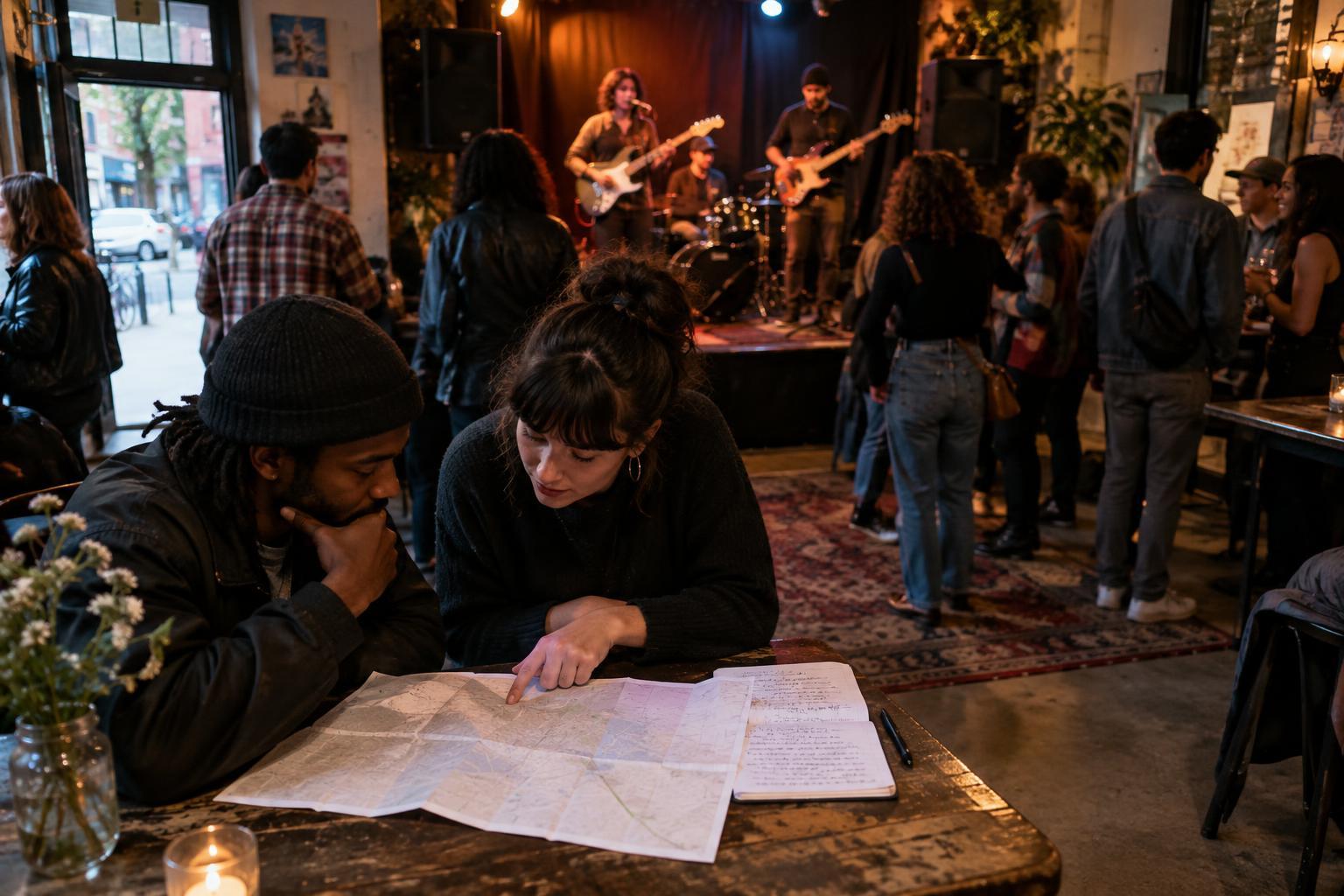
Most scenes are both place-based and genre-based to some degree. A local venue might host a recurring night devoted to one sound, drawing musicians from elsewhere while giving nearby listeners a regular meeting point. Conversely, performers in the same neighborhood may collaborate across styles because they share equipment, stages, or friends. The result can be a community that is recognizable without being musically uniform.
These overlaps change over time. A gathering may begin with a few friends, become associated with a venue, and later connect with similar gatherings in other places. If that venue closes or the original participants move, the relationships may continue in new rooms or online. Thinking of a scene as a set of practices and relationships, rather than a fixed map or genre tag, makes those changes easier to understand.
How to listen and participate with care
For listeners, exploring a scene can start with a modest question: who helps make this music possible? Look beyond the headliner to opening acts, recurring organizers, and the spaces that host them. Attend different kinds of bills when you can, and notice how audiences and performers interact. If you encounter an unfamiliar genre, treat its label as an invitation to listen, not a test you must pass.
Supporting a scene does not require declaring it the next big thing. Showing up when possible, paying for music or admission within your means, sharing accurate information, and respecting a space’s expectations are concrete contributions. When describing what you hear, be specific about the music and the people involved rather than assuming one artist represents an entire neighborhood or genre. Scenes form because people keep making room for one another; careful listening is one way to take part.