The big picture: one show, many teams
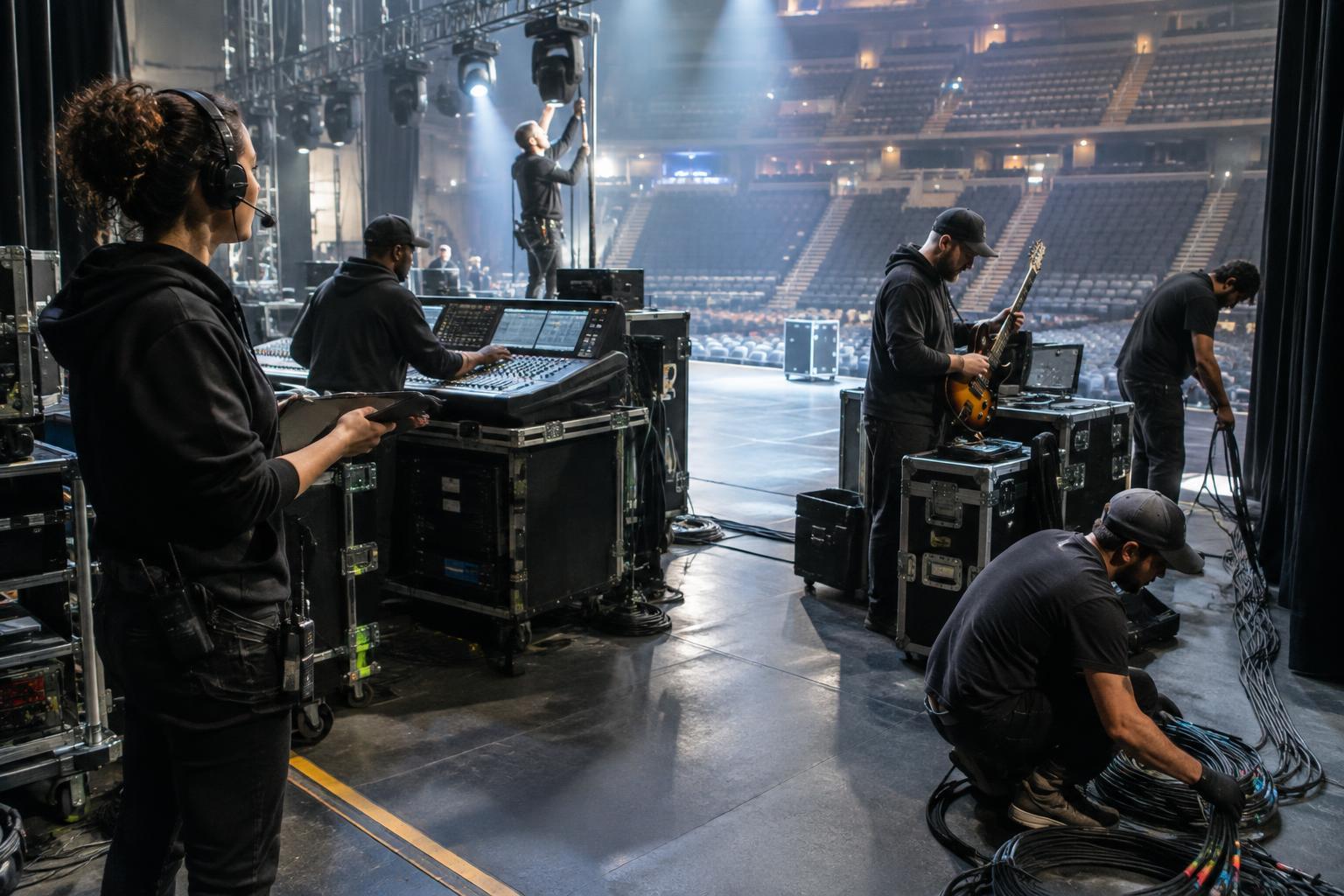
A concert can feel effortless from the audience, but backstage it runs on a sequence of tasks: equipment arrives, the stage is set, systems are checked, performers prepare, the show happens, and everything is packed away. Different people lead each step. Some travel with an artist; others work for the venue or a local production company. At a festival, several teams may share a stage across the day.
Job titles vary by venue and show size. On a small gig, one person may cover several roles; on a large production, a single department may have its own crew and supervisor. The useful question is not only “What is this person’s title?” but “What decision or piece of equipment are they responsible for?”
Who keeps the day on track?
A production manager looks at the show as a whole. They coordinate practical requirements such as crew calls, equipment, access, timing and communication between departments. A tour production manager may focus on what an artist’s traveling show needs, while a venue production manager works with the building’s staff and facilities. They help resolve conflicts before one delay affects the rest of the schedule.
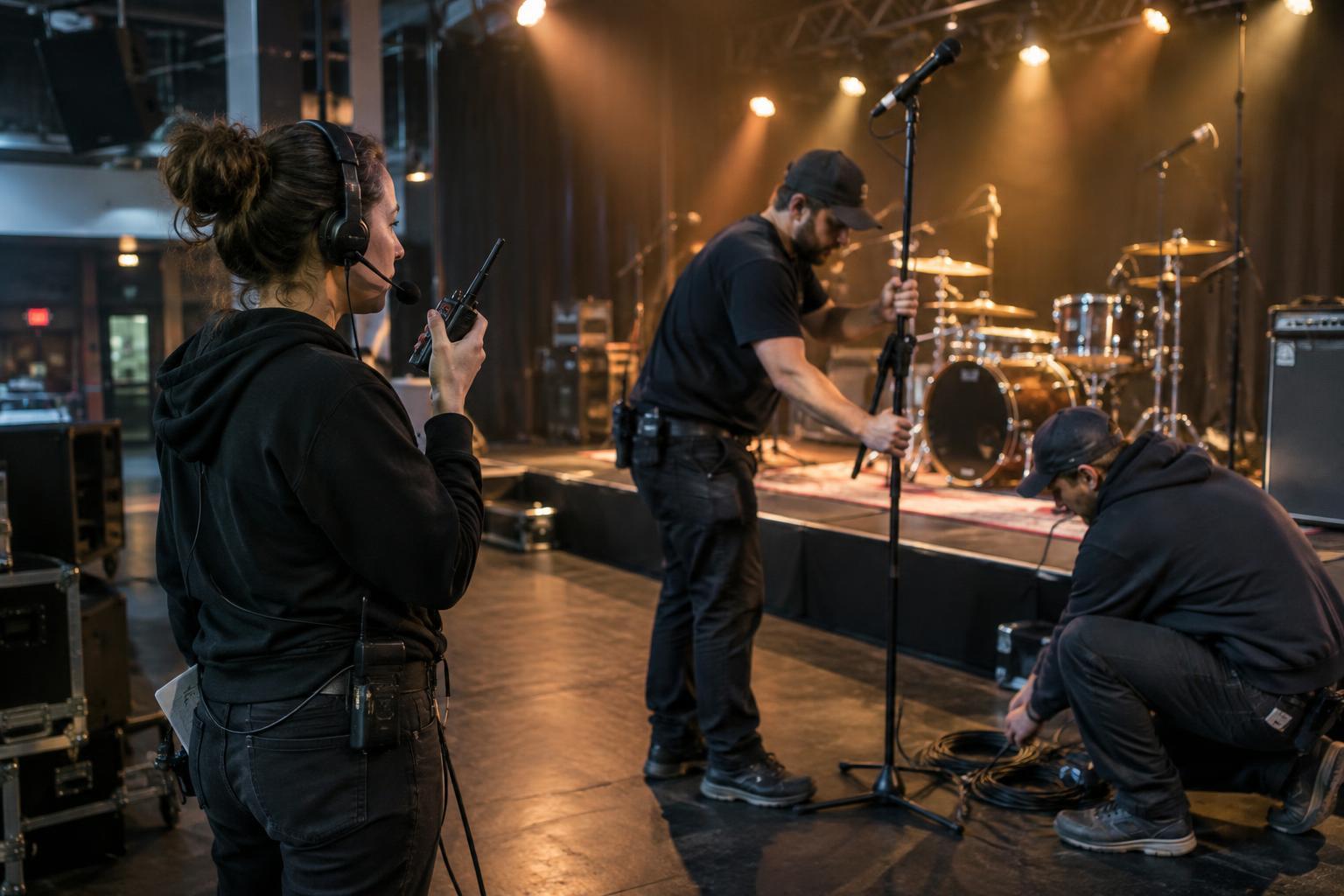
A stage manager focuses on activity at and around the stage. They may track when performers and crew need to be ready, communicate changes, and coordinate transitions between acts. At a multi-act show, that can mean helping one group clear its equipment so the next can set up. A tour manager has a different emphasis: the artist’s travel, daily plans and other practical needs on the road. These roles often work closely together.
Who makes it sound right?
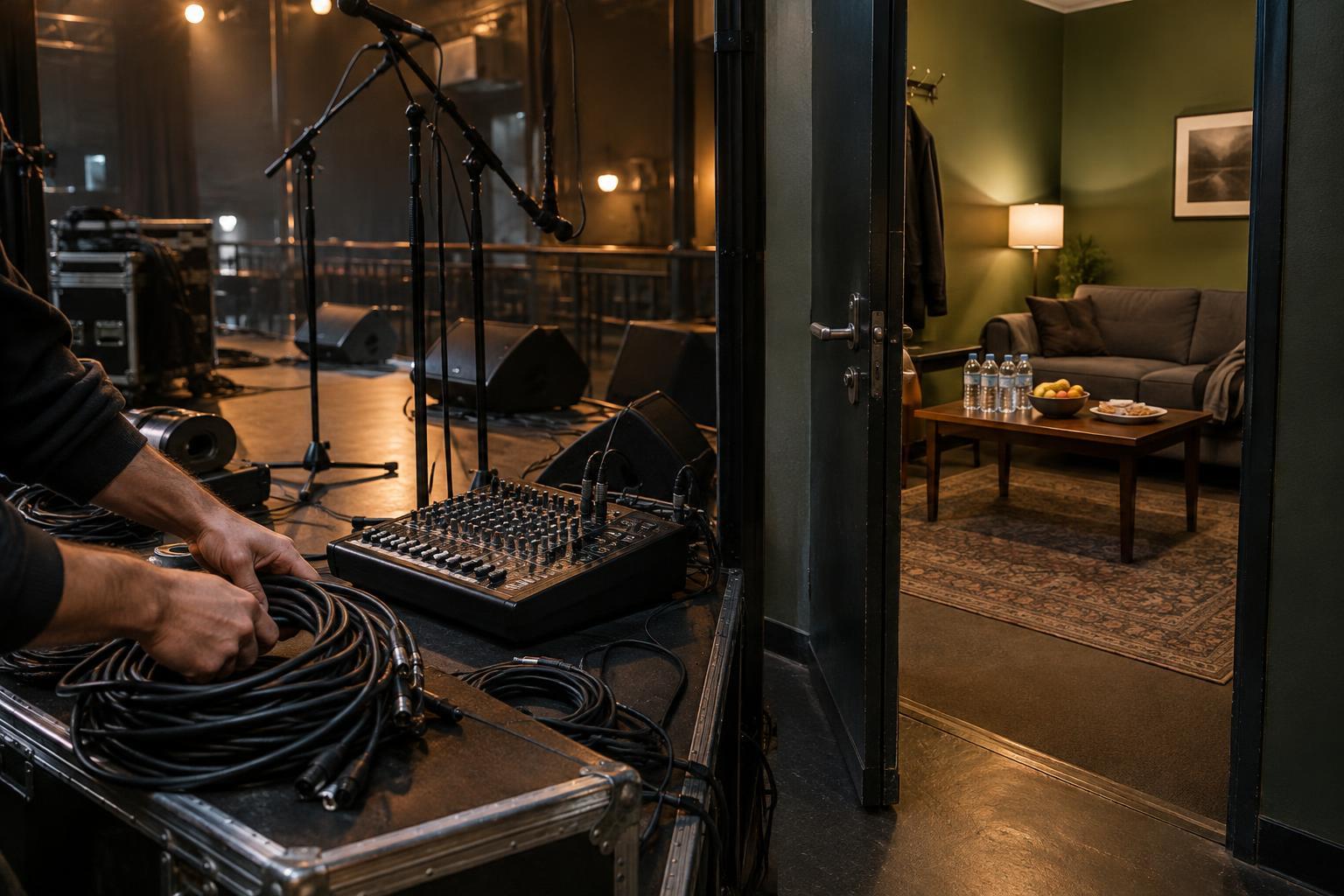
The front-of-house audio engineer mixes the sound the audience hears. From a position in the room, they balance voices and instruments, adjust levels and respond as the performance changes. Before the show, audio crew members place microphones, run cables, connect equipment and test signals. A system technician may concentrate on how the speakers and related equipment perform throughout the space.
Performers often need a separate mix to hear themselves and one another. A monitor engineer manages that mix through stage speakers or in-ear systems where those are used. Audio technicians support both mixing positions by checking connections and troubleshooting problems. Soundcheck gives the team and performers a chance to confirm that signals are working and make adjustments, though a room can sound different once an audience is in it.
Who builds the visual show and maintains the instruments?
Lighting designers and operators shape what the audience sees. A designer plans the visual approach; an operator runs lighting cues during the performance. Lighting technicians prepare fixtures, cables and controls, then help focus and test them. Some productions also use video technicians to operate screens, cameras or playback. These departments coordinate with the stage team so cues happen at the right moments and equipment stays clear of performance areas.
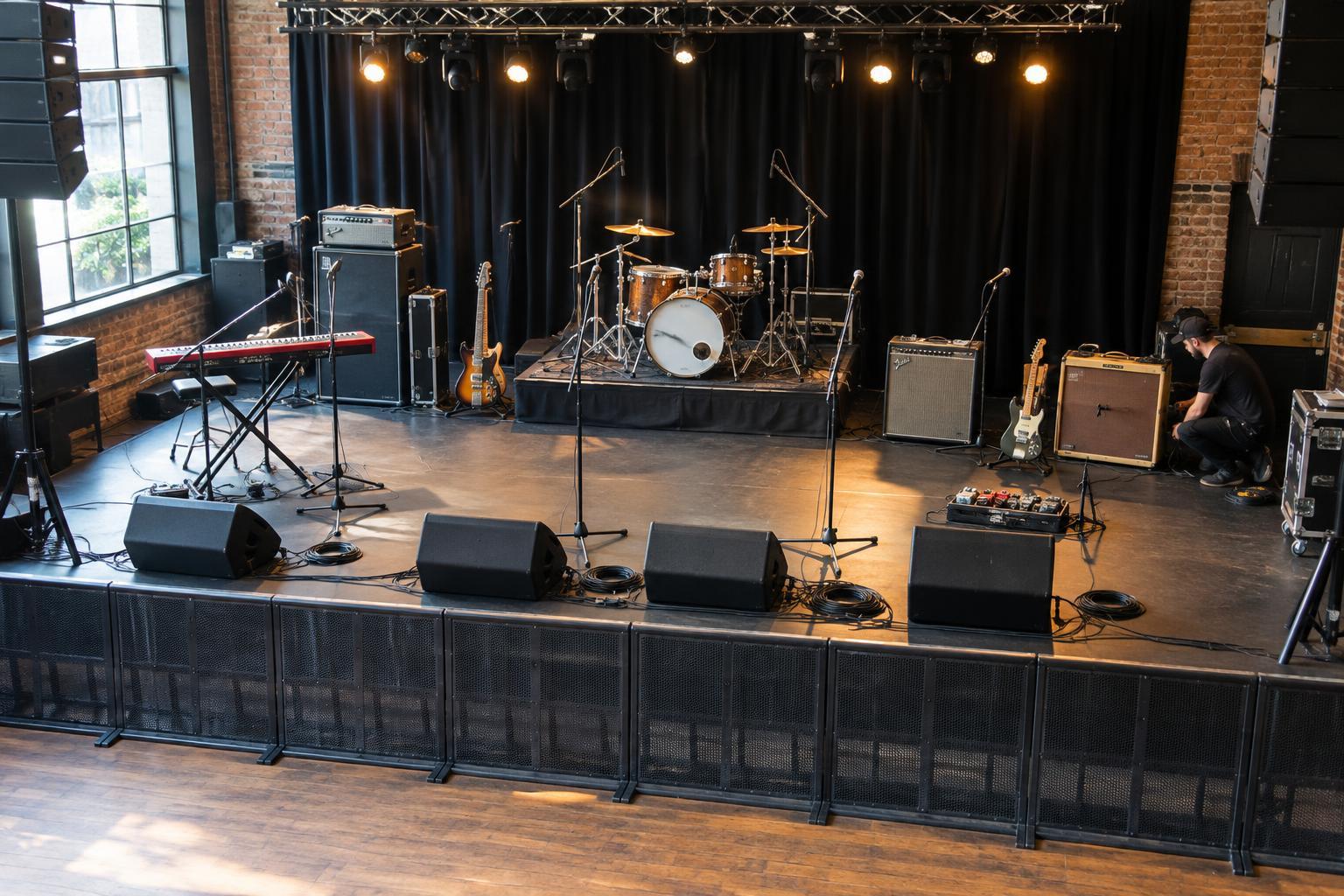
Backline technicians look after the instruments and equipment performers use onstage, such as drum kits, keyboards and amplifiers. They may set up, tune, test or swap gear between acts, depending on the show. Stagehands help move cases and equipment and assist with changeovers. Rigging crew members handle suspended production equipment where a setup requires it; that is specialized work carried out by appropriately trained people.
Who supports the show beyond the stage?
Many essential jobs happen away from the performance area. Loaders help move equipment in and out. Runners may collect supplies or carry messages. Hospitality staff prepare assigned artist and crew spaces, while security staff manage access and respond to issues within their remit. At some venues, house staff also coordinate with production teams on doors, audience movement and the handoff between the public and working areas.
These roles are connected by communication and timing. If an instrument needs attention, a backline technician may tell the stage manager; if a set runs long, the stage manager may alert the next act and other departments. No single job explains the entire show. Watching the credits for a recorded performance, or reading the crew list where one is available, can be a useful way to notice how many kinds of work support the music you hear.