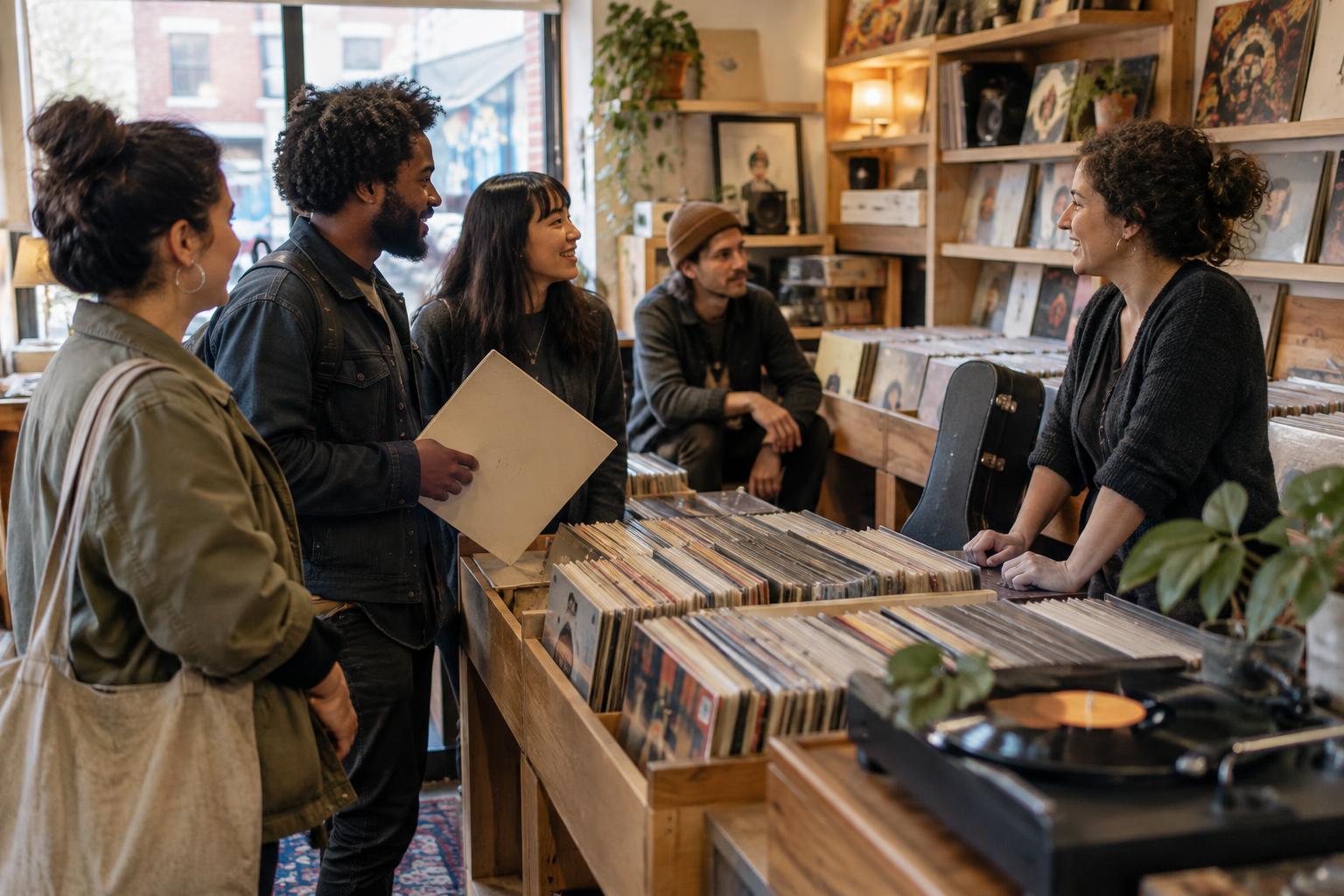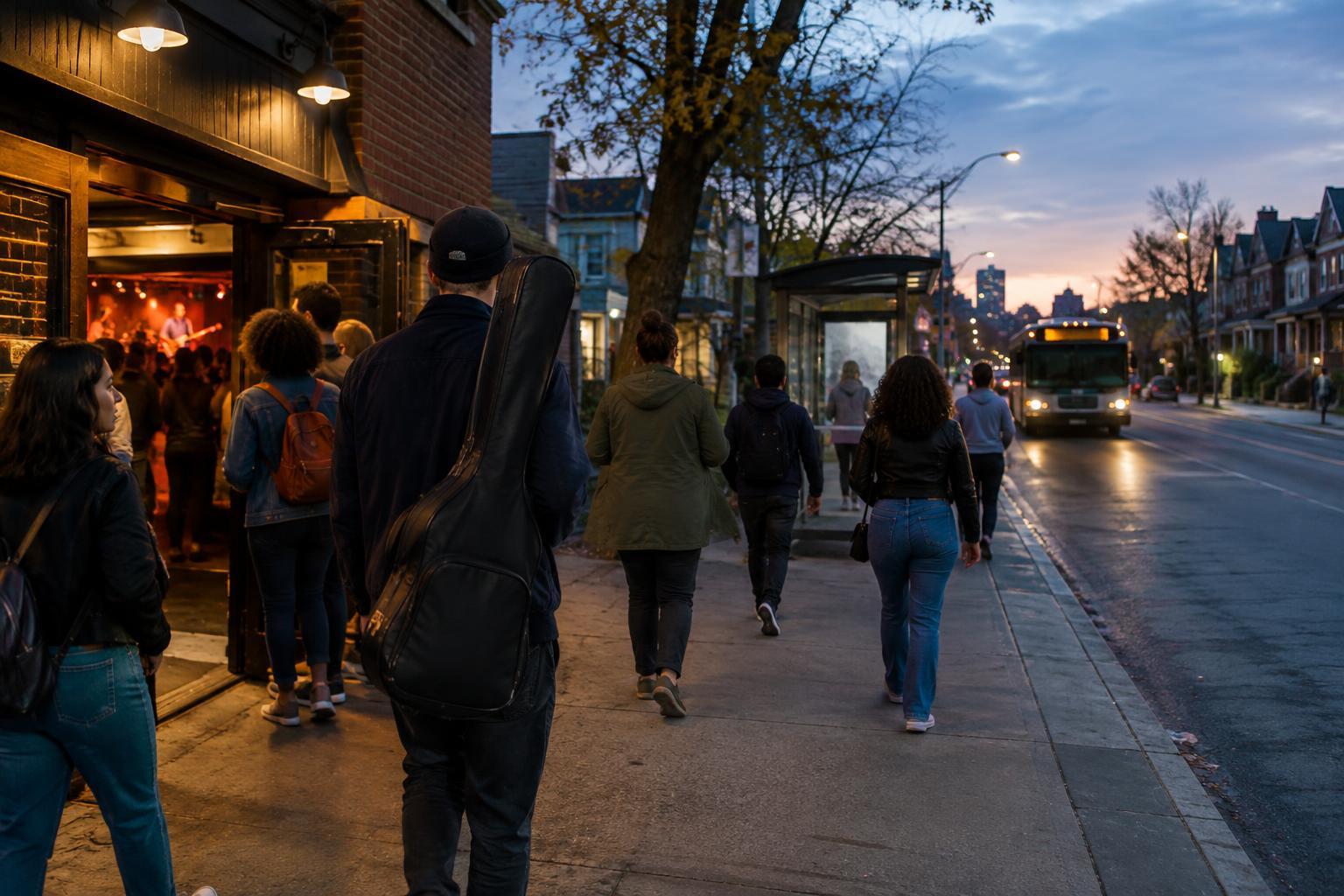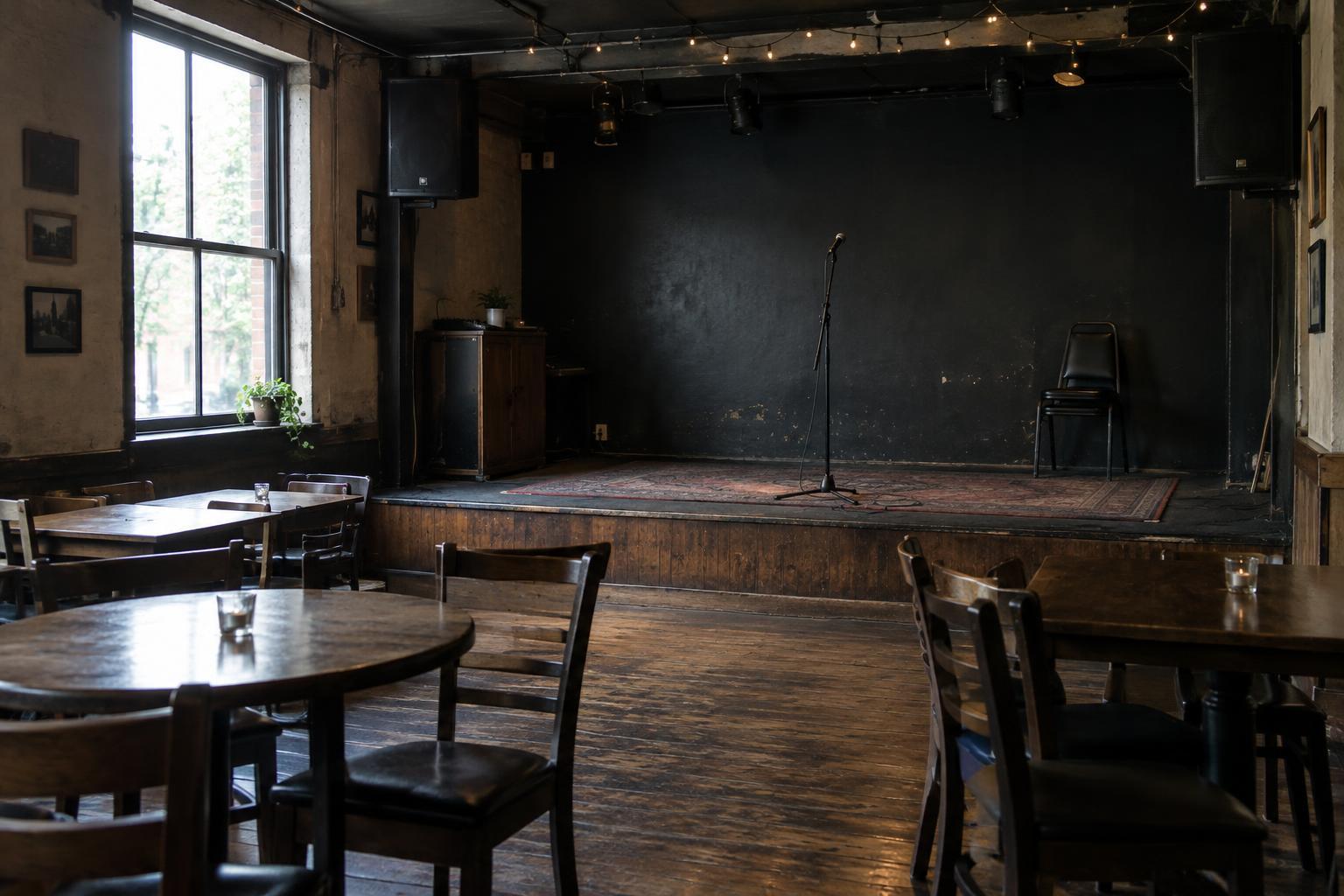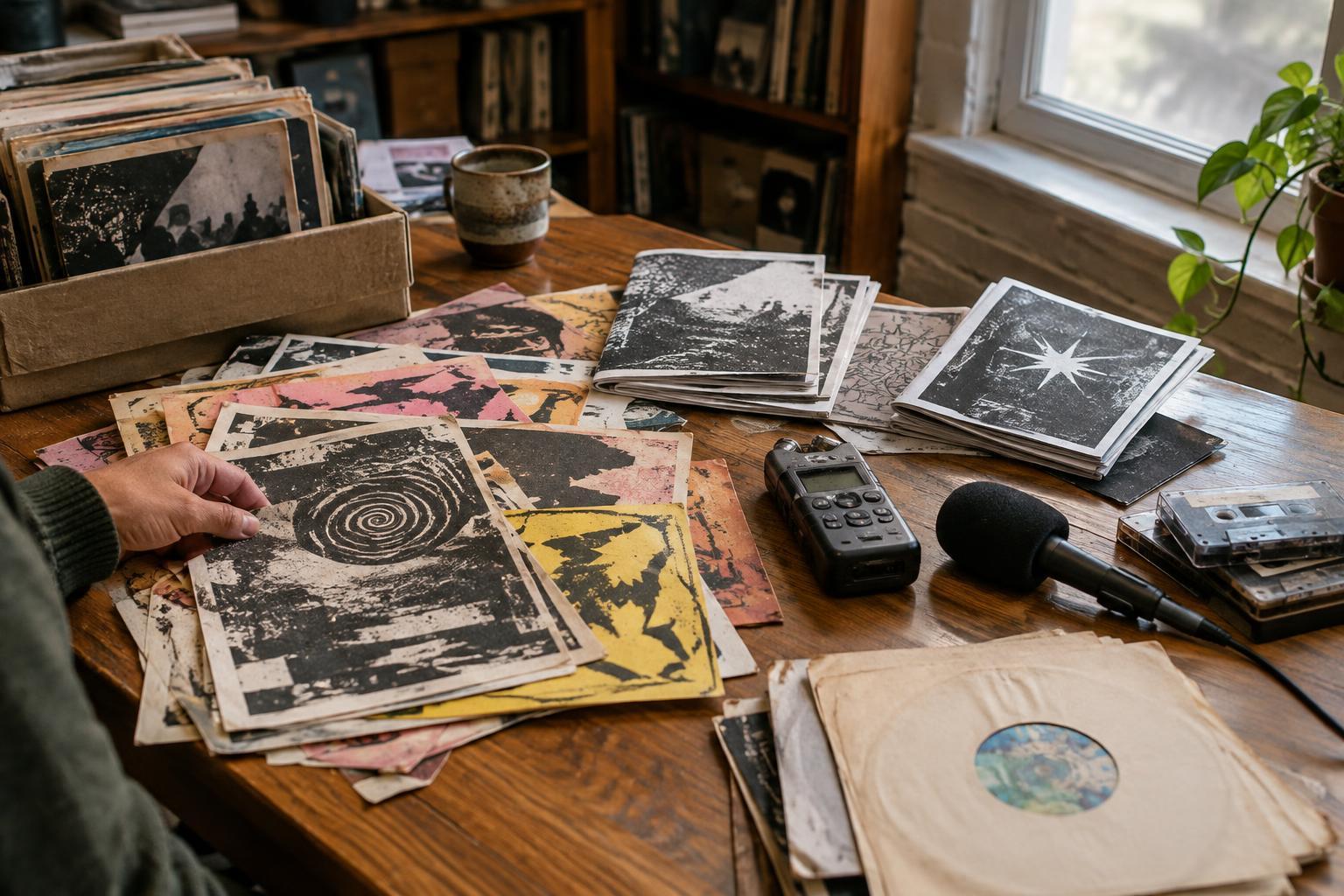
A scene is more than the music it recorded
A playlist can introduce the sound of a local music scene, but it rarely shows how that scene worked. Who booked a room on a quiet night? Which bands shared a bill before anyone knew their names? Where did people learn that a show was happening? Flyers, zines and firsthand accounts help answer those questions. They preserve the small decisions and relationships that recordings alone cannot hold.
These materials are valuable partly because they were made for immediate use, not for posterity. A flyer had to get someone through a door; a zine had to reach readers who cared enough to pick it up. Neither offers a complete history. Read together, though, they can reveal patterns: recurring venues, shared equipment, changing styles and the people who kept showing up.
Flyers record the practical shape of a scene
A show flyer can be a compact map of musical connections. Its bill shows which performers appeared together, while its venue and contact details suggest how audiences found them. Design choices can also convey a mood: a hand-drawn image, a photocopied collage or a spare block of type may reflect the tools and tastes available to the person who made it. None of those details proves what a show felt like, but each gives a useful starting point for asking.
If you collect flyers, keep their context alongside the image. Note where you found one, who designed it if known, and whether the event took place as advertised. A cancelled show still has a story, but a flyer by itself cannot confirm that anyone played. Photograph or scan both sides, including handwritten notes, and avoid cropping away information that may matter later. Basic handling and a dry, stable storage space can help paper survive without turning a personal collection into a formal archive.
Zines preserve conversations, not just announcements
Where a flyer invites people to one event, a zine can show what participants wanted to discuss between events. Interviews, reviews, drawings, letters and opinion pieces may capture enthusiasm, disagreement or uncertainty as it happened. Even the page layout can say something about how contributors made room for one another’s voices. A zine might connect musicians to record shops, rehearsal spaces, venues and listeners in ways a recording credit would not.
It helps to read zines as perspectives rather than neutral reports. An editor chose what to include, and some people may have lacked the time, access or encouragement to contribute. Keep issue numbers, covers and contributor credits attached to any pages you preserve so a striking excerpt does not lose its setting. Before posting a full scan publicly, consider the creators’ wishes and whether it includes personal information that was never intended for broad circulation.
Oral histories add memory and its limits
A conversation with a performer, sound technician, promoter or regular audience member can fill gaps that printed material leaves open. Someone may remember why a venue welcomed unusual bills, how bands helped one another carry equipment, or what made an audience feel at home. Asking open questions such as “How did you hear about shows?” often brings out more than asking someone to confirm a tidy timeline.
Memory is personal and can change over time. Two people may describe the same night differently without either account being worthless. When recording an interview, ask permission, explain how the recording may be used and let the speaker clarify names or details they are unsure about. Label recollections as recollections. Matching them with flyers, zines and other accounts can make a story richer without forcing every difference into a single definitive version.
Build a collection people can understand and trust
You do not need a large archive to begin. Start with one venue, a recurring show or a small set of related artists. Give each item a clear description: what it is, where it came from, who made it if known, and what remains uncertain. Keep original files separate from edited copies, and back up digital images and recordings. A simple, consistent naming system makes it easier to connect an interview to a flyer or a zine review later.
Preservation is also a question of whose stories receive attention. Ask who appears repeatedly in the surviving material and who helped make shows possible without appearing onstage or in print. Invite corrections, respect requests about sharing personal material, and leave room for accounts that complicate the familiar version of events. The goal is not to make a scene seem perfectly unified. It is to give future listeners enough context to hear the music as part of a lived, collaborative world.