Find the song beneath the acoustic part
An acoustic performance can make a guitar or piano part seem inseparable from the song. Before adding players, try singing the melody over simple chords or a steady pulse. Notice which elements carry the song’s identity: perhaps it is a lyric, a rhythmic strum, a descending bass note, or the pause before a chorus. Those elements are the starting point for the band arrangement. Everything else can be reconsidered.
Make a rough map of the form: intro, verses, choruses, bridge, and ending. Mark moments that feel intimate, restless, or expansive. This gives the group a shared purpose for each section, rather than a standing instruction to play throughout. A full band does not have to be loud from the first bar; holding something back often gives a later entrance its impact.
Give every instrument a job
The simplest way to crowd an acoustic song is to have every player follow the original chord pattern. Instead, divide up its musical functions. The bass can outline the chord movement and create momentum between changes. Drums can establish the pulse, answer a vocal phrase, or leave space around it. A second guitar or keyboard might add a short counterline, sustained notes, or a different rhythm rather than doubling the strum.
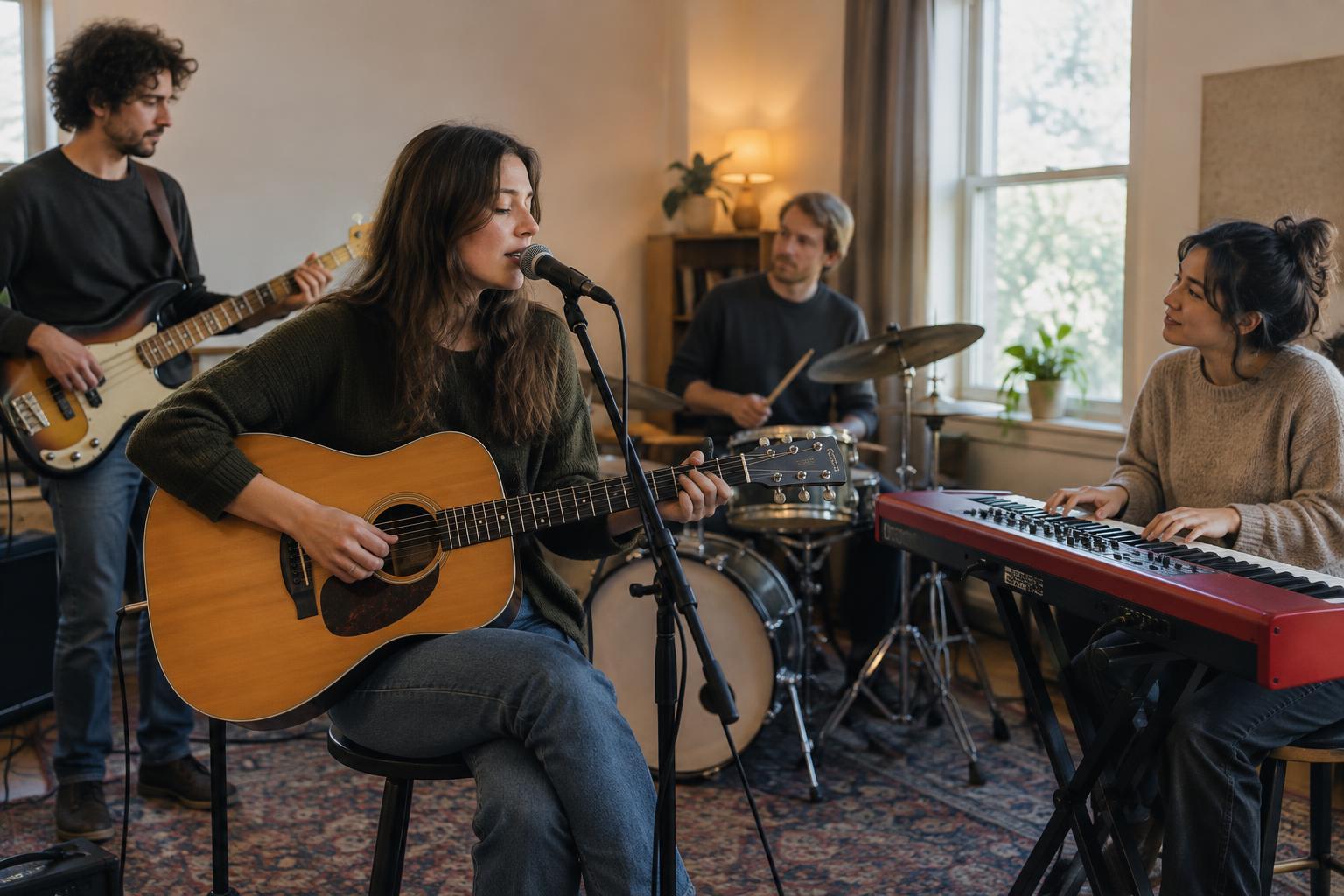
Start by rehearsing with only the vocal, one chord instrument, bass, and a restrained beat. Add other parts only when you can name what they contribute. If the acoustic guitar already fills the middle of the sound, an electric guitar may be more useful playing single notes in a higher register. Silence is a valid assignment, too: a player who waits until the second verse or final chorus can make that section feel new.
Build a dynamic arc instead of repeating one groove
A band can change the scale of a song without changing its chords. Try opening with the original acoustic texture, then introducing bass under the next verse. The drums might begin with a light pattern before moving to a fuller beat at the chorus. These choices give listeners a sense of movement and let the lyric remain clear while they learn the song.
Look for contrast between sections. A busy verse may need a simpler chorus so the melody can stretch; a quiet bridge may set up a strong return to the final refrain. Dynamics are not only about volume. Changing the density of notes, the length of chords, or the placement of accents can create a lift even when the band stays at a moderate level. When a section feels flat, try removing a part before adding another.
Make entrances, transitions, and endings deliberate
A promising arrangement can still feel uncertain if players enter at different times or disagree about how long a transition lasts. Choose clear cues: a lyric, a drum fill, a held chord, or a count from one player. Decide whether the band follows the flexible timing of the original performance or commits to a steadier tempo. Neither approach is automatically better, but everyone needs to hear the same plan.
Pay particular attention to the first and last few seconds. An intro should establish the mood without making the audience wait too long for the song to begin. For the ending, decide whether to stop together, let one instrument ring out, or return to the sparse sound of the opening. Rehearse these moments on their own; they can be harder to coordinate than the main groove.
Test the arrangement as a live performance
Record a rehearsal from across the room and listen for the vocal, the pulse, and the shape of the song. A part that sounds attractive on its own may cover a lyric when everyone plays together. If that happens, first try changing its register, rhythm, or point of entry. The goal is not to make every instrument equally noticeable at every moment, but to help the audience follow the song.
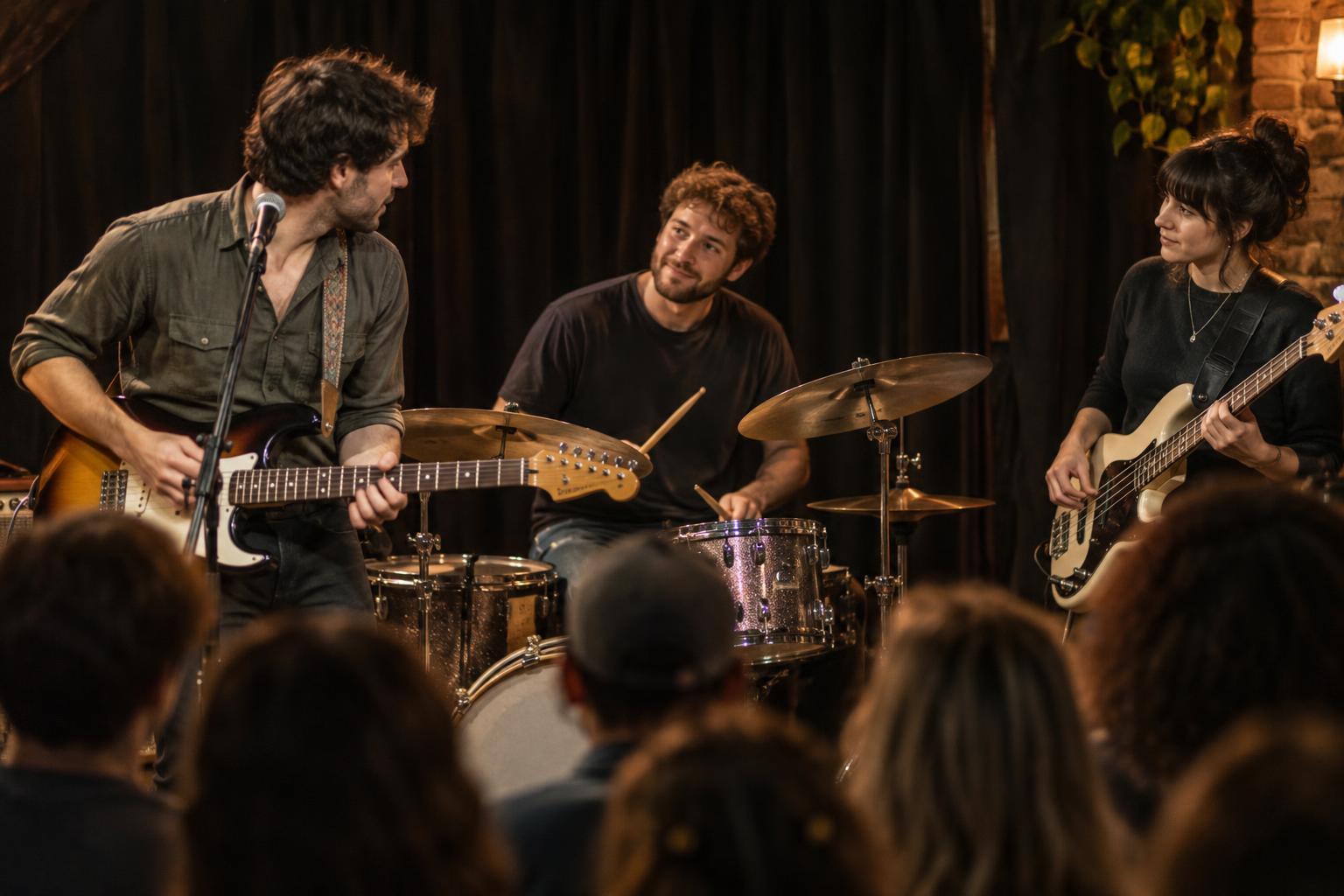
Run the arrangement at a realistic performance volume, then ask the group what feels natural and what requires constant attention to coordinate. Keep a simple written roadmap of entrances, stops, and any altered chords or bars. Once those decisions are secure, leave room for players to respond to one another. The strongest full-band version may not reproduce every detail of the acoustic original; it should preserve its character while making purposeful use of the people onstage.