A handoff is more than a changeover
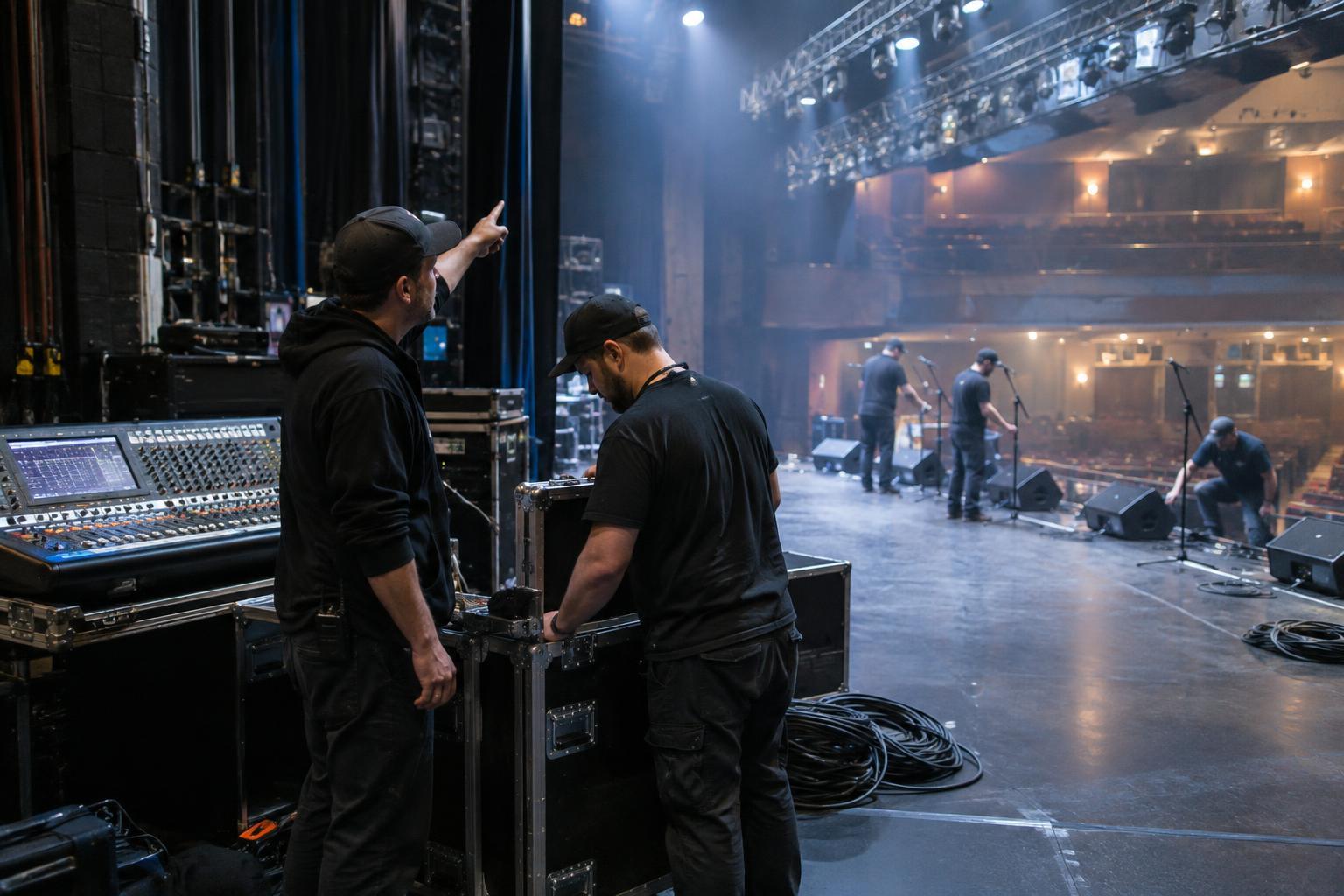
Between performances, many things change at once: instruments leave the stage, new equipment moves in, audio channels are reassigned, lighting cues shift, and performers need to know when they can enter. The handoff is the point where one person or team passes responsibility for those details to another. When it works, the audience may notice only a short pause. When it fails, a small misunderstanding can delay the next set or send someone searching for a missing cable.
The most useful handoffs answer three questions: what is ready, what has changed, and what still needs attention? That sounds simple, but backstage work is noisy and time-sensitive. A brief, direct exchange is often more reliable than assuming the next crew member saw what happened during the previous set.
Mistake one: assuming the plan has not changed
A stage plot or input list gives crews a starting point, not a guarantee that every detail will remain the same. A performer might use a different instrument, need an additional stand, or decide to leave an item offstage. Trouble starts when one team learns about a change but does not pass it to the people who will handle sound, monitors, lighting, or the next changeover.
Crews can reduce that gap by keeping one clear version of the working plan and naming changes out loud at the handoff. Instead of saying, “Everything is set,” a stage lead might say that the keyboard has moved, its power is in place, and its audio connection has yet to be checked. The distinction between done and still pending gives the next person something specific to act on.
Mistake two: leaving ownership unclear
Backstage, several people may be able to move a microphone stand or check a cable, but that does not mean anyone has agreed to do it. A vague request such as “Can someone sort the vocal mic?” can be lost among other tasks. The reverse problem happens when two people independently make different adjustments, each believing they own the same part of the setup.
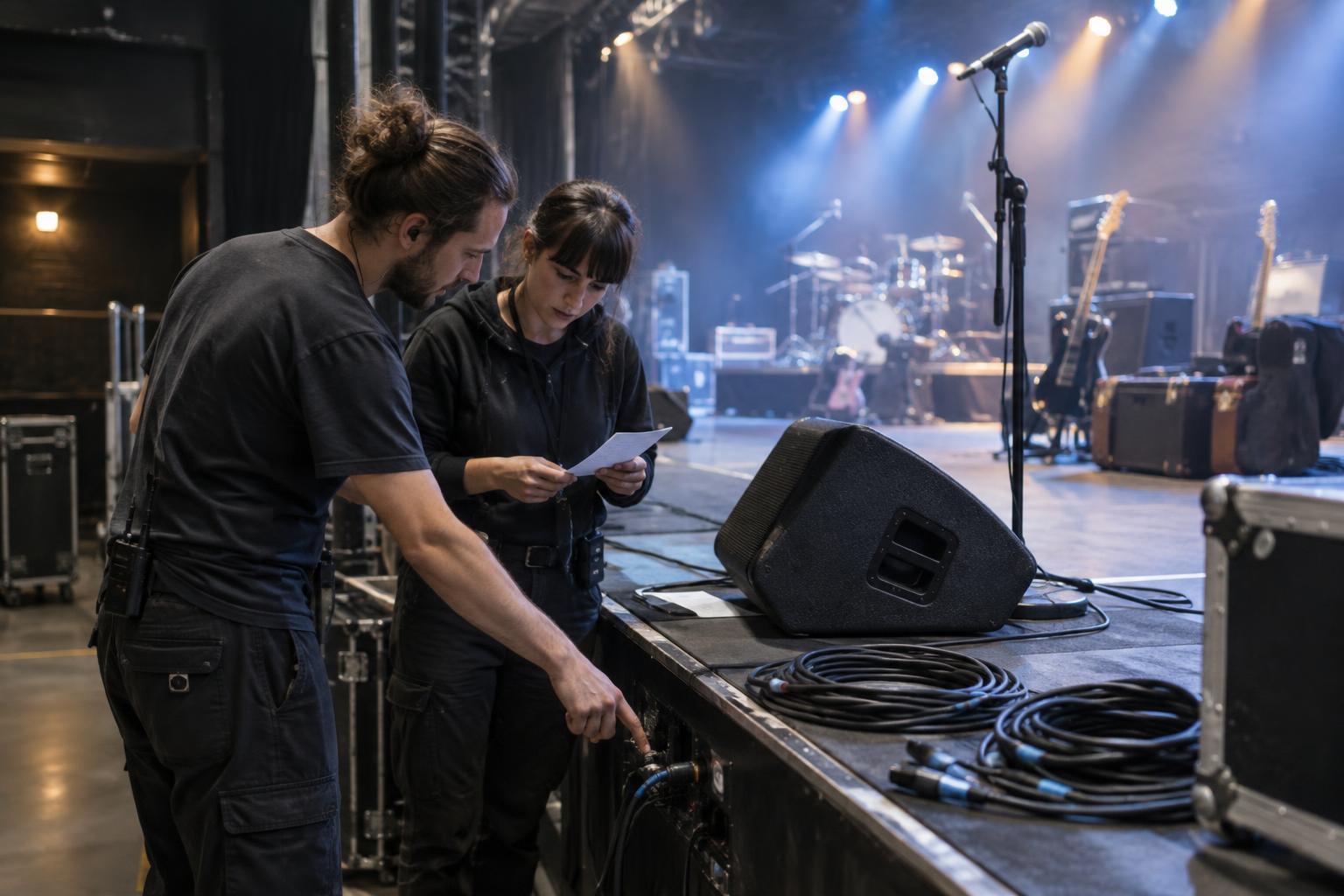
Clear ownership does not require a long meeting. A useful exchange names the task, the person taking it, and the point at which it will be reported complete. For example, one crew member can take responsibility for resetting vocal positions while another checks that the relevant channels are ready. If a task cannot be finished, passing that fact along is just as important as passing along a completed item.
Mistake three: treating a quiet stage as a tested stage
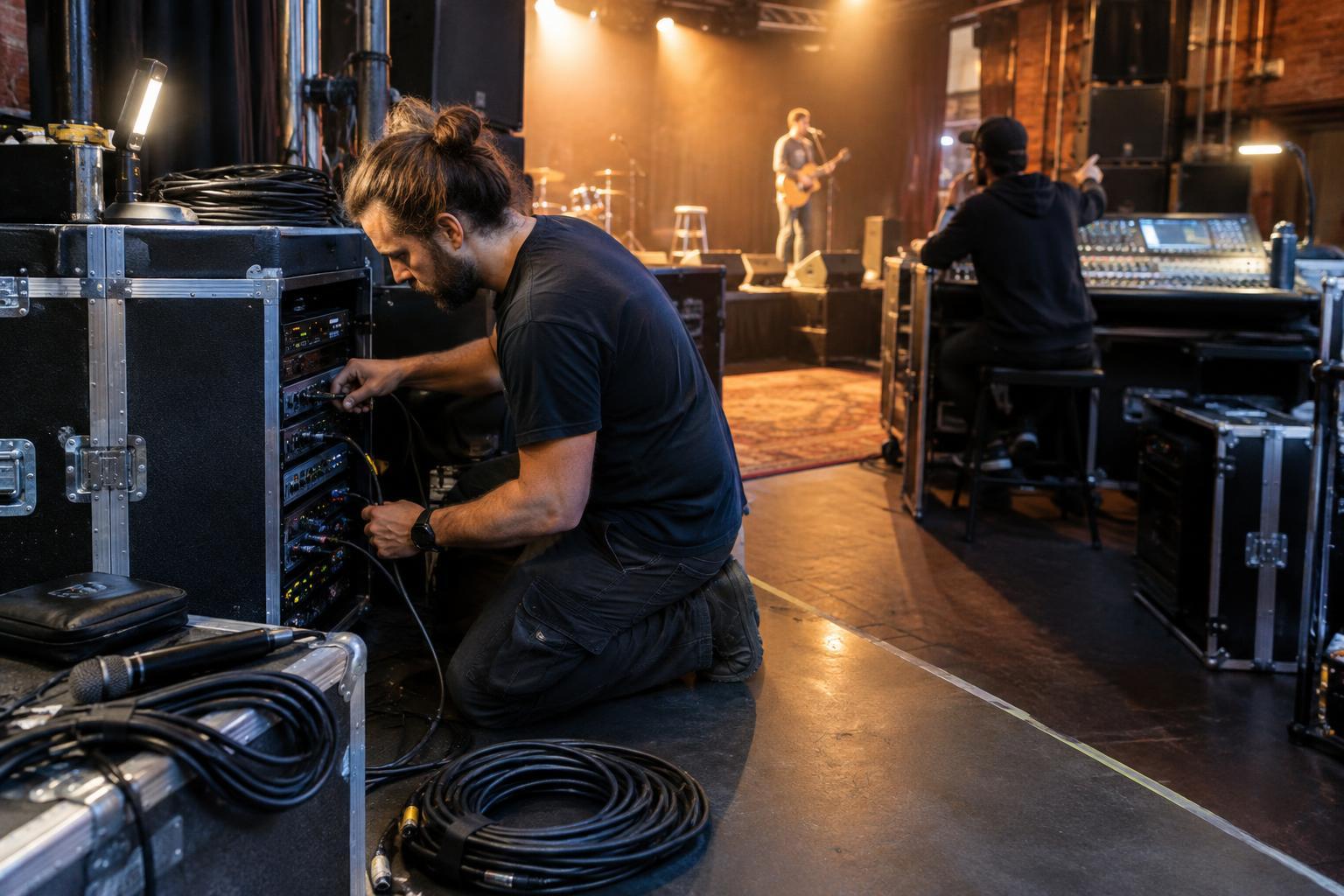
Equipment can look correctly placed without being ready for a performance. A microphone may be on the right stand but connected to an unexpected input; an instrument cable may be routed neatly but not seated fully. Crews may also overlook a performer’s monitor needs if they focus only on what the audience will hear. These are easy details to miss when the next set is approaching.
The practical safeguard is to separate placement from verification. Once items are in position, the appropriate crew members can confirm connections and communicate what has actually been checked. If there is not enough time for a full check, the handoff should say so plainly. “Placed but not tested” is more useful than “ready,” because it helps the next person decide what to verify first.
Mistake four: passing information without closing the loop
A shouted update across a busy stage may reach the wrong person, or no one at all. Even a correct message can become confusing if it lacks context: “The amp is off” might mean it has been powered down, removed from the plan, or found not to be working. Brief confirmation helps prevent a message from becoming an assumption.
Good handoffs use plain descriptions and a chance to acknowledge the important points. The outgoing crew identifies any unfinished work; the incoming crew confirms who is taking it. A short end-of-changeover check can then catch items that fell between teams: clear paths, equipment in its intended place, and any remaining questions directed to the right person. The goal is not paperwork for its own sake. It is a shared picture of the stage before the next performance begins.