The stage is a shared workspace
A stage can look simple from the audience: a few performers, instruments, microphones, and lights. Behind that view, cables connect equipment across a space where people are constantly moving. A singer may cross to another microphone, a technician may reach an amplifier between songs, and a performer may need a clear route offstage. Cable management helps those movements coexist.
The first goal is not to hide every cable. It is to make each run deliberate. Where will people walk? Which equipment might be moved during the set? What needs to remain accessible if something stops working? Asking these questions before cables go down can prevent a tidy-looking setup from becoming an awkward one as soon as the performance starts.
Clear routes make movement more predictable
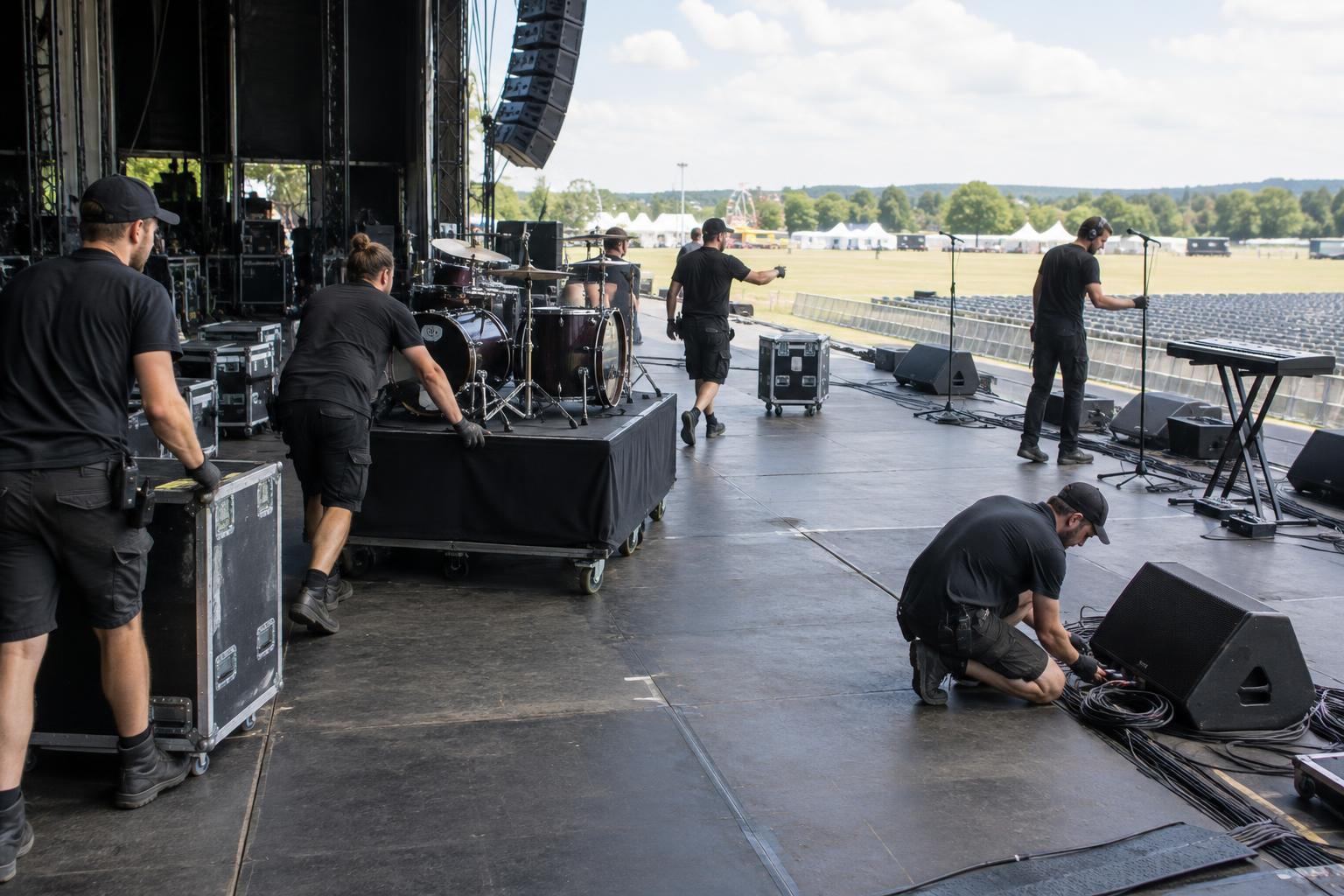
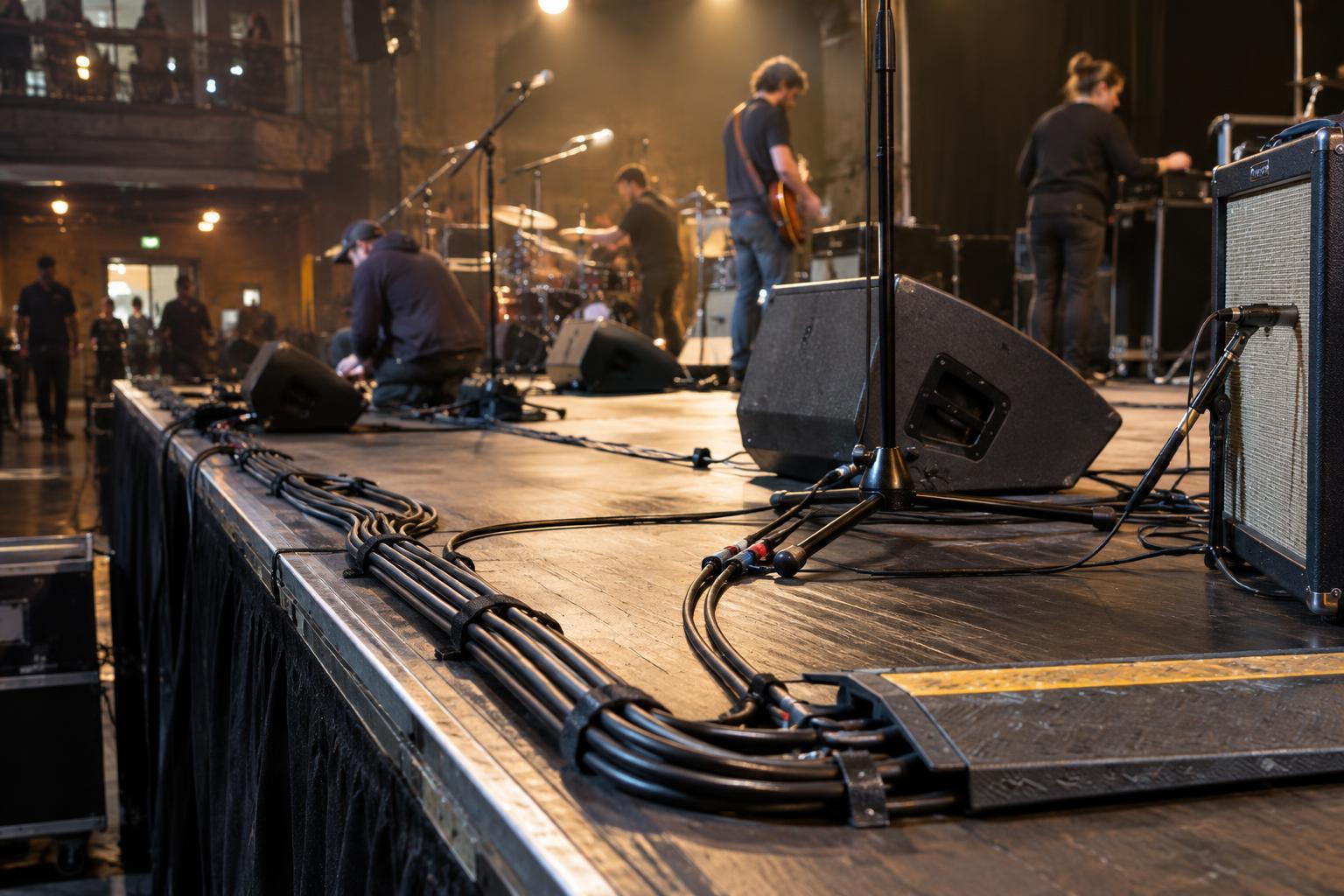
Loose cable loops can catch a foot, snag on a stand, or pull a connector when someone moves an instrument. Keeping excess length out of traffic areas reduces those risks. Where a cable must cross a walking route, the crew can choose protection suited to the surface, the equipment, and the venue’s rules. The right solution may differ between a small club stage and a large outdoor platform.
Cable paths also need to respect how performers actually use the space. A guitarist who moves across the stage needs enough slack to play comfortably, but a long coil at their feet creates another obstacle. Likewise, a microphone cable should not block access to a drum kit just because that was the shortest route. A quick walk-through from each performer’s position can reveal problems that are hard to spot from the mixing desk.
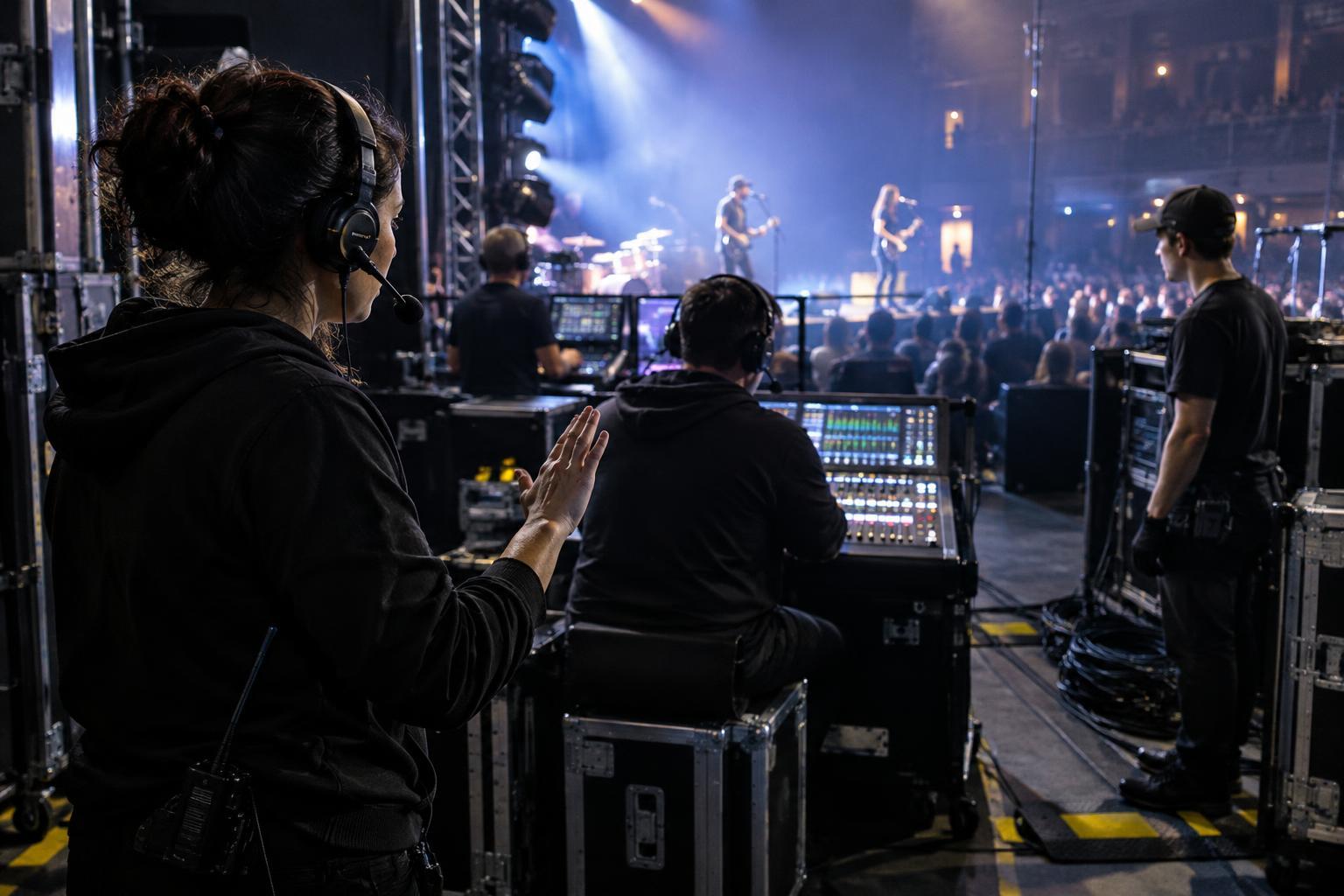
Good routing leaves practical access for the people working behind the performance, too. Crew members may need to adjust equipment or reach a connection without stepping over a dense bundle of leads. Clear paths can make those small interventions less disruptive.
Order helps when the sound changes unexpectedly
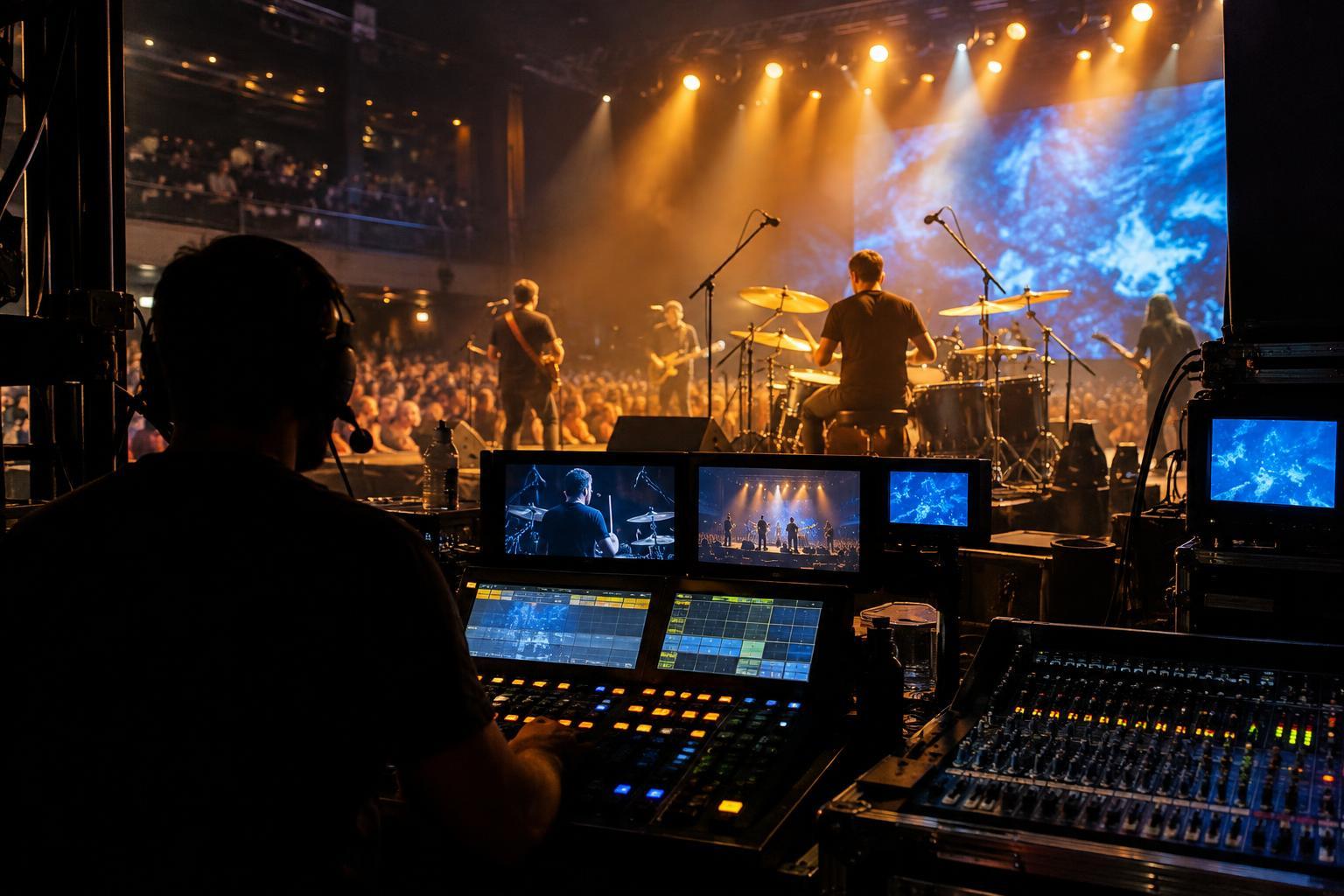
Not every sound problem starts with a cable, but connections are often among the first things a technician checks. If several similar leads disappear into one tangled pile, identifying the right one takes time. A route that can be followed visually, with clear labels at useful points, makes it easier to check whether a cable is connected, strained, or attached to the intended device.
Labels are most helpful when they match the stage plan and remain understandable during a hurried changeover. A simple description of the source and destination can be more useful than a label only one person recognizes. Keeping cables in sensible groups can also help the crew make a change without disturbing unrelated connections. None of this guarantees a trouble-free show; it gives the team a clearer place to start when something needs attention.
Changeovers put the plan to the test
A setup may work perfectly for one act and become confusing when the next group brings on different instruments. In that setting, cable management is part of the changeover plan. The crew can identify which lines stay in place, which will be removed, and where new equipment will land. Leaving space for those changes is often more useful than packing every cable into the smallest possible area.
Consistent habits help under time pressure. Coiling unused leads rather than leaving them in walkways, keeping connector ends easy to find, and checking a route before performers take their places all reduce avoidable searching. Clear communication matters as much as neatness: if a cable path changes, the people who depend on it need to know. A rushed changeover is not the moment to assume everyone can see what has moved.
A good setup stays workable through the final song
Cable management is not finished after setup. Stands shift, pedals move, and performers find new paths across the stage. A quick visual check during a suitable break may reveal slack that has migrated into a walkway or a lead being pulled tight. Any adjustment should be coordinated with the people using that equipment, rather than made unexpectedly during a performance.
The same care carries into teardown. Disconnecting and coiling cables deliberately helps prevent damage and makes the next setup easier to understand. Power connections and any higher-risk electrical work should be handled according to venue procedures by appropriately qualified people. For everyone else, the guiding principle is straightforward: make the stage easier to move through, easier to troubleshoot, and easier to change without getting in the way of the music.