Start with the full trip, not the ticket
A ticket gives you a clear starting number, but it rarely tells you what the whole festival will cost. Before buying, sketch the trip from the moment you leave home to the moment you return. Include admission, getting there, sleeping arrangements, meals, local transportation and anything you need to bring. A simple list is more useful than a precise-looking total that leaves out major expenses.
Separate costs into three groups: fixed costs you can check before committing, flexible costs you can limit, and possible costs you hope not to need. Ticket and lodging prices may be fixed once booked; food and merchandise are more flexible. A replacement rain layer or an extra ride back to your room belongs in the possible-cost group. This distinction shows where you have room to adjust if the total is higher than expected.
Map your route and your place to sleep
Travel can change the budget more than a small difference in ticket price. Compare realistic door-to-door options rather than looking only at a fare or fuel cost. Driving may also involve parking, tolls and a plan for who drives home. A train or bus may require another ride between the station, your lodging and the venue. If the festival has multiple days, write down how you will make that journey each day.
For lodging, consider the full stay rather than a nightly rate in isolation. Check the number of nights you need, how many people are sharing the cost, and whether getting to the venue will add time or transport expense. If camping is an option, list the equipment you already own before treating it as the cheapest choice. Borrowing suitable gear or choosing simpler accommodation may make more sense than buying items you are unlikely to use again.
Give food, water and small purchases their own lines
Meals are easy to underestimate when you picture only the hours spent watching music. Count breakfasts, travel-day food, late meals and snacks as well as what you might buy inside the site. Check the event’s published rules before planning to bring food, drinks or refillable containers; policies can vary. Then set a daily amount that fits the choices actually available to you, rather than assuming every meal will be inexpensive.
Small purchases deserve a line of their own. Lockers, phone charging, sunscreen, earplugs and merchandise can each feel minor in the moment. You may not need all of them, but naming the likely ones makes spending more deliberate. If a poster or shirt is part of the experience you want, include it in the plan instead of treating it as a budget failure.
Plan for comfort and a change of plans
The right preparations can prevent both discomfort and last-minute spending. Look at the likely conditions and the event’s permitted-items list, then check what you already have: comfortable shoes, weather protection, a portable charger or a bag that meets site rules. Avoid buying a complete set of festival gear by default. Prioritize items that solve a specific need and that you can use after the weekend.
Leave some unassigned money for ordinary surprises, such as a missed connection, a change in weather or a longer journey than expected. This cushion is not a target to spend; it is a way to keep one small setback from forcing difficult choices during the trip. If adding it puts the festival beyond what you can comfortably afford, consider a shorter visit, a different travel plan or waiting for another event.
Make the budget easy to use on the day
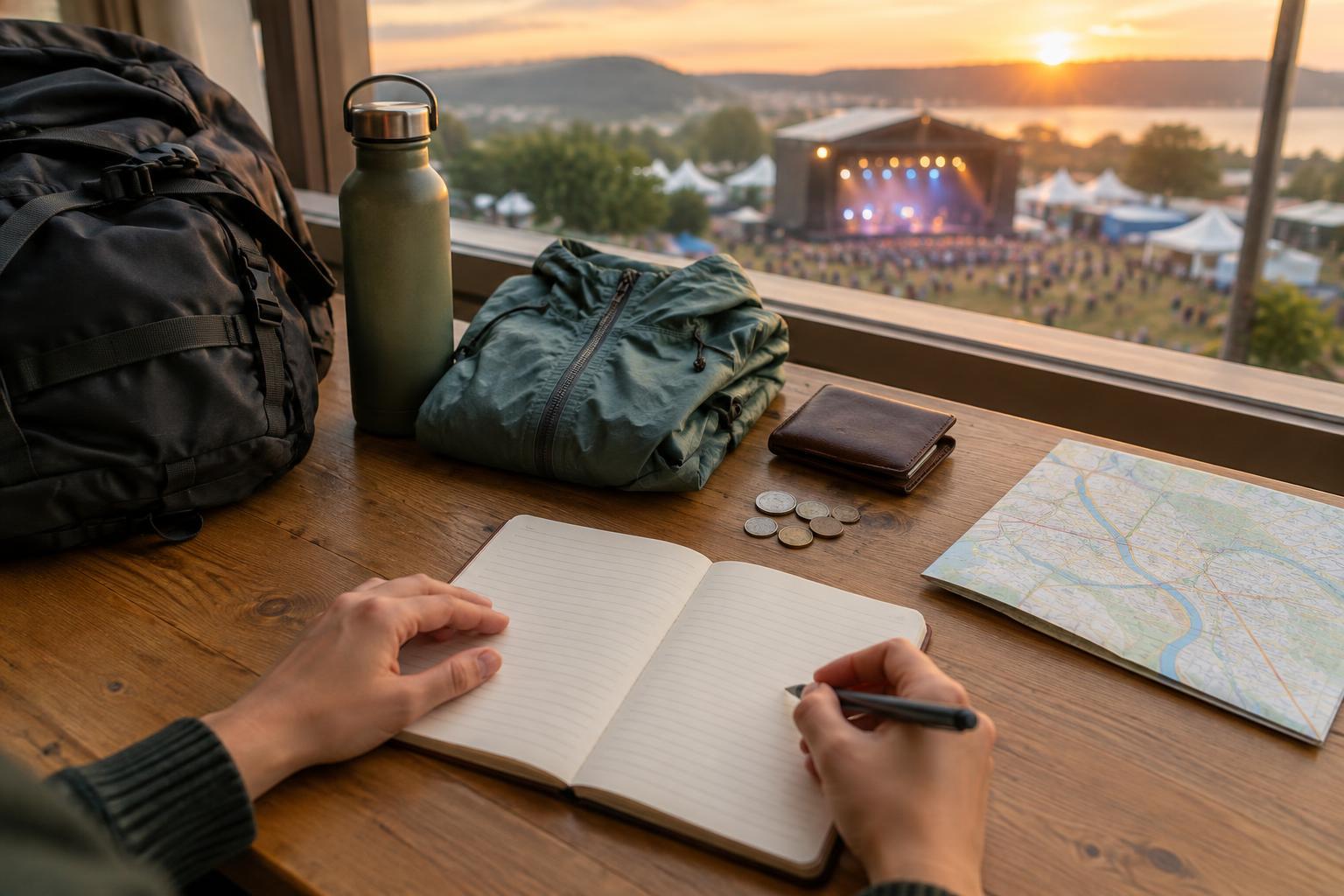
Put your estimates in a note or spreadsheet with one line for each cost and a total at the bottom. Mark amounts you have already paid so you do not accidentally count them twice, and keep flexible spending separate from money reserved for the return trip. Before you go, check booking details and venue policies against your plan; an assumption about parking or re-entry can affect what you need to carry and spend.
During the festival, a quick daily check is enough. You do not need to record every small purchase if that takes you out of the experience, but it helps to know what remains for food and transport. A good festival budget is not about removing every spontaneous choice. It gives you room to enjoy the music without wondering whether the trip home is covered.