A show has more than one conversation
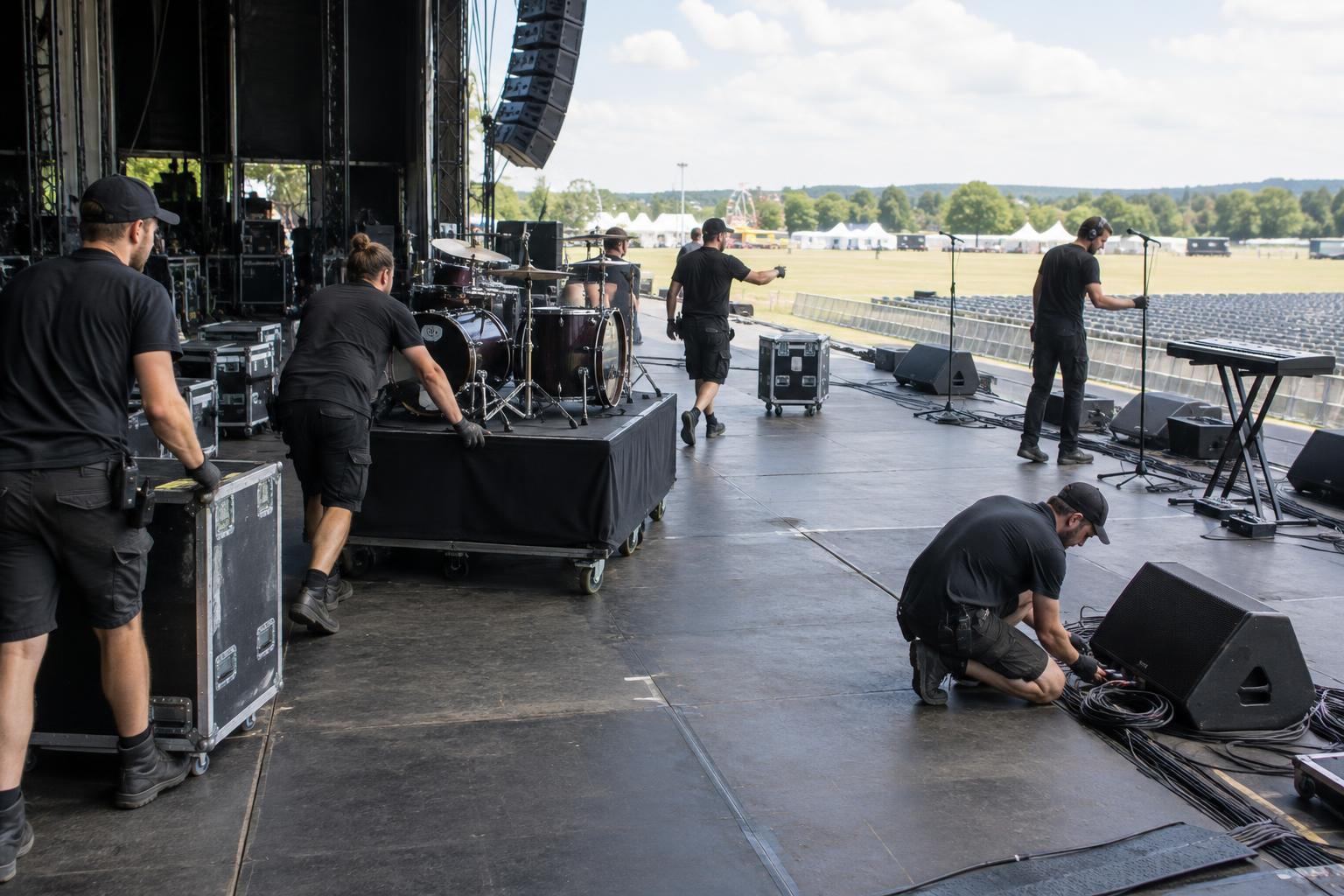
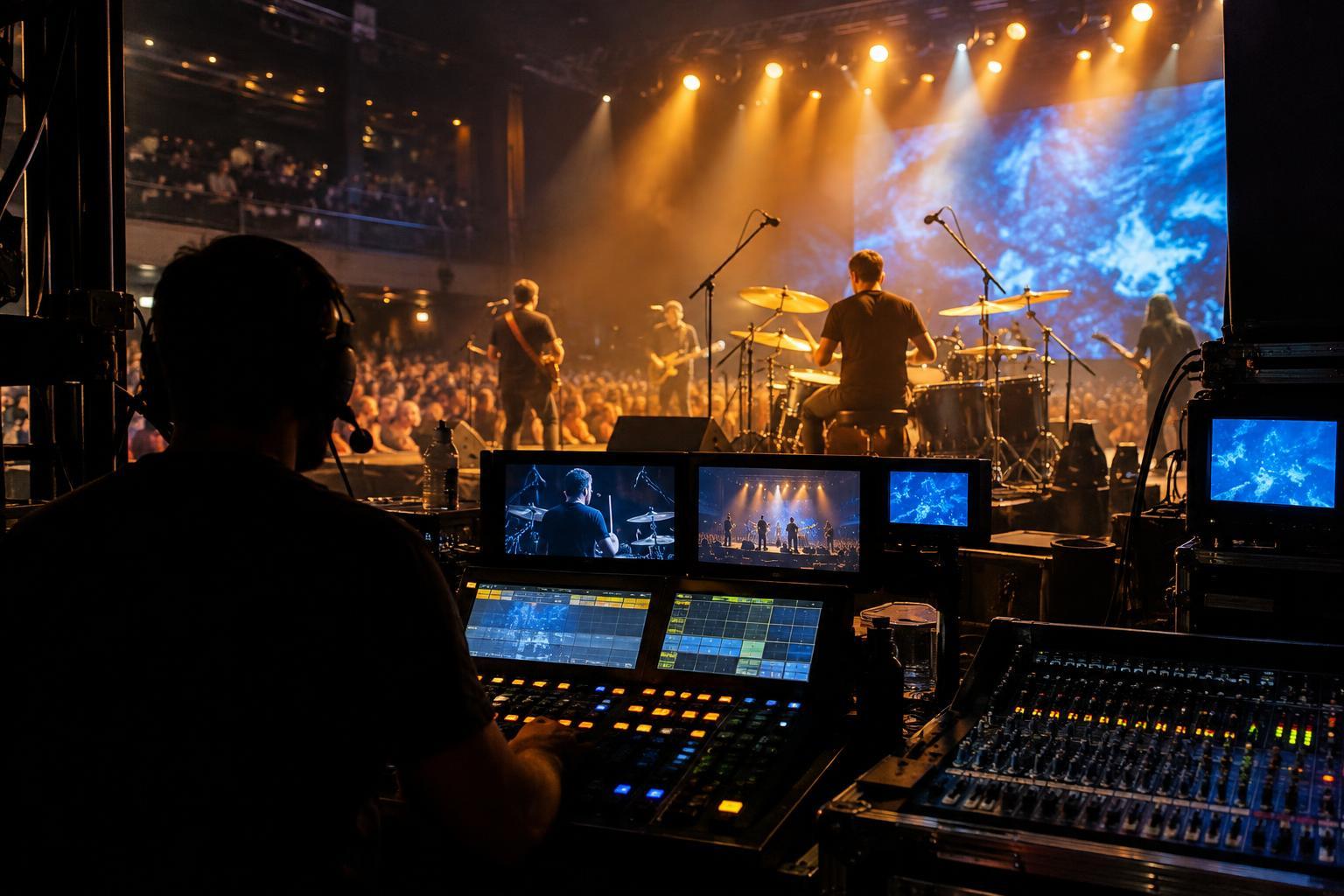
From the audience, a concert can look like one continuous event. Behind the stage, several teams are handling different parts of it at once. The front-of-house sound engineer listens to what the audience hears, while a monitor engineer may focus on what performers hear onstage. Lighting and video operators follow the performance from their own stations. Stagehands and backline technicians deal with instruments, microphones and equipment changes.
These jobs overlap, but not everyone needs every update. A stage manager or another designated lead often helps connect the departments, especially during transitions. The exact arrangement depends on the size of the show and the people available: a small venue may have one person covering several roles, while a larger production may have separate teams. In either setting, useful communication answers three questions: what is happening, who needs to act and when should they act?
Preparation gives cues a shared meaning
Much of the communication during a show begins before the first song. A schedule or show document might list the performance order, changeovers, planned lighting moments and any announcements. Teams may walk through complicated transitions together, checking where people and equipment need to be. That preparation gives a short cue such as “stand by for the next changeover” a meaning everyone can recognize.
A cue usually works best when it names an action rather than leaving room for interpretation. “Stand by” tells a person to get ready; “go” releases the action. For a planned entrance, one crew member might confirm that the stage is clear, another that the instrument is ready, and a lead might then call the entrance cue. Not every concert follows that sequence, and spontaneous performances can require more flexibility. The principle is the same: agree on the important handoffs in advance so people do not have to solve them from scratch in a noisy room.
Headsets, radios and sightlines each have a job
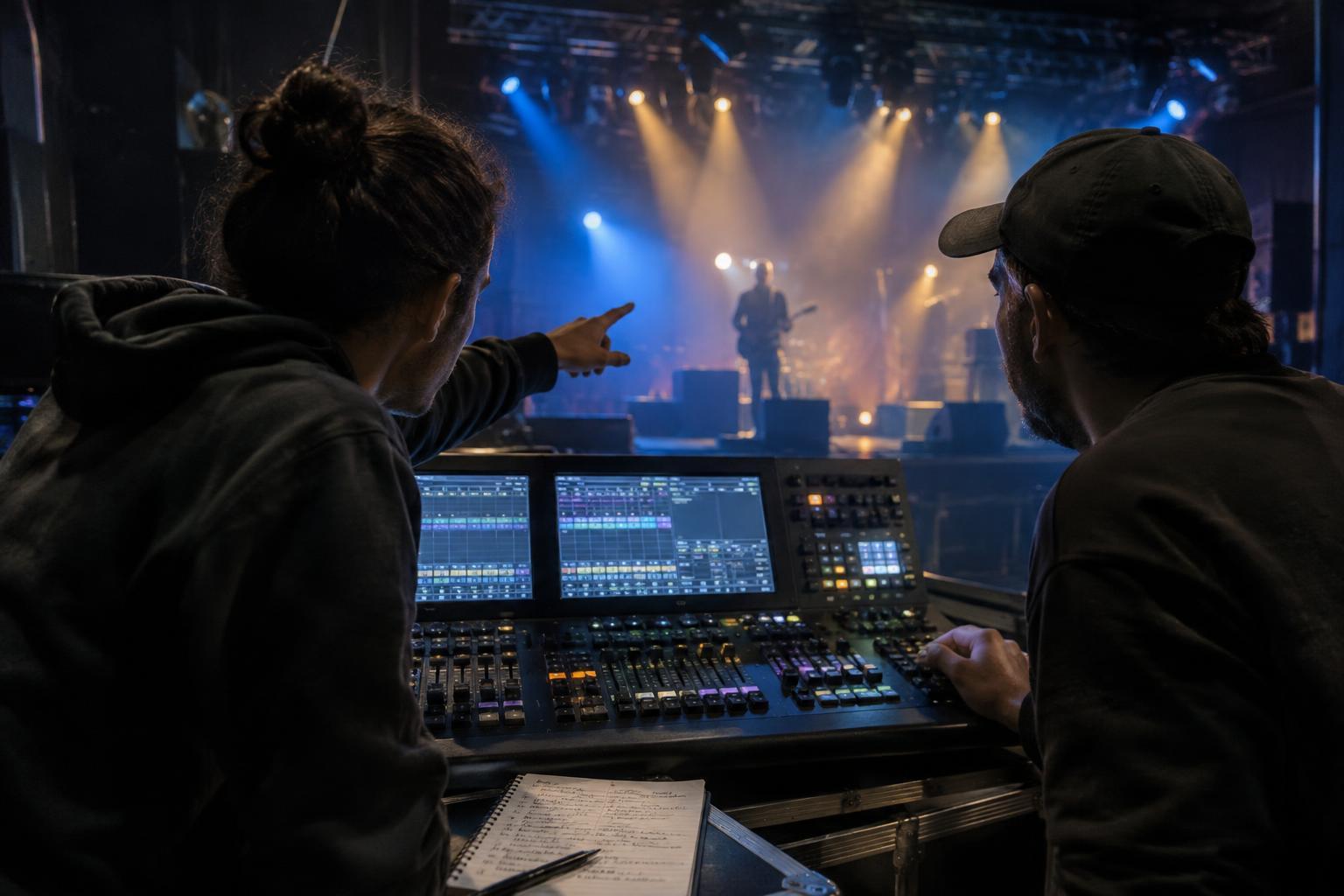
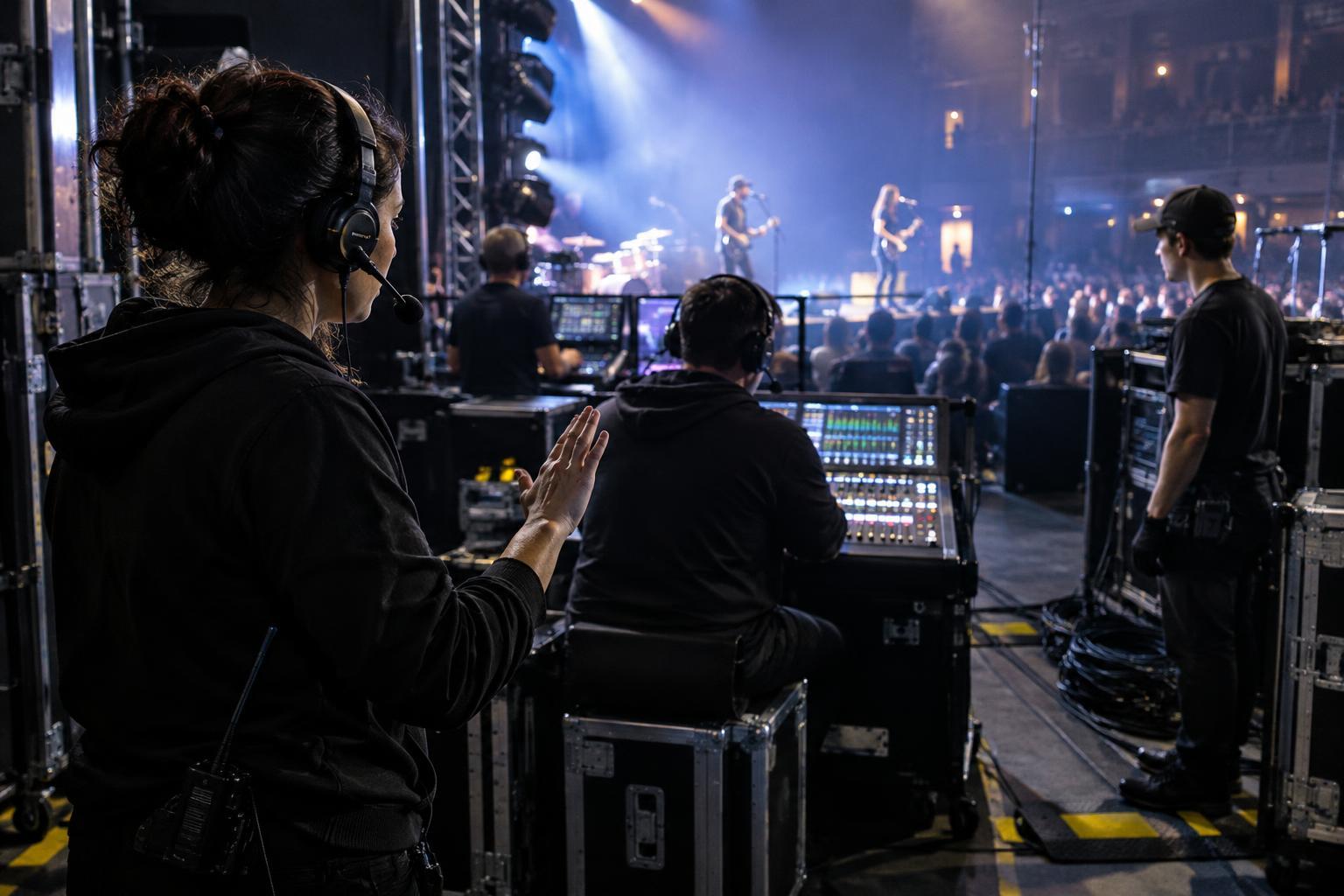
Headsets and intercom systems let crew members speak without shouting across the stage. Radios can help people working farther apart, although their channels may need to be kept clear for messages that matter. Some communication is visual instead: a lighting operator may watch the performer for the end of a song, while a stagehand may wait for a clear hand signal before moving equipment. A written set list or cue sheet provides another reference when speech is hard to hear.
No single method is perfect. Music can mask a spoken message, a headset may be unavailable to someone onstage, and a visual cue can be missed if a person is looking elsewhere. Crews therefore benefit from knowing which channel carries which kind of information and how to confirm an important instruction. A brief acknowledgment—such as repeating back the relevant cue—can be more useful than a long conversation when several people need the same clear answer.
Clear language matters when plans change
Live performances rarely unfold exactly as written. A song may run longer than expected, an instrument may need attention, or a performer may move somewhere the lighting operator did not anticipate. When plans change, the most helpful message describes the situation and its immediate consequence: an entrance is delayed, a microphone is not ready, or a stage area must remain clear. It avoids blame and gives the next person something they can act on.
Urgency also matters. Routine updates should not fill the same channel used for time-sensitive cues. If every observation sounds like an emergency, the crew has a harder time recognizing a genuine problem. Conversely, a safety concern should be communicated plainly and promptly, even if it interrupts the planned sequence. Depending on the venue and production, crews may agree beforehand on who has authority to pause an action and how that decision is relayed.
The audience sees the result, not the exchange
Good backstage communication is not necessarily silent or elaborate. It is timely, specific and directed to the people who need it. When a set ends, a stage manager might coordinate the handoff while technicians remove one setup and prepare another. Sound and lighting operators can use that same transition to adjust for the next performer. Each person works on a separate task, but the changeover succeeds only if those tasks fit together.
Listeners may notice this coordination only when something goes wrong—or when a difficult transition feels effortless. Watching a live show with an eye for its production can reveal the small signals behind that effect: a crew member waiting for a cue, an operator responding to a performer’s movement, or a stage clearing in a careful sequence. The performance belongs to the artists, but the crew’s communication helps give it a reliable space in which to happen.