Start with a question, not a genre
Streaming recommendations are convenient, but they often begin with what you already play. Away from that loop, a small question can give your search direction. What music does your favorite drummer listen to? Which artists share a bill with a band you like? What did a particular local scene sound like before you encountered it? A question gives you somewhere to begin without requiring you to know the name of your next favorite artist.
Keep the search manageable. Pick one question for a week and follow a few leads rather than trying to survey an entire genre. Write down unfamiliar names as you encounter them, along with where you found them. That bit of context helps later: a name from a radio set may call for different listening than one you spotted on a concert poster.
Let people make the introductions
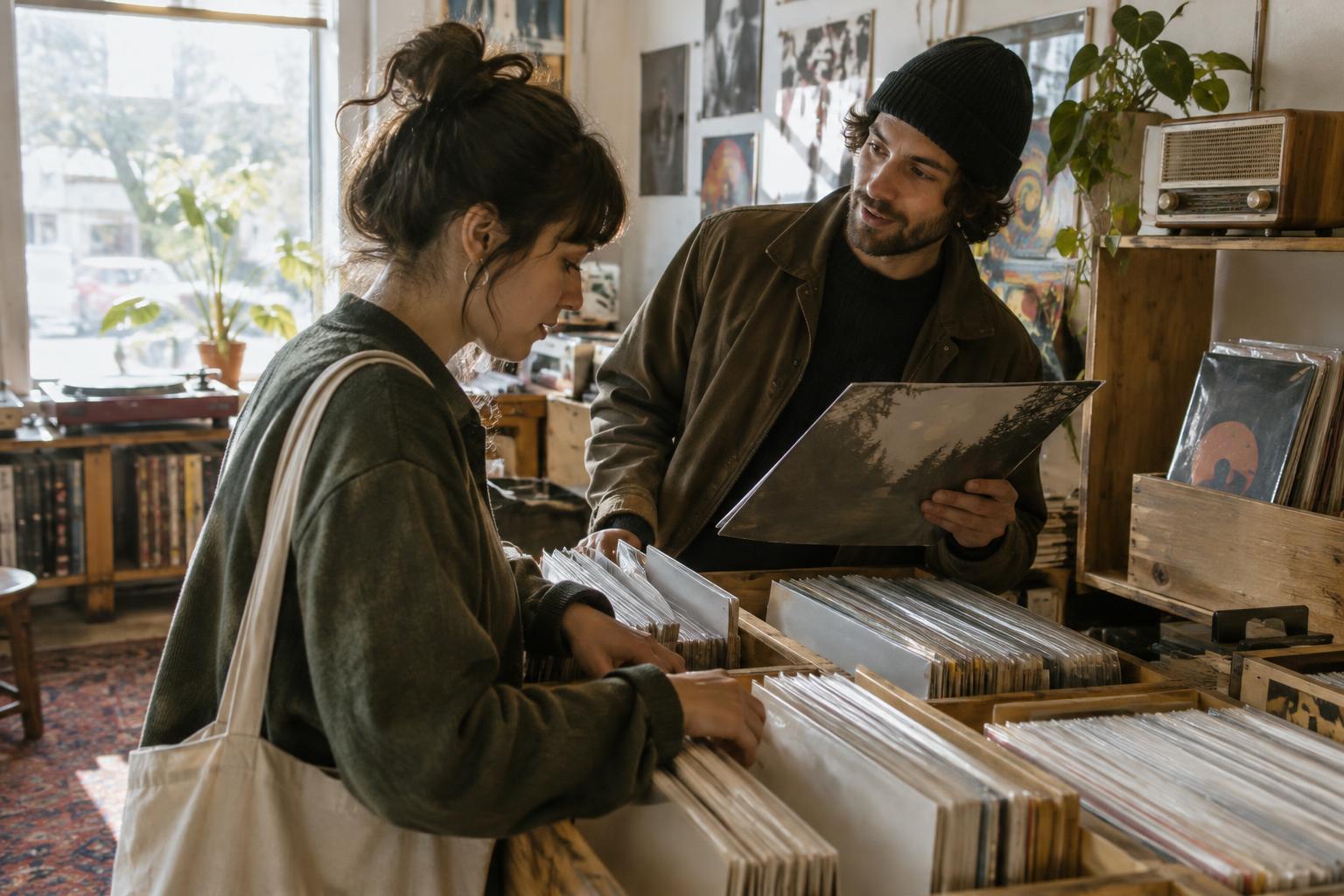
Ask a friend, a musician or someone at a record shop for one recommendation, not a complete list. A specific prompt tends to produce a more useful answer: “I like the spacious sound of this album; what else should I try?” If you can describe the part you enjoy—a rhythm, a voice, a mood—you give the other person room to suggest something unexpected. Offer a recommendation in return, and the exchange becomes a conversation rather than a test of taste.
Local radio hosts, music writers and community publications can play a similar role. Their selections have a point of view, and their descriptions may explain why two artists belong together even when they sound different. When a name catches your attention, note the program or article that led you there. You can return to that guide when you want another starting point.
Browse places built for wandering
A library music collection lets you explore without committing to a purchase. Try a shelf adjacent to one you know, or borrow an album because its personnel, cover notes or title sparks curiosity. Record shops offer another kind of map: bins, staff picks and used copies put familiar names beside unfamiliar ones. Browsing need not mean buying. You can make a note of what interests you and decide later whether you want to hear more.
Physical releases can also open paths beyond the main artist. Look at the performers, producers, labels and thank-you notes, then follow a name that appears more than once. These connections are clues, not guarantees. One collaborator may take you somewhere entirely different, which is part of the pleasure of searching this way.
Use live music as a listening guide
A concert bill is a compact discovery tool. If you are going to see an artist you know, arrive in time for the opening act when you can. Listen for a song, instrument or stage dynamic that holds your attention rather than deciding whether you like the whole set. Smaller shows can be useful because they make it easier to hear an unfamiliar performer up close, though any venue can offer a surprise.
You can learn from a lineup even when you cannot attend. Look at which artists perform together and explore the names that intrigue you through their own releases, interviews or local coverage. Treat the bill as an invitation to investigate, not proof that every act sounds alike. If you do go to a show, jot down a name soon afterward; a compelling performance is easy to remember, but an unfamiliar spelling may not be.
Make room to listen, then keep what matters
Discovery is more satisfying when it includes time with the music. Choose one album, radio program or borrowed recording and listen without trying to collect more leads at the same time. Notice what makes you want to return: perhaps a melody, an arrangement or a performance that changes direction halfway through. You do not need an instant verdict. Some music becomes clearer on a second listen; other music simply is not for you.
Keep a short discovery notebook on paper or in a notes app. Record the artist, a song or album, where you heard it and one honest sentence about your reaction. Sort the names into “hear again,” “explore later” and “not for me” if that helps. The goal is not to build a perfect catalog. It is to make your own listening history useful, so the next search begins with curiosity rather than an automated prompt.