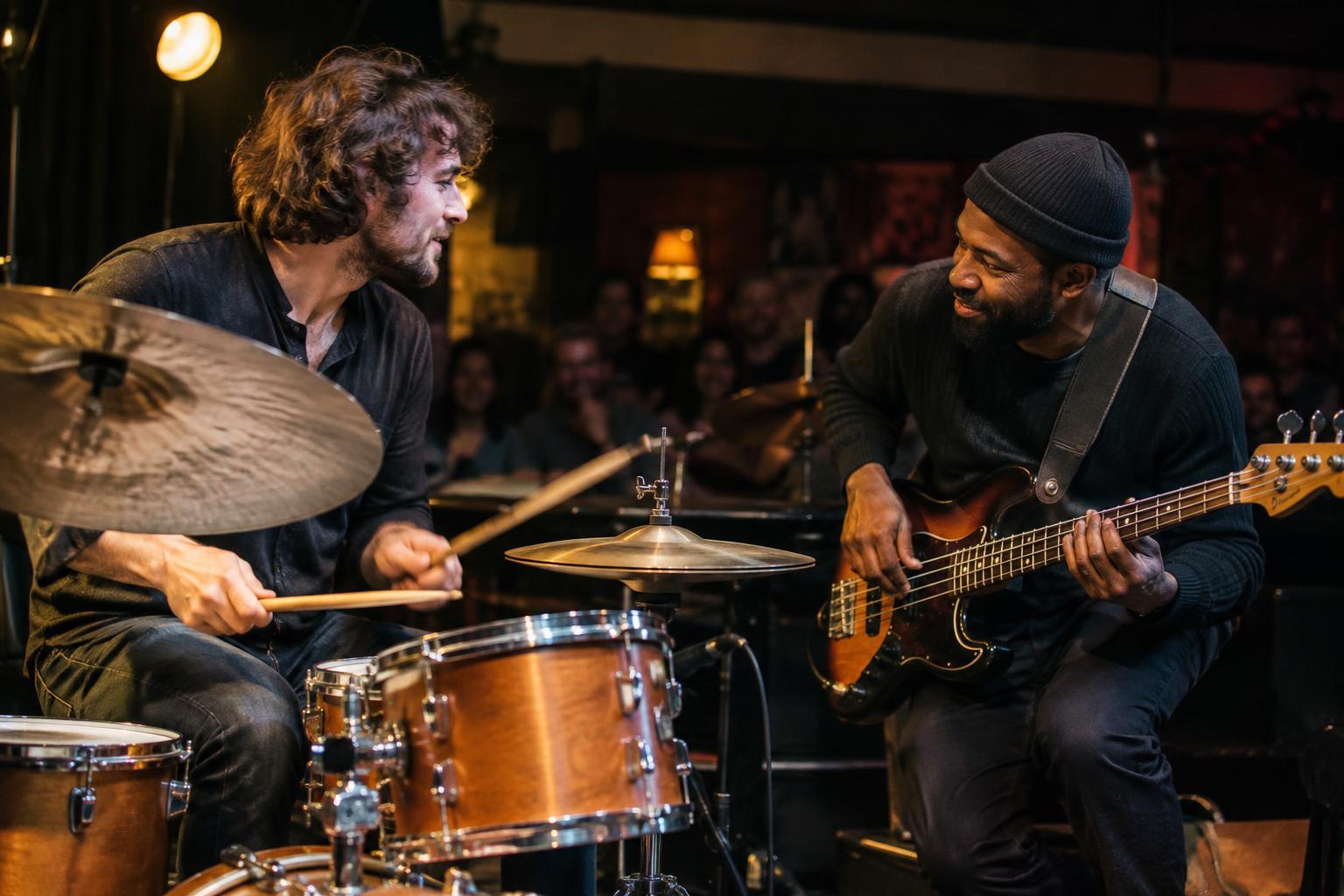
Reading the room starts before the first note
A musician does not need to know everyone in the audience to get a sense of the room. Its size, layout, noise level, and purpose all offer clues. A seated crowd facing a small stage may be ready to follow quiet details. A standing crowd near a busy bar may need a clearer opening gesture before it turns its attention toward the music. Neither setting is better; each gives the performer a different starting point.
The opening moments help test those first impressions. Musicians can notice whether listeners settle during a soft passage, respond to a strong rhythm, or continue talking between songs. They can also hear how the space treats their sound. Long reverberation may blur fast lyrics or dense arrangements, while a dry room may expose every pause. Reading the room means taking in both the people and the acoustics, rather than assuming the planned set will feel the same everywhere.
Audience cues are useful, but easy to misread
Applause is the most obvious signal, but it is not the only one. A crowd leaning toward the stage, moving in time, or becoming noticeably quiet can be deeply engaged. Some listeners show enthusiasm by singing along; others listen without moving. A performer who treats every quiet moment as a problem may interrupt the very atmosphere the music has created.
Context matters, too. Conversation might mean a song has lost the room, or it might come from a venue where people expect to socialize while music plays. A slow response after a complex song does not necessarily mean it failed. Musicians are better served by looking for patterns across several moments than by making a dramatic change after one uncertain cue. The aim is to remain observant without turning the show into a constant search for approval.
Small adjustments can change the feel of a set
Reading the room rarely requires abandoning the performance plan. Often, the most effective changes are modest: shortening the introduction to a song, allowing a groove to run longer, leaving more space before the next number, or bringing an energetic piece forward in the set. A singer might deliver a familiar line more directly when the room feels distracted, or step back from the microphone for an intimate passage when listeners are attentive.
The band’s dynamics matter as much as the song order. Playing louder is not always the answer to a noisy room; it can make the overall sound less distinct. A tighter rhythm, a simpler texture, or a deliberate pause may do more to draw attention. Conversely, an audience that is already engaged may give musicians room to stretch a phrase, try a quieter transition, or let an instrumental section breathe. These choices work best when they serve the song rather than merely demand a reaction.
Musicians also read one another
A live adjustment succeeds only if the people onstage can make it together. Bandmates use eye contact, body movement, familiar musical phrases, and clear count-ins to signal what comes next. A drummer may hold a steady pattern while a singer speaks to the crowd; a guitarist may leave space for a vocal line that is landing particularly well. These exchanges can be subtle to an audience, but they keep the performance coherent.
Shared preparation gives a group more freedom in the moment. If musicians know where they can extend an ending, reduce an arrangement, or change the order of songs, they can respond without creating confusion. The same principle applies to a solo performer: knowing the material well makes it easier to vary pacing or delivery while retaining a clear sense of direction.
Connection is more important than control
No performer can control how every listener feels. A room may contain devoted fans, curious newcomers, tired festivalgoers, and people who came primarily to spend time with friends. Reading it is therefore less like solving a puzzle and more like maintaining a conversation. The musician offers something, notices what comes back, and decides whether to continue, clarify, or shift emphasis.
The strongest adjustment is sometimes to change nothing. If a quiet song is central to the set, playing it with conviction may be more meaningful than replacing it with a faster one. Responsiveness does not mean surrendering an artistic point of view. It means presenting that point of view with awareness of the space and the people sharing it. For listeners, those choices can make a performance feel immediate: not a flawless replay of a plan, but music shaped by a moment everyone is part of.