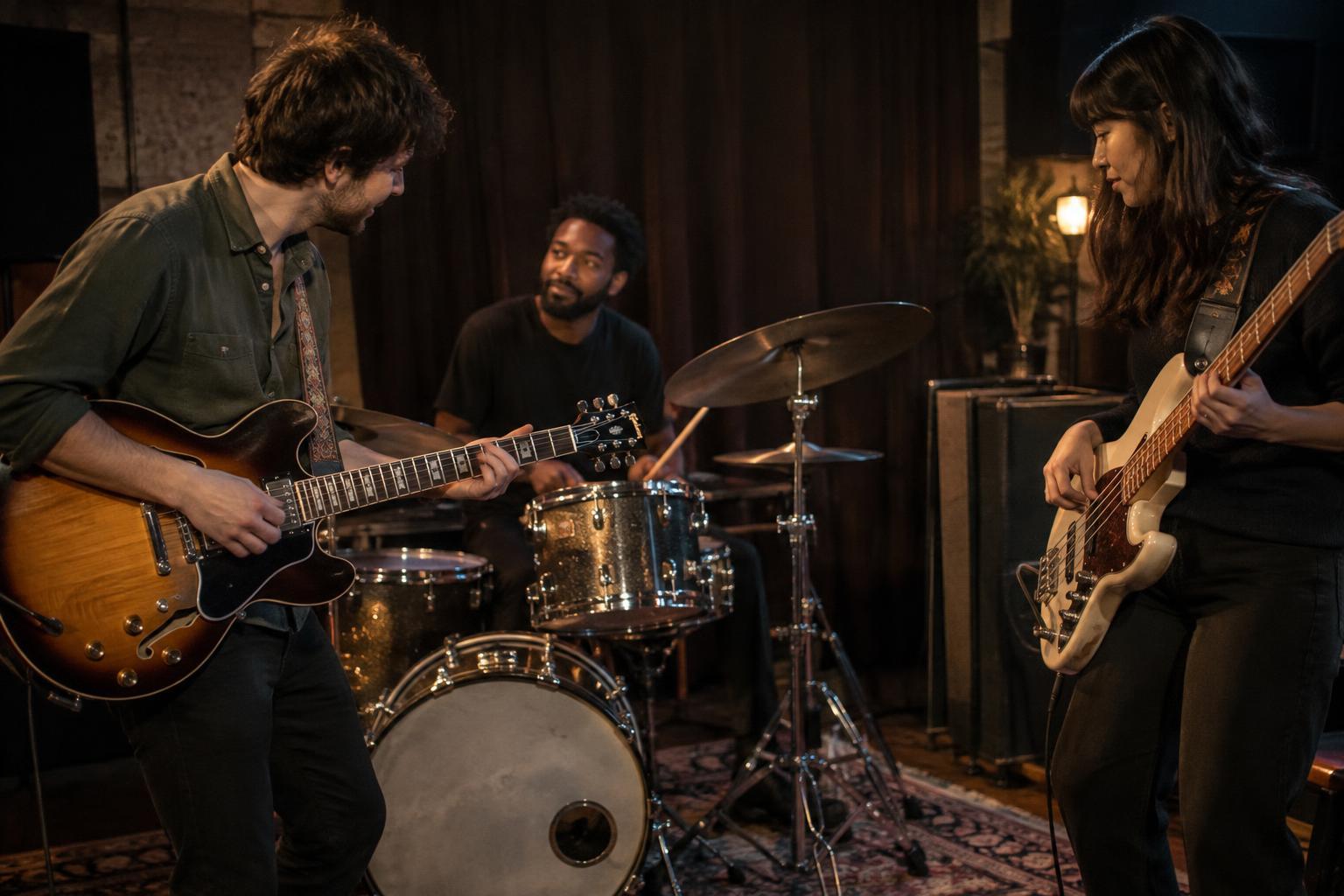
Dynamics are more than loud and soft
Think of a song that makes you lean forward just before the chorus. The moment that draws you in might be quiet, but it does not feel calm. That is dynamics at work: performers change the intensity of the music, then give that intensity somewhere to go. A louder passage can deliver release, but so can a sudden drop to a lone voice after a crowded arrangement.
Volume is the easiest change to notice. A drummer moves from light taps to a full beat; a singer shifts from a restrained phrase to a strong sustained note. Yet intensity also depends on how many parts are playing, how busy those parts are and how long a band delays an expected arrival. Live, musicians can adjust all of these in response to one another, making a familiar song feel newly suspenseful.
A build gives the audience something to expect
Tension often begins with a pattern the listener can recognize. A bass line repeats while the drummer adds a little more movement. A guitarist holds a chord as the singer stretches the final words of a phrase. Each addition suggests that a bigger moment is coming. The build works because the audience can hear both what is happening now and what has not happened yet.
Musicians can make that expectation stronger by withholding a familiar element. Imagine a chorus that normally starts with a heavy beat. If the band plays the first line with only vocals and a quiet instrument, the missing beat becomes part of the drama. When it finally enters, the release feels earned. Repeating this trick too often may make it predictable, so performers may vary the length or shape of a build across a set.
Space can be as powerful as a crescendo
A pause changes the way a crowd hears the next sound. When the band stops together for a beat, even a modest return can seem forceful. A longer silence might leave a vocal line exposed or give an instrumental phrase time to settle. These moments need coordination: if one player fills every gap, the sense of suspension can disappear.
Playing less within a passage has a similar effect. A drummer might leave out the cymbals, while a keyboard player holds a single note instead of playing chords. The music has not stopped, but there is more room around each sound. When the full arrangement returns, listeners can hear the contrast. At a show, notice whether a big moment follows an especially loud build or an unexpectedly spare one.
Texture and rhythm change the emotional weight
Two sections can be equally loud and still feel different. Long notes and a steady pulse may create a broad, open sound. Shorter notes, sharper attacks and a busier rhythm can make the same group feel urgent. Musicians use these changes to build tension without simply turning up. A guitarist may switch from ringing chords to clipped strokes; a drummer may move from a simple groove to more frequent accents.
Texture matters, too. Adding a harmony vocal, another instrument or a brighter register can widen a passage. Taking those layers away can bring the focus back to a single performer. The effect depends on contrast rather than a fixed recipe. If every part plays at full intensity throughout a song, there is less room for a peak to stand out.
The room becomes part of the performance
Onstage dynamics do not reach every listener in exactly the same way. The size of a room, the audience's noise and the sound system can affect how clearly a quiet passage comes across. Performers may respond by simplifying a delicate section, holding a pause a little longer or using a more distinct change in texture. None of that requires abandoning subtlety; it means making the contrast legible in that space.
At your next show, follow one instrument through a whole song. Listen for when it joins, when it pulls back and what changes after it goes silent. Then listen to how the rest of the group reacts. The most memorable release may be a soaring chorus, but it might also be the moment everyone steps aside and lets one small sound land.