The schedule starts before the first note
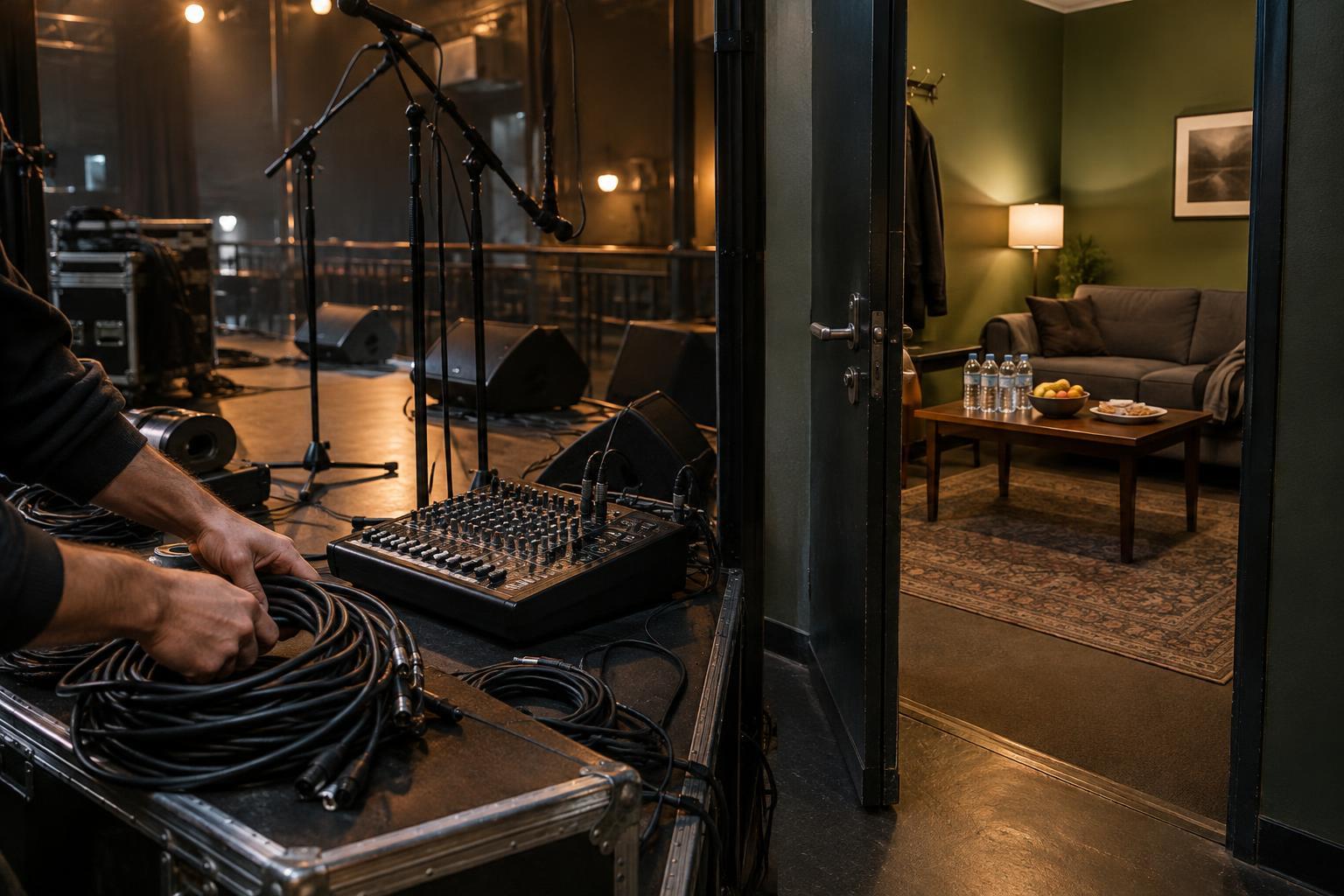
From the audience, a show can look like a simple sequence: one act finishes, the next walks on, and the music continues. Behind the stage, each transition depends on smaller tasks happening in the right order. Instruments need to be placed, cables checked, performers located, and the stage made ready for the next set. A stage manager helps keep those tasks connected to the running order so that everyone knows what needs to happen next.
The role varies with the size of the event. At a small venue, one person may handle several responsibilities; at a larger production, stage management may be shared across a team. In either setting, the schedule is a working plan rather than a stopwatch. A useful plan allows enough time for sound checks, equipment moves, breaks and audience movement, while making clear which moments cannot easily shift.
Building a plan people can actually use
A running order is most helpful when it shows more than performance start times. It can include when an act should arrive backstage, when its gear can be brought on, how long a changeover is expected to take, and who gives the go-ahead to begin. Stage managers use that information to spot crowded periods: perhaps two groups need the same loading route, or a performer is scheduled for an interview just as their sound check begins.
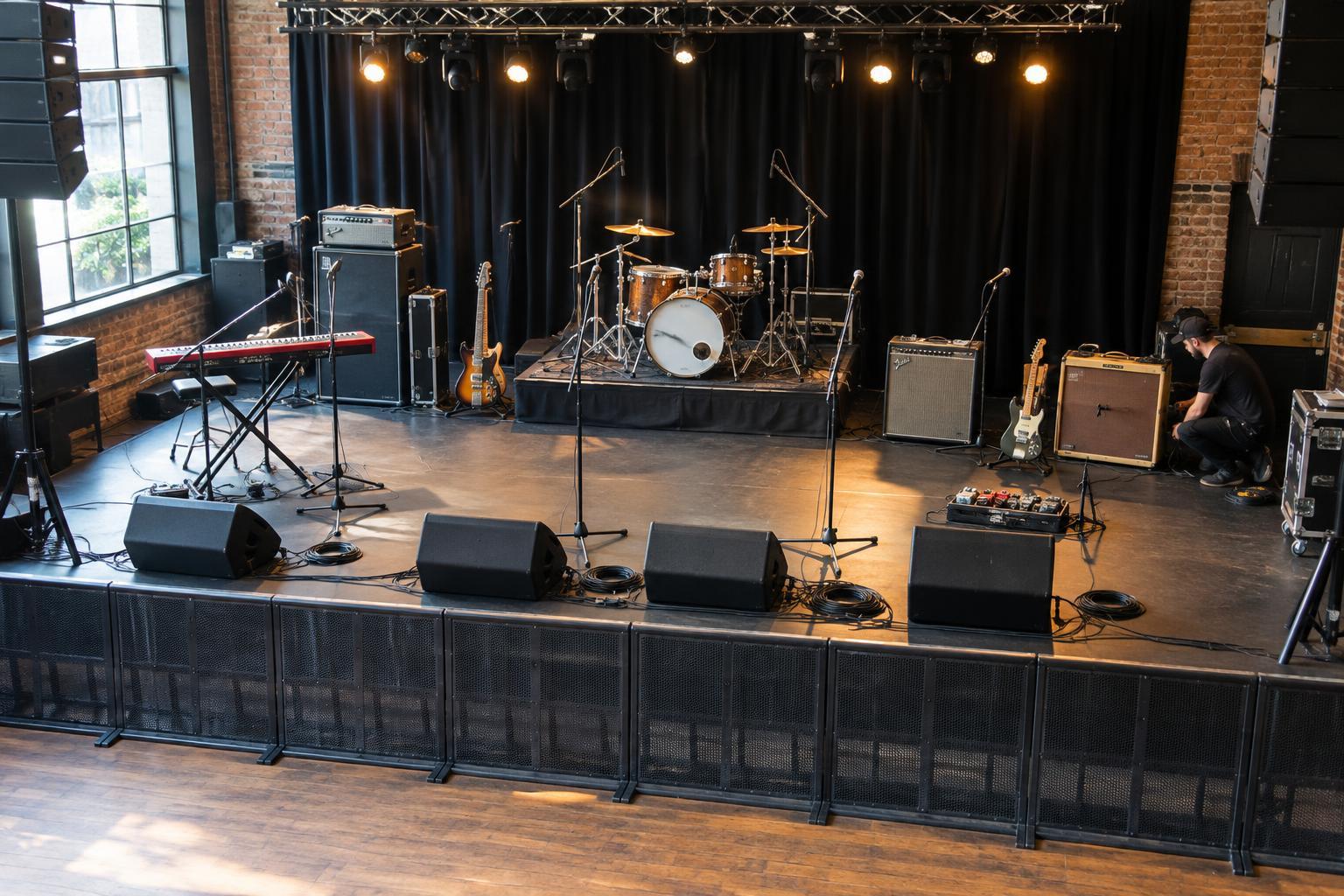
Preparation also means learning what each act needs without assuming every setup is alike. An acoustic duo, a band with several amplifiers, and an electronic performer may all require different approaches to the same stage. Equipment lists and stage plots can guide the plan, but a brief confirmation with the people doing the work helps catch misunderstandings. The goal is not to control every detail; it is to make the next step clear enough that the crew can take it.
Changeovers are coordinated, not rushed
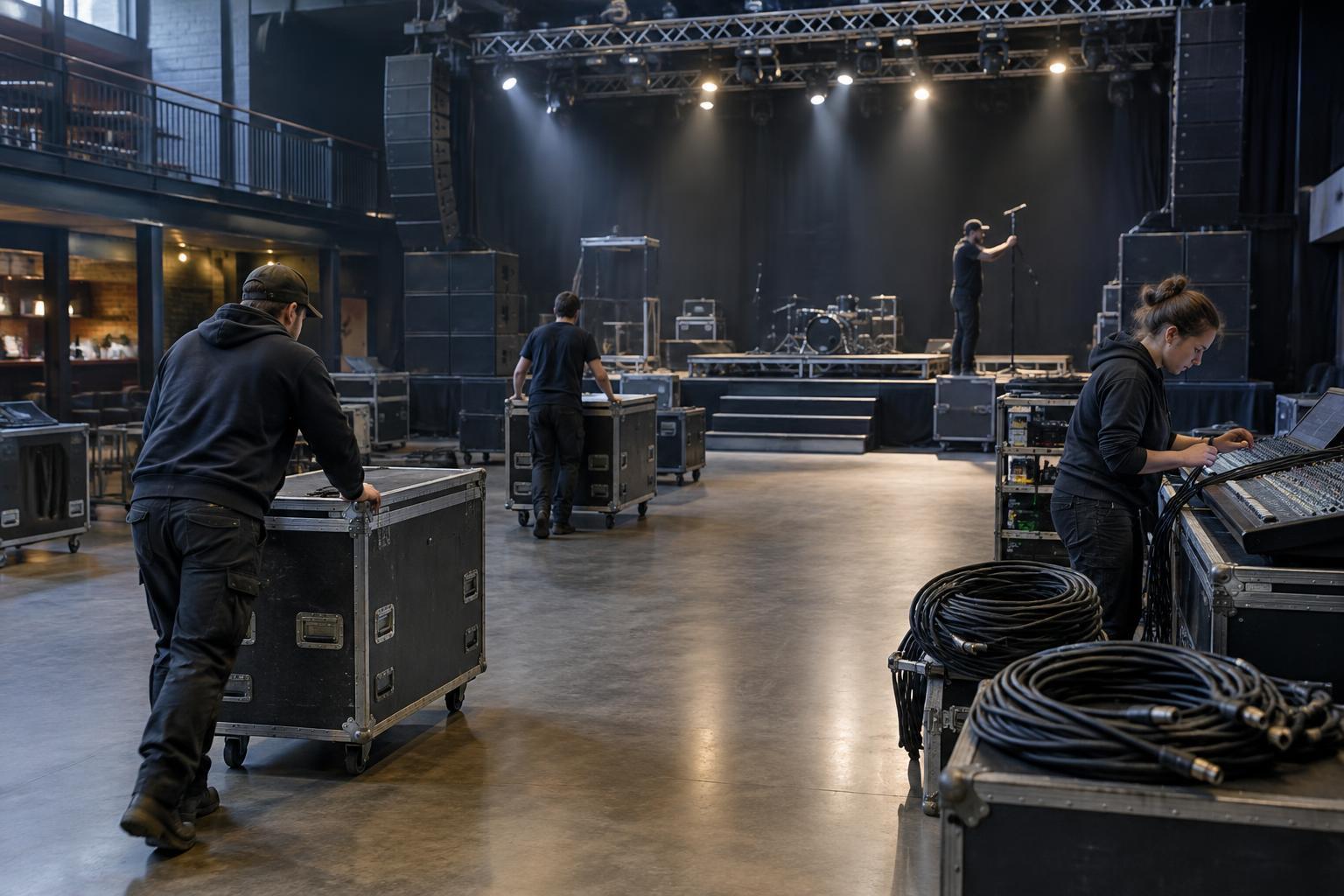
The interval between sets is one of the most visible tests of a schedule. While one act leaves, another may be preparing instruments, monitors and microphones. Stage managers keep track of where those tasks stand and help prevent a well-meaning shortcut from creating a bigger delay. Moving a piece of equipment before its cables are cleared, for example, is unlikely to save time if the crew then has to stop and untangle the setup.
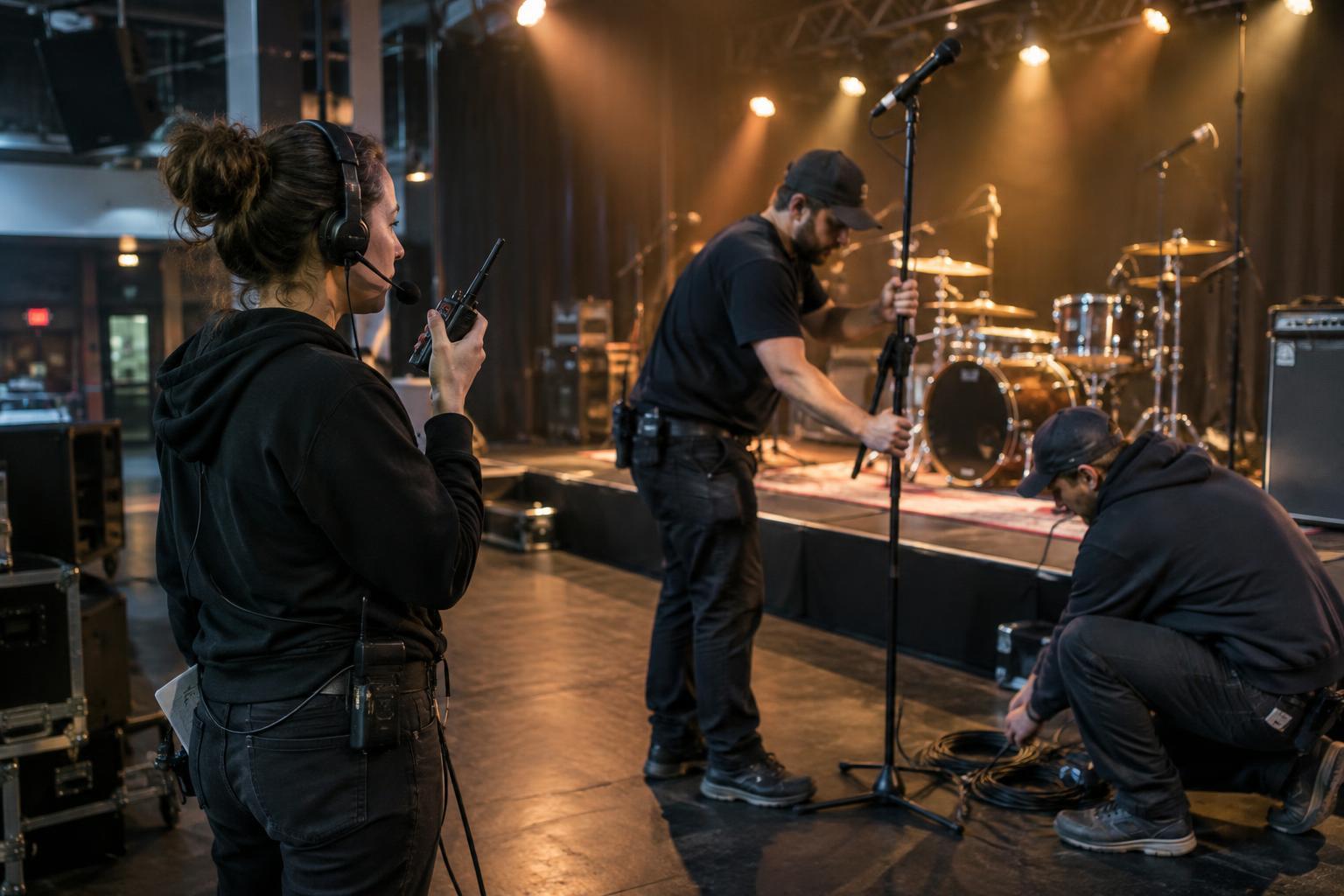
Clear cues matter more than a stream of reminders. A stage manager may confirm that the previous act is clear, that the incoming setup is ready for a line check, and that the performer can take the stage. The exact process depends on the production, but its purpose is consistent: give each team a reliable signal before it acts. When people know who is calling the next move, they spend less time guessing.
Communication keeps small delays from spreading
Even a careful plan meets surprises. A case may arrive late, a sound check may reveal a problem, or an artist may need a few extra minutes. Stage managers cannot prevent every delay. They can make it easier to respond by identifying what has changed, telling the people affected, and checking which parts of the schedule still have room to move.
That communication works best when it is specific. “The next set is delayed” leaves a crew wondering whether to keep working or wait. A clearer update says what is holding the start, what can proceed in the meantime, and when another decision will be made. It also keeps performers from receiving conflicting instructions. If the schedule must change, one shared version is more useful than several private guesses.
Staying on time without losing the show
Keeping a show on schedule does not mean treating every minute as more important than the performance. Stage managers often have to balance timing with a setup that is ready to use, a crew that can work safely, and performers who understand their cues. Starting before essential checks are complete can turn a short wait into a more disruptive stop once the set is underway.
For concertgoers, the work is easy to miss when it goes well. The next act appears, the stage is ready, and the evening has a steady rhythm. That apparent ease comes from preparation, attention during each handoff, and calm decisions when the plan changes. A stage manager helps hold the whole sequence in view, so that everyone on and around the stage can focus on their part of the show.