A scene is a network, not a sound
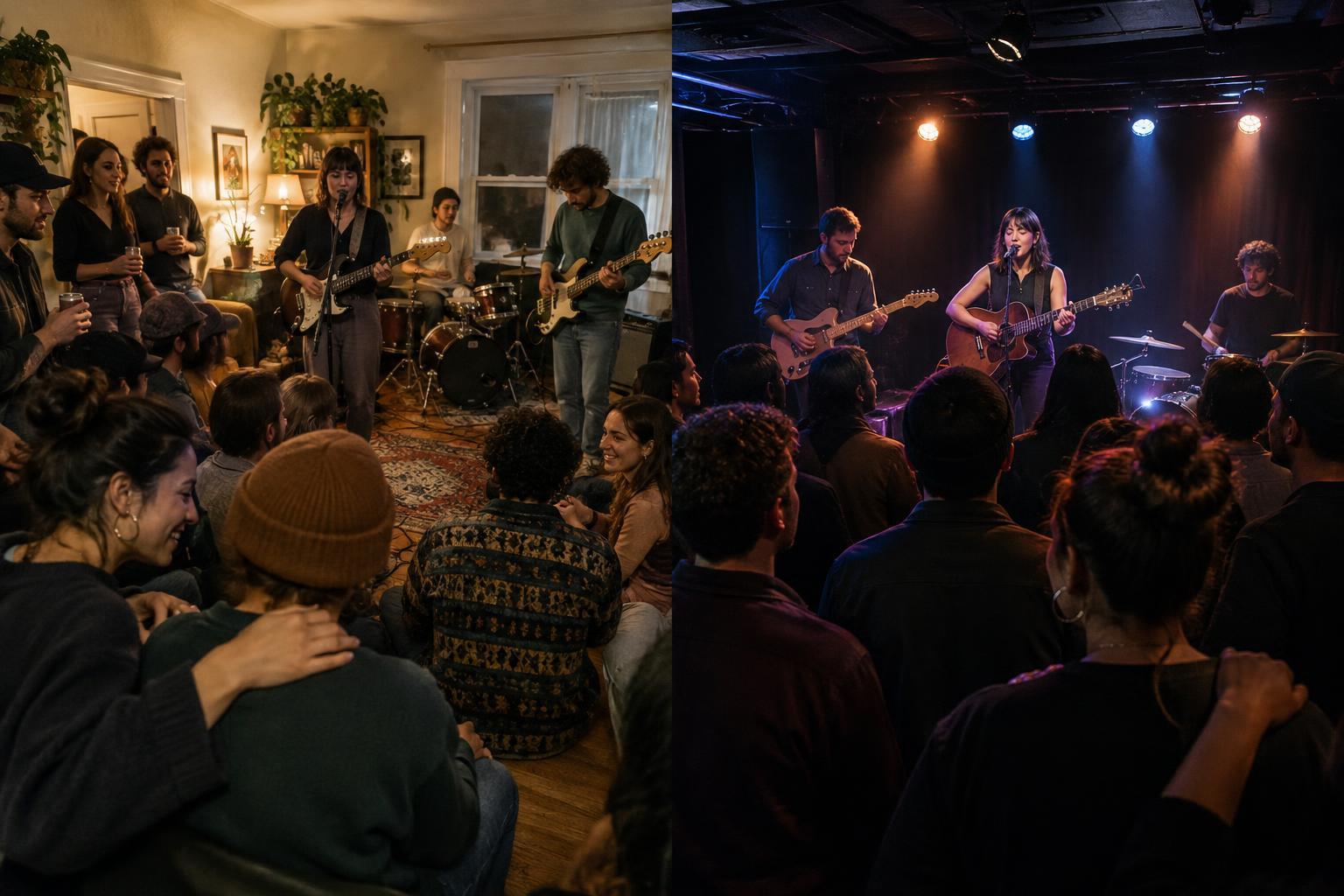
Ask what a city’s music scene sounds like, and the answer may be a genre. But a local scene is better understood as a network of people who repeatedly make, present, hear and talk about music in a place. It might include several styles that rarely share a stage, or one group of listeners who follow artists across different kinds of shows. Its boundaries are rarely neat: people move between neighborhoods, nearby towns and online spaces while still building relationships close to home.
Repetition matters. A single well-attended concert can be memorable, but a scene takes shape when people keep showing up, recognize one another and find ways to collaborate. A listener recommends an opener to a friend. A performer asks another act to share a bill. Someone learns how to run sound by helping at small events. These modest exchanges can give artists more chances to play and audiences more ways to discover them.
The people who hold it together
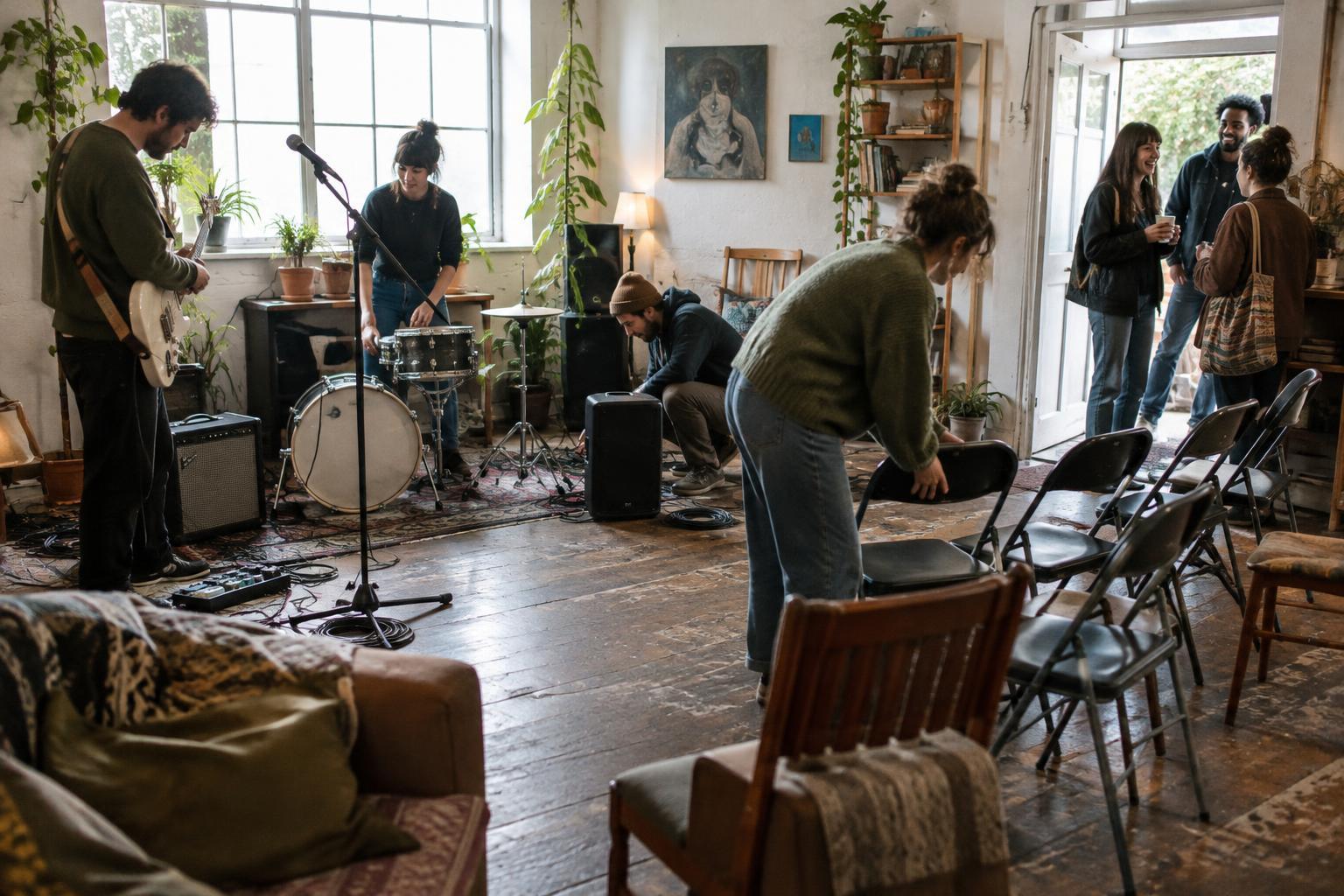
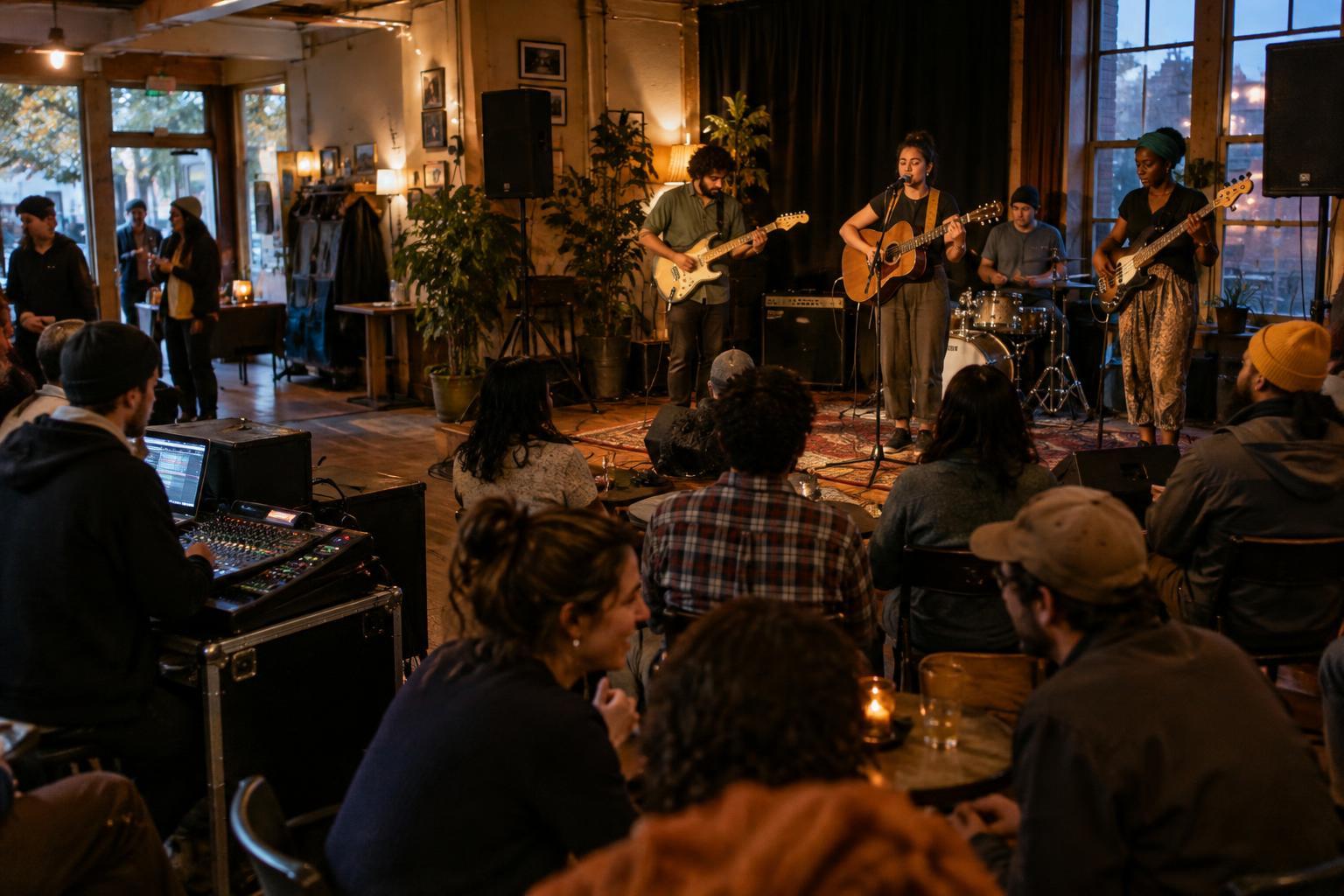
Performers are often the most visible part of a scene, but they do not work alone. Bookers, sound engineers, venue staff, photographers, designers, writers, independent promoters and volunteers all help turn a performance into a shared experience. Listeners matter just as much. They buy admission when they can, bring friends, pay attention to opening acts and tell others what moved them.
Participation does not have to mean becoming an insider. A newcomer who asks what else is happening, follows up on a recommendation and returns for another show is already making connections. At its best, a scene leaves room for different levels of involvement, from the occasional concertgoer to the person who spends most weekends helping events happen. If every opportunity depends on knowing the right people, a scene may feel close-knit to some and difficult to enter for others.
Places give music a place to meet
Venues provide more than a stage. Their size, layout, accessibility, staff and approach to booking affect who feels welcome and what kinds of performances can work there. A small room may make quiet, experimental sets possible; a larger space may let a growing act bring different audiences together. Rehearsal rooms, record shops, community spaces and informal gathering spots can also give people time to exchange ideas between shows.
No scene depends on one perfect venue. Spaces change, and people may need to adapt when a familiar room closes or becomes less affordable. What carries across locations is the ability to organize, share knowledge and invite others in. Digital spaces help circulate recordings, flyers and conversations, but a post alone cannot replace the experience of hearing an artist with other people and meeting them afterward.
Shared practices shape the atmosphere
A scene also has habits: how bills are assembled, how newcomers are welcomed, whether artists are credited, and how people behave while someone is performing. Some practices are easy to spot, such as posting set times clearly or giving opening acts a real introduction. Others become visible only after several visits. Do the same few artists get every opportunity, or are new voices heard? Can someone attend alone and still feel comfortable?
These habits are not fixed rules that every show must follow. A lively standing-room performance and a seated listening set can call for different kinds of attention. What matters is whether expectations are communicated and whether participants treat one another’s time and work with care. A scene becomes more sustainable when people can offer feedback, solve problems and make room for change rather than relying only on nostalgia for how things used to be.
How to get to know your local scene
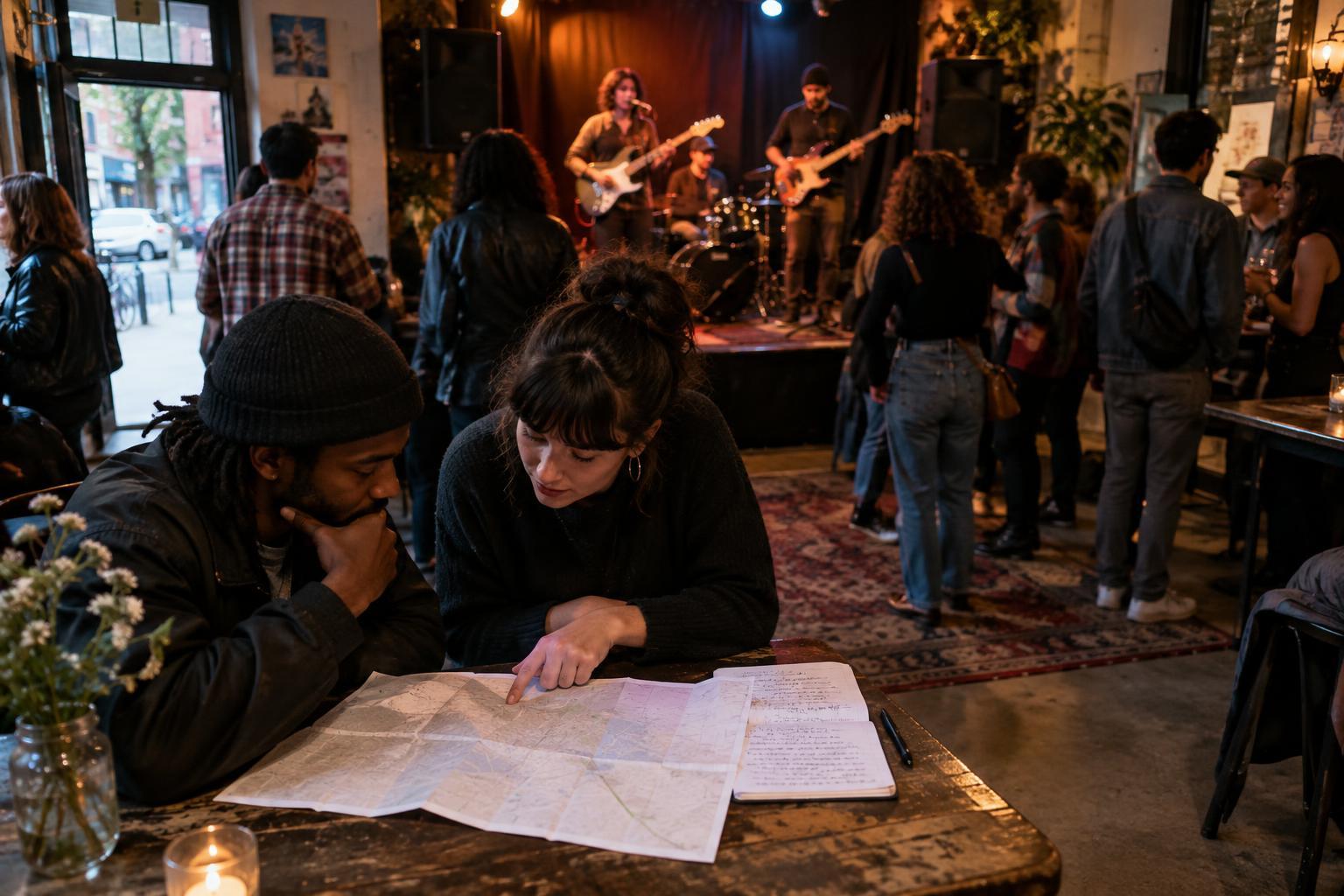
Start small and stay curious. Pick a show with an unfamiliar artist on the bill, arrive in time for the opener and note the names of performers you enjoy. Look for connections: who plays together, which spaces host a range of acts, and where people share upcoming performances. If conversation feels welcome, ask a fellow listener or performer what they have enjoyed recently. There is no need to master a city’s entire calendar to begin paying attention.
Support can take different forms. Pay admission when possible, purchase music or merchandise if it fits your budget, share accurate event details, or simply listen without talking over a set. Respect a space’s rules and the people working there. Most of all, keep an open mind: the value of a local scene is not that everyone likes the same music. It is that people create ways for music to be heard, discussed and made again.