Make the plan before the music starts
A festival is more fun when nobody has to choose between seeing a favorite set and keeping the group together all day. Before you arrive, ask which performances or activities each person cares most about. Mark the times you expect to spend together, and treat the rest as time when people can split into smaller groups. A meeting plan should make that freedom easier, not turn the day into a rigid timetable.
Agree on who is included in each check-in. A large group may find it simpler to use pairs or small clusters rather than expect everyone to assemble repeatedly. Make sure everyone has the plan in a form they can access without an internet connection, such as a saved note or screenshot. If plans change during the day, tell the people affected directly instead of assuming that a message in a busy group chat has been seen.
Choose places people can actually find
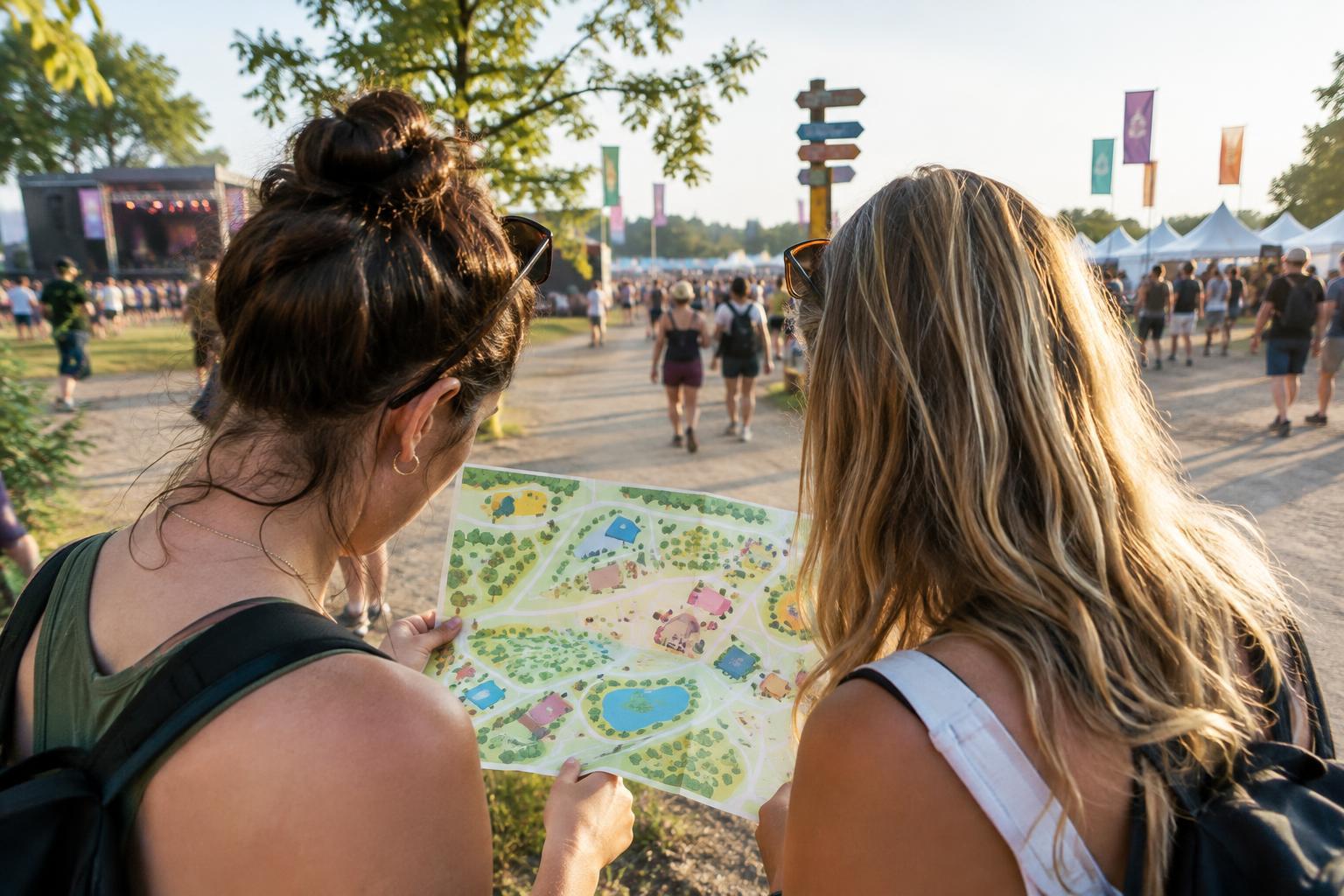
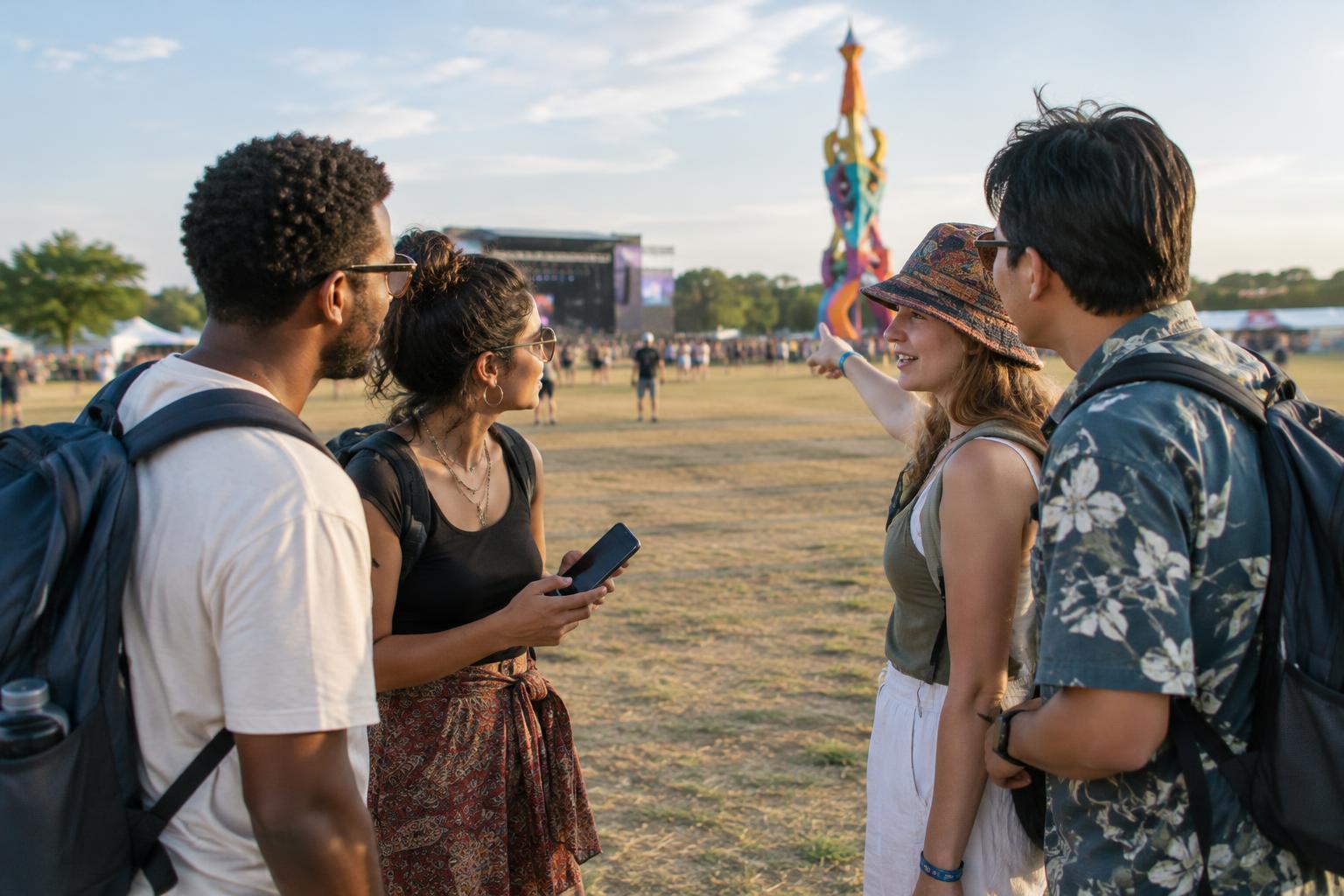
Pick one main meeting point and one backup. Use locations shown on the festival map or marked by a stable, distinctive feature. An information point, a named entrance, or a clearly labeled area may be easier to identify than “near the big stage.” Before relying on a spot, check that your group can reach it from the areas you plan to visit; some festivals have separate zones, one-way routes, or entrances that cannot be used for reentry.
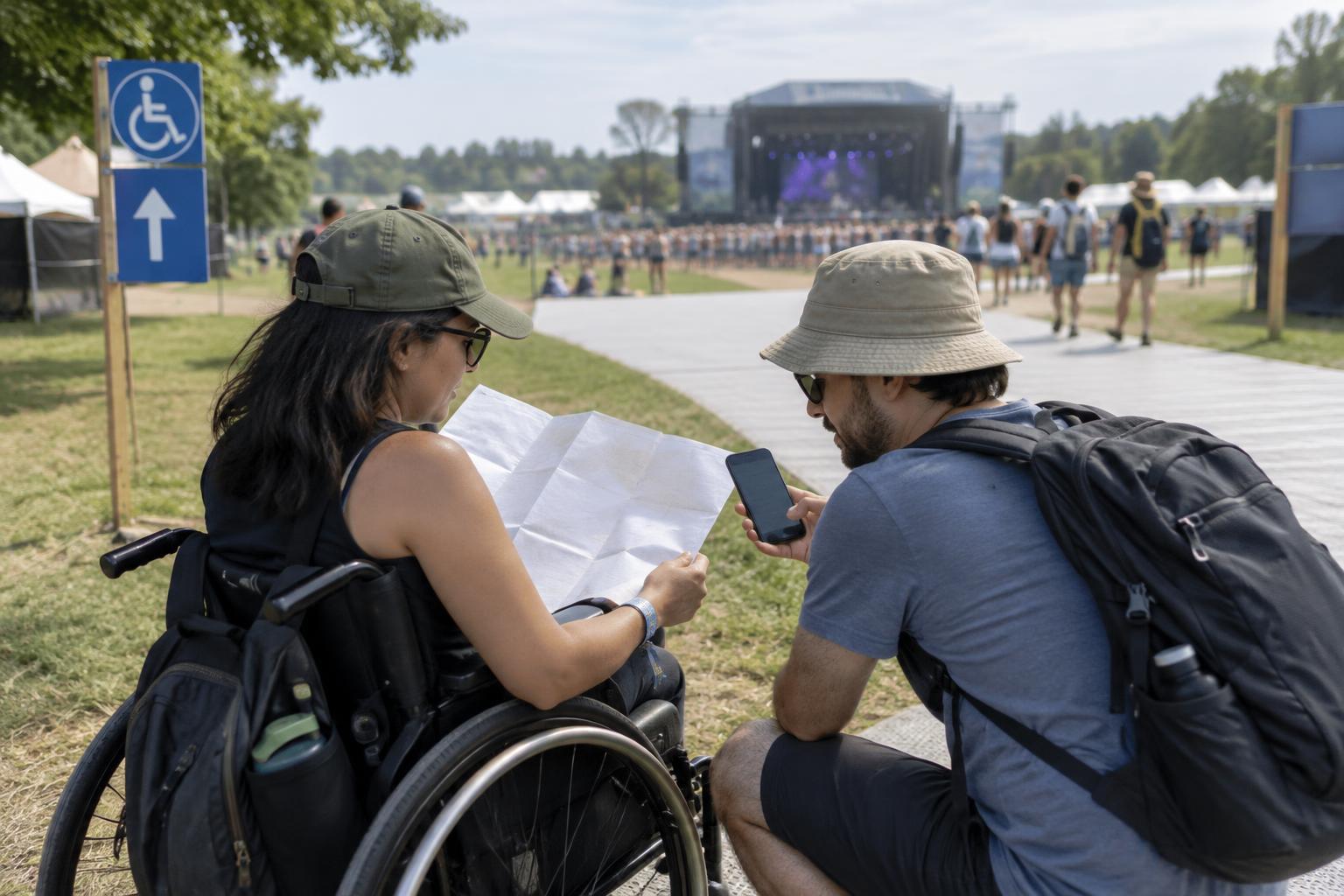
Be precise about where to stand. “At the information point, on the side facing the food area” is more useful than “by information.” Avoid choosing the middle of a crowded walkway, an emergency access route, or a place likely to be blocked during a performance. If anyone in the group has mobility, sensory, or access needs, let those needs shape the choice of location and the amount of travel between check-ins.
Set times and a reasonable waiting window
A meeting spot is only half a plan. Choose a small number of check-in times tied to moments the group can remember, such as before a shared performance or after a meal break. Leave enough time to move between areas without rushing. If schedules are uncertain, decide which meetings are essential and which are optional; that way, a delayed set or a long queue does not create confusion for the whole group.
Agree on how long to wait for someone who is late and what happens next. For example, the group might wait at the main point for a set period, send one message, then continue to the agreed activity. Decide where a late person should go if they miss that window. The important part is that everyone knows the same sequence in advance, rather than making a new decision while standing in a crowd.
Prepare for phones that do not cooperate
At a busy event, messages may arrive late, batteries may run low, and loud surroundings can make calls hard to hear. Save the meeting details, venue map, and any essential contact information before entering. If you use a group chat, keep practical updates short: say where you are, where you are heading, and when you expect to be there. A photo of a landmark can help, but it should supplement a clear location description rather than replace one.
Have a no-phone version of the plan. Agree that anyone who cannot reach the group will try the main point at the next check-in, then the backup point if the main one is unavailable. If the group is leaving together, set a separate departure time and location. Also decide how you will tell one another if someone leaves early, so the others do not spend the end of the day looking for a person who has already gone home.
Keep the plan considerate and easy to change
Ask each person what would help them feel comfortable if they get separated. Some friends may prefer regular check-ins; others may only need a clear end-of-day meeting. Do not assume everyone wants to share their live location. If you choose to use location sharing, make it optional and agree when to turn it off. A simple plan that everyone accepts will usually be more useful than an elaborate one that half the group forgets.
Finally, distinguish an ordinary missed meetup from a situation where someone may need help. Find out where the event’s staffed information or assistance points are, and follow the venue’s guidance if there is a safety concern. For routine changes, stay flexible: confirm a new place and time with the people involved, then carry on enjoying the music. The goal is not to stay together every minute. It is to make finding one another straightforward when it matters.