Get oriented before the music starts
A small show might take place in a dedicated venue, a café, an art space or another room adapted for live music. Each has its own routines. When you arrive, look for signs about entry, seating, accessibility, photography and re-entry. If something is unclear, ask a staff member rather than guessing. Keeping your ticket or confirmation easy to find helps the entrance move smoothly for everyone behind you.
You do not have to dress a certain way or recognize every band to fit in. Give yourself time to find the restroom, locate a place to stand and notice where people need room to pass. If seating or a clear sightline is important to you, ask about available options early. Being curious and considerate matters more than appearing to be a regular.
Share the room with other listeners
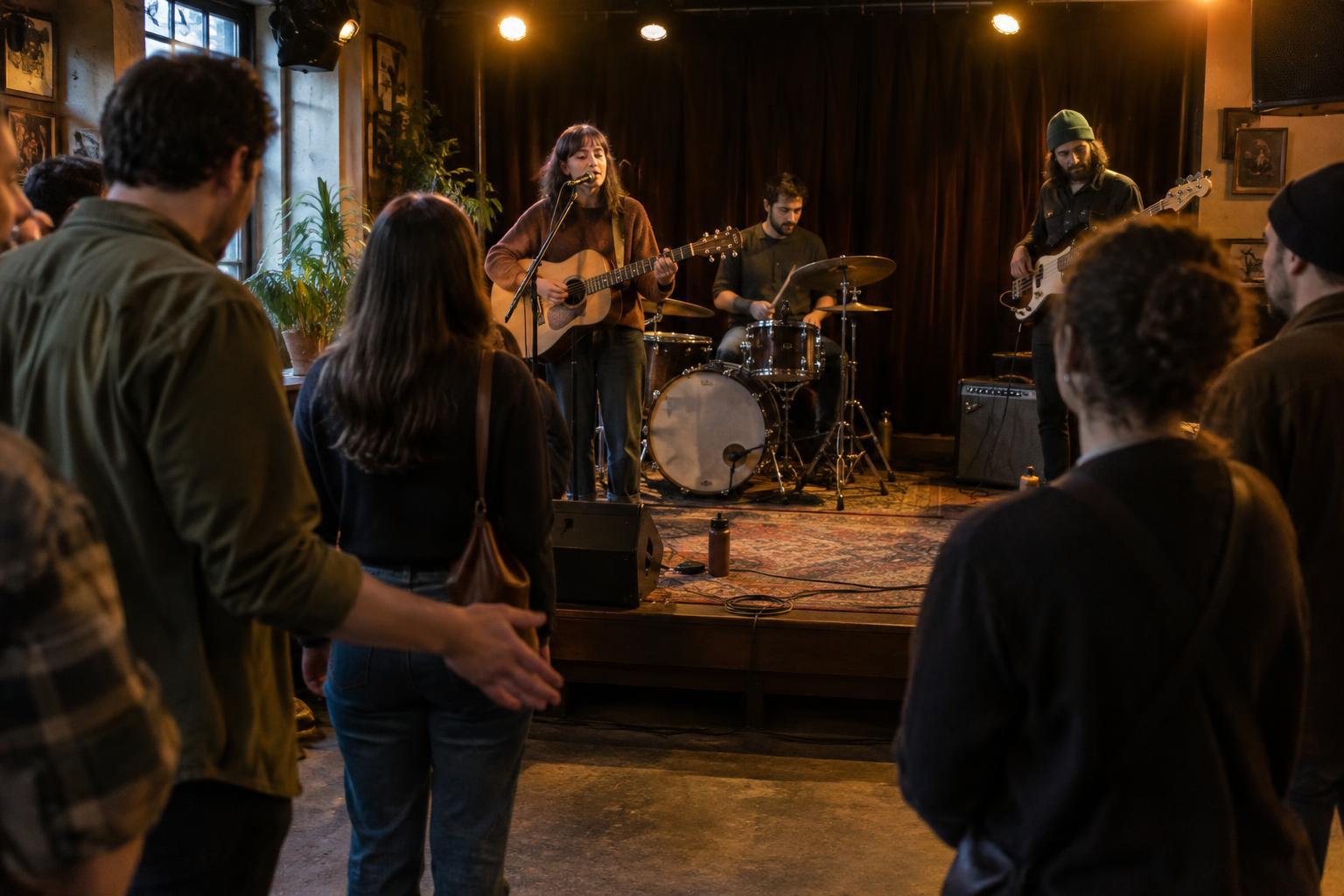
At a small show, a conversation that feels quiet to you may carry across the room. Chat freely between sets, but lower your voice or step away from the performance area when someone is playing, especially during softer songs. If you arrive late, wait for a natural pause before moving through a tightly packed audience. A simple “excuse me” works better than pushing forward.
Be aware of what you bring into the crowd. Keep bags close, take care with drinks and avoid blocking someone’s view with a raised phone throughout a song. There is no universal rule about where to stand, but people near the front may have arrived early for that spot. If you are taller than those around you, a small shift can make a difference without spoiling your own view.
Follow the energy without forcing it
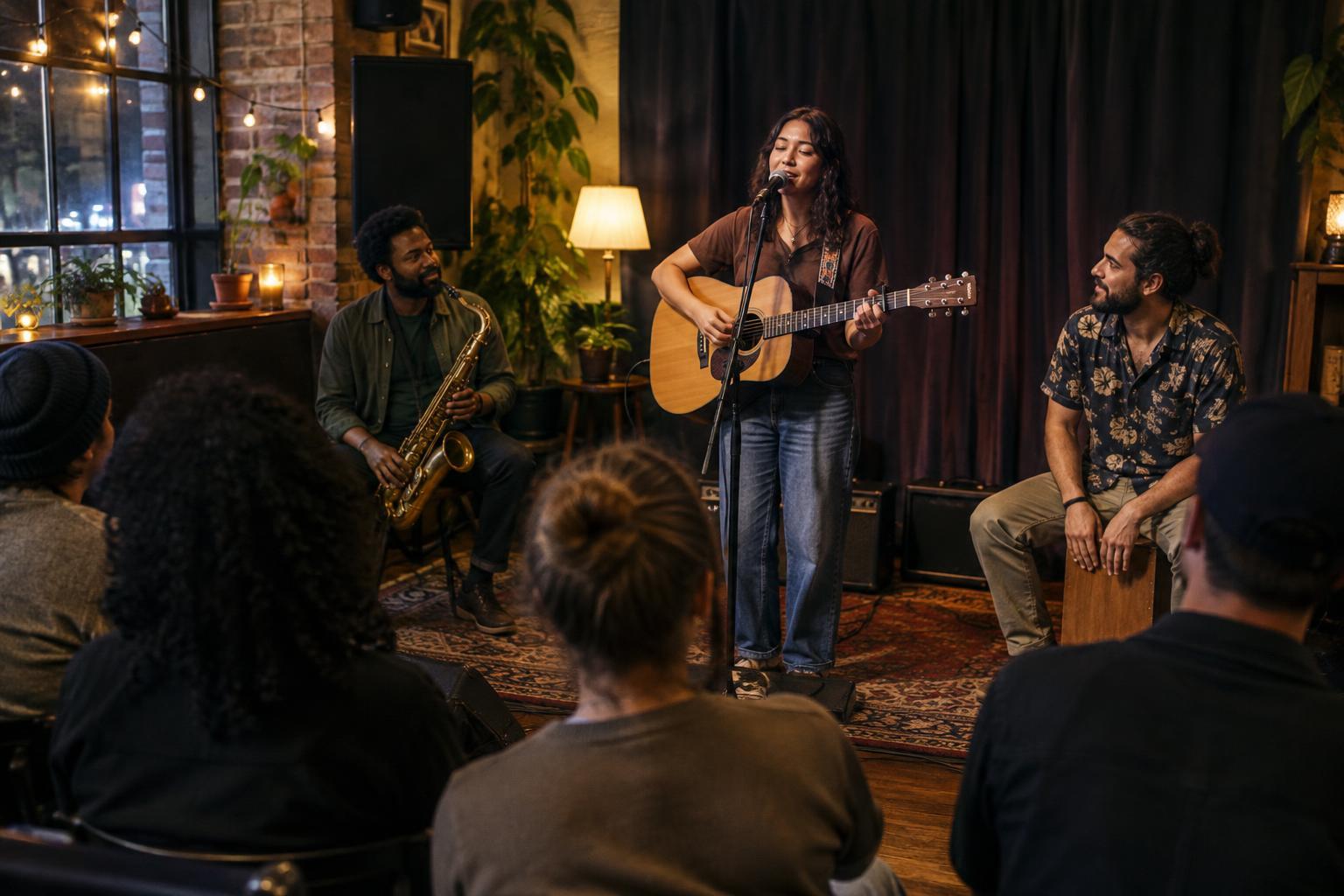
Some rooms invite dancing and singing along; others settle into focused listening. Watch the performers and the audience for cues, then participate in a way that leaves others room to do the same. Applause, movement and a genuine response are welcome in many settings. Shouting over a quiet passage or repeatedly calling for a particular song can pull attention away from the set.
If the crowd gets lively, respect boundaries. Do not assume a stranger wants to dance, be touched or be pulled toward the stage. If you bump into someone, check in and give them space. You can move back from a crowded area at any time. Enjoying the show does not require staying in the middle of the action.
Treat performers and their work with care
The distance between stage and audience can be short, but that does not make equipment or personal space communal. Leave instruments, cables, set lists and bags alone unless someone invites you to help. Avoid leaning on the stage or placing drinks near gear. Performers may also need a few minutes to pack up or catch their breath before talking.
Check the room’s policy before taking photos or video. If recording is allowed, keep your screen dim, your flash off and your filming brief enough that you still experience the performance. Do not publish an unflattering close-up or a long recording simply because you were able to capture it. If an artist asks people not to film, put the phone away.
Support the scene in ways that feel genuine
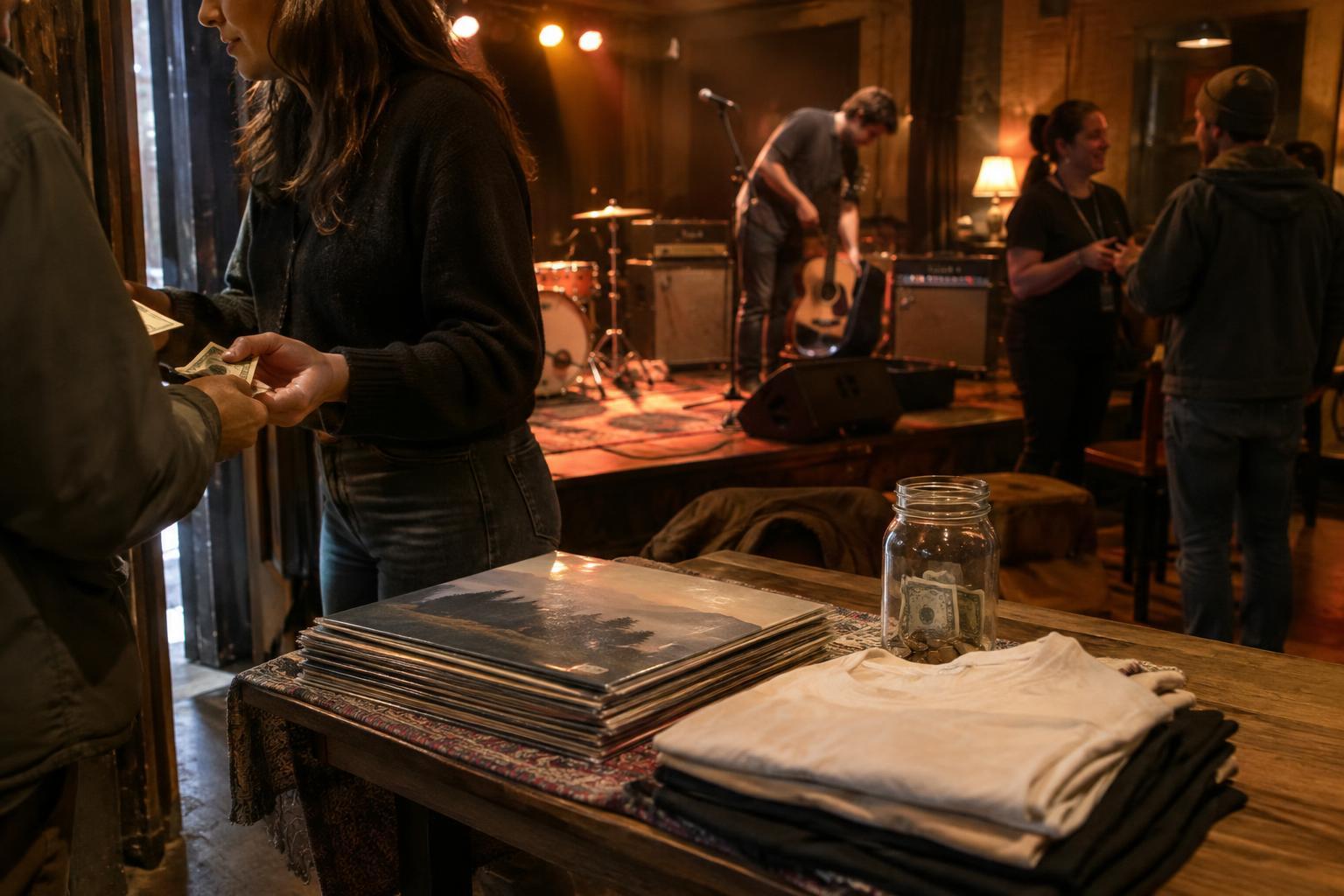
Small shows connect musicians, venue workers, organizers and listeners. Buying a ticket, paying an entry fee when one is requested and treating staff respectfully all help the night run well. If you can afford it and something appeals to you, a piece of merch is another way to support an artist. There is no need to buy something to prove you belong.
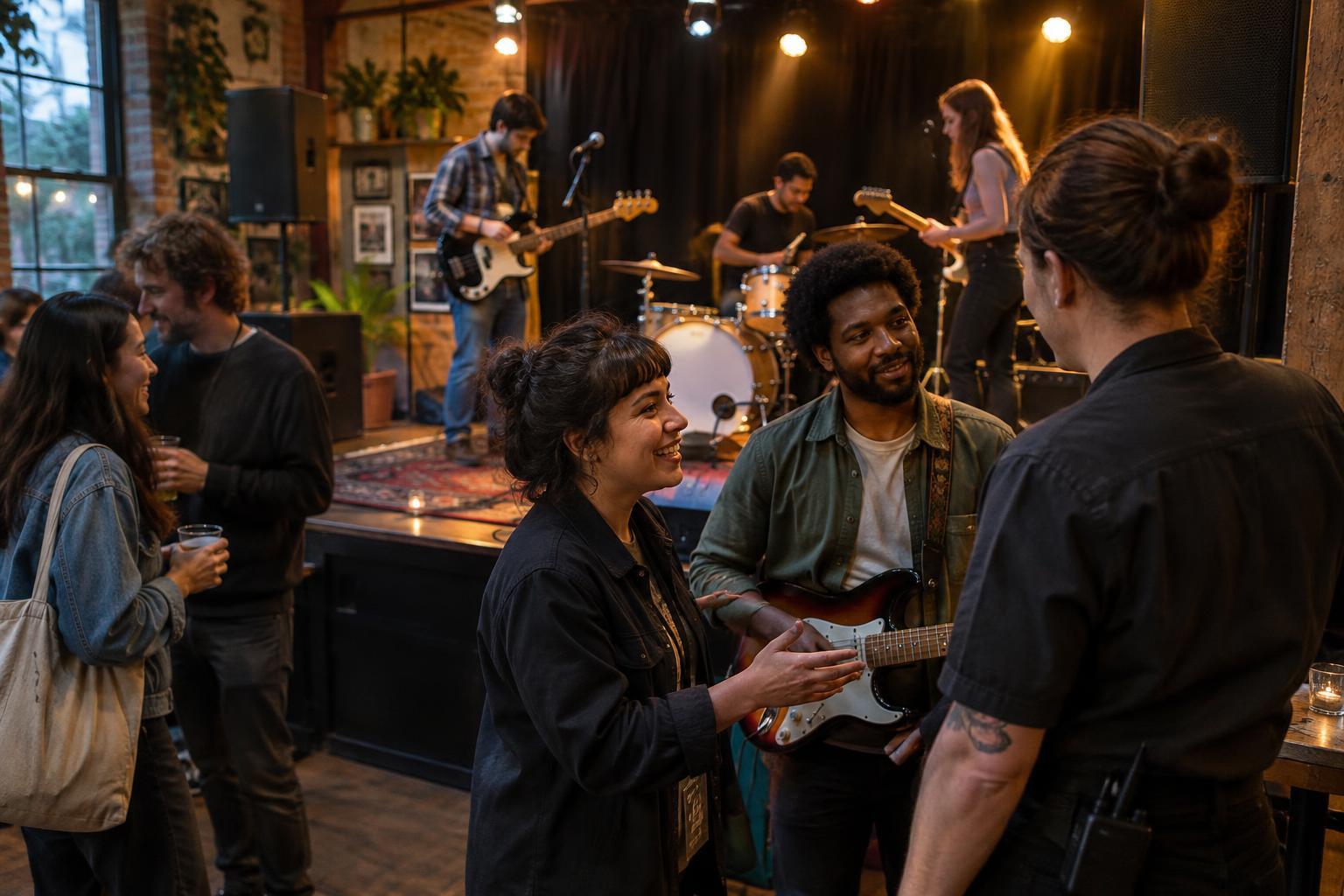
After the set, a specific, sincere compliment can mean more than a long critique. Give performers space to speak with others, and save unsolicited advice unless they ask for it. You can also remember a band’s name, listen again later or tell a friend what you enjoyed. The best etiquette is not a test of insider knowledge: it is paying attention, respecting boundaries and leaving room for someone else to discover the music too.