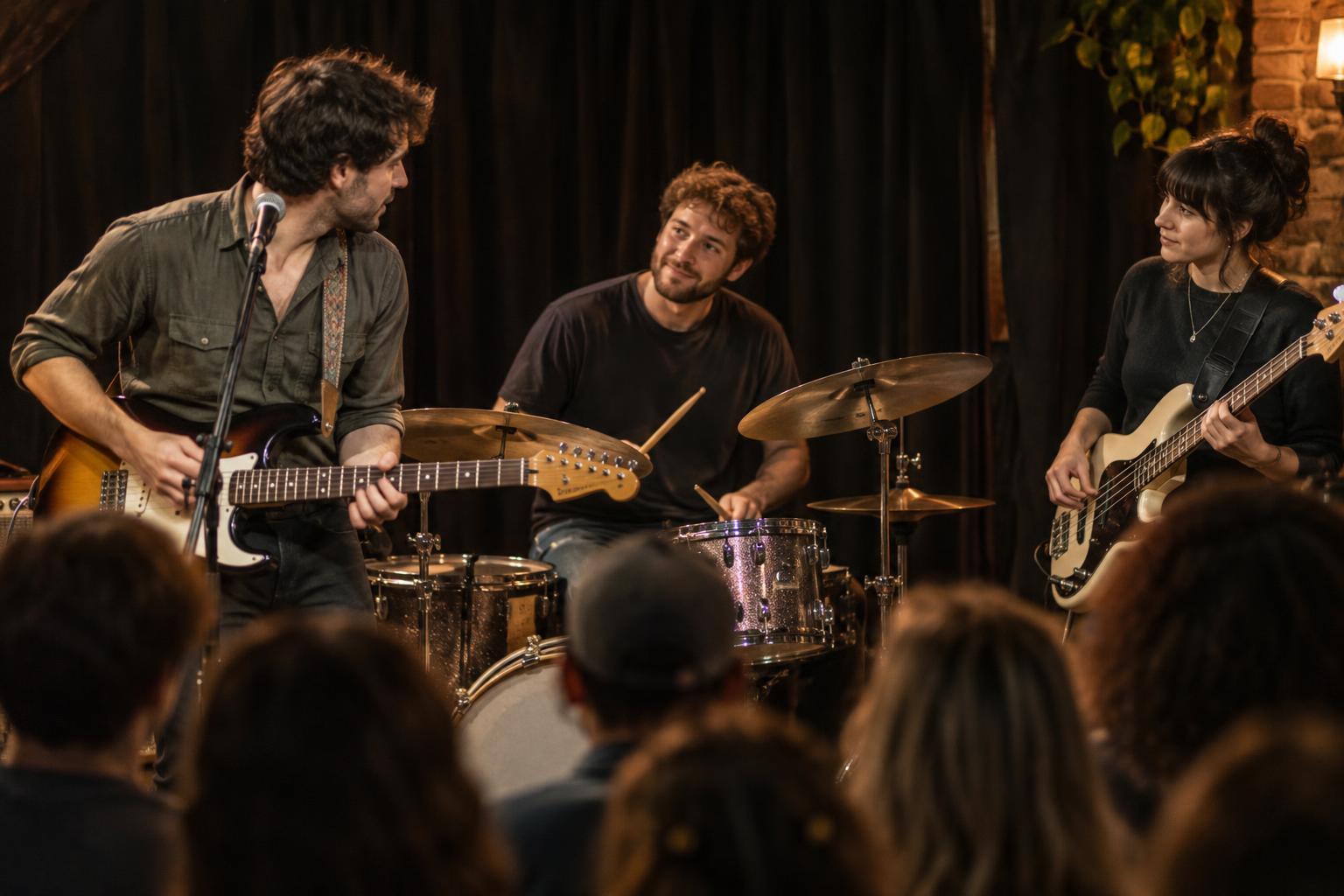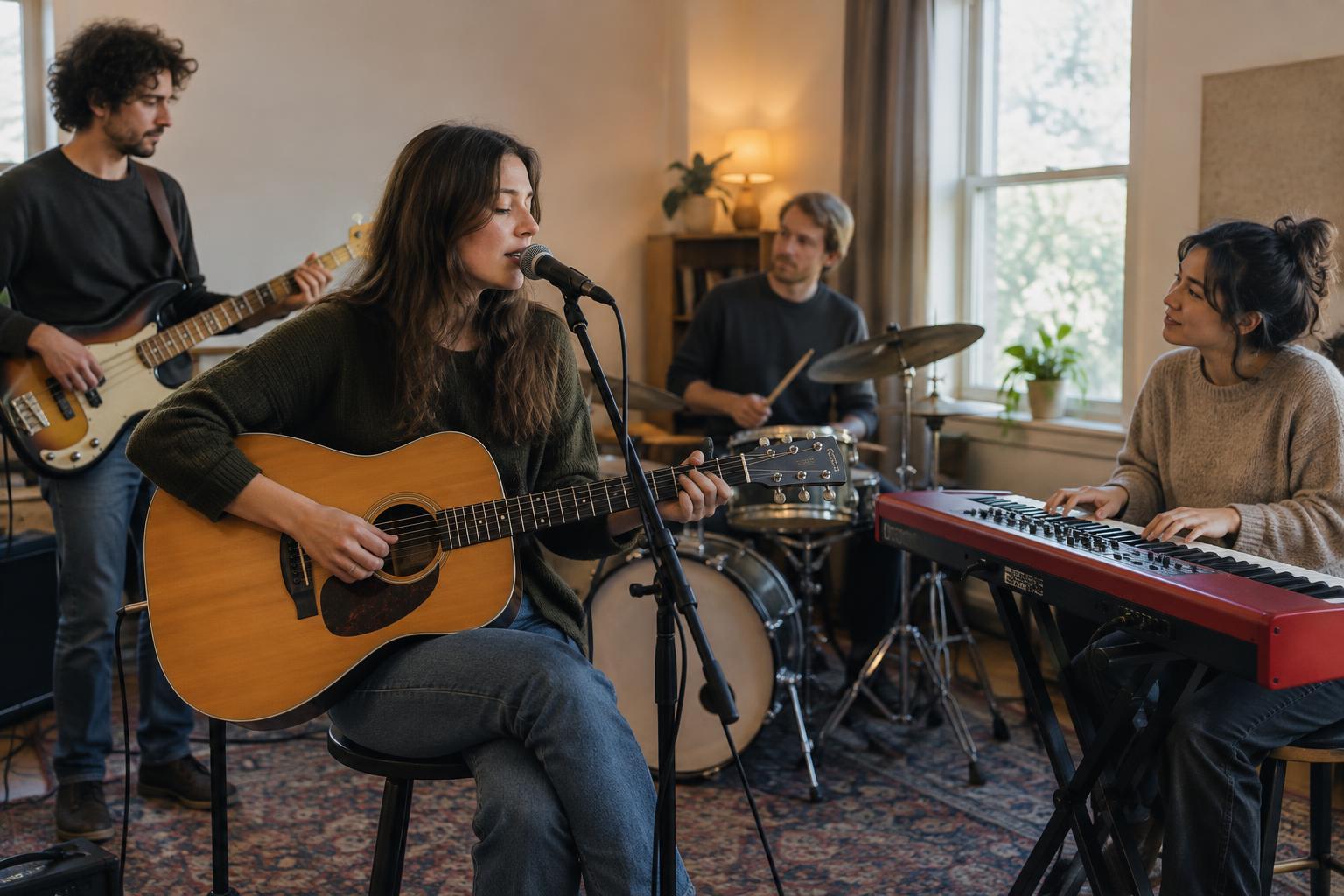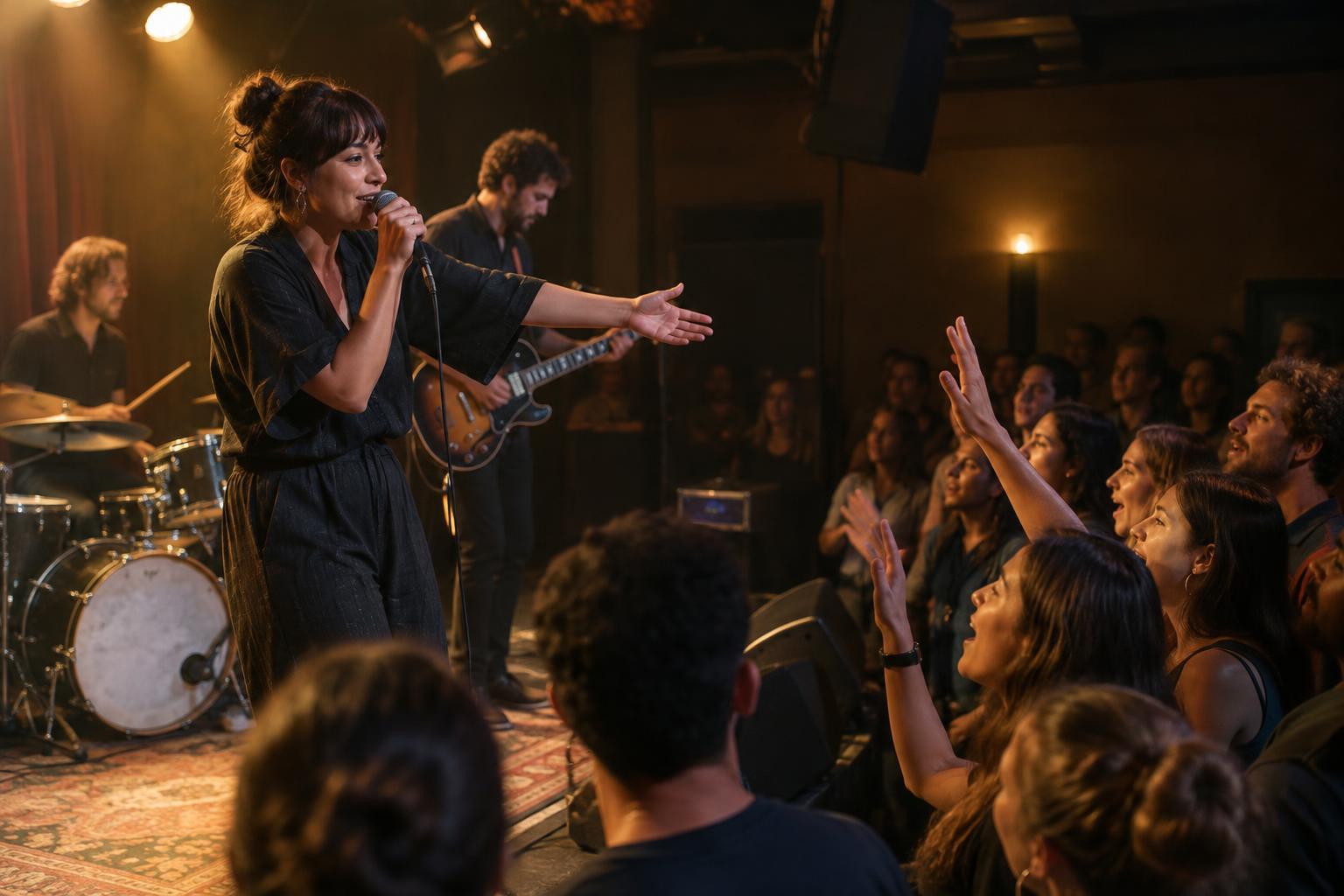
Give the audience a role, not the whole arrangement
Audience participation works best when listeners can tell what is being asked of them. A short phrase to echo, a chorus to sing or a steady clap gives people an entry point without requiring them to know the song. If the invitation takes longer to explain than the musical moment it serves, the performance can begin to feel like a set of instructions rather than a song.
Before a show, an artist can identify one or two places where a crowd response would strengthen the arrangement. A repeated lyric may already sound like an invitation; a break before the final chorus may leave room for voices to enter. That is usually more effective than asking for participation throughout every verse. The audience gets a distinct part, and the performer keeps responsibility for carrying the piece.
Make the cue easy to hear and follow
A good cue has both a beginning and an end. The singer might demonstrate a line once, gesture toward the room for the repeat, then visibly bring the band back in. A drummer or percussionist can hold a simple pulse underneath, helping people find the beat. For a clap, a brief demonstration at the intended tempo is clearer than asking a crowd to “keep time” and hoping everyone chooses the same pattern.
Simplicity matters because a live room is rarely perfectly synchronized. People hear from different positions, and some will join a beat late. A short response with space around it can absorb that looseness. A rapid, intricate vocal exchange may be exciting with a prepared group, but it can put an unfamiliar audience in the position of guessing while the song moves on.
Protect the song’s emotional arc
Not every powerful moment calls for noise. A quiet verse may depend on the audience listening rather than singing, and a lyric can lose its force if it becomes a prompt at the wrong time. Performers can treat participation as one tool among many: invite a room into a buoyant refrain, then let a more intimate passage stand on its own.
Dynamics help make that choice audible. If the band pulls back before a singalong, the crowd has space to respond. When the instruments return, they can give the next section a sense of arrival. The transition should still suit the song. An extended pause may build anticipation in an upbeat number but interrupt the flow of a reflective one. Rehearsing a short version of the cue gives the band a shared way forward without making the moment feel rigid.
Leave room for different kinds of participation
An invitation is not an obligation. Some people will sing; others may listen closely, move to the rhythm or simply enjoy hearing the room respond. Language such as “Join in if you’d like” makes the option clear without treating quiet listeners as a problem to solve. An artist can welcome the sound that comes back instead of measuring whether the audience is loud enough.
It also helps to offer cues people can follow from wherever they are. A visible gesture can complement a spoken invitation, while a repeated lyric can help someone who missed the first cue. Not everyone can or wants to clap, stand or raise a hand. When participation has more than one acceptable form, the room can feel involved without anyone being singled out.
Listen to the room and know when to move on
Even a well-planned moment may land differently from one performance to the next. A crowd that quickly picks up a refrain might carry it for an extra repetition. If the response is hesitant, the performer can sing the next line and continue. That flexibility protects the momentum of the set and keeps the invitation from becoming a test the audience has to pass.
The clearest sign of a successful participation moment is not volume alone. It is whether the response feels connected to what the song is doing. When the cue is simple, the choice is welcoming and the band knows how to return, the audience can add something distinctive without taking the music off course.