A ticket price has several jobs
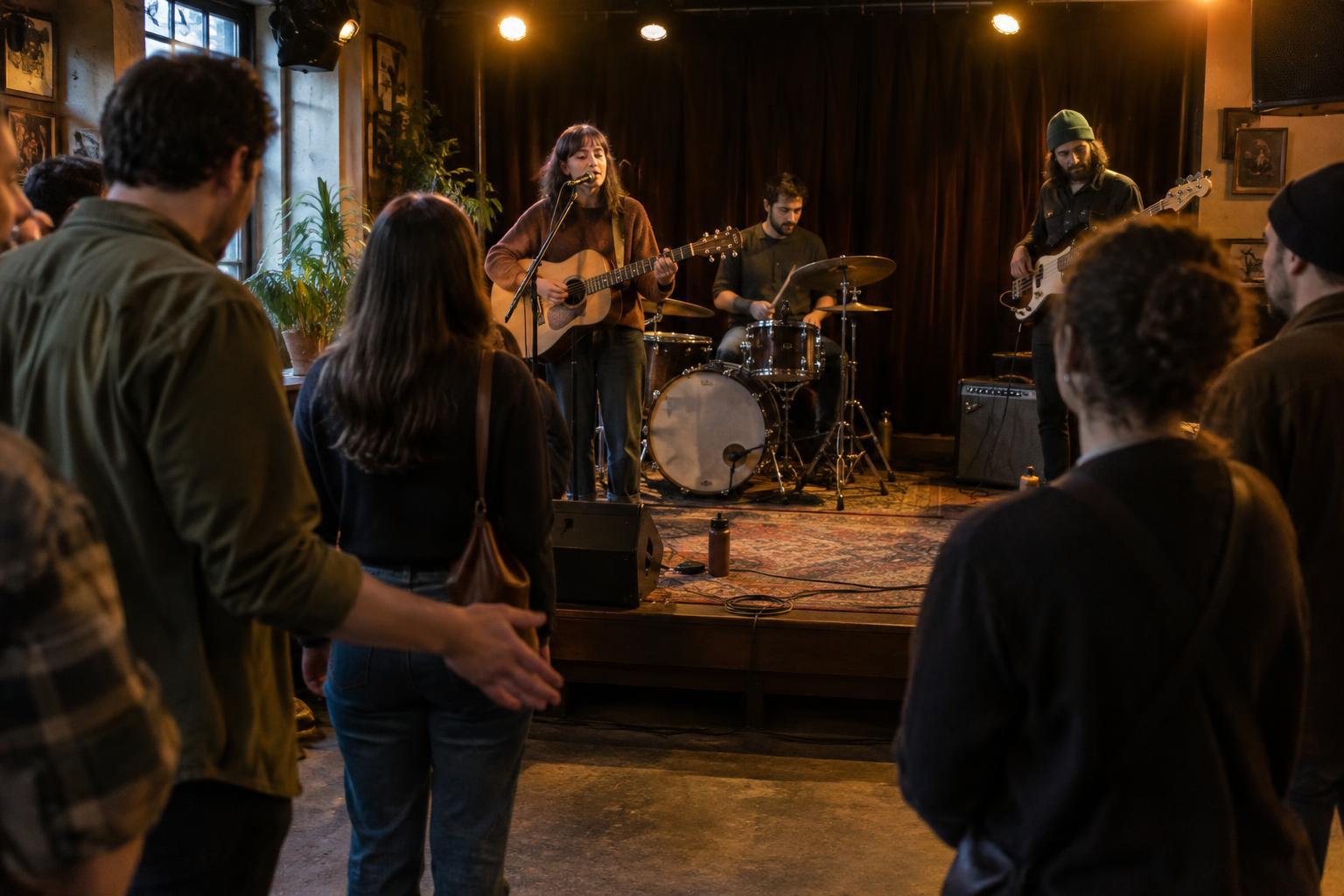
At a small show, the price at the door may look like a simple payment for an evening of music. Behind it are several possible costs: the room, sound equipment, a person running the door, promotion, and travel for performers. Who covers those costs varies from show to show. A venue may provide staff and equipment, while an independent organizer may bring in a sound engineer and handle nearly everything else.
That is why a busy room does not automatically mean a large payment for every musician. It also explains why clear expectations matter. When performers and organizers discuss costs, payment and timing before a show, they can make choices with a shared understanding of what the door is meant to cover.
What a door split actually does
A door split divides admission income among agreed parties, often including performers, a venue or an organizer. Some arrangements first cover specified show costs; others divide the full door take or include a guaranteed performer payment. There is no single model that fits every room. A low-capacity space with borrowed equipment has different needs from a staffed venue with a dedicated sound system.
For musicians, the useful questions are concrete: Is the split calculated before or after costs? Which costs come out first? Is the division equal across acts, or based on another agreement? When will payment happen? A short written summary can prevent confusion without making an informal show feel bureaucratic. For audiences, paying the stated admission price rather than assuming entry should be free helps make that agreement possible.
Donations can fill gaps without replacing clarity
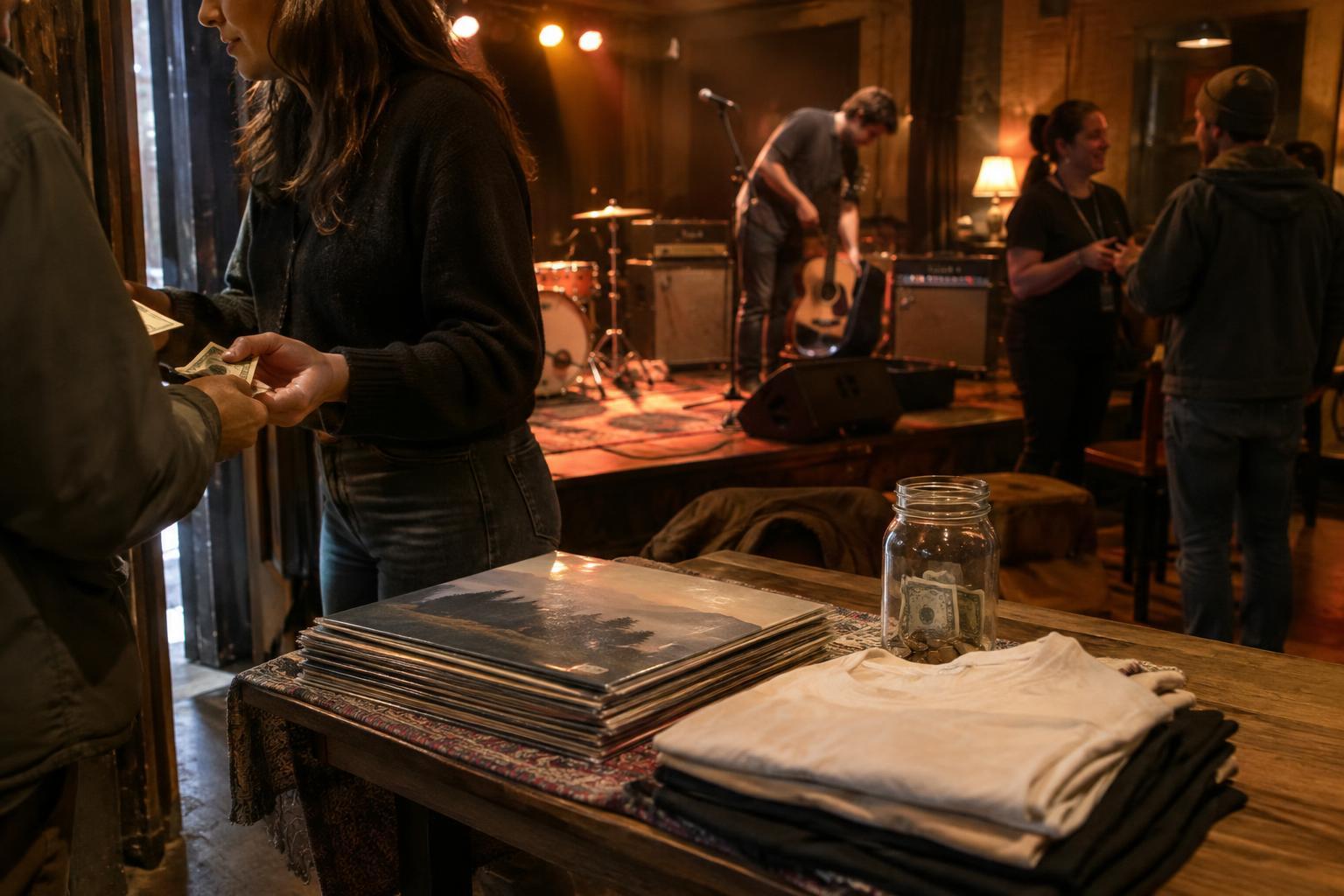
A donation jar, a pay-what-you-can door or an optional contribution link can make room for people with different budgets. Donations may help with travel, equipment upkeep or the next show. They can also offer a way to support a free event. Because contributions are uncertain, though, they are harder to plan around than a known admission price or an agreed guarantee.
The clearest approach is to say what is optional and, when practical, what the money supports. A sign that distinguishes a suggested contribution from a required charge lets listeners decide without pressure. It also avoids asking the audience to guess whether their payment goes to the band, the space or a broader project. People who cannot contribute money can still participate by showing up, listening and helping others discover the music.
Merchandise carries music beyond the room
Merchandise can give performers another source of income and listeners a tangible connection to a set they enjoyed. A record, shirt, print or small handmade item may continue the conversation after the show ends. Unlike a door split, a merch sale usually connects a purchase directly to one artist or project, though artists may still have production costs or a venue arrangement to account for.
A thoughtful merch table does not need to be elaborate. Clear prices, enough light to browse and someone available to answer questions make it easier for interested listeners to buy. Organizers can help by finding a visible spot that does not block exits or the path to the stage. Audiences can help by buying within their means and recognizing that a conversation or a follow-up listen is welcome even when a purchase is not possible.
Support is a shared practice
Door income, donations and merchandise do different jobs. The door can provide a foundation for a show’s agreed costs. Donations can add flexible support or improve access. Merch gives listeners a direct way to back an artist they connected with. None is a guaranteed solution on its own, and each works better when expectations are visible to the people involved.
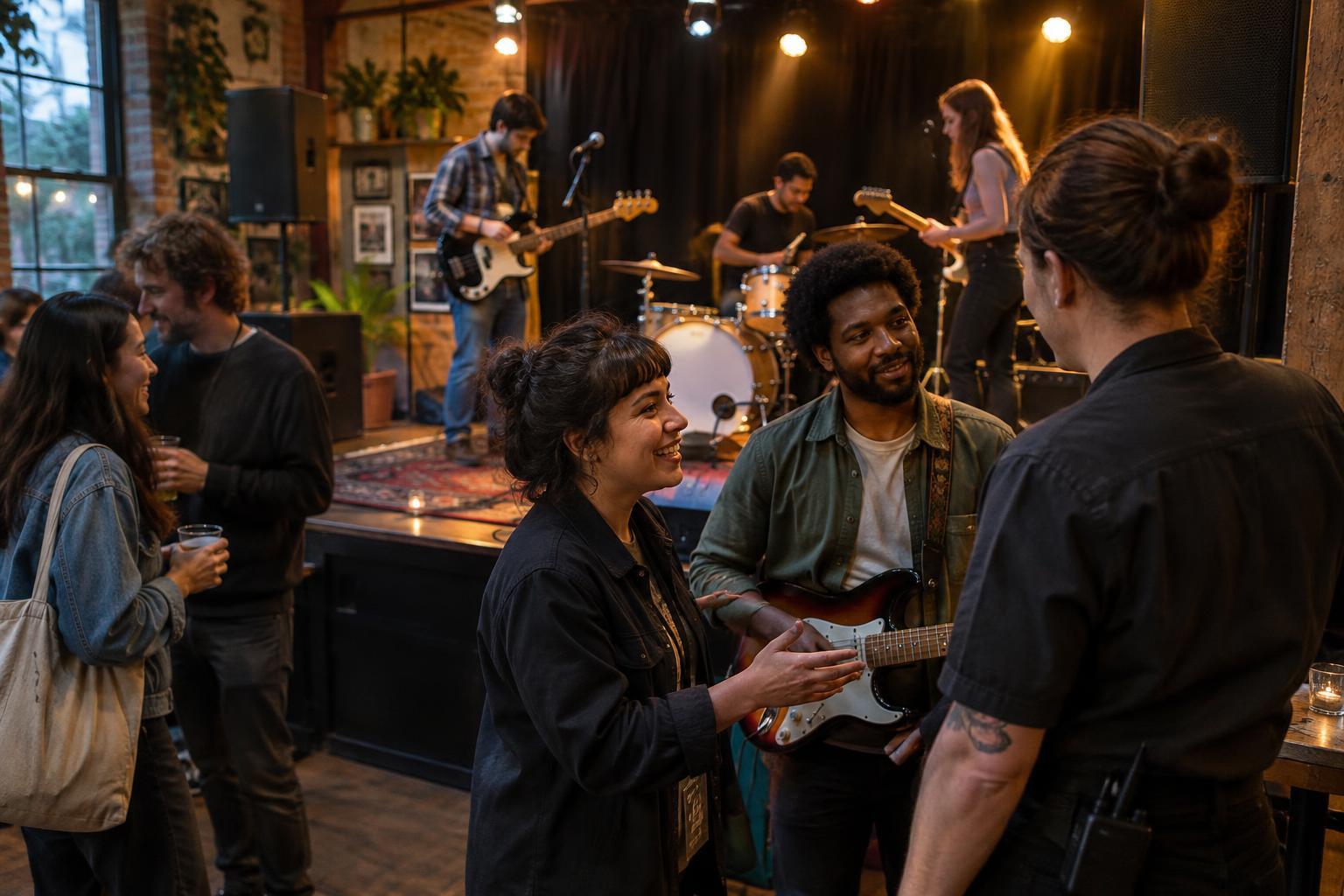
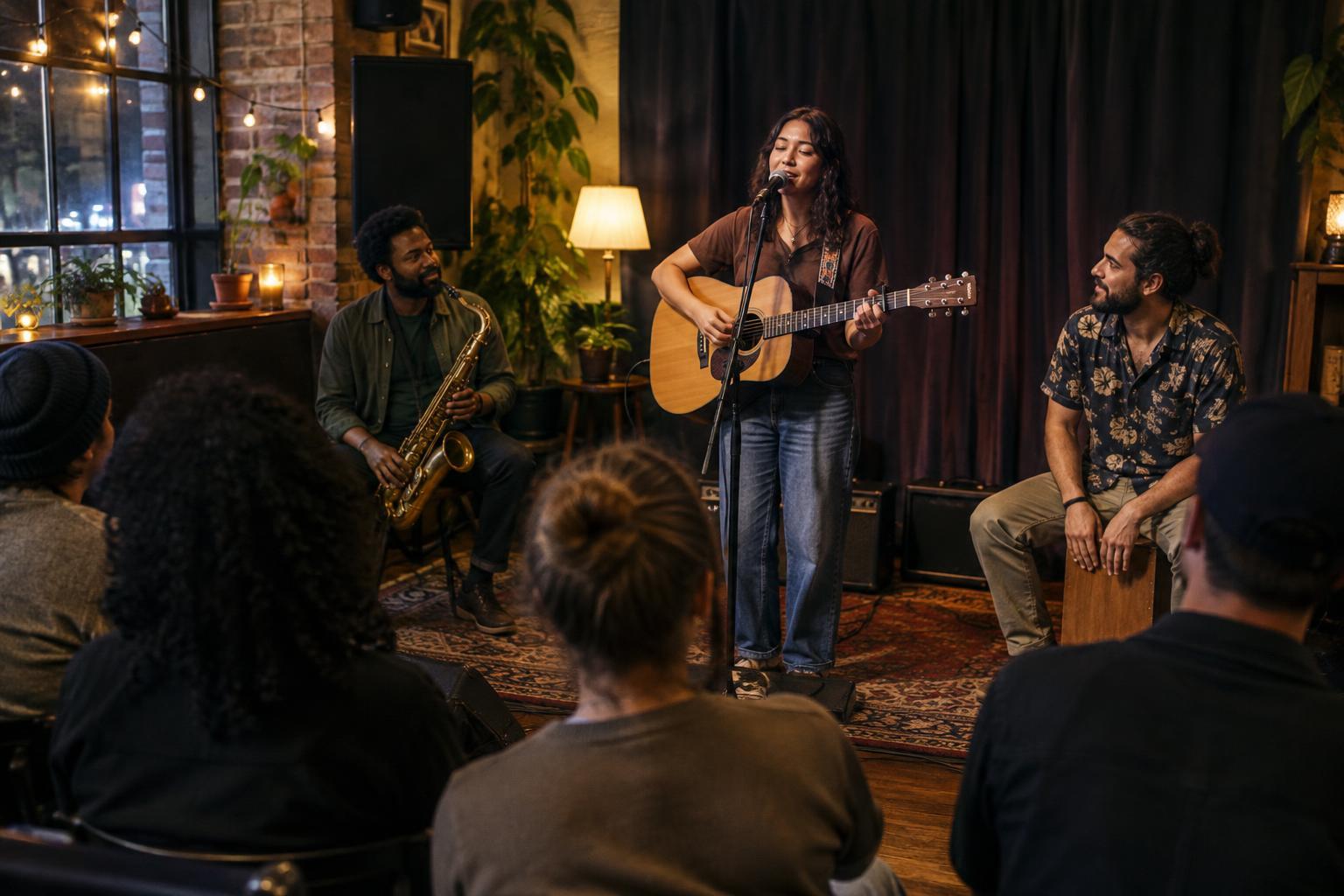
A durable small scene depends on more than transactions. Performers need reasonable agreements; organizers need workable budgets; audiences need welcoming shows worth returning to. Clear communication, fair treatment and attention to the room itself help all three groups trust one another. That trust makes it easier for the next local show to happen.