Start with the site rules, not the packing list
Before buying gear or filling a bag, read the festival’s camping information. Check what size tent is permitted, whether you can bring cooking equipment, how drinking water is supplied and which items cannot enter the site. Look for arrival instructions, vehicle access details and any limits on re-entry. Rules vary, so a checklist borrowed from a friend may miss something important.
Make a simple plan for getting in and out. If you are traveling with others, agree on a meeting point that does not depend on phone service, and decide who is carrying shared items. Save the information you need for arrival somewhere you can access offline. If you have accessibility needs, review the available site information and contact the event team in advance about arrangements you cannot confirm. Knowing where to go is far more useful than trying to solve every question at a busy entrance.
Pack for a livable campsite
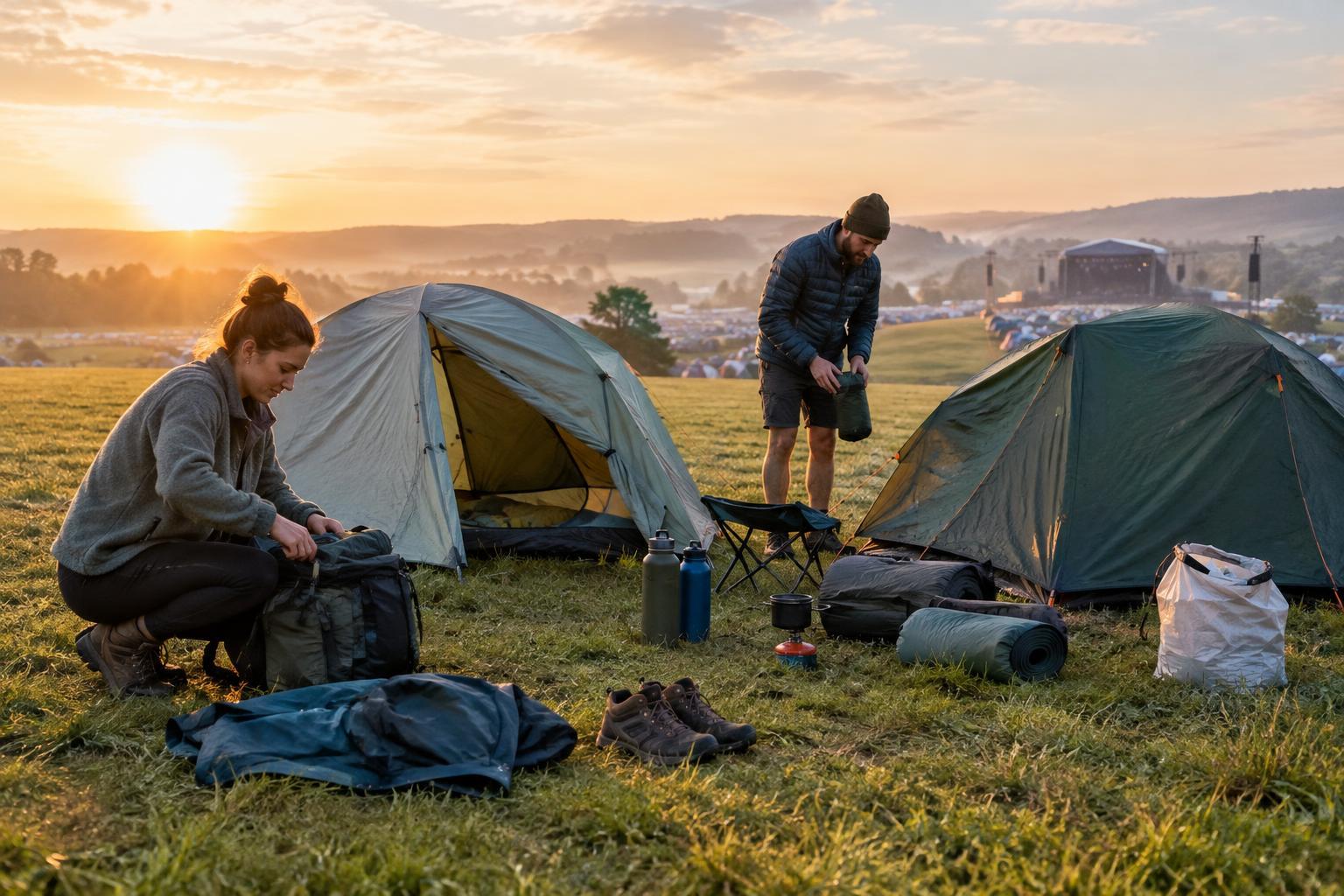
Your tent should be familiar before it becomes your home for several nights. Practice pitching it, check that the poles and stakes are present, and make sure its packed size is practical to carry. Add a groundsheet if appropriate for the tent, a sleeping bag suited to the expected conditions and a sleeping mat for insulation and comfort. A small light or headlamp makes late returns less disruptive than searching by phone flashlight.
Think in layers rather than in single-purpose outfits. Comfortable footwear, spare socks, rain protection and something warm for evenings can cover a wider range of conditions than an extra festival look. Pack toiletries, any personal essentials, a reusable water container and bags to separate wet clothes from dry ones. Bring a power bank if permitted, but do not make your phone your only light, map or way to find your group. Labeling your gear can also help distinguish it from similar-looking items nearby.
Set up camp with the next few days in mind
When you arrive, choose your spot within the designated camping area and follow staff directions. Look at the ground before pitching: avoid obvious low points where rainwater could collect, and leave paths and neighboring entrances clear. Orient the tent door so you can get in and out without stepping through another group’s space. Once it is up, secure it properly rather than assuming calm weather will last.
Keep frequently used items in a consistent place inside the tent. A tidy campsite saves time when you are leaving for a set or returning tired in the dark. Put rubbish in a bag early and use the site’s disposal facilities as directed. Keep food stored according to the event rules and its packaging instructions; if you cannot keep a perishable item at a suitable temperature, choose a more durable option. Small routines make camp easier to share and more pleasant to return to.
Plan your energy as carefully as your schedule
A multi-day lineup invites ambitious plans, but the best day may include a break. Pick a few performances you especially want to see, then leave room for travel between stages, meals and rest. Locate water points, toilets, quiet spaces and exits when you have time to look around. Drink water regularly, eat enough to sustain your day and pay attention to how heat, cold or rain changes what you need.
Live music can be loud, so pack hearing protection you will actually wear. If you are with friends, agree that anyone can leave a crowded area without having to justify it. A meeting point and a rough check-in plan help when people want different experiences. Keep essential belongings secure and carry only what you need away from camp. Pacing yourself is not missing out; it gives you a better chance of enjoying the performances you came to hear.
Make departure part of the plan
The last morning is easier when you have left space in your bag and kept track of your gear. Before taking down the tent, check its pockets and the ground around it for small items. Separate reusable equipment from waste, follow the site’s disposal instructions and take home anything you brought that cannot go in the provided bins. Do not leave a damaged tent behind simply because it is awkward to carry.
Allow time to pack without rushing toward a train, shuttle or car. If you traveled with a group, confirm that everyone has their belongings and understands the route out. A thoughtful departure is part of being a good neighbor to other campers and the people working on the site. It also means the stories you take home are about the music, not the things you left behind.