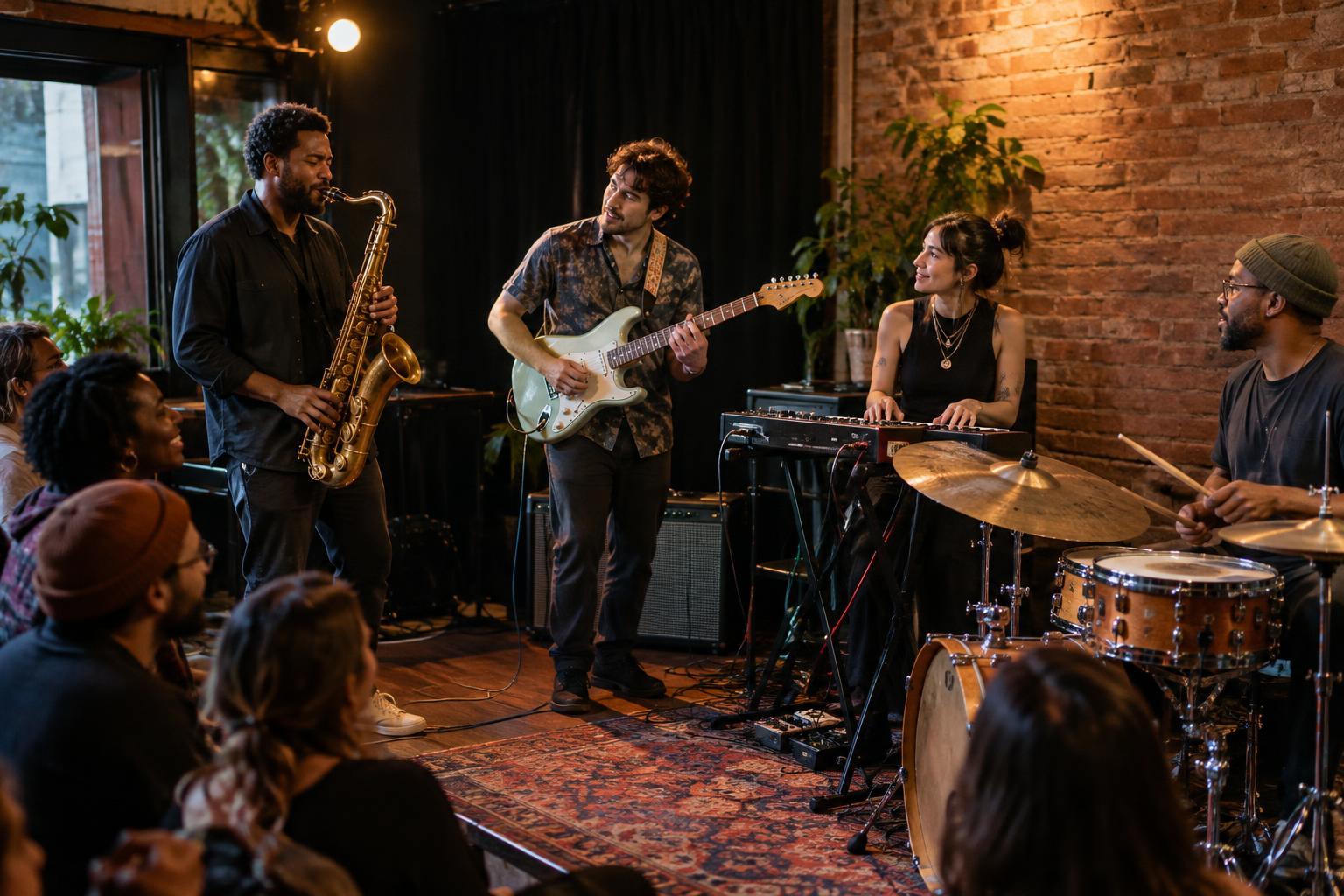
Treating knowledge as an entry requirement
Every music scene develops a shared history: favorite records, memorable shows, local venues and artists who influenced what came next. That history can help people feel connected. It becomes a barrier when someone must know it before they are allowed to belong. Asking a newcomer to name obscure tracks or explain a genre’s roots may sound playful to an insider, but it can turn a conversation into a test.
Try sharing context instead of demanding credentials. If someone likes a band, ask what drew them in and offer a recommendation. When explaining an artist’s significance, leave room for the other person’s experience. Knowledge is more valuable when it opens a path into the music than when it proves who arrived first.
Confusing taste with status
People discover music through friends, playlists, radio, small shows and big stages. None of those routes makes a listener more authentic. Dismissing a popular song as the wrong way into a genre, or treating an unfamiliar favorite as embarrassing, tells people their enthusiasm counts only if it matches someone else’s taste.
Strong opinions are part of music conversation; contempt does not have to be. Explain what you hear in a track rather than assuming someone else has not listened closely. A person who came for the headliner might leave curious about the opener. That curiosity has room to grow when people can ask questions and change their minds without being ridiculed.
Keeping the practical rules unspoken
Unwritten expectations can be as excluding as blunt criticism. A first-time attendee may not know where to find the running order, whether a venue allows re-entry, or how a scene typically supports performers at a small show. Someone interested in contributing may not know whom to contact about playing, photographing or helping out. When information travels only through familiar circles, newcomers are left guessing.
People who host events, perform or share show information can make the basics easier to find. Clearly explain where to look for venue policies, accessibility details and participation contacts when that information is available. If you do not know an answer, say so rather than guessing. Even a simple welcome that identifies where to ask questions can make a room feel less closed off.
Clarity does not mean everyone must have the same access to every opportunity. Venues, artists and organizers may need boundaries around space, time and safety. The useful distinction is between explaining a boundary and making someone feel foolish for not knowing it already.
Mistaking exclusivity for community
A tight-knit crowd can create a powerful sense of belonging. It can also develop habits that make everyone outside the circle feel like an interruption: introducing friends only to friends, ignoring someone who asks a sincere question, or implying that a show mattered less because the audience was larger than usual. Protecting an intimate atmosphere does not require treating new listeners as a threat.
Small actions change that dynamic. Introduce someone by name when they join a conversation. Make space near a shared table or listening area when appropriate. Invite people to take part without pressuring them to stay late, spend money or become regulars. If an event is meant for a particular group or purpose, communicate that respectfully rather than relying on cold shoulders to enforce it.
Making room without dismissing real boundaries
Calls for openness should not be used to wave away harassment, unsafe behavior or a performer’s right to set limits. A welcoming scene is not one where nobody ever says no. It is one where expectations are communicated fairly and people can raise concerns without having to earn social standing first. Consider who gets heard when discomfort is reported and whether the same standards apply to close friends.
Listeners can start with their own habits: recommend more than you quiz, explain more than you mock, and notice when an in-joke leaves someone out. Performers and event teams can make participation routes clearer and respond to questions with patience. None of this requires everyone to agree about the music. It gives more people the chance to hear it, talk about it and decide whether they want to come back.