Two riders, two kinds of preparation
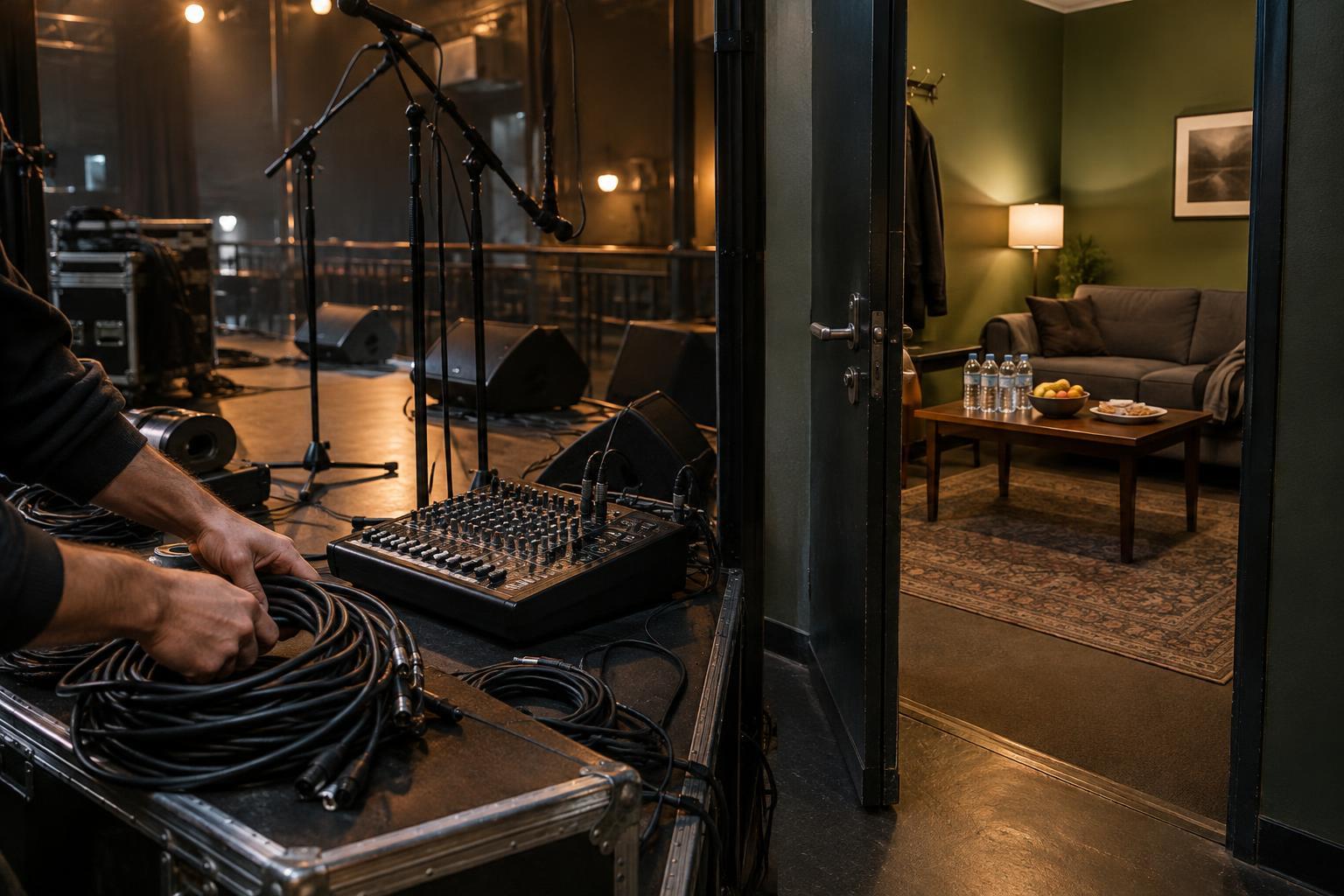
A rider is a document, often attached to a performance agreement, that sets out what an artist needs from a venue or event team. The technical rider addresses the conditions needed to put the performance on stage. The hospitality rider addresses the people making that performance happen: where they can prepare, what they can eat or drink, and other practical needs during their visit.
The distinction is useful, but it is not a wall. A dressing room might appear in a hospitality rider, while its location matters to the stage manager planning an entrance. A requested instrument might be listed in a technical rider, while arranging its delivery affects the day’s schedule. The documents work best when everyone treats them as part of one coordinated plan, rather than as unrelated wish lists.
What a technical rider covers
A technical rider describes the setup required to present the show. It may specify the performance area, sound system, microphones, monitor mixes, lighting, power, video equipment, and instruments or amplifiers to be provided on site. Depending on the act, it may also describe crew requirements, setup time, changeovers, and soundcheck needs. Its purpose is to turn a performance concept into tasks that a production team can assess and prepare.
Two common companion documents make those tasks easier to understand. A stage plot shows where performers, instruments, monitors, and other equipment are positioned. An input list identifies the sound sources that need connections, such as vocals, drums, or a playback device. Together, they help the sound team plan channels, cables, microphones, and stage space. A simple solo set may need only a short list; a larger production may need considerably more detail.
Specific wording matters. “Four vocal microphones on stands” is more useful than “enough microphones,” provided the count is accurate. A rider should also make clear which items the artist brings and which the venue is asked to supply. If a venue cannot meet a specification, the useful next step is a discussion about an alternative that preserves the needs of the performance.
What a hospitality rider covers
A hospitality rider focuses on the artist and crew away from the performance setup. It can describe dressing-room access, drinking water, meals, dietary requirements, towels, secure storage, parking or loading arrangements, and the timing of these provisions. For a touring group, a reliable meal and a place to prepare can make a long day more manageable. These details may be modest, but they still require someone to arrange them.
Hospitality is not simply about treats. Clear information about headcount, meal times, and dietary needs helps a host avoid guesswork. Requests for privacy or a quiet space can help performers prepare before a set. Some needs, including accessibility arrangements, may affect several teams and should be discussed early rather than left to a last-minute note.
Not every hospitality request will suit every room or budget. A small venue and a large event may have very different facilities. The practical goal is to confirm what can be provided, identify what cannot, and agree on workable substitutions before the artist arrives. A confirmed alternative is more helpful than an unanswered request.
How the documents come together before show day
Riders are most useful when they are reviewed in advance, a process often called advancing the show. A production contact can compare the technical rider with the room’s equipment and layout, while a venue or artist-services contact checks the hospitality details. Questions can then go to the right people: Can the requested keyboard stand be supplied? Is there enough time for a soundcheck? Where will meals be served?
The answers should lead to a shared, updated plan. Touring setups change, and venues sometimes replace equipment, so an old rider should not be assumed to describe the current show. Clear versions and named points of contact help prevent one team from working from a different set of expectations. If a change affects both stage operations and artist care, both teams should know about it.
For concertgoers, much of this preparation is invisible. A smooth changeover, an intelligible mix, and a performer who can focus on the set may all depend on questions settled well before doors open. Technical and hospitality riders cover different ground, but both help turn a booking into a show that people can deliver with fewer surprises.