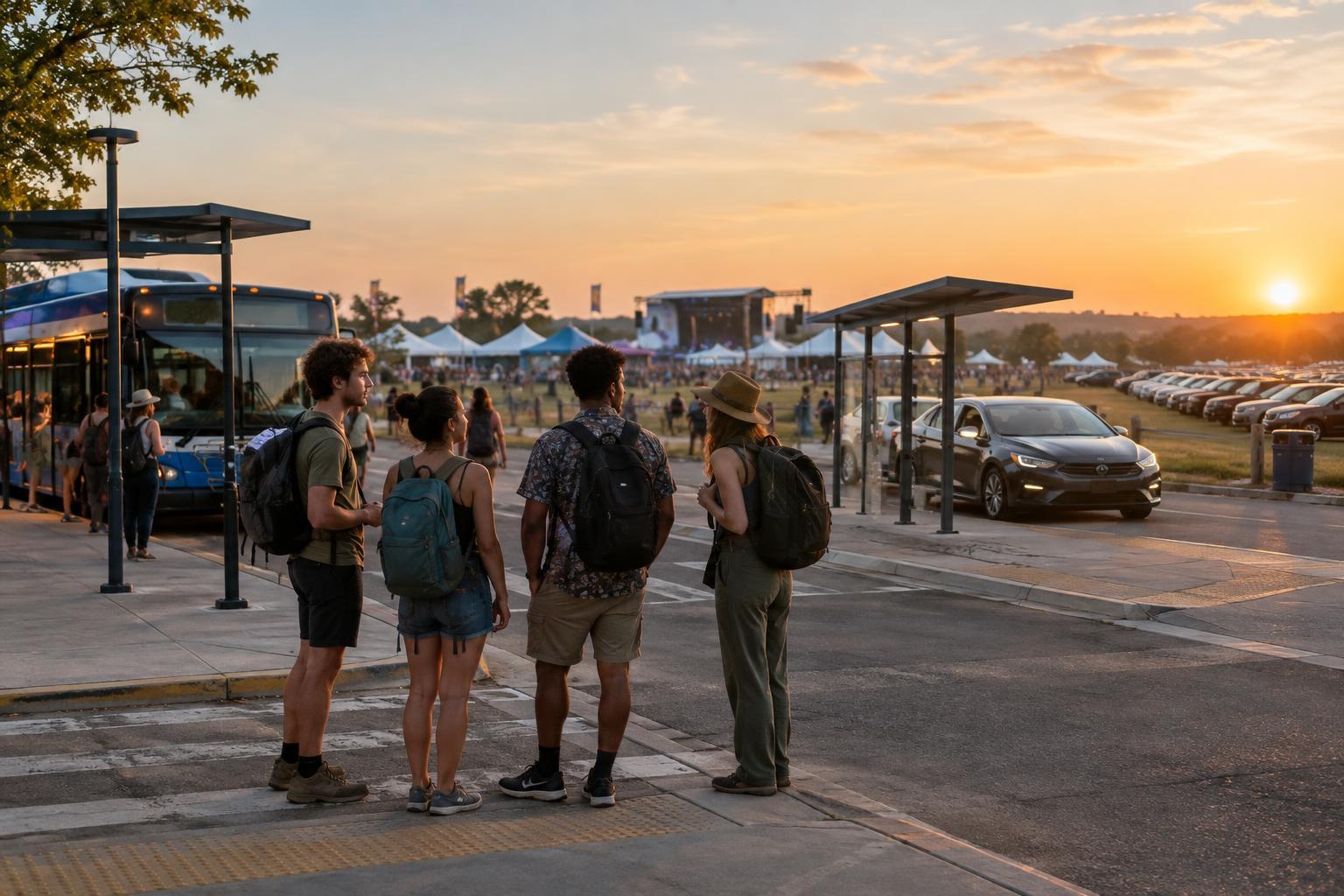
Start with the trip home
It is easy to plan festival transportation around the first act you want to see. The harder question is how you will leave when many other people have the same idea. Before choosing a mode of travel, look at the venue’s published entrance and exit information, the expected walking route and the time you are likely to depart. A plan that works for an afternoon arrival may not work after the final performance.
Compare the full journey rather than just the time spent in a vehicle. A nearby transit stop may still require a long walk. A rideshare pickup point may be separate from the main gate. A parking space may be convenient on arrival but slow to leave. If you are traveling with children, carrying gear or managing a mobility need, those final stretches deserve as much attention as the ride itself.
Public transit: predictable costs, less control over timing
Buses and trains can be appealing when service reaches the venue or a comfortable walking distance from it. Fares are usually easier to estimate in advance than rideshare prices, and you do not have to find parking or drive while tired. Transit can also let a group travel separately if members want to arrive at different times.
The main constraint is the schedule. Check the route in both directions, including the last practical departure and any transfers. Allow room for a slow exit from the grounds: the time you leave a performance is not necessarily the time you reach the platform or stop. If the last service leaves little margin, consider an earlier departure or a different way home.
Think about what you will carry. A crowded vehicle is less comfortable with bulky chairs, large bags or items that may not be permitted onboard. If step-free travel or another accommodation matters to you, check the transit provider’s information and the route between the stop and the venue before relying on it.
Rideshares: flexible booking, variable pickup
A rideshare may help when transit does not serve your route, when you are splitting a fare with friends or when you want to avoid driving. It can be especially useful for one leg of the trip: you might take transit in and arrange a ride home, or reverse that plan if late service is limited.
Flexibility does not guarantee a quick exit. At busy times, available cars, quoted prices and wait times can change. Drivers may also be directed to a designated pickup area rather than the gate nearest you. Find that area on the venue map if one is provided, and choose a clear meeting point for your group before you need a ride. Keep enough phone charge to request and identify your car.
For a fair comparison with driving or transit, estimate the fare for both directions and leave room in your budget for a higher-than-expected return price. If you are considering a taxi or another local service as a backup, check how its pickup arrangements work rather than assuming it can collect you anywhere.
Driving: useful for flexibility, but parking is part of the plan
Driving gives you control over your departure time and room for permitted supplies. It may suit a group sharing fuel and parking costs, or a trip that combines the festival with an overnight stay. That convenience depends on knowing where you can park. Check the venue’s parking instructions, any advance-purchase requirements and the walking route from the lot. Do not assume nearby streets allow event parking.
The true cost includes more than fuel. Add parking, possible tolls and the time spent entering and leaving the area. Decide who will drive home before the day begins, and make sure that person is prepared for a late, potentially tiring trip. If an overnight stay would make the journey easier, compare that option before committing to a long drive after the show.
Choose a primary route and one workable backup
There is no single best choice for every festival. Transit often makes sense when service runs comfortably past your planned exit. Rideshares can fill gaps but call for a flexible budget and a clear pickup plan. Driving can simplify carrying supplies and choosing your own schedule, provided parking and the return trip are manageable.
Write down a simple plan your group can follow: how you will arrive, where you will meet if separated, when you need to leave and what you will do if the first option falls through. Save relevant route, parking or pickup details where you can access them without a strong signal. A little preparation leaves more attention for the music and less for solving the ride home.