What backline preparation covers
Backline is the collection of instruments and related equipment performers use onstage. Depending on the show, it might include guitars, basses, drums, keyboards, amplifiers, stands and pedals. A backline technician helps make that equipment ready to play and keeps it accessible during the performance. The exact job varies: one person may handle several instrument types at a small venue, while a larger production may have separate guitar, drum and keyboard technicians.
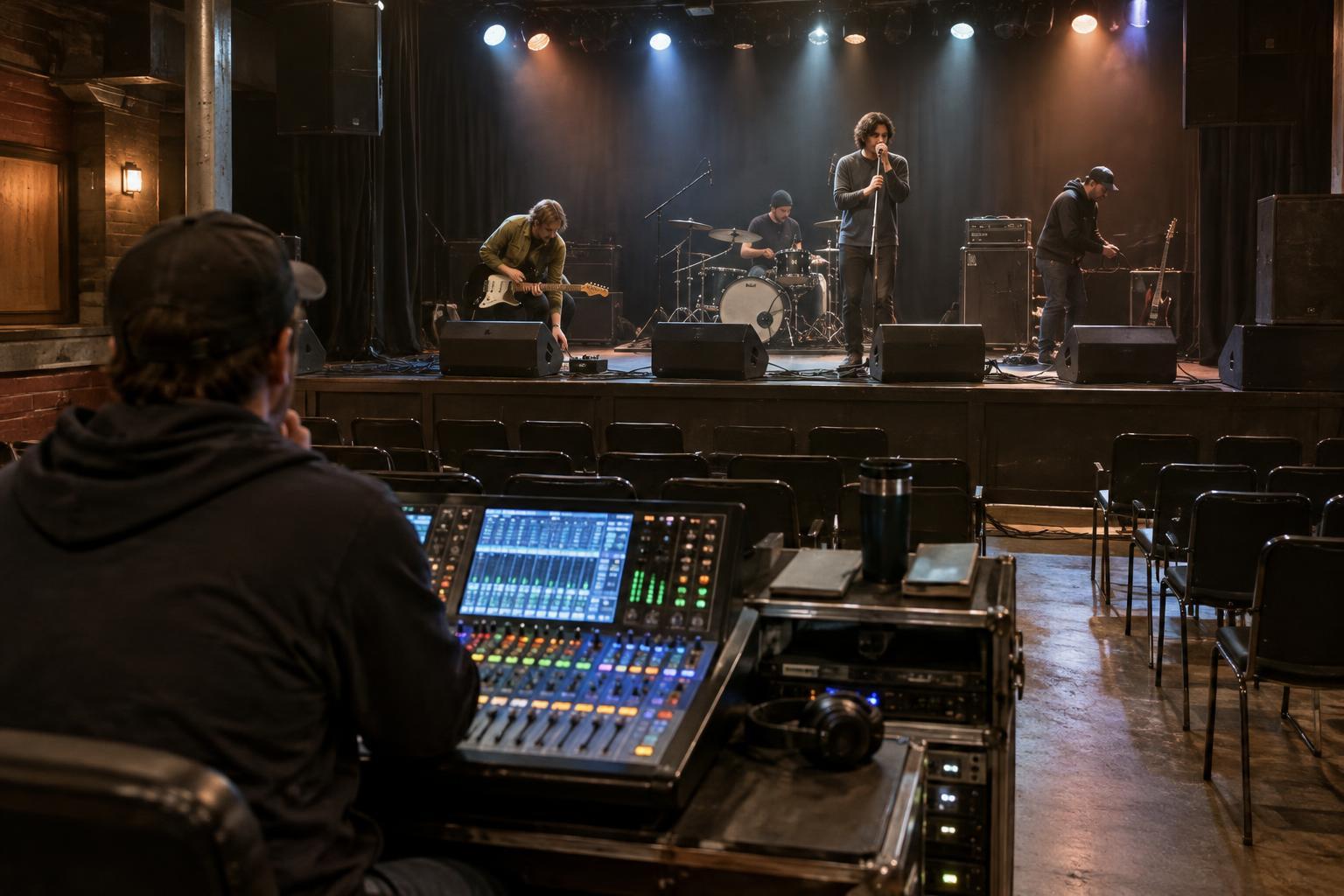
Their work overlaps with, but is not the same as, the work of the sound crew. A guitar technician may make sure an amplifier and pedalboard behave as expected; an audio engineer handles how those sounds travel through the sound system. Clear handoffs matter because a problem that sounds like an instrument fault could also be a cable, input or monitoring issue. Preparation gives both teams a chance to identify such problems before the audience hears them.
Planning the setup before equipment reaches the stage
Preparation often begins with a stage plot and an equipment list. These show where performers will stand, what instruments they expect to use and which items are being brought in or supplied locally. The technician can compare those plans with the equipment that has arrived, check that required accessories are present and flag differences while there is still time to resolve them. Spare strings, drumheads, batteries, picks and suitable cables are small items that can make a large difference when one is missing.
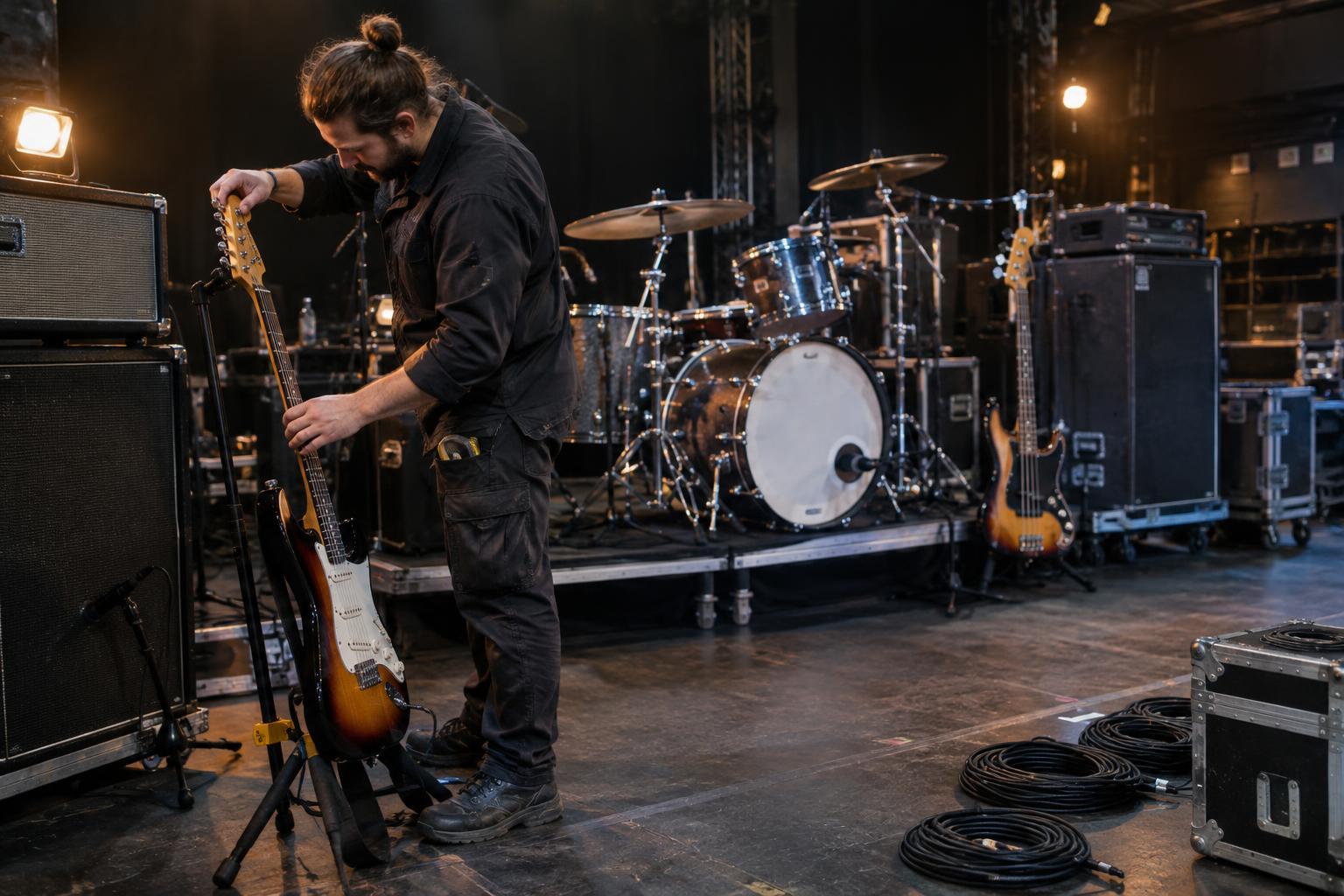
Placement is practical as well as visual. A guitar stand needs to be within reach without obstructing a walkway. A drum kit needs room for the player and for any planned changes. Keyboard stands and pedals should stay stable during use. Technicians also consider how instruments will move on and off the stage, especially when several acts share a bill and changeovers must be orderly.
Checking and setting up each instrument
For guitars and basses, a technician may inspect strings, tuning machines, strap attachments, jacks and controls. They can tune the instrument, test it through its intended signal path and confirm that a backup is ready if one is part of the plan. Any adjustments should respect the performer's preferences: string height, tuning, strap length and the position of pedals can affect how familiar an instrument feels under the hands.
For drums, preparation can involve assembling the kit, positioning stands and pedals, inspecting heads and hardware, and tuning the drums to a usable starting point. Cymbal stands and drum stools should remain secure when played. Keyboard preparation may include checking stands, power supplies, pedals, patches or presets, and the connections needed for audio output. Not every show uses every item, so the goal is to verify the specific setup a performer expects rather than apply a single checklist to all acts.
Equipment checks also have limits. A technician can notice a damaged connector or an unsafe-looking power arrangement, but electrical faults should be addressed by qualified personnel under the venue or production's procedures. Rushing a questionable piece of equipment into service is not a substitute for a safe, working setup.
Rehearsal, soundcheck and the final pass
Once the instruments are in place, a line check can confirm that the expected signal reaches the audio crew. During soundcheck, musicians can play at performance level and say whether something feels or sounds wrong. A technician might then retune an instrument, secure a loose stand, replace a noisy cable or adjust an item that has shifted. They can also note which instruments will be used for particular songs and where each one should wait.
The final pass is about reducing avoidable surprises. Before the set, technicians may confirm tuning again, check that batteries or power supplies are ready, place picks and sticks where performers expect them, and make sure instrument changes are possible without crossing tangled cables. Quiet coordination is important here: a technician should know who is responsible for each connection or stage move, rather than changing another crew member's setup without discussion.
Staying ready once the show begins
Preparation continues after the first note. Instruments can drift out of tune, strings can break and hardware can loosen during a set. A backline technician may tune a spare instrument between songs, handle a planned swap or bring a replacement into use when a problem occurs. The aim is not to make the work visible, but to give performers a dependable path through interruptions.
Good backline work is a mix of technical checking, organization and attention to the musician's routine. A thoroughly tested instrument is useful only if it is in the right place, set up the right way and ready at the right moment. That is why the quiet work before and during a show is part of the performance, even when the audience never notices it.