Two ways to fill out a solo sound
A solo performer can make a room feel full without putting a band onstage. Two common tools are the loop pedal, which records a phrase and repeats it, and the backing track, which plays audio prepared before the show. Both can support a voice or instrument, but they ask for different kinds of attention during a performance.
With a looper, the audience may hear a rhythm, chord pattern, or vocal harmony being added one layer at a time. A backing track can begin with those parts already in place, leaving the performer free to concentrate on singing, playing, and connecting with the room. Neither method is inherently more “live.” The useful question is which one helps the performer deliver the song clearly and confidently.
Flexibility comes with responsibility
Looping can make an arrangement responsive. A performer might extend an introduction, build toward a chorus gradually, or leave a section sparse when the room calls for it. Once a loop is recorded, though, its timing and sound become part of the performance. A slightly rushed first phrase will keep returning until it is stopped or replaced. Building layers also takes time, which can make a short song feel long if each part has to be recorded before the vocal begins.
Backing tracks trade some of that freedom for consistency. They can carry parts that would be difficult to create in real time, such as several distinct textures entering at once. The performer needs to know exactly where those entrances occur. Stopping for a conversation, repeating a chorus, or recovering from a missed cue may require a track designed with those possibilities in mind. Simple arrangements and unmistakable count-ins can make that structure easier to live with.
What the audience sees and hears
A visible loop-building process can become part of the show. Listeners can recognize a clap or guitar figure when it returns later, and the gradual construction gives them a way into the arrangement. It works best when each new layer adds something meaningful. If the performer spends more time managing pedals than presenting the song, the technique may draw attention away from the music.
Backing tracks can feel equally engaging when the live contribution remains clear. A strong vocal, expressive instrumental part, or deliberate change in dynamics gives the audience something happening in the moment. It may help to decide which elements should sound human and variable, then keep those elements in the performer’s hands. A track does not have to imitate an entire band; a restrained pulse or atmospheric part may provide all the support a song needs.
Keep the sound setup understandable
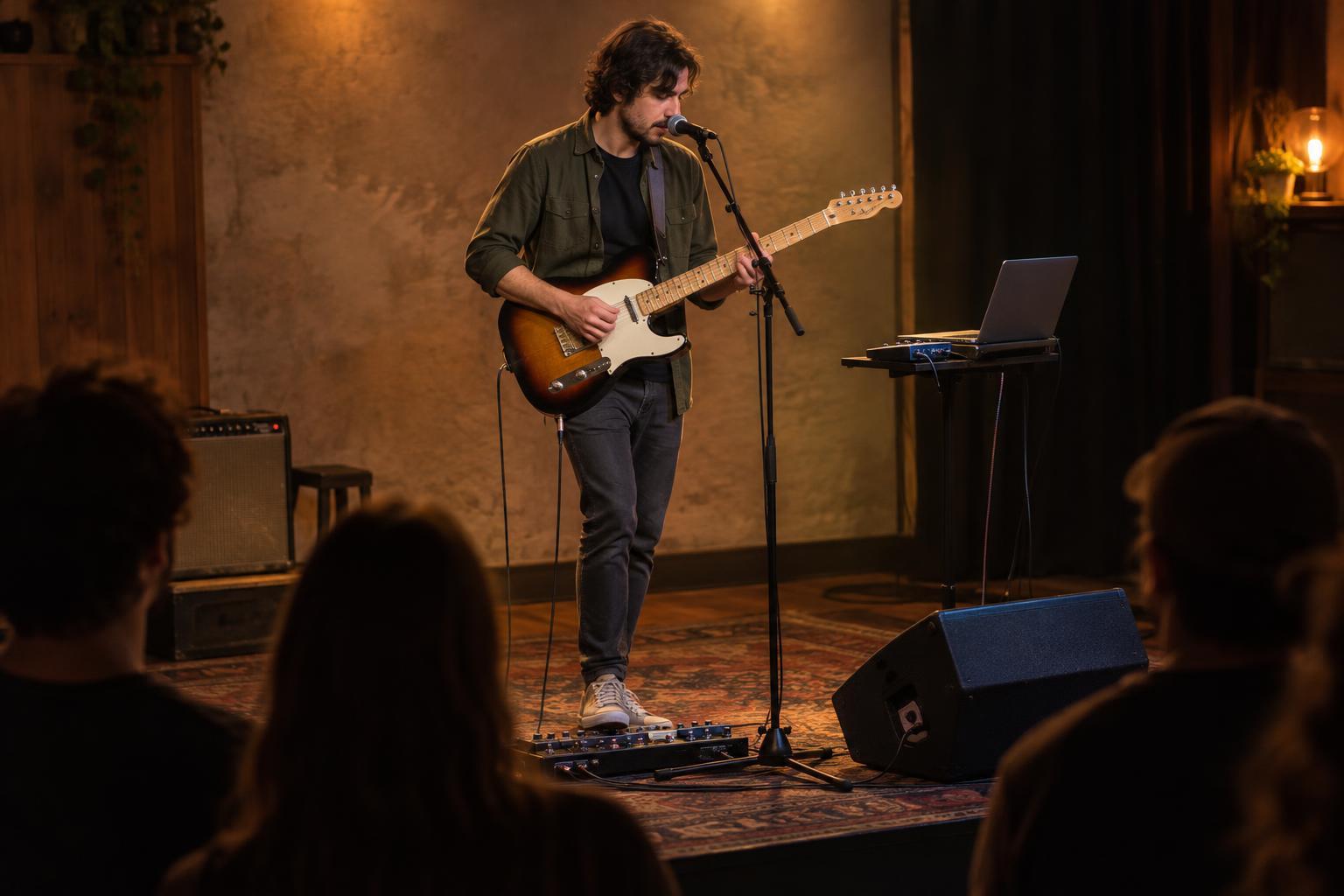
Both approaches benefit from a straightforward signal path. A looper may capture instruments, vocals, or both, so the performer should know what each input records and how its level relates to the unlooped sound. Layers can accumulate quickly and obscure the lead part. Leaving space in the loop, rather than filling every frequency range, often makes the live voice or instrument easier to hear.
Backing tracks need similarly careful level control. A track that sounds balanced in headphones may compete with a vocal through a room’s speakers. Performers who use cues or a click should plan how they will hear them without sending them to the audience mix. Before a set, it is worth checking how tracks start and stop, what happens if playback is interrupted, and whether the show can continue if one device fails. Clear, brief information about the inputs can also make a sound check more useful.
Choose by the needs of the song
The best test is not which tool can produce the biggest sound, but which makes the performance more reliable and expressive. Try the same song in three forms: stripped back, built with loops, and supported by a simple track. Notice where attention goes, how long the arrangement takes to develop, and whether the live part has enough space. A recording of rehearsal can reveal balance or pacing problems that are hard to notice while performing.
A hybrid approach is possible, too. A quiet prepared texture can sit beneath loops made onstage, provided the performer can keep both elements in time and avoid an overcomplicated setup. Whatever the choice, rehearse the transitions between songs as well as the songs themselves. An arrangement is ready for an audience when its tools serve the performance—not when every available layer has been used.