Three formats, three kinds of opportunity
A music scene is made of more than headline shows. It also grows in smaller rooms where people try songs, meet collaborators and hear performers they might otherwise miss. Open mics, jam sessions and showcases can all provide an entry point, but they ask different things of performers and audiences. Knowing the distinction helps you choose a night that suits your goals rather than arriving with the wrong expectations.
An open mic usually gives individuals or small groups a short turn to perform, often after signing up. A jam session centers on playing together, sometimes around a shared style or a set of familiar tunes. A showcase is more like a curated bill: performers are selected in advance and generally present a prepared set. These are useful descriptions, not fixed rules. Each venue and host may run its night differently, so check the format before bringing an instrument or planning to perform.
Open mics: a place to try the work
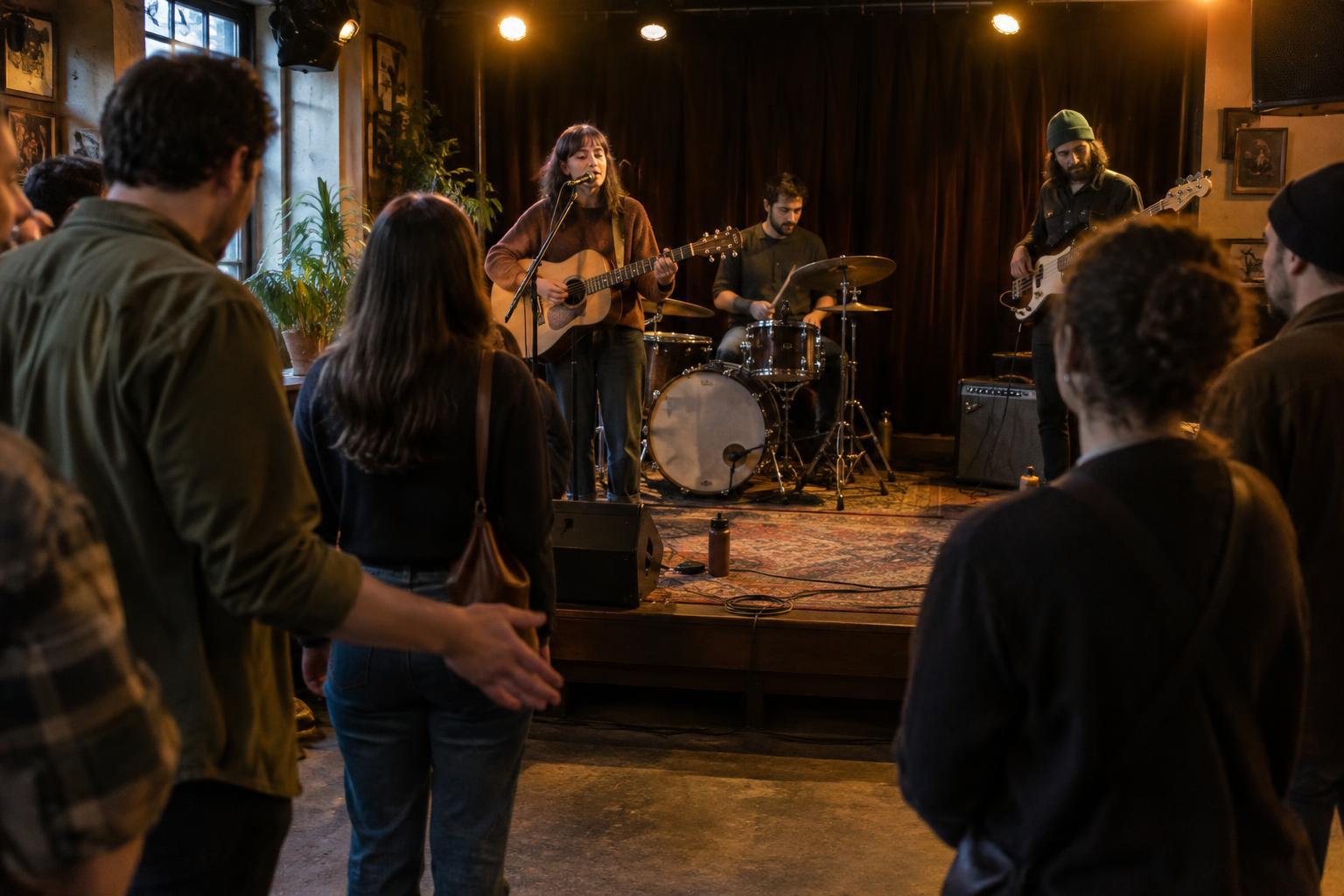
For a performer, an open mic can be a manageable way to put a new song, arrangement or stage introduction in front of listeners. A short set gives you room to learn without having to fill an entire evening. The audience may include other musicians as well as friends and regulars, which can make the room feel informal. That informality is useful, but it is still a performance: arrive prepared, know your time limit and be ready to set up and leave the stage promptly.
For listeners, the appeal is discovery. One slot might bring a careful solo performance; the next might sound completely different. Give each act your attention, especially when the room is small enough for conversation to carry to the stage. If you want to perform, ask how sign-up works, whether backing tracks are allowed and what equipment is provided. Rules about original songs, covers and set lengths vary. Watching one night before taking a slot can answer questions that a listing does not.
Jam sessions: a place to listen while playing
A jam session puts musical exchange ahead of a polished individual set. Players may take turns leading songs, trading solos or supporting someone they have just met. That can be rewarding if you want to develop your ears and learn how other musicians communicate. It can also be intimidating if you expect a rehearsal with instructions at every step. Some sessions welcome beginners; others assume familiarity with a genre or common repertoire.
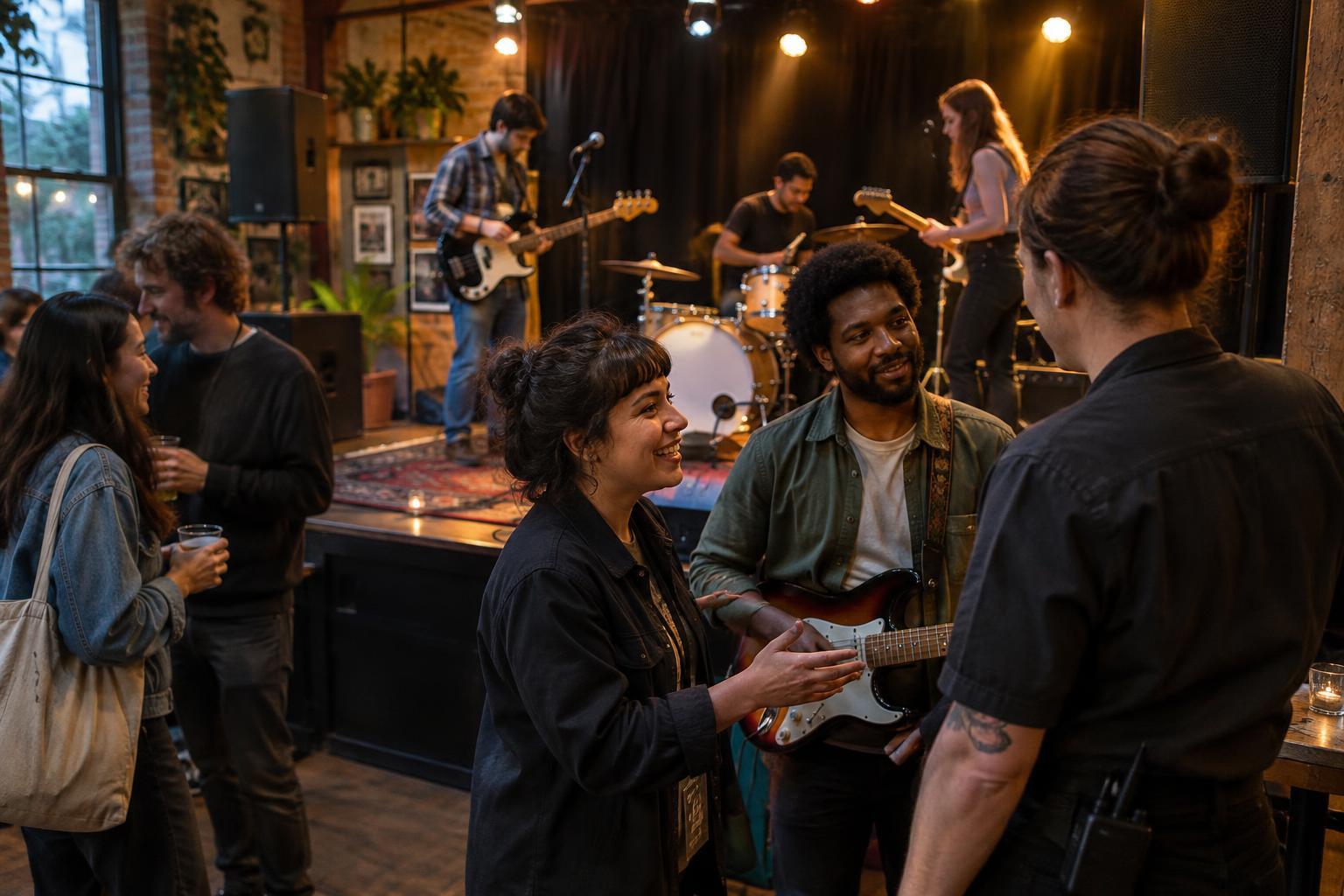
If you hope to join in, listen first. Notice how players signal a song’s start and end, how many people are onstage at once and who appears to be guiding the session. Introduce yourself to the host rather than stepping into a setup uninvited. Bring the gear you have been asked to bring, keep your volume in balance with the group and leave space for others. You do not need to take every solo to contribute; steady accompaniment and attentive listening are musical skills, too.
Showcases: a place to see a fuller picture
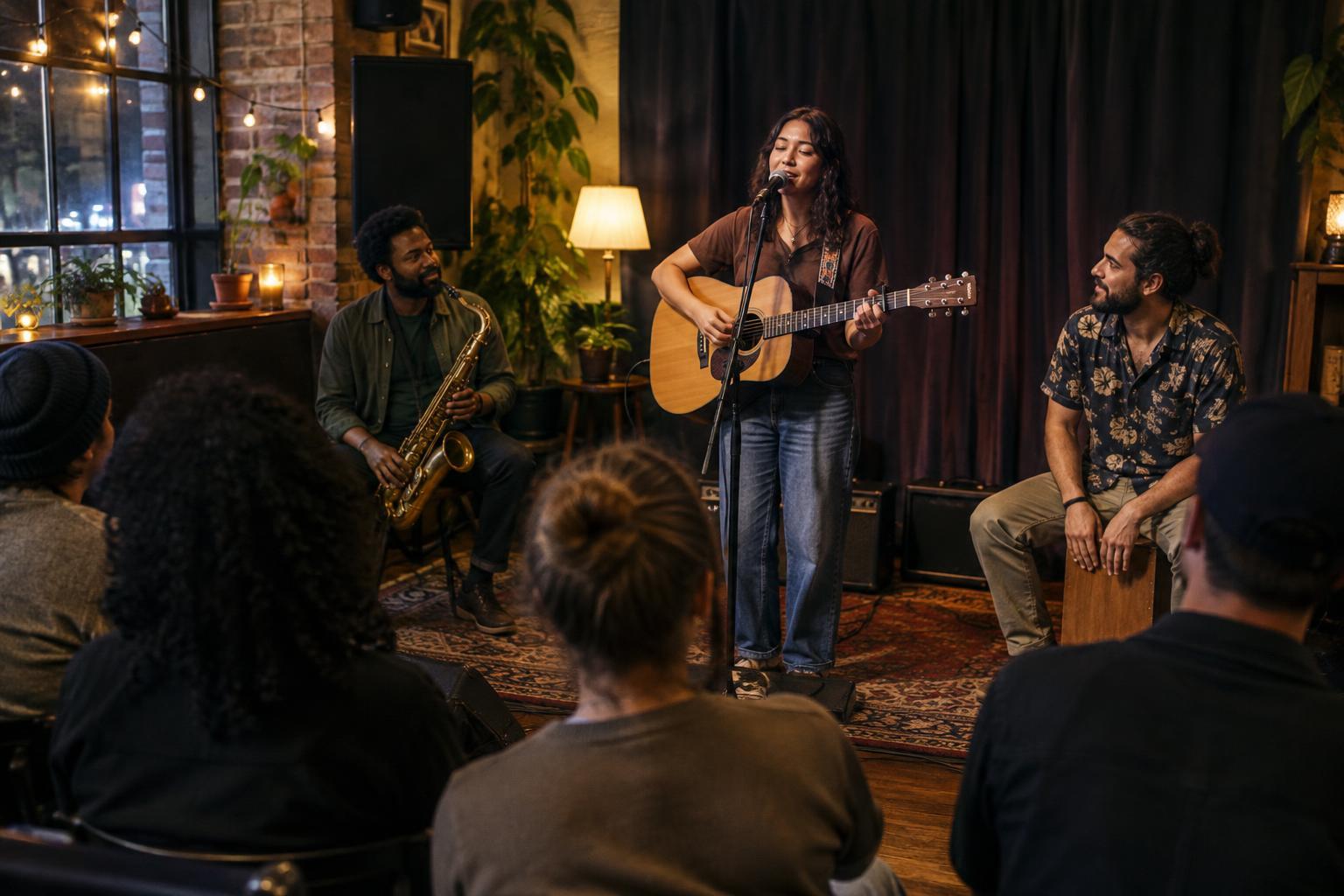
A showcase typically gives selected artists more time and a clearer billing than a drop-in night. That extra room can reveal how a performer shapes a set, connects songs and works with an audience. For someone exploring a scene, a showcase is a way to hear several acts in context and notice connections among them. It may be less open to spontaneous participation, though the people you meet there can point you toward other nights.
If you are an artist interested in a showcase, treat it as a relationship to build rather than a slot to demand. Learn what the organizer programs, attend when you can and make any inquiry concise and relevant. If you are in the audience, consider arriving for the full bill. Supporting an opener and staying for a performer you do not know can broaden your sense of what the local scene holds.
Find your entry point, then keep showing up
Your best first step depends on what you want. Choose an open mic if you need a low-stakes chance to perform, a jam if you want to make music with others, or a showcase if you mainly want to listen and learn. You can also go without an agenda. A welcoming scene needs people who show up, pay attention and treat performers and venue staff well, not just people waiting for a turn onstage.
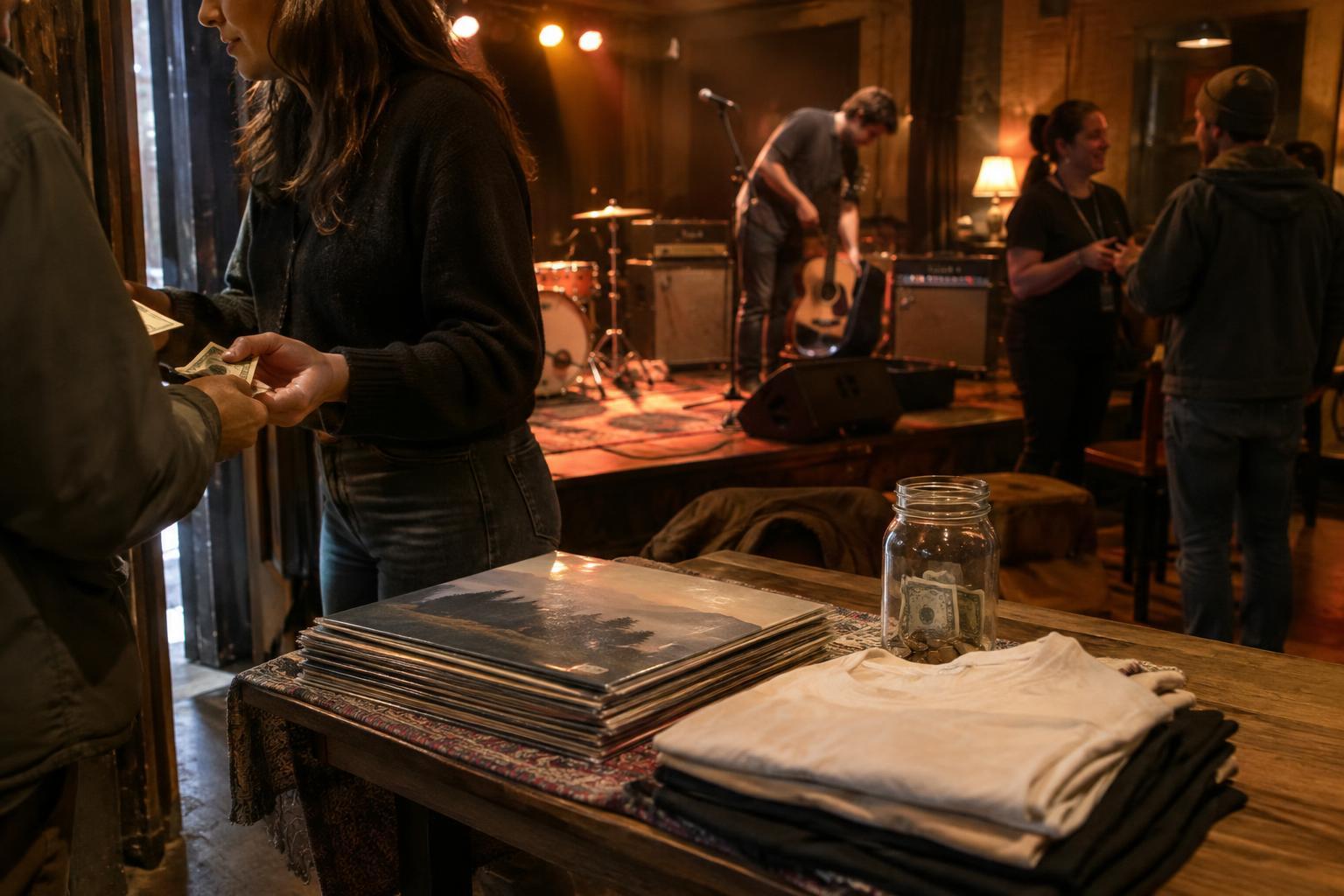
Before heading out, check the host’s current details for sign-up, access, age restrictions and any cover charge; these can differ even between nights at the same venue. Once there, introduce yourself naturally, ask thoughtful questions and follow up only where the conversation is mutual. A scene rarely opens through one perfect appearance. Familiarity grows through repeated, respectful encounters, and each kind of night offers a different way to begin.