The cue often begins before the first note
From the audience, a song may seem to begin all at once. Onstage, someone usually has to establish when “one” arrives. A drummer might tap sticks, a singer might count aloud, or a guitarist might give a small nod before playing an opening riff. The cue can be obvious or nearly invisible, depending on the song and the band’s style.
The musicians also need to agree on what the cue means. A four-count might lead directly into a full-band entrance, while a nod might tell only the drummer to begin an intro. If a song opens with one exposed instrument, the others may wait for a familiar phrase rather than count silently through an uncertain pause. Rehearsal turns these choices into shared expectations, leaving less to negotiate in front of an audience.
Different players can lead at different moments
There is not always one person directing the whole set. The drummer often provides a clear rhythmic reference, but the singer may control the length of a spoken introduction or a held final line. A keyboardist starting an unaccompanied passage can set the pace for everyone else. In a song built around a guitar riff, the guitarist’s first phrase may be the cue that matters most.
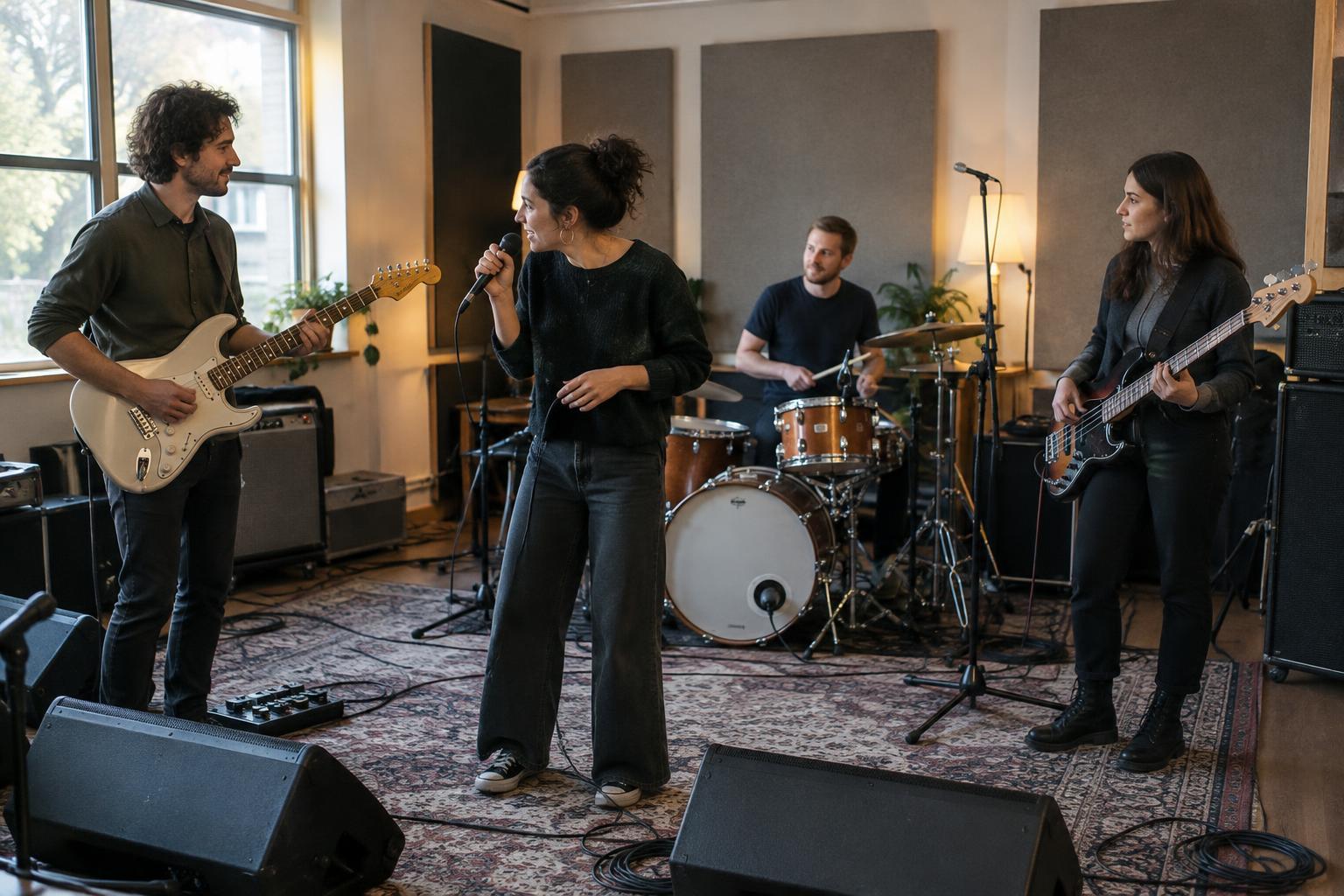
Good cues are easy for the intended players to notice without demanding attention from the crowd. Musicians may turn toward one another, lift an instrument neck, take a visible breath or make eye contact just before an entrance. They also listen for musical cues: the last chord of a verse, a particular lyric or a short fill. Using both sight and sound helps when stage lights, movement or audience noise make one signal hard to catch.
Changes work best when everyone knows the destination
A cue for a chorus or breakdown does more than say “change now.” Each player needs to know what comes next: a louder section, a quieter texture, a different rhythm or a complete stop. In tightly arranged songs, the structure itself does much of the work. After a familiar number of bars, a drummer’s fill or a rising vocal phrase confirms a change that everyone is already expecting.
Flexible passages require more active communication. A band may extend a solo, repeat a chorus or leave space for the audience to sing. To leave that open section together, one player can signal the final cycle with a raised hand, a repeated phrase or a distinctive fill. The useful cue is usually one the band has agreed to recognize, rather than an improvised gesture that could mean several things.
Stops and endings need their own plan
Stopping together can be harder than starting together. A sudden break may call for every instrument to cut off on the same beat, even while sound continues to ring through the room. Players often prepare for that beat by watching the drummer, following a vocal line or feeling the shape of the bar. Silence then becomes part of the arrangement, not simply a gap where nobody plays.
Endings can be just as varied. Some songs finish on a fixed final chord; others slow down, repeat a phrase or let one player decide when to close. A clear final cue might be a stick lift, a breath before the last lyric or an emphatic chord that the rest of the band answers. The goal is not always perfect uniformity. A loose ending can sound deliberate when everyone understands who is leading it and how to respond.
Listening holds the plan together
Even a well-rehearsed band cannot treat a live performance like an automatic sequence. A player might miss an entrance, a singer might hold a note longer than usual, or the energy of a room might invite an extra repeat. Musicians recover by listening for where the group actually is, rather than insisting on where they expected it to be. A steady pulse and a familiar musical landmark can help everyone find the same place again.
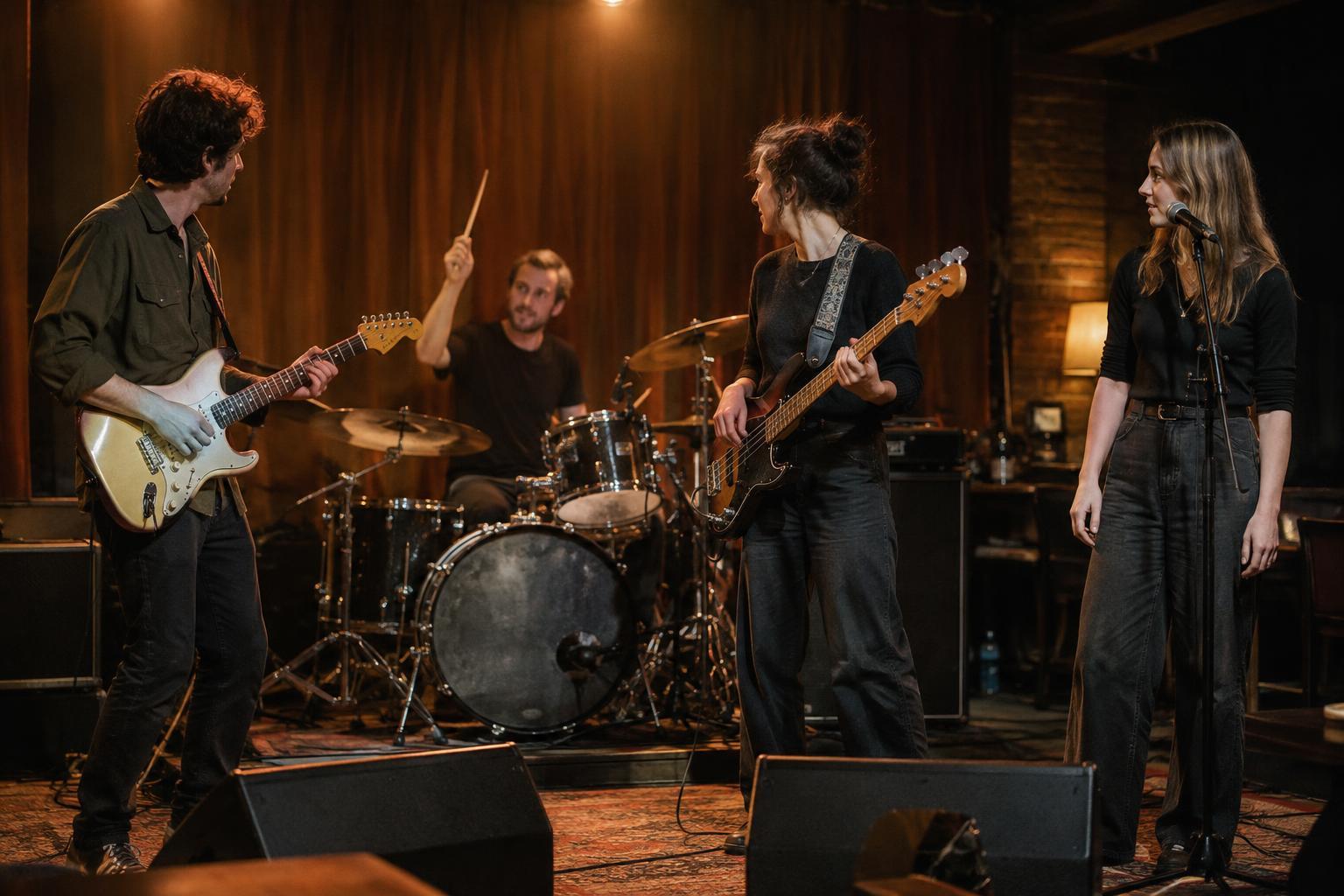
For concertgoers, these small exchanges offer another way to watch a performance. A glance across the stage, a drummer’s lifted sticks or the collective breath before a final hit can reveal the work behind a seemingly effortless moment. The strongest cues do not necessarily stand out. They allow the band to take risks, adjust together and make a song feel alive each time it is played.