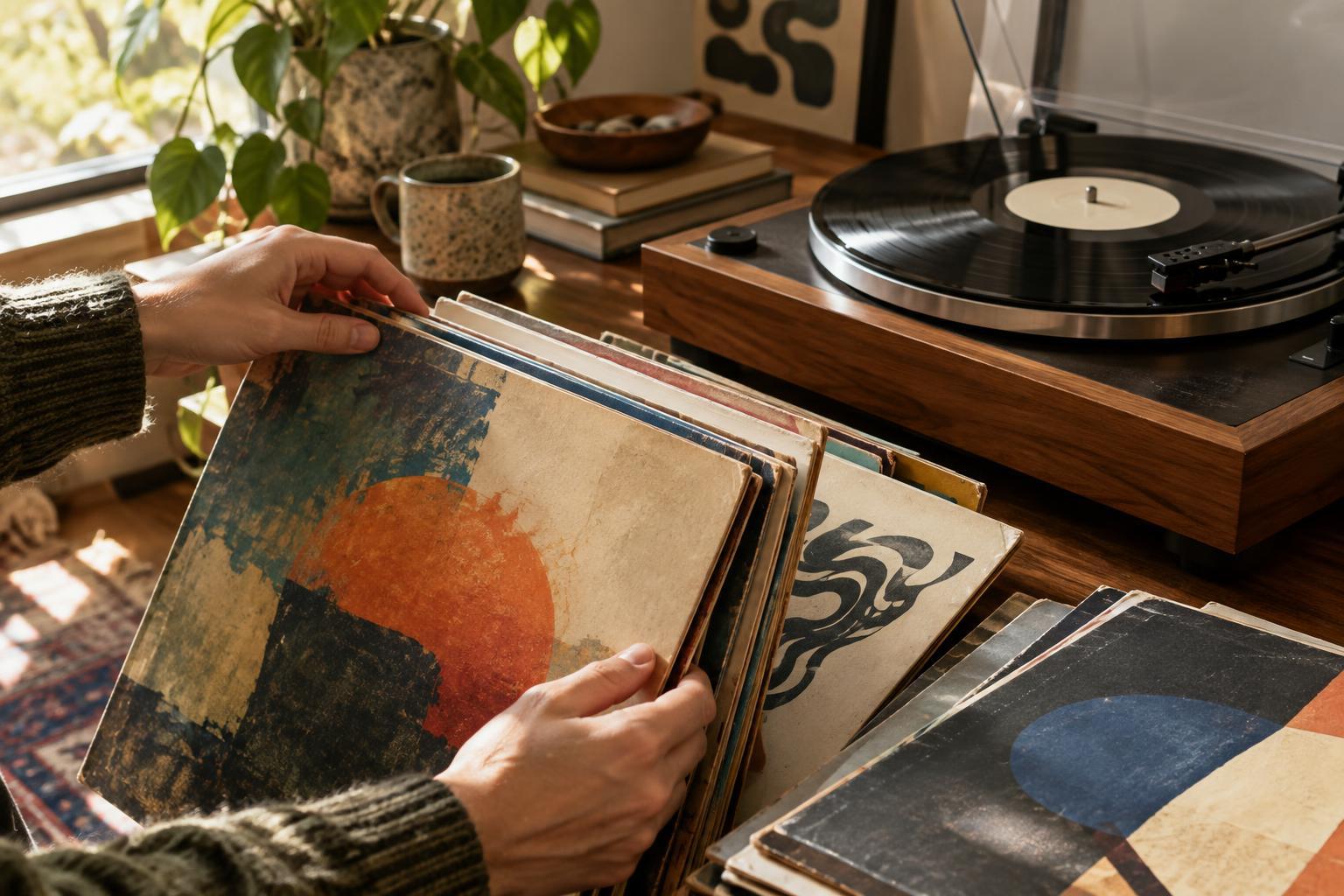
Start with a compilation that has a point of view
A compilation album gathers tracks from different artists into one listening experience. Unlike a random shuffle, it usually offers a reason for those tracks to sit together: a shared sound, a place, a label, a scene or a theme. That organizing idea makes it a useful starting point when you want to explore music but do not know which artist to try first.
Choose a collection that gives you a manageable question to follow. You might look for an introduction to a style you barely know, a survey of a local scene or a set of tracks connected by a particular instrument. Read the title and any available notes, but treat them as a guide rather than a promise that every track will sound alike. The interesting discovery may be the song that does not fit your expectations.
Listen for curiosity, not instant favorites
On a first pass, let the compilation play in its intended order if you can. Notice how the tracks relate to one another: a change in tempo, a familiar rhythm handled differently or a voice that cuts through the surrounding songs. You do not need to rank everything. Mark any track that makes you want to hear another minute, even if you are unsure whether you like it.
On a second pass, listen more closely to the tracks you marked. What caught your attention: the songwriting, the production, the performance or the mood? Naming that detail helps you decide where to go next. If you love the guitar sound but not the song itself, for example, you might explore the compilation’s wider style rather than that artist’s catalog. If the voice or melody stays with you, follow the artist.
Follow a track back to its own setting
A compilation gives you an introduction, not a full portrait. Find the original release when it is identified, then listen to a few songs around the featured track. A song that feels bright and immediate in a varied collection may take on a different character beside the artist’s slower work. Pay attention to whether the qualities you liked recur or whether the compilation captured an unusual moment.
Credits and liner notes can offer other paths without requiring an exhaustive search. A producer, collaborator or label name may connect several tracks you enjoy. These links are useful clues, but they are not guarantees of a similar sound. Follow one at a time and listen before adding anything to your library. That small pause keeps discovery enjoyable instead of turning it into a list of names to process.
Use the collection to hear a scene, with care
Compilations can make relationships between artists easier to hear. Several tracks may share a rhythmic approach while differing in language, instrumentation or energy. Comparing them can sharpen your ear for what you enjoy within a broad category. It can also help you describe a new artist to a friend more precisely than a genre label alone would.
Remember that every compilation reflects choices about what to include. A collection cannot represent every artist or perspective in a scene, and its title may simplify a complicated musical history. Use it as one doorway rather than a definitive map. If a place or style interests you, try another collection with a different focus, then follow individual artists whose work stands out across those listening sessions.
Turn discoveries into a listening habit
Keep a short list of the tracks you want to revisit, along with a few words about why. “Restless drums” or “gentle vocal harmony” will be more helpful later than a long list of unfamiliar names. From each compilation, choose one or two artists to explore further. Listening to a full release or a live recording, when one is available, gives you more context than collecting dozens of isolated tracks.
You can also return to the original compilation after spending time with an artist. A track you overlooked may now reveal a connection you did not hear before. That is the pleasure of using compilations as gateways: they let you wander widely, then come back with better questions. You do not have to know the whole scene to find music that rewards another listen.