A meeting place built around listening
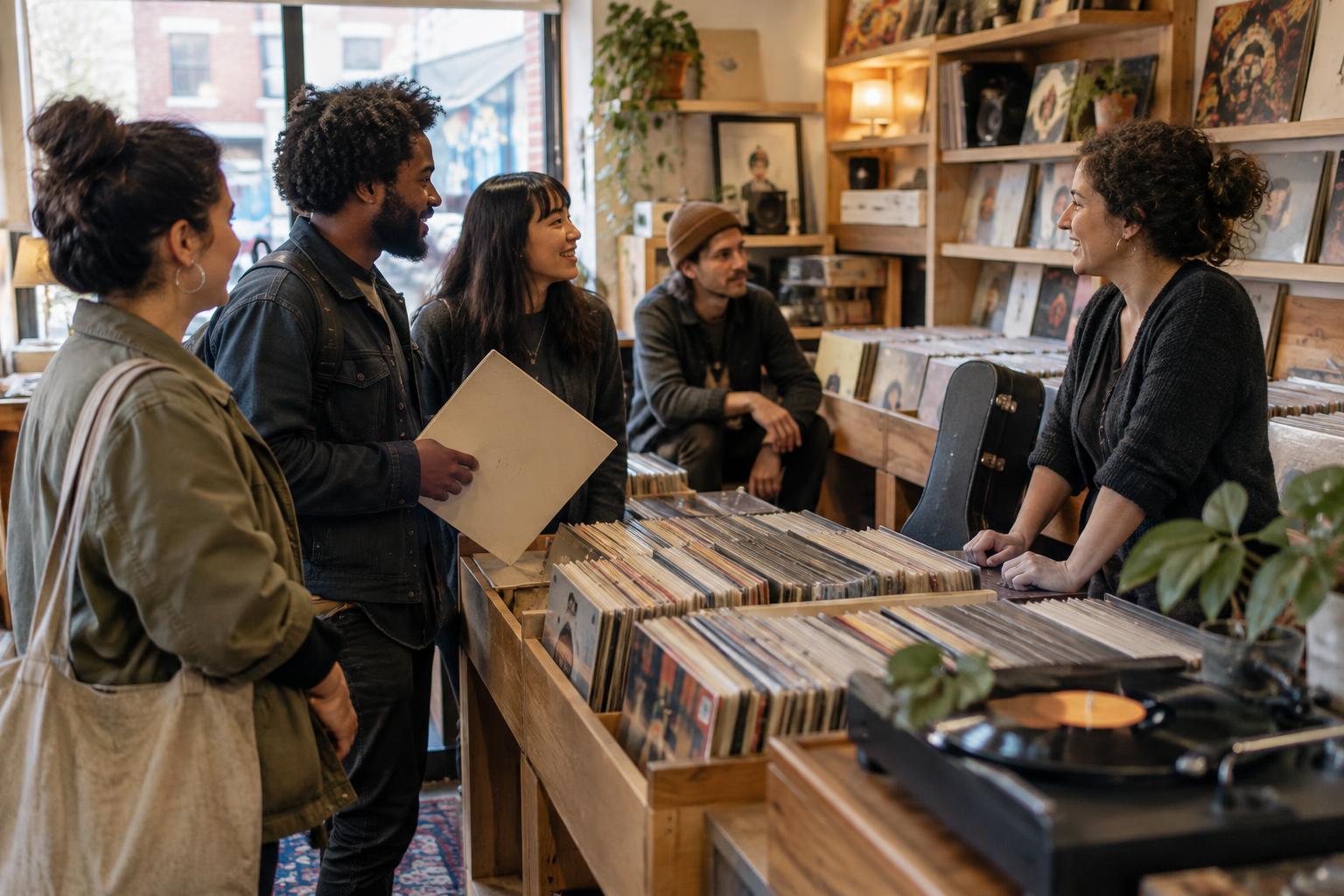
A record store offers something that can be hard to recreate in a rehearsal room or online feed: a shared reason to spend time with music without a fixed agenda. Musicians may arrive looking for a particular album, then stay to ask about a sound they have never heard before. A conversation at the listening station or the counter can lead to a recommendation, an invitation to a show or a new collaborator.
These connections are often informal. A drummer might recognize an album a guitarist is holding; a singer might learn that someone nearby runs a small recording space. Not every visit produces a partnership, and it need not. The value lies partly in repeated, low-pressure encounters. Seeing familiar faces over time makes it easier to move from talking about music to making it together.
Discovery moves in both directions
For musicians, browsing a store can be a way to step outside familiar listening habits. Staff selections and nearby customers may point them toward recordings they would not have searched for on their own. That exposure can shape a set list, inspire an arrangement or simply sharpen the way someone listens. It does not require treating every discovery as material to borrow; enjoying a record for its own sake is enough.
Local musicians can also introduce their work to listeners through a store, if the store chooses to carry it or provide space for it. A recording on a shelf gives someone an opportunity to encounter an artist outside a performance or a social media post. Those opportunities depend on each shop’s space, policies and capacity. Asking what a store accepts, and respecting the answer, is more useful than assuming every shop can stock a release.
Small events can strengthen a scene
Some record stores make room for performances, listening sessions, release gatherings or conversations about music. Their scale can encourage a different kind of exchange from a larger venue. Listeners can ask how a song came together, and performers can hear what caught someone’s attention. An event may also bring musicians from different parts of a scene into the same room.
The best fit depends on the shop. Floor space, neighbors, staffing and sound levels all matter, so an intimate listening session may work where a full-band set would not. Musicians proposing an event can help by explaining what they need, how long it would take and how they will promote it. Treating the store as a partner, rather than simply a free room, makes future gatherings more sustainable.
A local hub needs more than a familiar crowd
A shop can feel welcoming to regulars while remaining intimidating to someone entering for the first time. Dense shelves and deep musical knowledge are part of the appeal, but they need not become a test of who belongs. A beginner asking about an unfamiliar genre deserves the same patience as a collector looking for a rare pressing. Musicians can help set that tone by sharing enthusiasm without turning conversations into competitions.
Accessibility also affects who can participate. Prices, opening hours, physical access and the kinds of music a store carries can shape who feels able to visit. No single shop can meet every need, but listening to customers and artists can reveal useful changes. A healthier scene makes room for people with different budgets, backgrounds and levels of experience, including those who come primarily to listen.
Keeping the connection reciprocal
Musicians who value a record store as a gathering place can support it in ordinary ways. Buy something when your budget allows, recommend the shop when it fits someone’s interests and show up for other artists’ events as well as your own. If you leave promotional materials or ask about carrying a release, check the store’s preferences first. Small courtesies help preserve the trust that makes spontaneous conversations possible.
For listeners, participation can be just as simple: ask a thoughtful question, try a staff recommendation or attend a small event without expecting a polished concert experience. Record stores do not create a local music scene on their own; venues, practice spaces, homes and online communities matter too. What a good shop can offer is a place where those threads cross, and where a shared interest in music has room to become a lasting connection.