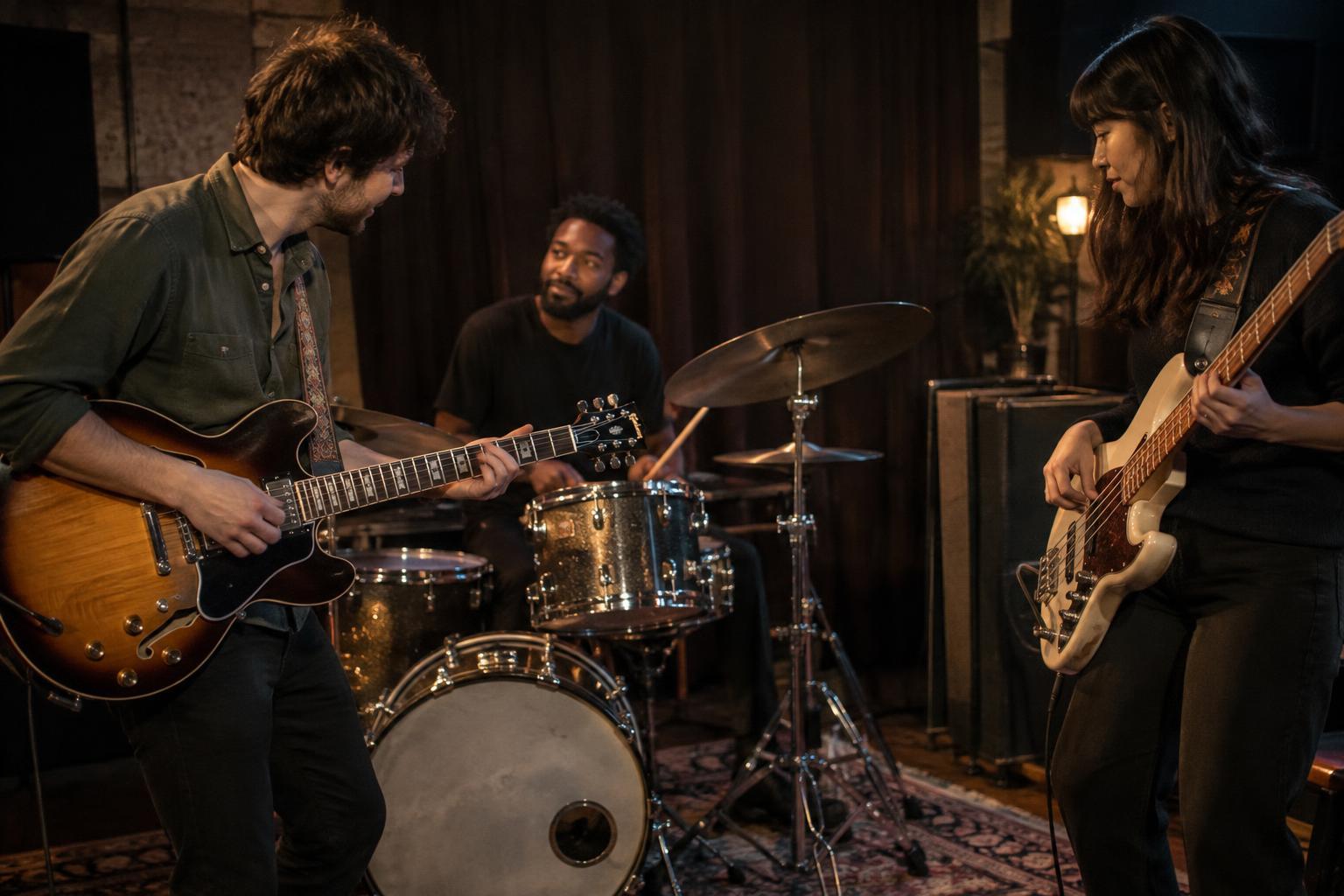
Tempo is a shared decision
In a live performance, tempo is more than a number or the drummer’s responsibility. It is the pace everyone agrees to feel, even when individual notes land ahead of or behind the beat. A singer may linger over a phrase while the band keeps its pulse. A guitarist may leave extra space before a chorus. Those moments can sound intentional when the performers understand where the song is going.
The useful question is not whether a song should be perfectly steady or freely expressive. It is which parts need a dependable foundation and which parts gain something from a little room. Making that distinction before a show helps a band respond to the room without asking every player to guess what happens next.
When a steady pulse does the work
A consistent tempo can make a groove feel secure. It gives a bass line and drum pattern room to repeat, lets dancers anticipate the next beat, and helps tightly arranged parts meet in the right place. Songs built around repeating riffs, loops, sequenced sounds, or precise vocal entrances often benefit from an especially clear pulse. If a performer uses a click track, the rest of the group should know how they will hear or follow it.
Steady does not mean stiff. Players can change the force, length, and placement of notes without speeding up or slowing down the underlying beat. A quieter verse might feel spacious because the drummer plays fewer notes, not because the whole band drifts slower. Before changing tempo, try changing the arrangement: simplify a rhythm, sustain a chord, or leave a beat empty. The contrast may deliver the lift or release the song needs while keeping its structure intact.
Where flexible timing can add meaning
Some moments invite the performers to move together rather than follow a fixed count. A solo voice at the start of a song can take time to finish a thought. An ending can ease back as a final chord approaches. A brief pause before a chorus can make the return of the full band feel bigger. These choices work best when they serve the phrase, not when each player independently decides to slow down.
There is a difference between a planned breath and accidental drag. If the verse repeatedly loses energy, the band may need a firmer pulse rather than a more expressive one. If a ballad feels rushed, leaving space between phrases may help more than lowering its overall tempo. Listen for whether the timing change makes the musical idea clearer. If it calls attention to itself instead, it may be worth simplifying.
Make the cue easy to hear or see
A flexible moment needs a clear way back in. One performer can lead it with a vocal pickup, a visible breath, a guitar strum, or a drum fill. The cue should be easy for the whole group to recognize, including anyone who cannot see the leader from their place onstage. Rehearsing the transition matters as much as rehearsing the pause itself: decide who leads, what everyone listens for, and where the first shared beat lands.
It can help to run the same passage in a few ways. Hold the pulse through it once, then try a slight pause or gradual easing of the pace. Record a rehearsal if practical, and listen to the full phrase rather than judging one dramatic instant. A choice that feels exciting to the players may sound confusing from the room; a small change may carry more clearly than a large one. Agree on a version, but leave enough attention for performers to notice if a cue needs an extra breath on the night.
Give the room energy without chasing it
An enthusiastic audience can tempt a band to start every song faster. The stage can add its own momentum, too: a loud chorus or busy fill may pull the next section forward. Neither reaction is automatically wrong, but speed alone is not the same as excitement. If the song begins to feel crowded, returning to the pulse practiced in rehearsal can give the melody and groove their space back.
For listeners, tempo is one reason two performances of the same song can feel different. Notice whether the band stays grounded through a lively section or waits together before an important line. The most satisfying timing choices often feel natural because no one has to explain them. The pulse gives everyone a place to meet; the occasional breath gives the song somewhere to go.