Presence begins with attention
Stage presence is often mistaken for the amount of ground a performer covers. Movement can bring energy to a set, but it is only one way to communicate. A singer standing at a microphone, a drummer behind a kit or a guitarist concentrating on a difficult passage can hold attention without traveling across the stage. What matters is whether the performer appears engaged with the music and aware of the people sharing the room.
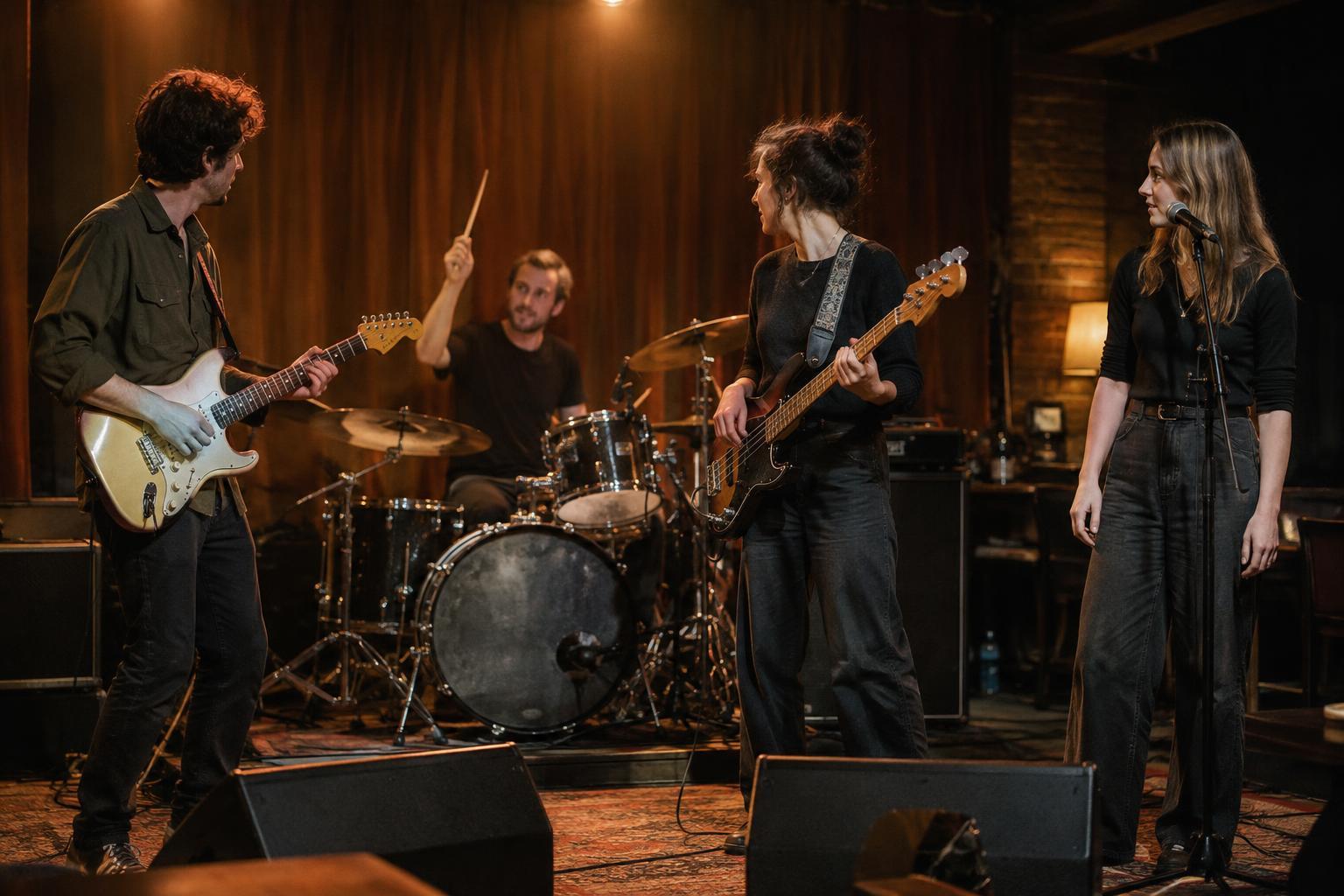
Stillness feels different from hesitation. A performer who settles into a stance before a quiet verse gives the audience a place to focus. Someone who stops moving because they are unsure what to do may look disconnected instead. The distinction is not about perfect confidence; it is about making a choice. Even a small action, such as turning toward another musician as their part enters, can show that the performer is listening and involved.
Let the song set the scale of movement
A useful starting point is to ask what each section of a song needs. A restrained opening may benefit from a steady posture that leaves room for the words or melody. As the arrangement builds, a step forward, a change in stance or a more open gesture can mark the shift. If every moment receives the same level of motion, those changes can lose their impact. Contrast gives a small movement meaning.
Performers can look for natural cues in the music: the first beat after a pause, a harmony entering or a final sustained note. These moments offer opportunities to move with purpose rather than fill every silence. The goal is not to choreograph every step. It is to know where the important turns are so that movement supports them instead of competing with them.
Use focus, posture and expression
An audience can read where a performer directs their attention. Looking up during a lyric, watching a bandmate take a solo or facing the crowd at the end of a phrase can create a sense of connection. Eye contact need not mean staring at one person or scanning the room constantly. Brief, comfortable moments of outward focus can be enough, especially when balanced with the concentration a performance requires.
Posture also shapes what the audience sees. A stable stance can help a performer look grounded, while shoulders, hands and facial expression can reflect the character of a song. None of this calls for a fixed ‘stage face.’ A serious passage may call for quiet concentration; a playful exchange between musicians may invite a smile. Expression is most convincing when it fits the sound and the performer, rather than imitating someone else’s style.
Make room for other performers
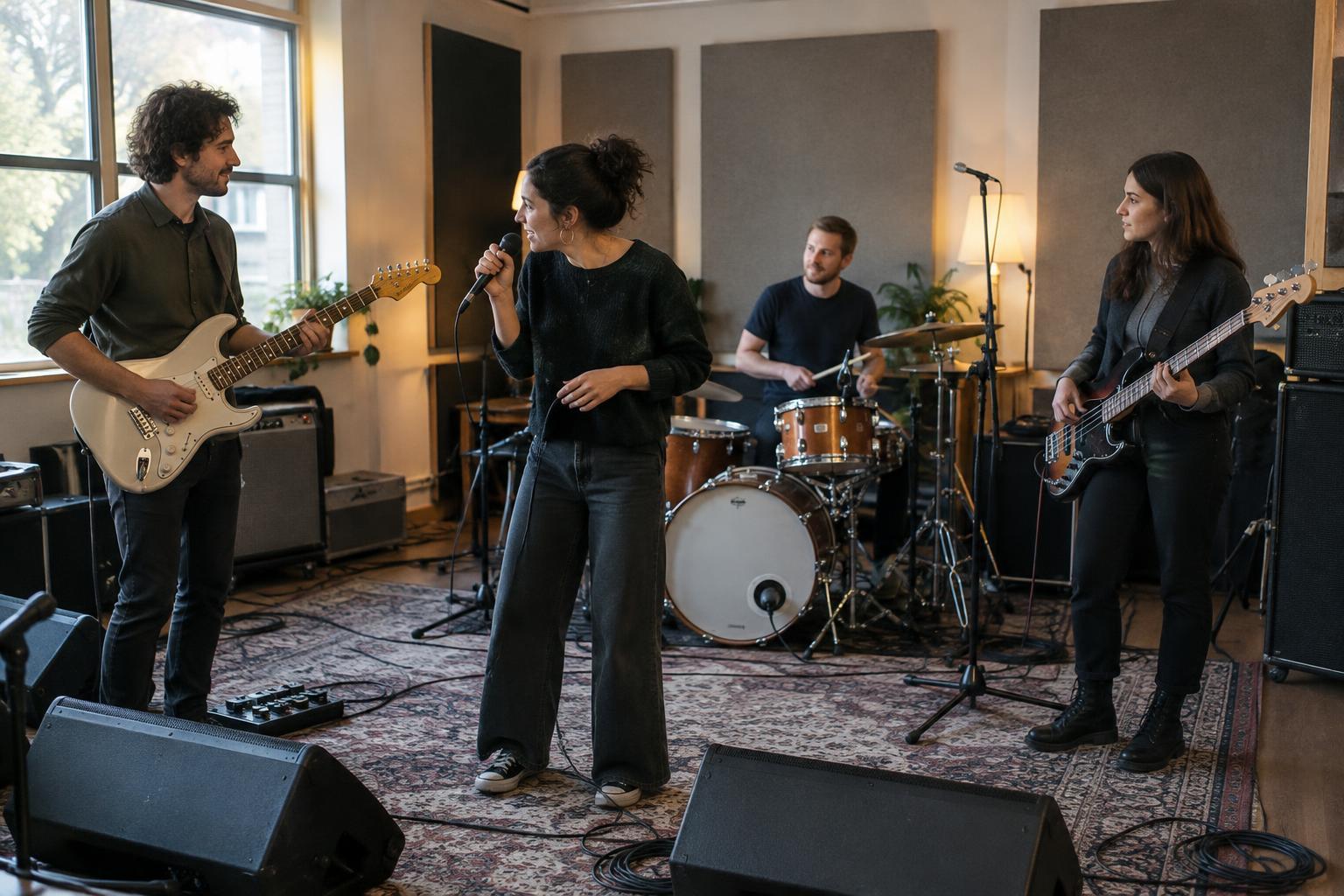
Stage presence is not always about being the center of attention. In a group, one musician can strengthen a moment by giving another space. Turning toward a soloist, stepping back during a featured vocal or holding still while the rhythm section changes direction can help the audience notice what is happening in the arrangement. These choices also make the performance feel like a shared conversation.
This matters on small stages, where sweeping movement may be impractical, and during sets that involve instruments or equipment that limit mobility. Performers can use the space they do have: a change of angle, a glance across the stage or a pause before returning to the microphone. Awareness of cables, stands and fellow players keeps those choices comfortable and helps avoid movement for its own sake.
Practice the quiet moments as well as the big ones
Rehearsal is a chance to notice what happens between the obvious highlights. What does the performer do during an instrumental break? Where does their attention go after a song ends? Trying a few approaches while running a set can reveal which actions feel natural. A simple recording of a rehearsal, when everyone involved is comfortable with it, may help a performer see whether a planned pause reads as focused or uncertain.
There is no single amount of movement that suits every artist, genre or room. A lively set may call for frequent motion; an intimate one may draw strength from restraint. The useful test is whether each choice helps carry the music to the audience. When performers are comfortable letting a moment stand still, their next movement has more room to matter.