First, the stage has to work
A soundcheck is the time set aside before a performance for musicians and audio crews to make sure the show can be heard clearly onstage and in the audience. It is not simply a chance for a band to rehearse. The crew needs to confirm that microphones, instruments, playback devices and speakers are connected, then make useful adjustments while the performers are available to play.
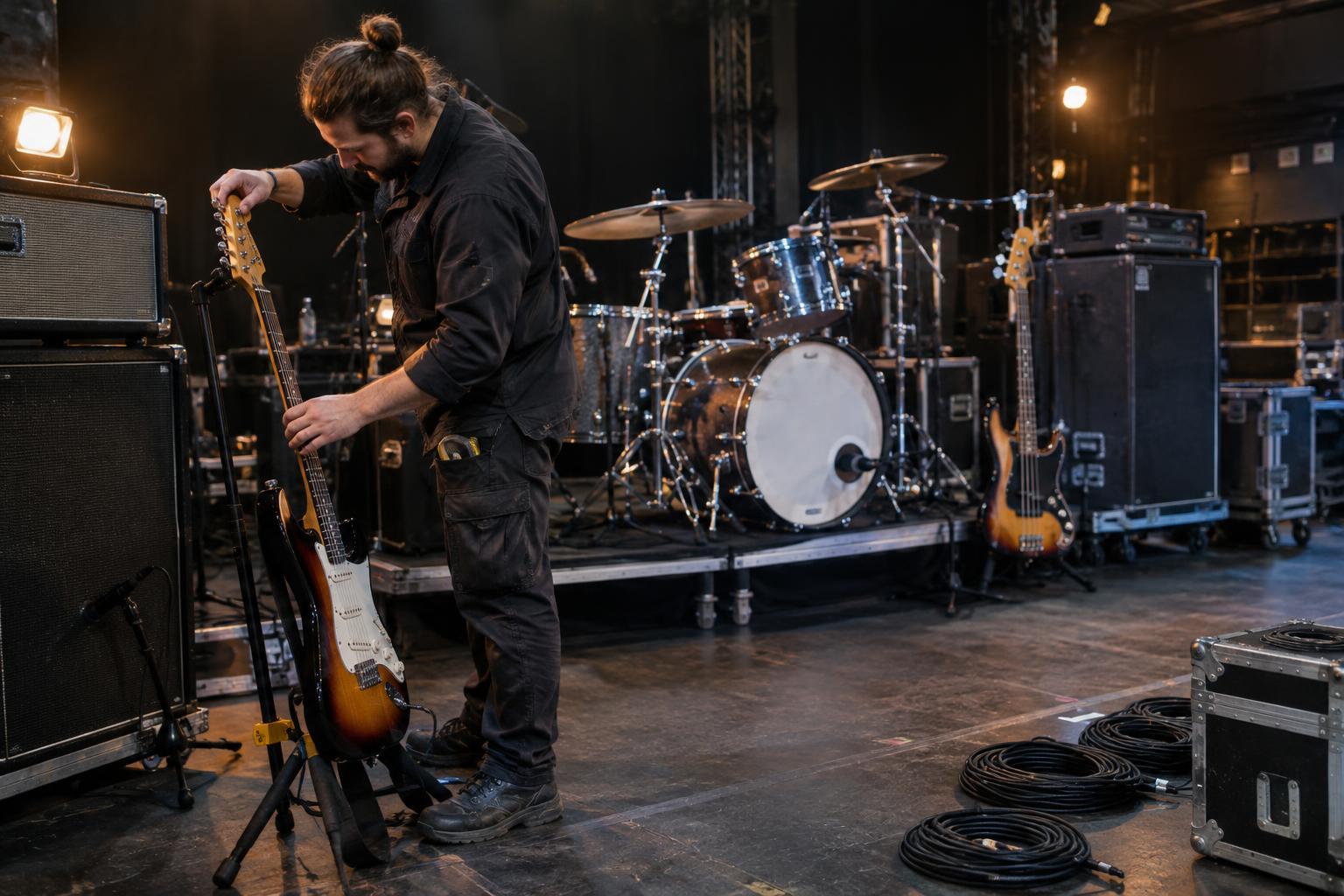
The first pass is often a line check. A technician asks for a brief sound from each input: a kick drum, a vocal microphone, a guitar amplifier or another source in the show. This confirms that the intended signal reaches the mixing desk and that it is assigned to the right channel. If a microphone is silent or an instrument appears on the wrong channel, it is easier to trace the problem now than during a song. At a small show, this step may blend into soundcheck; at a larger production, it may be handled separately.
The performers build the sound they need
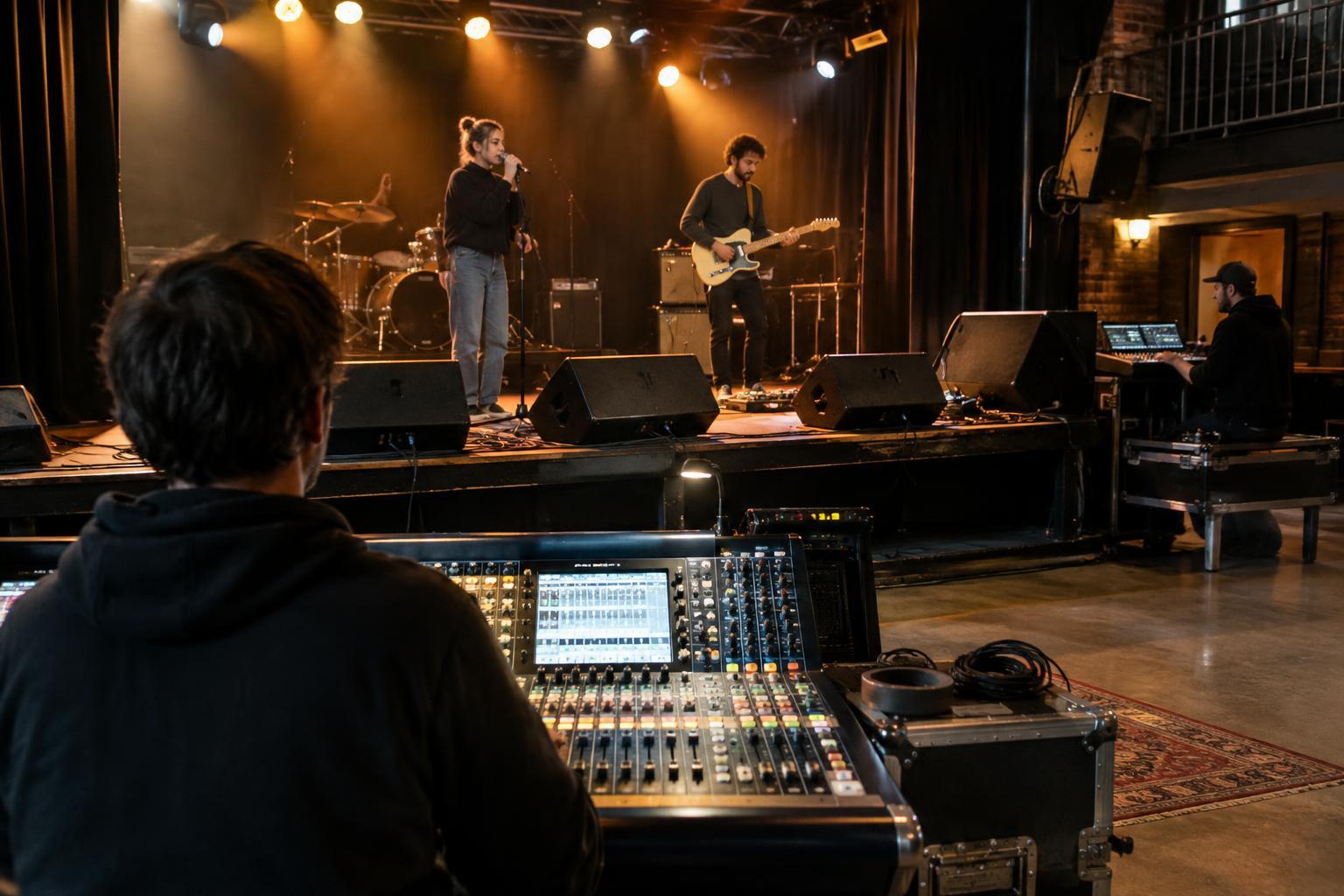
Once signals are working, the musicians play short passages so the crew can hear how the sources interact. A drummer may move around the kit, a singer may try both quiet and strong lines, and the full group may play part of a song. These examples are more useful than a single note because a mix has to hold together when several people perform at once.
The performers also need to hear themselves. Floor wedges are speakers aimed toward the stage; in-ear monitors deliver a mix through earpieces. Either way, the monitor engineer, or the person handling monitors, adjusts what each performer hears. A singer might ask for more of their voice, while a bassist may need a clearer kick drum to stay locked in with the beat. These mixes can differ substantially from what the audience hears. The goal is not to make every source equally loud onstage, but to give each performer enough information to play confidently without creating unnecessary volume.
Front-of-house shapes the audience mix
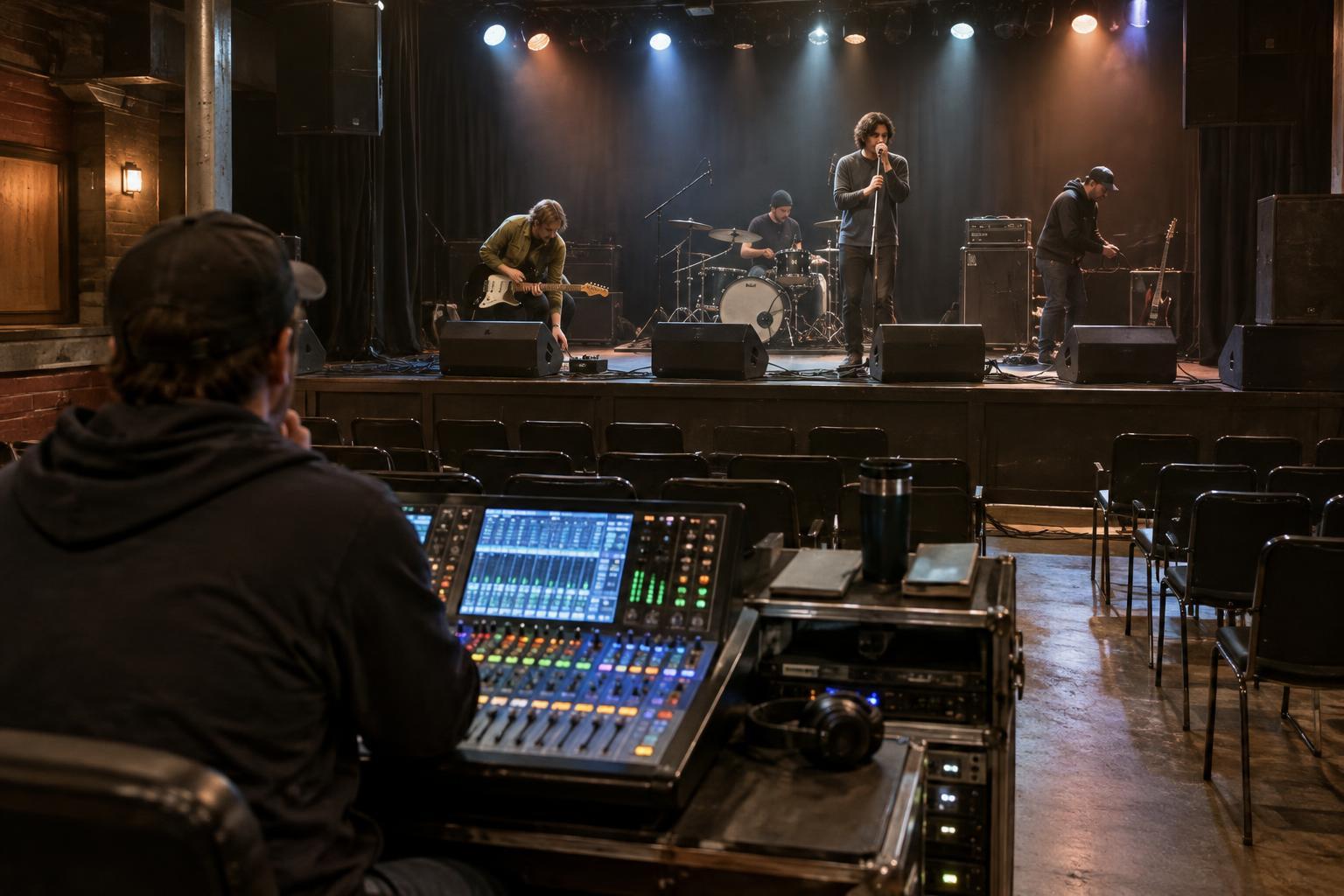
Front-of-house is the mixing position responsible for sound through the main speaker system. As the band plays, the engineer balances levels, adjusts tone and listens for sources that are hard to distinguish. A vocal that sounds clear by itself may get buried when guitars and cymbals enter. A bass sound that works onstage may feel too heavy elsewhere in the room. Listening to the whole group helps reveal those conflicts.
The engineer may also check effects, such as vocal reverb, and make sure changes between songs are manageable. If an act uses different instruments or playback tracks during its set, the crew needs to know when those sources will appear. Soundcheck is an opportunity to agree on cues as well as sound: which microphone a performer will use, where someone will stand and whether a particular song needs a different setup. Clear communication can prevent a rushed fix in front of an audience.
Why an empty room is only a starting point
A room does not sound exactly the same once it fills with people. An audience can absorb and scatter sound, and the energy of a performance may lead musicians to play or sing differently than they did at soundcheck. The crew therefore treats its settings as a starting point, not a finished recording of how the show must sound. Engineers continue listening and making small adjustments throughout the set.
Time and space also shape the process. A headlining act may have more opportunity to play through material, while a supporting act may get a shorter check or only a line check, depending on the schedule and venue. Some stages have limited room for equipment changes between acts. In those cases, clearly labeled cables, planned equipment moves and concise requests matter as much as extra minutes of playing. A short check can still be effective when everyone knows what needs testing.
What the audience can take from it
If you hear a band play a fragment of a song before doors open, you are hearing part of a working conversation. A repeated snare hit lets someone adjust a microphone or monitor. A few lines of singing reveal whether the vocal stays audible over the instruments. Stopping and starting is normal because the purpose is to identify problems, make changes and listen again.
A good soundcheck cannot guarantee that nothing will go wrong during a concert. Equipment can fail, performers can move, and the room changes as the night unfolds. What it can do is give the people behind and on the stage a shared, tested starting point. The smoother the handoff from preparation to performance, the more attention everyone can give to the music itself.