Treat waiting as part of the day
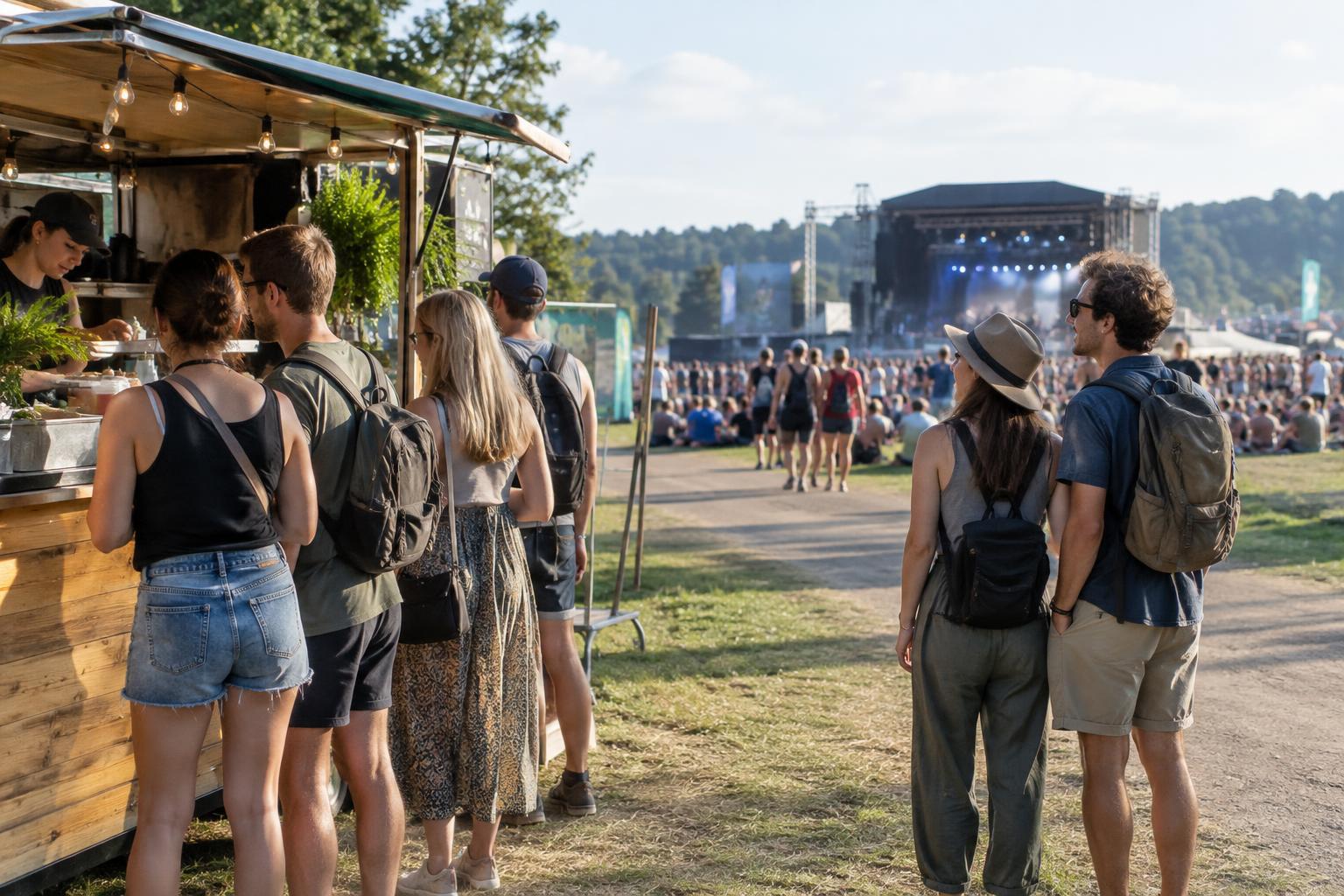
A festival schedule often looks straightforward until you account for the time between sets. Getting through the entrance, finding a stage, buying food and using a restroom may each involve a wait. The length of those waits can change throughout the day, so a precise minute-by-minute plan is less useful than a schedule with room to move.
Start by choosing the performances you would most regret missing. For each one, decide whether you want to hear the full set or would be happy arriving partway through. Then leave an unscheduled gap before your highest-priority sets. That gap gives you time to handle a line, walk between stages or simply find a comfortable place to listen. If everything runs smoothly, you gain a break rather than a problem.
Put arrival and entry first
The first queue is often the hardest to predict because it may include security screening, ticket checks and a walk from the gate to the stages. Before leaving, check the festival’s own entry guidance for gate locations, opening times and permitted items. Having your ticket ready and packing within the stated rules can help you avoid preventable delays at the entrance.
If an early set matters to you, plan to be inside the site before it begins rather than aiming to reach the gate at showtime. Allow time for your journey, the entry process and the walk to the stage. If you are meeting friends, agree on a meeting point that does not depend on everyone getting through the gate at exactly the same time.
Match errands to your priorities
Food, water, restrooms and merchandise do not all need the same approach. Meals and water deserve space in your plan; repeatedly postponing them for one more set can make the rest of the day less enjoyable. When you notice a manageable line during a lower-priority performance or a gap between acts, consider taking care of a basic need then instead of waiting until it feels urgent.
Merchandise is usually more flexible. If a particular item matters to you, check where the stand is when you arrive and decide how much set time you are willing to trade for it. If browsing is optional, save it for a quieter part of your personal schedule. The same principle applies to photo spots and other optional stops: enjoy them when they fit, but do not let an unexpected queue quietly replace the music you came to hear.
When attending with friends, you can make these choices together without requiring everyone to join every line. Agree on where and when to regroup, and respect anyone’s decision to stay for a set while others run an errand.
Decide when to leave a line
A line can be worth joining and still stop being worth the wait. Before you step into an optional queue, set a simple limit: perhaps you will leave if it has barely moved by the time you need to head toward a stage. Check the time against walking distance, not just the advertised start of the next set. This makes it easier to change plans without feeling that you must stay simply because you have already waited.
Keep a backup option for necessities. If one food stall has a long queue, another suitable option may work better; if a nearby restroom is crowded, look at the site map before assuming it is your only choice. Follow staff directions and avoid blocking walkways while deciding. You cannot eliminate every wait, but you can keep lines from making all your decisions for you.
At the end of the day, use the same flexible thinking for departure. Leaving immediately after the final performance may mean joining a crowd moving toward the exits. If your travel plans allow it, take a moment to confirm your route and regroup before heading out. A good festival plan is not one that predicts every queue; it is one that leaves you free to respond while still making time for the sets that matter most.